S&P Warns Iran War Could Hammer U.S. Credit as an Overvalued Stock Market Looks Increasingly Crash-Prone
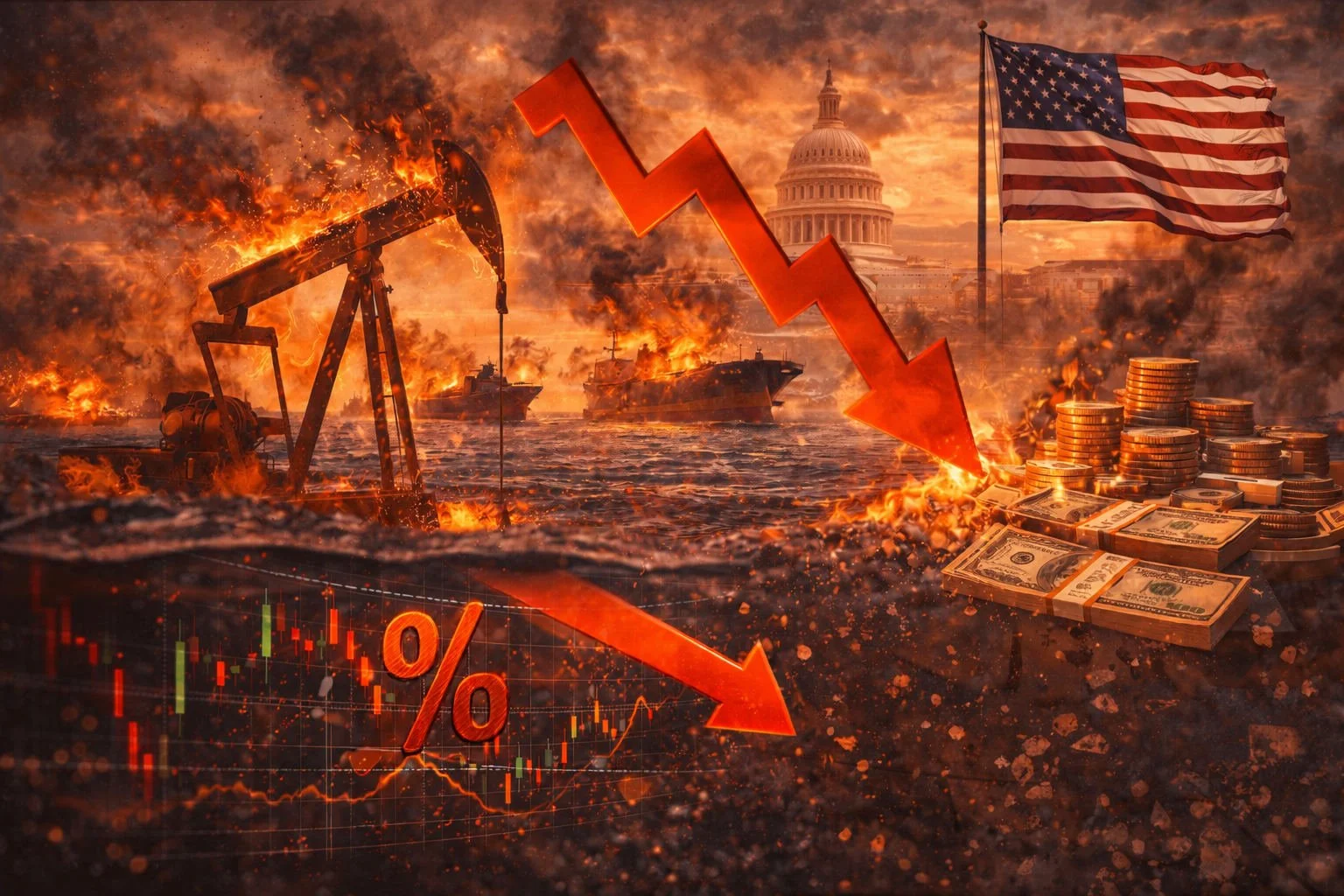
S&P Global’s warning cuts straight to the point investors have been trying not to face: this war may not just be an oil shock. It may be the kind of shock that bleeds into growth, inflation, and credit conditions long after the first military phase ends. Reuters reported that S&P said it would avoid knee-jerk rating actions, but warned that soaring oil and gas prices from the Middle East war are already putting vulnerable borrowers at risk. That matters because once a geopolitical crisis starts tightening credit as well as raising energy costs, the damage can spread well beyond oil traders and airlines and straight into the foundations of the broader market.
The problem is that U.S. stocks still do not look fully priced for that kind of outcome. Reuters wrote on Friday that Wall Street’s roughly 1.5% drop on Thursday looked like “barely a flesh wound” given a shuttered Strait of Hormuz, an escalating tanker war, and triple-digit oil. The same Reuters analysis said U.S. stocks had remained “remarkably calm” compared with the turmoil in energy markets, and warned that investors may be leaning too heavily on the idea that Washington will pull back before the damage gets much worse.
That calm is hard to justify when the macro backdrop is already deteriorating. Reuters reported that the International Energy Agency now sees the current Middle East conflict as the largest oil-supply disruption in history. Barclays and Goldman Sachs have both pushed back their calls for the first Fed rate cut to September because the war is raising inflation risks, while Reuters also reported that consumer sentiment in early March fell as gasoline prices jumped more than 21% to $3.63 a gallon and households grew more anxious about their finances. This is the exact kind of setup equity investors should fear most: slower growth, hotter inflation, and less room for the Fed to bail markets out.
There are already signs that this stress is spreading into market plumbing, not just headlines. Reuters reported Thursday that big banks fell on rising credit-quality concerns as crude surged, and a separate Reuters analysis on Friday noted that investors are becoming increasingly worried about problems hiding in private credit markets. Global equity funds just saw their biggest weekly outflows since mid-December, while high-yield bond funds suffered their largest weekly outflow since April 2025 and money market funds pulled in fresh safety-seeking cash. That is not what a healthy market looks like. It is what a market looks like when investors are starting to move from “buy the dip” to “reduce exposure.”
What makes this especially dangerous is that the U.S. market came into the war already bloated. Reuters reported in January that U.S. stocks started 2026 with the highest 12-month forward price-to-earnings multiple among 47 global indexes, at 25. Even after some slippage, Reuters reported on February 24 that the S&P 500 was still trading at 21.6 times forward earnings, while Wall Street strategists were still looking for the index to finish 2026 around 7,500, about 10% above where it stood then. In other words, this was already a richly priced market built on optimism before oil exploded and the war started rewriting inflation assumptions.
It is also a market that is far less diversified than it looks on the surface. Reuters reported last summer that the top 10 stocks in the S&P 500 had reached 37.3% of the index, near a record, and that the tech sector’s 33.9% share of the index’s market value was the largest since the dot-com bubble. Reuters also warned that reliance on a handful of megacap names means weakness in just a few stocks can have outsized effects on the whole index. That concentration is exactly what makes a richly valued market fragile: when confidence breaks, the biggest names do not cushion the index — they drag it down.
The market’s recent behavior suggests that the repricing may only be starting. Reuters reported that in the first 41 trading days of 2026, the S&P 500’s closing range was the narrowest for that period on record going back to 1928, even as war risk exploded and oil posted its biggest weekly jump since U.S. crude futures were launched in 1983. Reuters also quoted investors saying the market has likely been underestimating the geopolitical risk, and that with the S&P only slightly below its highs earlier in the selloff, “not enough short-term pain” had been inflicted yet. That is classic complacency: a crowded, expensive market assuming a crisis will pass before valuations have to adjust.
That complacency is what makes the crash risk feel so real now. If oil remains above $100, if Hormuz stays constrained, if consumer sentiment keeps eroding, and if rate cuts keep getting pushed out, the market no longer has the luxury of treating this as a brief geopolitical spasm. It has to start pricing a world in which earnings estimates are too high, multiples are too rich, credit is getting tighter, and the old consensus trade — U.S. exceptionalism plus AI-driven megacap leadership — is not enough to carry everything higher. Reuters already reported that the Middle East war has upended some of 2026’s most popular trades, with investors who had positioned for growth suddenly confronting a stagflationary shock “that was not part of the plan.”
That is why S&P’s warning matters so much. It is not just another gloomy headline layered on top of a war. It is a reminder that this conflict can outlive the initial strikes and keep feeding through the economy via oil, inflation, credit stress, and weaker confidence. In an ordinary market, that would be bad enough. In a market that is still expensive, top-heavy, and only beginning to see serious outflows, it looks much more dangerous. The real risk is not that stocks have already fallen too far. The real risk is that they still have not fallen nearly enough to reflect what a longer war could do.