Why This Stock Market Rally Feels Irrational When Hormuz Is Still a Mess
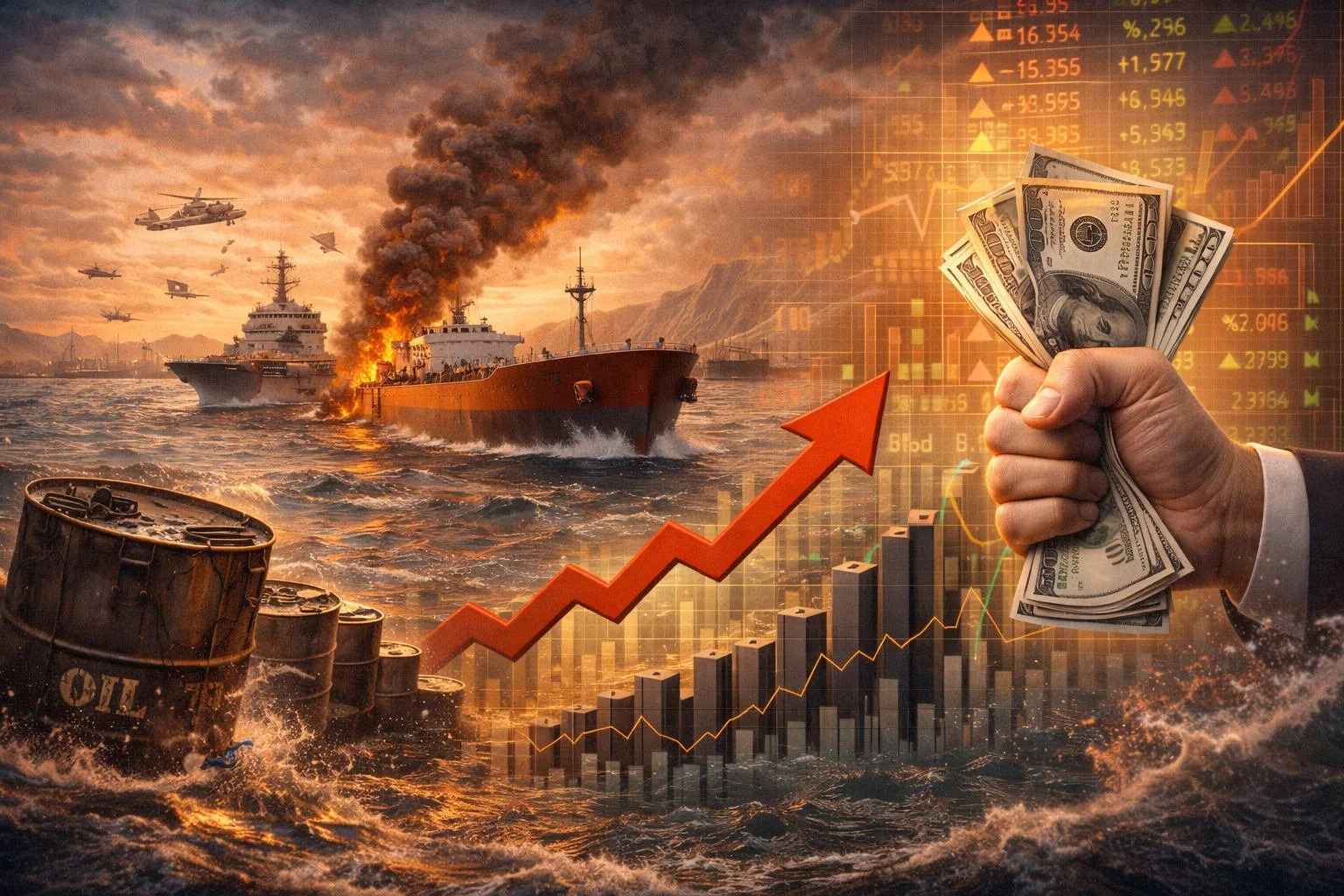
If this market feels wrong to you, that is because, on some level, it is.
As of Tuesday, April 14, 2026, investors are still dealing with a Strait of Hormuz crisis serious enough that the U.S. blockade of Iranian ports is ongoing, tanker traffic remains badly disrupted, and energy markets are still pricing real supply stress. Yet stocks keep bouncing every time Donald Trump suggests talks could resume or implies Iran wants a deal. Wall Street hears “maybe peace soon” and buys first, asks questions later.
That does not automatically mean the market is rigged. But it does mean the market is behaving in a way that looks increasingly disconnected from physical reality.
The first thing to understand: the damage is still real
The basic bullish argument is simple. Traders are not pricing what is happening right now. They are pricing the odds that the worst-case outcome gets avoided. That is how markets are supposed to work in theory.
The problem is that the underlying disruption has not actually gone away. Reuters reported today that limited non-Iranian tankers are still getting through, but flows through Hormuz remain far below normal. AP noted that the strait normally handles nearly 20% of the world’s oil shipments, which is why even partial disruption hits so hard. In other words, this is not “back to normal.” It is a constrained, politically fragile, still-dangerous energy chokepoint.
And here is the part that makes the rally look even stranger: not every oil quote is at a literal all-time high, but the physical oil market is under far more stress than the headline futures quote suggests. The Wall Street Journal reported today that Dated Brent, a key physical-delivery benchmark, surged to $132.74 a barrel, while front-month Brent futures settled around $99.36. That is an enormous gap, and it suggests the screens investors watch may be understating how tight the real-world market actually is.
So when people say, “Why are stocks rallying if oil is still screaming danger?” they are not imagining things. The dislocation is real.
Wall Street is trading headlines, not barrels
The market’s behavior makes more sense once you accept one ugly truth: modern equities often react faster to political narratives than to the underlying economic damage.
Reuters reported Tuesday that Wall Street rose again as investors latched onto hopes for renewed U.S.-Iran dialogue, even though the blockade remains in place. Brent fell back toward the mid-$90s on those hopes, and stocks took that as permission to rally. The market is not waiting for ships to move freely again. It is trading the possibility that a future headline will make the problem smaller.
That creates a market that feels less like sober price discovery and more like a giant reflex machine. Trump says Iran wants a deal. Oil futures drop. The S&P rips. A day later the actual physical bottleneck is still there. But the rally has already happened.
This is one reason so many investors feel like something smells fishy. It is not necessarily because there is proof of manipulation. It is because the market keeps treating soft diplomatic chatter as if it were a hard improvement in the physical world.
A few giant stocks can drag the whole index higher
Another reason this feels irrational is that “the market” is not really one thing.
Reuters reported that Tuesday’s gains were aided by strength in tech stocks, while other coverage noted software names just logged their strongest two-day advance in nearly a year. Citigroup also upgraded U.S. equities to overweight on the view that tech earnings and valuations can still support the market despite Middle East turmoil. That means the indexes can look strong even while major macro risks remain unresolved.
This matters because people see the S&P 500 or Nasdaq going up and conclude that investors must believe the economic outlook is fine. That is not always what is happening. Sometimes it just means a handful of huge companies are catching bids hard enough to overpower everything else.
So yes, the index rally can be real on the screen while still feeling deeply false underneath.
Positioning can turn a flimsy headline into a violent rally
The other piece of this is positioning.
Reuters said Bank of America’s latest fund manager survey showed the most bearish sentiment since mid-2023. The Wall Street Journal separately reported that hedge fund short-covering has been a major force behind the rebound, with the S&P 500 already back above prewar levels. That combination is combustible: when investors are gloomy, underweight, or short, even a weak positive headline can create a sharp upside move as people rush to cover or chase.
That does not make the rally healthy. It just makes it mechanically powerful.
This is the kind of market where traders are not saying, “The Hormuz crisis is solved.” They are saying, “I cannot afford to be short if Trump posts one more peace teaser and algos launch the index 1.5% in an hour.”
That is not the same thing.
The oil market and the stock market are telling different stories
If you want the cleanest argument for why this rally feels irrational, it is this: the oil market and the stock market are no longer speaking the same language.
Reuters today described a world where stocks are edging higher on de-escalation hopes while the blockade persists. Another Reuters piece bluntly framed it this way: “War is over for Wall Street, while oil drags down bonds and gold.” Ken Griffin warned that a prolonged Hormuz disruption lasting six to twelve months could threaten the global economy with recession. The IEA has already cut its 2026 oil-demand forecast, projecting the first drop since the pandemic because high prices are starting to destroy demand.
That is not a normal backdrop for a cheerful relief rally.
It is a backdrop for a market making a very specific bet: that diplomacy will arrive before the energy shock fully bleeds into earnings, consumer spending, inflation expectations, and central-bank thinking.
Maybe that bet works.
But if it is wrong, the repricing could be vicious, because the market is no longer cheap and the easy excuse for complacency is already being used up. AP reported the S&P 500 is back near its highs, even as the broader economic strain from the Hormuz disruption remains unresolved.
So is the market “fishy”?
Here is the honest answer.
There is a difference between a manipulated market and a market that has become structurally bad at reflecting reality in the short term.
Right now, there is no hard public evidence that stocks are rallying because of some grand hidden hand. But there is strong evidence that markets are being driven by a mix of headline-chasing, short-covering, index concentration, and hope-based repricing while the physical energy system remains under real stress. Oil futures are sending a softer message than physical crude. Equities are responding to diplomacy headlines faster than to shipping reality. And the result is a market that feels detached, twitchy, and suspiciously eager to believe the danger has already passed.
That is why so many people are looking at the tape and thinking: this does not add up.
Because it doesn’t fully add up.
Not yet.
The bottom line
Wall Street is effectively making a time-sensitive wager that peace-talk headlines will become real before the Hormuz shock fully infects the broader economy.
If that wager pays off, this rally will look smart in hindsight.
If it fails, this stretch may be remembered as one of those absurd moments when the market kept levitating on vibes while the physical world was flashing red.
And that is the real reason the rally feels irrational: it is not built on resolution. It is built on hope that resolution arrives just in time.