Why the Iran War Could Keep Oil Prices High for Much Longer
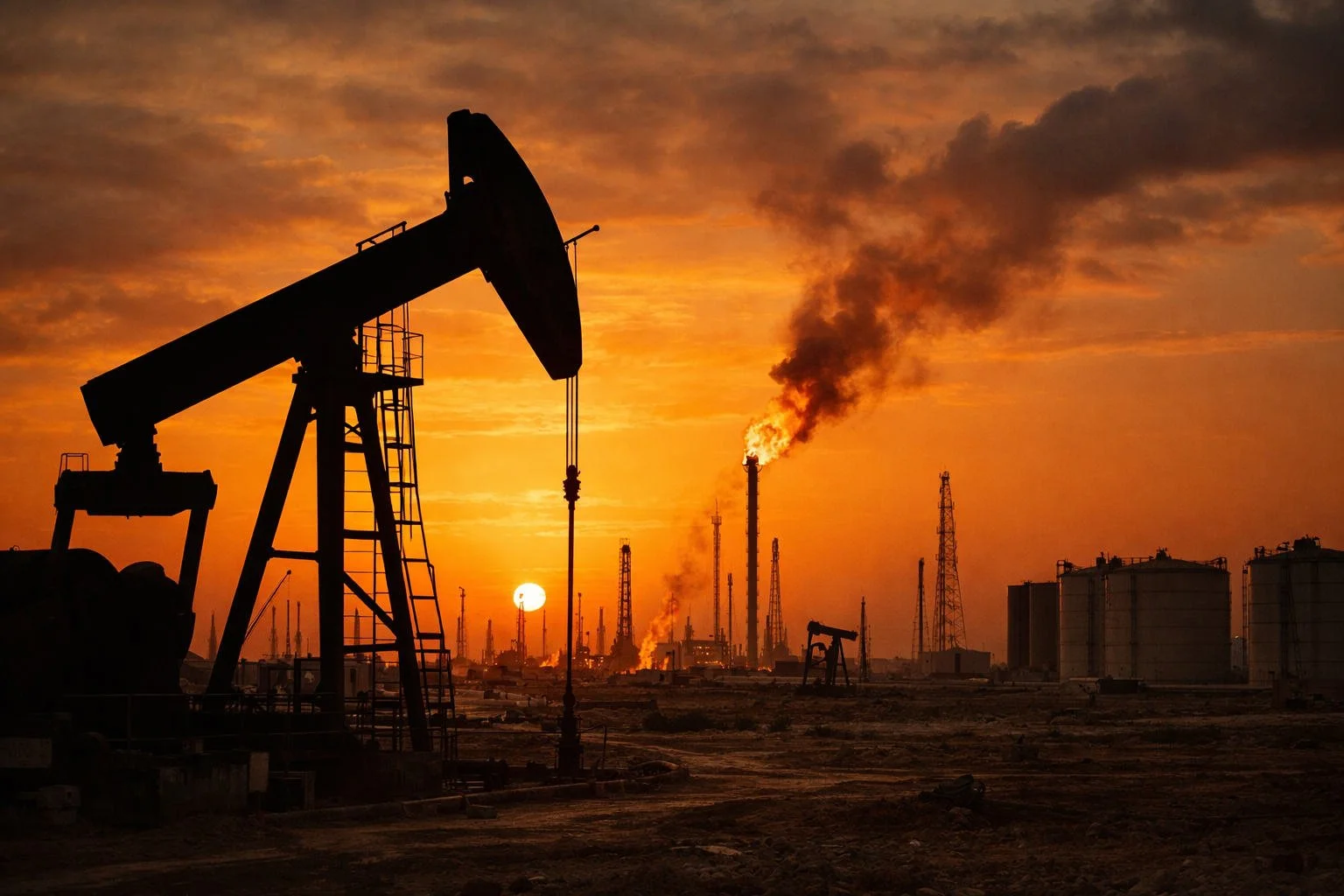
The most dangerous oil story in the Iran war is not the daily headline. It is the structure of the conflict itself.
A lot of war coverage treats oil like a side effect. Missiles fly, ships burn, refineries get hit, and crude spikes. Then the market waits for the next update. But the deeper problem is that this war has exposed how much of the global economy still depends on one narrow piece of water, and how hard it is to restore normality once that waterway stops behaving like a normal shipping lane. That broader strategic point has been made powerfully in recent commentary on the war, and current reporting now shows the market beginning to confront it in real time.
This was never just an air war
The early hope behind the campaign against Iran appears to have been that heavy bombing, leadership decapitation, and military shock might produce a quick political collapse or at least a fast strategic capitulation. That broad assumption has not held up well. U.S. intelligence reporting cited by Reuters says Iran’s government is not at immediate risk of collapse, which means the war’s political endgame looks much less tidy than its advocates likely hoped. Bret Devereaux’s analysis reaches a similar conclusion from a strategic angle: once a quick-regime-collapse gamble fails, the conflict naturally shifts toward the one place where Iran still has enormous leverage over the outside world.
That place is the Strait of Hormuz. And once the war moved there, the whole economic equation changed. Reuters reports that the conflict has already disrupted about 500 million barrels of energy flows since February 28, while the IEA has described the current shock as the largest oil-supply disruption in history. This is no longer a market pricing abstract fear. It is pricing a real chokepoint crisis.
The war’s center of gravity is now Hormuz
Hormuz matters because too much still runs through it. Roughly one-fifth of the world’s oil and LNG normally transits the strait. When that flow seizes up, the effects do not stay in the Gulf. They move through refinery runs, freight prices, petrochemicals, fertilizer markets, power systems, and food costs. That is why this war has felt so much bigger economically than the map alone might suggest.
What makes the crisis especially dangerous is that Iran does not need to dominate the U.S. military to create chaos. It only needs to keep Hormuz politically and commercially unstable. Reuters reported this week that Iran told the United Nations and the International Maritime Organization that “non-hostile” ships may transit the strait if they coordinate with Iranian authorities and avoid involvement in hostile acts. That is not freedom of navigation. That is Iran asserting a gatekeeper role over one of the world’s most important energy arteries.
That distinction matters enormously for oil. A market can handle danger better than it can handle uncertainty over who controls access. Once passage depends on political permission rather than normal commercial rules, the route may be technically open for some vessels while still being functionally broken for the market as a whole. That keeps the risk premium high even when the most dramatic headlines cool off.
Reopening is not the same thing as normalization
One of the biggest mistakes in oil-market thinking is assuming that a partial reopening of Hormuz would mean the crisis is over. It would not.
Even if a few more ships begin moving, normality does not return instantly. Iraq’s output has already plunged as storage fills and blocked exports force production cuts, according to Reuters. That is a reminder that oil systems are not infinitely flexible. Fields, storage tanks, tankers, insurance contracts, credit lines, and refinery schedules all have to work together. When the chokepoint fails, those systems start to break in sequence.
That is why oil can stay high even after the shooting eases. Traders are not only pricing whether ships are moving today. They are pricing how many barrels are trapped, how quickly producers can restart, how willing insurers are to cover voyages, and whether refiners in Asia can trust deliveries weeks from now. Once a supply chain has been bent this hard, it does not snap neatly back into place.
The emergency fixes are too small and too slow
Governments have not been idle. They are releasing strategic reserves, leaning on alternative suppliers, and looking for logistical workarounds. The problem is that the scale of the disruption is much bigger than the scale of the relief.
Reuters reported that the IEA’s record 400 million-barrel emergency stock release is only a partial band-aid. The same reporting said coordinated reserve draws may flow at only about 1.2 million barrels per day at maximum pace, against a disruption previously estimated in the 15 million to 20 million barrel-per-day range. Even worse for Asia, U.S. reserve barrels can take 40 to 60 days to arrive. In other words, governments can announce relief now while the physical market stays painfully short for weeks.
That lag is crucial. Asia imports over 80% of the crude that normally passes through Hormuz, and Reuters reports countries there are already revisiting COVID-era fuel-saving policies because the shock is biting so hard. That means the world’s most exposed region is not waiting for the market to sort itself out. It is already acting like a real energy emergency has begun.
Even $100 oil may not be the real problem
A lot of people still talk about oil as if the crisis is “whether crude stays around $100.” That may actually understate the danger.
BlackRock CEO Larry Fink warned oil could hit $150 if Iran remains a threat to trade and Hormuz stays dangerous, and he said sustained oil at that level would trigger a global recession. That warning matters because it shifts the conversation from “war premium” to “macro damage.” At $150 oil, the issue stops being energy-sector winners and losers. It becomes global demand destruction, tighter credit, weaker consumers, and broad recession risk.
The worrying part is that the ingredients for that scenario are still present. Reuters reported that efforts to plug the gap remain inadequate, that up to 20 million barrels per day have effectively been removed from normal market circulation, and that executives at CERAWeek were openly warning the supply response is falling well short. That is not what a temporary spike looks like. That is what a structurally stressed market looks like.
Why the market still may be underpricing duration
Markets are usually good at pricing the first shock and much worse at pricing duration. That may be happening again here.
If traders believe the war is still fundamentally short, then every peace rumor can knock oil lower and every military scare can knock it higher, without forcing a deeper revaluation. But if the strategic reality is that Iran’s regime is still standing, Hormuz remains politically constrained, and no easy military solution exists, then time starts working against the bulls in equities and the bears in crude. Devereaux’s core strategic argument is that once the quick-win gamble fails, the war becomes a trap centered on the Gulf chokepoint. Current Reuters reporting strongly supports the material side of that argument: blocked flows, collapsing regional output, inadequate workarounds, and rising conservation measures across Asia.
That matters because duration changes everything. A two-week panic is one kind of oil story. A month or two of unreliable Hormuz traffic is another. A semi-permanent regime in which access depends on Iranian approval, military risk, and selective commercial routing is something else again. At that point, the market is not waiting for the next airstrike. It is repricing what “normal oil” means.
The food and fuel spillovers are part of the same story
Another reason this war could keep oil high is that it is not just an oil disruption. It is a broader trade and input disruption.
Reuters has reported that the Hormuz crisis is also hitting fertilizer flows and industrial inputs, while Asian governments are already exploring emergency demand-reduction measures. When energy shocks widen into fertilizer, petrochemical, and freight shocks, the economic pain becomes more persistent because it spreads through multiple supply chains at once. That keeps pressure on policymakers and raises the odds that governments respond with subsidies, stock draws, or demand controls rather than a clean return to normal market pricing.
That, in turn, feeds back into crude. If countries are scrambling to conserve fuel, subsidize consumers, and secure emergency cargoes, the market understands that the shortage is not just financial. It is physical. And physical shortages are the kind that tend to keep prices elevated even after speculative froth burns off.
What would actually push oil back down?
For oil to fall meaningfully and stay down, the market would need more than encouraging diplomatic language. It would need to believe that Hormuz is once again functioning as a normal commercial route, not a politically filtered corridor under coercive pressure.
That would likely require several things at once: safer and broader transit, more reliable insurance coverage, visible recovery in Gulf exports, and confidence that Iran is no longer using the strait as its main strategic lever. Right now, Reuters reporting does not point to that kind of clean reset. It points to selective access, trapped output, and emergency measures that are still too small to fill the hole.
So the bearish oil case is possible, but it requires a much better reality than the one currently in front of the market. Until then, every dip risks looking less like the end of the crisis and more like a pause inside a still-broken system.
The real oil story is not the next strike
The most important thing to understand about this war is that oil is no longer trading mainly on tactics. It is trading on strategy.
If the conflict had produced a quick political collapse in Tehran or a fast, reliable reopening of Hormuz, the market could have treated this as a violent but temporary spike. Instead, the political gamble appears to have failed, the chokepoint remains central, and the supply response is still not large or fast enough to restore confidence. That is why crude may stay more expensive, more jumpy, and more dangerous to the global economy than many investors still want to admit.
The daily war headlines will keep changing. The deeper oil problem probably will not. As long as the world’s most important energy artery is functioning more like a contested pressure point than a normal shipping lane, the market has every reason to stay tense. And tense oil markets have a way of staying expensive longer than the first round of optimists expect.
Thanks for reading.