Will Oil Hit $100? The 4 Conditions That Make It More Likely
Oil hitting $100 per barrel isn’t just a scary headline. It’s a psychological “break point” where markets stop thinking in days and start thinking in weeks—and where businesses and consumers begin to feel the damage everywhere (fuel, flights, groceries, shipping).
As of March 2026, Brent has already shown how jumpy the market is. The real question now is: what has to go wrong for $100 oil to become the new normal—at least for a while?
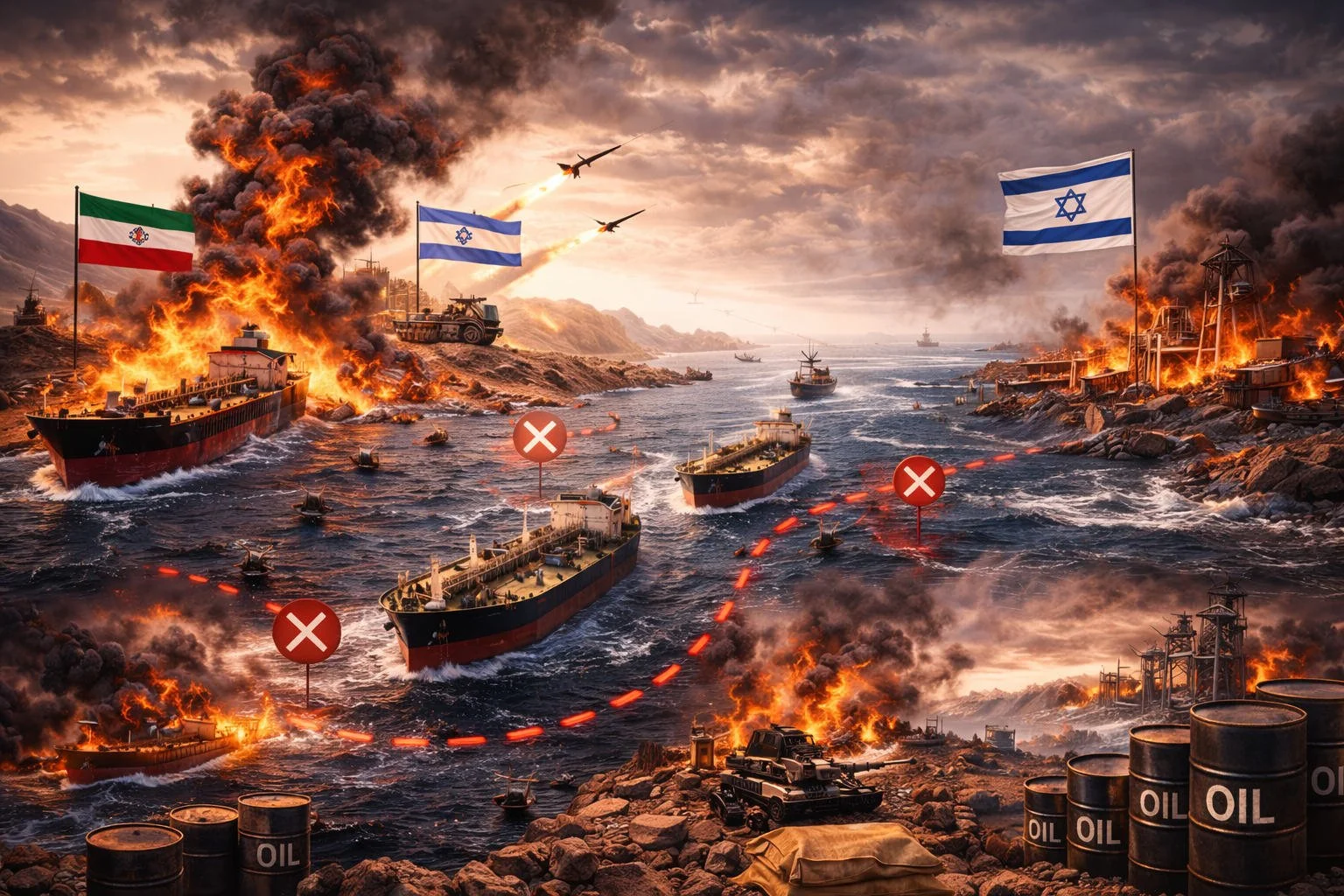
Below are four conditions that make $100+ much more likely if the Strait of Hormuz remains unstable.
Condition 1: The disruption lasts into week three (and doesn’t look like it’s improving)
Oil can spike on day one. But to stay elevated—and punch through $100—you usually need a disruption that lasts long enough for buyers to believe: “This isn’t clearing up quickly.”
Why week three matters:
Week 1 is panic.
Week 2 is “workarounds.”
Week 3 is when the market starts pricing in rationing (shortage-by-price).
In plain terms: if tanker flows aren’t meaningfully restored by the time the world hits that third-week window, traders stop selling rallies and start buying dips—because the baseline assumption flips from “temporary mess” to “ongoing constraint.”
Condition 2: Insurance and shipping economics break the route—even without a formal “closure”
This is the sneaky one that can push prices higher fast.
The Strait of Hormuz doesn’t need to be physically blocked for oil to stop moving. It just needs to become:
too dangerous to insure,
too expensive to ship,
too risky for crews and companies to tolerate.
When that happens, you get a de facto closure: ships sit at anchor, rates explode, and “available supply” becomes “supply that can actually arrive.”
If war-risk coverage stays canceled (or returns only at punishing cost), the result isn’t just higher oil prices—it’s higher delivered oil prices, which is what refiners and importers actually pay. That can keep a war premium locked into the market long enough to push $100 from “possible” to “probable.”
Condition 3: It stops being only a shipping problem and becomes a real supply outage problem
Markets can handle delays better than they can handle lost barrels.
Oil gets much closer to $100 when headlines shift from:
“tankers are avoiding the route”
to:“refineries are shutting,”
“export terminals are hit,”
“fields are offline,”
“countries are force majeure-ing cargoes,”
“output is being shut in.”
The moment major regional producers start losing production or export capacity—not just shipping convenience—buyers scramble for replacement cargoes globally, and the bidding war begins.
Even a “partial” outage becomes a global issue because the Gulf region isn’t just another supplier. It’s the shock absorber for the entire system. If outages spread while shipping is already impaired, you get a stacked crisis: less oil + harder delivery + higher fear.
Condition 4: The usual shock absorbers don’t work (or can’t be accessed)
Oil tends to stay below $100 when the market believes there are credible backstops:
spare capacity can come online quickly,
alternative routes can move enough volume,
strategic reserves can calm things down,
inventories can bridge the gap.
But $100 becomes much more likely when traders believe those backstops are weak, slow, or trapped.
Here’s what that looks like in practice:
Producers may have spare capacity, but it’s hard to use if export routes are constrained.
Output increases might be too small relative to perceived losses.
Strategic reserve releases can blunt spikes, but they don’t fix a sustained shipping/insurance breakdown.
Inventories can cushion a short disruption, but they get less comforting the longer the crisis drags on.
This is where oil markets get “loud.” Once the belief spreads that the system can’t quickly add supply—or can’t reliably move it—prices start doing the rationing for policymakers.
The quick gut-check: the “$100 checklist”
Oil is more likely to hit $100 if you see three or four of these at once:
Tanker traffic remains heavily reduced beyond ~2 weeks
War-risk insurance stays canceled or returns only at extreme premiums
Multiple energy facilities are offline (not just threatened)
Gulf producers begin shutting in output because exports can’t move
Governments start openly discussing emergency measures and coordinated releases
Each “good news” headline fails to pull prices down for more than a few hours
What would keep oil under $100?
Even now, there are realistic off-ramps:
A clear de-escalation that restores shipping confidence quickly
Insurers reinstating coverage in a way shipowners accept
Naval escort/route security stabilizing the corridor
Coordinated strategic reserve releases that convince the market the crunch is manageable
If those happen early, the market can cool fast. If they don’t—and the disruption stretches into that third-week zone—$100 starts looking less like a sensational number and more like a stress-test outcome.