The Bobby Flay Way to Order a Better Burger Anywhere
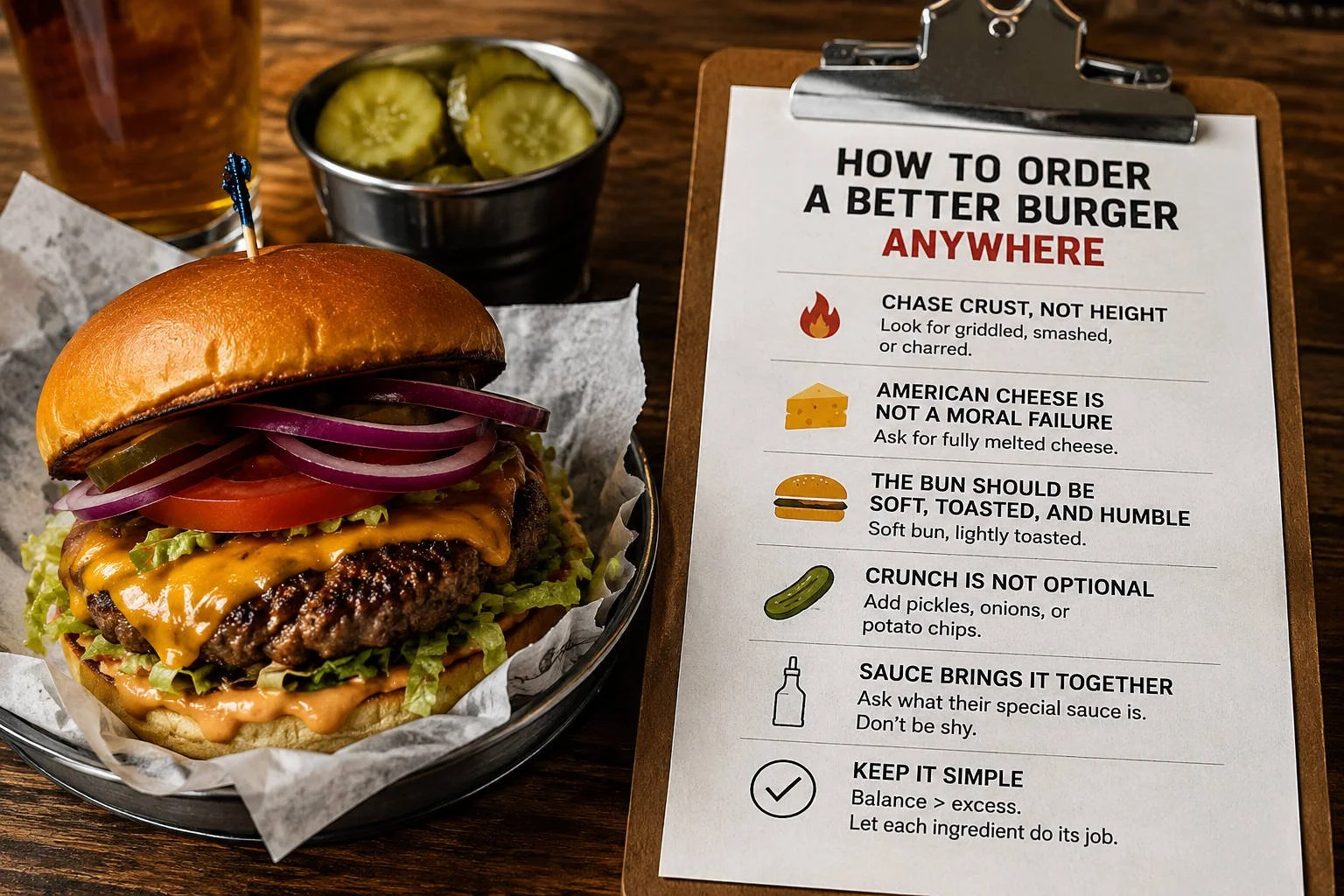
A bad burger is one of life’s most irritating betrayals. It looks promising. It arrives tall. It has a steak knife stabbed through it like someone performed emergency surgery. Then you take one bite and discover a dry patty, cold cheese, wet lettuce, sad tomato, and a bun so hard it could be used to defend a small village.
This is why Bobby Flay is useful.
Not because every burger needs Southwestern fireworks, chipotle aioli, and a Food Network lighting package. But because Bobby Flay understands the burger as a system. Patty, heat, cheese, bun, sauce, crunch, acid, timing. A burger is not improved by randomly stacking expensive things until it becomes a leaning tower of menu insecurity. It is improved by making every part do a job.
Flay’s own burger world gives away the playbook. His Bobby’s Burgers menu features the Crunchburger with American cheese, potato chips, and Bobby’s Sauce; the Bacon Crunchburger adds bacon; the BBQ Smokehouse uses bacon, American cheese, a buttermilk onion ring, and chipotle BBQ sauce; and the Nacho Burger uses queso, pickled jalapeños, blue corn tortilla chips, and tomato chipotle salsa. The theme is not subtle, because subtlety left when potato chips entered the sandwich: beef, melt, sauce, crunch, heat, acid, soft bun.
That is the Bobby Flay way to order a better burger anywhere: stop asking for “everything” and start asking for balance.
Rule 1: Chase Crust, Not Height
The best burger on the menu is usually not the tallest one. Height is often a warning sign. Tall burgers are built for photos, not mouths. If you need to unhinge your jaw like a python at a county fair, the restaurant has already failed you.
Flay’s burger advice starts with heat. His Perfect Burger recipe calls for a hot grill, grill pan, sauté pan, or preferably cast iron, cooking until the burger is golden brown and slightly charred before flipping. His broader cooking advice is just as blunt: home cooks often do not get pans hot enough, and crowding a pan leads to steaming instead of searing.
So when ordering, look for words like griddled, smashed, charred, flat-top, seared, or wood-grilled. These words suggest the kitchen cares about crust, which is where burger flavor stops being theoretical and starts paying rent.
Avoid the giant “pub burger” if the place looks like it cooks every patty to the emotional texture of a hockey puck. A thick burger can be great, yes. It can also become a gray meat pillow hiding under bacon jam. If you do not trust the kitchen, order the smash burger. Thin patties with crust are harder to ruin than a giant beef boulder that must be cooked through the center while the bun ages nearby.
Rule 2: American Cheese Is Not a Moral Failure
There is always someone who wants to perform sophistication at the burger table. “Do they have aged Gruyère?” they ask, as if the burger is applying to graduate school.
Calm down.
Flay has openly defended American cheese for burgers, and his burger tips emphasize fully melted American cheese, often two slices, because it melts properly and becomes part of the burger instead of sitting on top like a smug dairy postcard. His Crunchburger recipe also adds cheese during the last minute and covers the burger to melt it properly.
The lesson is not that American cheese is always the only choice. Blue cheese works. Cheddar works. Pepper jack works. Queso works. But the cheese has to melt, and it has to make sense.
A cold slice of sharp cheddar on a burger is not “artisan.” It is a missed opportunity with dairy.
Order American when you want classic melt. Order pepper jack when you want heat. Order blue cheese only if the burger has something sweet or acidic to keep it from becoming a salty funk avalanche. Order queso when the burger is already going nacho, like Flay’s Nacho Burger does with queso, pickled jalapeños, blue corn tortilla chips, and tomato chipotle salsa.
The Bobby Flay move is not fancy cheese. It is useful cheese.
Rule 3: The Bun Should Be Soft, Toasted, and Humble
A burger bun has one job: hold the burger and stay out of the way. It is not there to audition for a bread documentary.
Flay’s burger tips reject hard, crusty rolls and favor a soft, seeded bun. His Crunchburger recipe also includes a cook’s note saying lightly toasted buns have better taste and texture. This is the kind of advice that sounds obvious until you bite into a burger served on ciabatta and wonder why your sandwich is fighting back.
When ordering, ask yourself one question: Will this bun compress?
A good burger bun should squish slightly. It should not shatter. It should not slide. It should not absorb sauce until it becomes pudding. It should not be so sweet that the burger tastes like beef inside a doughnut.
Best bun signals: potato roll, sesame bun, soft brioche used sparingly, classic seeded bun.
Worst bun signals: ciabatta, pretzel bun on a delicate burger, “artisan roll,” or anything that looks like it could survive a minor flood.
If the menu says toasted bun, good. If it does not, ask for it toasted. Not aggressively grilled into a cracker. Toasted. The line between “structured” and “bread roof tile” is thinner than society admits.
Rule 4: Crunch Is Not Optional
Bobby Flay’s most famous burger idea is the Crunchburger, and the name is not exactly a riddle written by monks. The Crunchburger uses potato chips inside the burger, and Flay’s Food Network recipe literally instructs you to pile on potato chips before serving immediately. Bon Appétit also notes that he likes to “crunchify” burgers with thin potato chips.
This is the burger lesson everyone should steal: texture matters.
A burger without crunch is just soft meat, soft cheese, soft bun, soft sauce, and emotional softness. That is not dinner. That is a nap with condiments.
Order crunch wherever you can get it:
Pickles.
Raw red onion.
Fried onions.
Onion ring.
Potato chips.
Tortilla chips.
Slaw.
Shredded lettuce, if it is crisp and not swamp lettuce.
Pickled jalapeños.
Crispy bacon, but only if it is actually crisp.
This is why the BBQ Smokehouse Burger on Flay’s menu uses a buttermilk onion ring, and why the Nacho Burger uses blue corn tortilla chips. They are not there for decoration. They are there because burgers need texture or they become meatloaf cosplay.
If a restaurant has potato chips, ask for them on the burger. If it has onion rings, put one on the burger. If it has slaw, use it for crunch and acidity. If it has pickled jalapeños, congratulations, the burger found a personality.
Rule 5: Sauce Should Solve a Problem, Not Create a Swamp
Bad burger ordering often begins with sauce enthusiasm. Garlic aioli, barbecue sauce, special sauce, ranch, ketchup, mustard, hot honey, chipotle mayo, truffle sauce, and suddenly the burger is no longer food. It is a condiment landslide with beef somewhere under the rubble.
Flay uses sauces, but he uses them with direction. His Crunchburger uses horseradish mustard mayonnaise in the Food Network recipe. Bobby’s Burgers uses Bobby’s Sauce on several burgers. The BBQ Smokehouse uses chipotle BBQ sauce. The Nacho Burger uses tomato chipotle salsa. These are not random sauces. They create identity.
When ordering, choose one main sauce personality:
Classic: special sauce, mayo-mustard, ketchup-mustard.
Smoky: chipotle BBQ, smoky mayo.
Spicy: jalapeño mayo, hot sauce mayo, chipotle sauce.
Sharp: mustard, horseradish mayo, pickle-heavy sauce.
Rich: aioli, queso, blue cheese dressing.
Then stop.
The sauce should answer the burger’s weakness. Dry burger? Mayo-based sauce. Too rich? Mustard or pickles. Too plain? Chipotle or jalapeños. Too sweet? Add acid or heat.
Ask for sauce on the side if the restaurant is a known sauce criminal. Some places apply sauce like they are trying to waterproof the sandwich.
Rule 6: Tomato Is Seasonal, Lettuce Is Structural, and Both Are Usually Overrated
Bobby Flay’s tomato advice is quietly brutal: tomatoes belong on the burger only if they are in season. Otherwise, he recommends alternatives like coleslaw, pickled jalapeños, chipotle ketchup, and thinly sliced red onion. Finally, a celebrity chef brave enough to say winter tomato tastes like wet packing material.
This is a major ordering lesson.
Do not automatically accept lettuce and tomato just because they are “classic.” Bad lettuce adds water. Bad tomato adds cold sadness. Together they can turn a burger into a damp produce apology.
Use lettuce if it adds crunch or structure. Romaine, shredded iceberg, or crisp leaf lettuce can help. Limp lettuce belongs in a witness protection program.
Use tomato only if the restaurant looks like it cares. A thick in-season tomato on a summer burger can be glorious. A pale February tomato is just a red circle of disappointment.
Better freshness options: pickles, onions, slaw, pickled jalapeños, salsa, relish, arugula if it is actually fresh, or cabbage.
A better burger is often not “lettuce, tomato, onion.” It is pickle, onion, crunch, sauce.
Rule 7: Do Not Let the Patty Become Meatloaf
Flay is very clear about not stuffing the burger patty with secret ingredients. In his Bon Appétit tips, he says all the patty needs is salt and pepper on both sides, and that mixing in secret ingredients turns it into meatloaf. Beautifully rude. Correct.
This helps when ordering.
Be suspicious of burgers that brag about the patty being mixed with onions, herbs, eggs, breadcrumbs, steak sauce, Worcestershire, cheese, and the chef’s grandfather’s unresolved feelings. That may be delicious, but it is not necessarily a great burger. It may be a grilled meatloaf sandwich wearing a bun.
The better move is a simple beef patty, properly seasoned, properly seared, then topped intelligently.
If the menu is trying too hard inside the meat, order something simpler. A good cheeseburger beats a “signature blend” that tastes like someone lost a seasoning drawer inside ground beef.
Rule 8: If There Is a House Burger, Usually Order That First
Every burger place has a burger that reveals what it thinks a burger is. Order that before you start customizing like a maniac.
At Bobby’s Burgers, the Crunchburger is the thesis statement: American cheese, potato chips, Bobby’s Sauce. The Palace Classic is American cheese, pickle, lettuce, tomato, and Bobby’s Sauce. The whole menu teaches the house logic before it starts wandering into BBQ Smokehouse, Nacho Burger, Blue + Bacon, and Brunch Burger territory.
At any restaurant, the house burger usually tells you the kitchen’s default assumptions. If the house burger is balanced, you can trust the menu more. If the house burger has six toppings and no acid, prepare yourself emotionally.
Order the signature burger first if it sounds focused. Modify only if needed. Add pickles. Add crunch. Ask for sauce on the side. Swap cheese if it makes sense.
Do not start by building a custom monster unless the place is designed for that. Customization is powerful. It is also how adults end up eating avocado, egg, bacon, blue cheese, BBQ sauce, onion rings, mushrooms, and jalapeños on one burger while claiming the bun “fell apart.” Yes, because you built a wet cargo ship.
Rule 9: Bacon Is a Tool, Not a Personality
Bacon can improve a burger. Bacon can also ruin a burger by making it too salty, too chewy, too greasy, or too dominant.
Flay’s Bacon Crunchburger works because bacon joins American cheese, potato chips, and Bobby’s Sauce. The bacon is part of a texture-and-salt system. It is not just tossed on because menus know people will pay extra for strips of pork nostalgia.
When ordering bacon, ask yourself:
Is it crisp?
Does the burger need more salt?
Is there enough acid to balance it?
Is the sauce already smoky or sweet?
If the burger already has BBQ sauce, cheese, onion rings, and a rich bun, bacon may push it into “county fair chair nap” territory.
If the burger is simple — patty, American, pickles, sauce — bacon can work beautifully.
The Bobby Flay move is not “always add bacon.” It is “add bacon when it has a job.”
Rule 10: Add Heat Carefully, Like an Adult
Bobby Flay’s cooking style loves chiles, spice, Southwestern flavor, and sauces with heat. But he does not just throw hot sauce at food and call it a personality. His menus use pickled jalapeños, chipotle BBQ, tomato chipotle salsa, and queso in specific burger builds.
Heat on a burger should wake it up, not hold it hostage.
Best heat options:
Pickled jalapeños.
Chipotle mayo.
Hot sauce mayo.
Pepper jack cheese.
Salsa.
Green chile.
Spicy mustard.
Avoid stacking every heat source unless you are eating for social media or unresolved masculinity. A burger with pepper jack, jalapeños, hot sauce, spicy mayo, and hot honey is no longer a burger. It is a cry for help with fries.
The best heat is balanced by fat, acid, and crunch. Nacho-style burger? Queso and pickled jalapeños. BBQ burger? Chipotle sauce and onion ring. Classic burger? Mustard, pickles, maybe jalapeños.
Heat should sharpen the burger, not turn it into an endurance sport.
Rule 11: Order for Mouthfeel, Not Menu Length
A good burger has a sequence:
Soft bun.
Juicy patty.
Melted cheese.
Creamy sauce.
Crunch.
Acid.
Salt.
Maybe heat.
That is it. That is the whole sensory committee.
Bad burgers fail because they repeat the same texture. Soft bun, soft patty, soft cheese, soft mushrooms, soft onions, soft avocado. Congratulations, you ordered baby food with grill marks.
When looking at a menu, identify what texture each topping brings. Mushrooms bring umami but no crunch. Avocado brings fat but no structure. Fried onions bring crunch. Pickles bring snap and acid. Slaw brings crunch, moisture, and tang. Chips bring crunch. Bacon brings salt and crunch if cooked properly, rubber sadness if not.
Build contrast. Not chaos.
Rule 12: At a Diner, Order the Classic Like You Mean It
Diners are where the Bobby Flay method shines because the ingredients are usually simple.
Order: cheeseburger, American cheese, toasted bun, pickles, raw onion, mustard and mayo or special sauce, lettuce only if crisp.
If they have potato chips, put a few inside. Yes, inside. Do not be afraid. The chip is not going to hurt you. It has been waiting its whole life for this promotion.
Skip tomato unless it is summer or the diner looks unusually committed to produce. Add bacon only if the diner cooks it crisp. If the menu has a patty melt, consider it, because griddled bread, melted cheese, onions, and beef are basically the burger’s wiser older cousin.
Rule 13: At a Sports Bar, Remove Three Things
Sports bars love burgers that sound like rejected wrestling names: The Ultimate Inferno Bacon Ranch BBQ Mac Attack Burger. These burgers are designed by committee and regret.
The Bobby Flay way at a sports bar is to simplify.
Start with the burger that has the best cooking method. Smash burger, griddle burger, or house cheeseburger. Then remove the nonsense.
Keep: cheese, pickles, onion, one sauce, one crunchy topping.
Remove: extra sauce, excessive lettuce, soggy tomato, second fried item, unnecessary egg, and anything called “loaded” unless you are emotionally prepared.
If the burger has onion rings, BBQ sauce, bacon, cheese, and ranch, ask for ranch on the side or skip it. If it has mushrooms, Swiss, and garlic mayo, add pickles or mustard. If it has blue cheese and bacon, add red onion or pickled jalapeños for contrast.
You are not insulting the kitchen. You are saving the burger from its own résumé.
Rule 14: At Fast Casual, Use the Topping Bar Like a Grown-Up
Fast-casual burger places can be excellent because they let you customize. They can also become burger clown college because people panic and add everything free.
The Flay template:
American cheese.
Pickles.
Raw or grilled onion.
One sauce.
One crunch.
One heat or acid element.
That is enough.
Do not add lettuce, tomato, grilled mushrooms, grilled onions, raw onions, jalapeños, relish, mayo, ketchup, mustard, BBQ sauce, and ranch just because the menu board offers them. Free toppings are not a dare. They are options. Adults understand options. Children make condiment soup.
Rule 15: At a Fancy Restaurant, Beware the Burger Trying to Impress Itself
Fancy restaurant burgers often have excellent meat and deeply questionable judgment. Wagyu. Brioche. Onion jam. Aioli. Aged cheddar. Bacon. Fried egg. Foie gras. Truffle. A $28 price tag and absolutely no crunch.
This is not always bad. Some fancy burgers are great. But a fancy burger can get so rich it forgets to be a burger.
Order it Bobby-style by adding contrast:
Ask for extra pickles.
Ask for mustard.
Ask for the bun toasted.
Ask for sauce on the side.
If it has onion jam, add raw onion or pickles.
If it has blue cheese, add something acidic.
If it has a fried egg, make sure the burger is not also loaded with three other rich toppings.
A fancy burger should still be eatable with two hands. If it requires a fork, structural engineering, and emotional closure, order the steak frites and move on.
The Bobby Flay Burger Order Formula
Here is the universal order:
One properly cooked beef patty, American cheese or one useful cheese, soft toasted bun, pickles, onion, one sauce, one crunch, optional heat.
That formula works at diners, chains, sports bars, food trucks, hotel restaurants, and fancy places trying too hard.
The default Bobby-style order:
Cheeseburger with American cheese, toasted bun, pickles, thin onion, special sauce or mustard mayo, and potato chips or crispy onions for crunch.
The spicy Bobby-style order:
Cheeseburger with American or pepper jack, pickled jalapeños, chipotle mayo or salsa, crispy tortilla chips or onion ring, toasted bun.
The BBQ Bobby-style order:
Cheeseburger with American, bacon only if crisp, onion ring, chipotle BBQ, pickles, toasted bun.
The blue cheese Bobby-style order:
Burger with blue cheese, bacon, red onion, pickles or peppery greens, toasted bun. No sweet jam unless there is enough acid.
The brunch Bobby-style order:
Burger with American cheese, crisp bacon, fried egg, pickles or hot sauce, toasted bun. Skip extra mayo unless you enjoy yolk-and-mayo flood conditions.
Order for Balance, Not Bragging Rights
The Bobby Flay way to order a better burger anywhere is not about copying one exact burger. It is about understanding why his burgers work.
He wants beefy patties, high heat, crust, simple seasoning, melted cheese, soft buns, crunch, sauce, and toppings that create contrast. His Crunchburger is famous because it solves the burger’s most common problem: too much softness. Potato chips are not a gimmick. They are a texture correction with salt.
A better burger is not taller. It is smarter.
So stop ordering the burger with the most toppings like you are collecting merit badges. Order the burger with the best structure. Chase crust. Demand melted cheese. Choose a soft toasted bun. Add crunch. Add acid. Use one sauce. Skip winter tomato unless you enjoy damp disappointment. Put heat where it helps. Treat bacon like a tool, not a religion.
That is how you order a better burger anywhere.
Not by asking for everything.
By knowing what the burger is missing and fixing it before it arrives wearing a steak knife and a bad attitude.