Why McDonald’s Fries Are More Emotionally Powerful Than Most Relationships
McDonald’s fries have no business being this important. They are strips of potato cooked in oil and salted by someone wearing a visor under fluorescent lighting. They are not rare. They are not handmade by an elderly potato monk on a windswept hill. They do not arrive with truffle shavings, aioli foam, or a server named Luca explaining the soil composition of Idaho.
And yet, somehow, they matter.
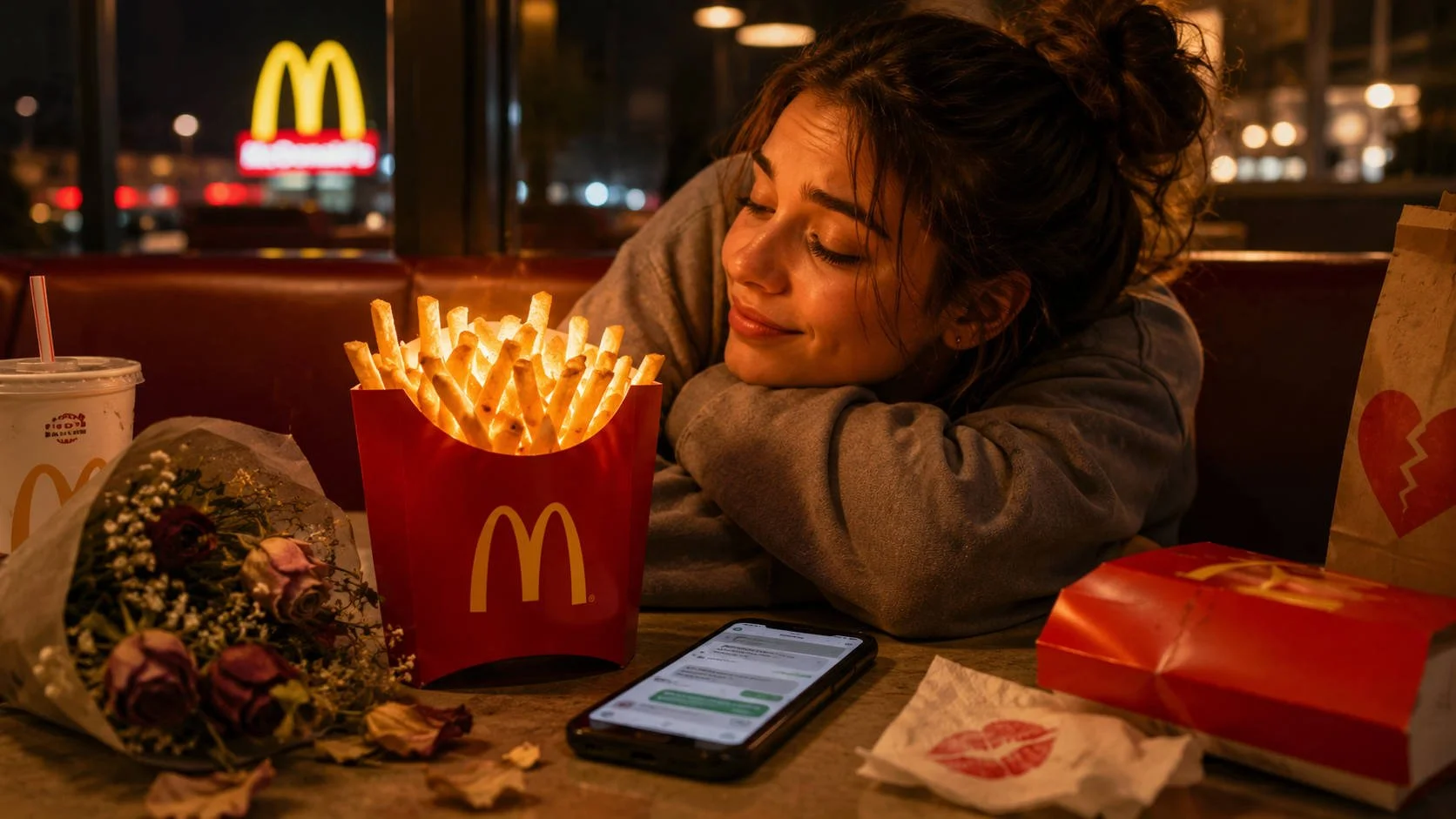
A hot McDonald’s fry can make a fully grown adult sit silently in a parked car and feel, briefly, that life has structure. A fresh fry pulled from the bag before you even get home is not a side dish. It is an emotional support system with sodium. It is a tiny golden therapy session, except cheaper than therapy and arguably more consistent.
Most relationships ask for communication, vulnerability, compromise, timing, effort, and the occasional apology. McDonald’s fries ask only that you eat them before they become cold and useless, which honestly is a much clearer contract.
McDonald’s calls them World Famous Fries, and the official description leans into the whole appeal: crispy and golden outside, fluffy inside, made with potato varieties such as Russet Burbank and Shepody, with a small serving listed at 230 calories. That is not a side order. That is a brand identity in a red carton.
McDonald’s Fries Are Built on Consistency, Which Is More Than We Can Say for Darren
The first reason McDonald’s fries are emotionally powerful is consistency. You know what you are getting. That alone makes them more reliable than many people named in group chats.
McDonald’s says its suppliers peel, cut, blanch, dry, partially fry, and quickly freeze the potatoes before they are shipped to restaurants, where they are cooked in a canola-blend oil. The company also says the in-restaurant process is tightly defined, including cook time and salt amount, so the fries taste hot and consistent. Imagine applying that level of operational discipline to dating. Society would be unrecognizable.
Consistency creates trust. Trust creates attachment. Attachment creates the person in the passenger seat saying, “Can I have just a few?” before eating half the order like a raccoon with soft hands.
A McDonald’s fry does not surprise you with “I’m not really looking for anything serious.” It does not suddenly announce it needs space. It does not forget your birthday. It shows up salty, hot, and exactly the shape your brain expected.
That is emotional power.
The Smell Is Doing Psychological Black Magic
The McDonald’s fry smell is not normal food smell. It is a fog machine for memory. You can be walking past a McDonald’s, not hungry, living your adult life badly but with dignity, and then the fry smell hits. Suddenly you are eight years old, in the back seat, holding a Happy Meal, believing the world is basically fair because there is a toy and no bills.
There is science behind this little potato haunting. Harvard explains that smell signals travel quickly to brain regions involved in emotion and memory, including the amygdala and hippocampus. This helps explain why certain smells can yank memories out of storage like your brain has terrible boundaries.
That is why the fries do not just taste good. They smell like childhood, road trips, airport layovers, post-game meals, late-night bad decisions, divorced-dad weekends, mall food courts, and the specific feeling of eating in a car while the paper bag steams your windshield.
A salad could never. A salad smells like responsibility and wet leaves.
The Fries Are Hot for About Seven Minutes, Which Makes Them Romantic
McDonald’s fries have a brutally short prime window. Hot fries are transcendent. Warm fries are acceptable. Cold fries are packing material with a tragic backstory.
This fragile timing makes them more emotionally charged. You have to eat them now. Not later. Not after the burger. Not when you get home. Now. They demand presence. They create urgency. They force mindfulness, except without a wellness app telling you to breathe at a subscription rate.
A hot fry says, “Be here with me.” A cold fry says, “You failed us both.”
This is why people reach into the bag before leaving the parking lot. It is not impatience. It is respect. The fries are at their peak, and you are honoring the peak. That is more emotional intelligence than most office meetings contain.
The Salt Hits Like a Tiny Apology From the Universe
Salt is not just seasoning. Salt is punctuation. It is the difference between potato and experience. McDonald’s fries are designed around that sharp little hit of salt that makes the first fry feel like someone switched the lights on in your brain.
McDonald’s says it adds salt after cooking and that customers can ask for fries without added salt, though some salt transfer may still happen from the bin or scoop. Translation: even the no-salt fries may carry a ghost of the original sin, because the fry station has history.
The salt matters because it announces itself immediately. Sweet foods flirt. Bitter foods make you earn it. Sour foods slap you politely. Salt just walks in and says, “You needed this.”
And sometimes you did.
They Are Not Fancy, Which Is Why They Are Safe
Fancy food carries social pressure. You have to understand it. Pronounce it. Evaluate it. Pretend the foam is doing something. McDonald’s fries require no performance. Nobody asks if you detect notes of hay, smoke, and preserved lemon. Nobody pairs them with a biodynamic orange wine that tastes like a barn got feelings.
You eat them. That is the full ritual.
The fries are democratic in a way expensive food pretends to be while charging $19 for roasted carrots. They belong to kids, parents, teenagers, office workers, night-shift people, travelers, hungover adults, athletes after games, and anyone who has ever said, “I’ll just get fries,” as if that is not one of the most emotionally loaded sentences in food.
McDonald’s history shows fries joined the menu in 1949, replacing potato chips. The company’s own fry story also says fries have been on the McDonald’s menu since the early Kroc-era restaurants, when crews hand-cut potatoes in store. That is a long time for one side item to keep emotionally manipulating civilization.
The Red Carton Is Basically a Tiny Cathedral
The fries taste better from the red carton. This is not up for debate. A pile of fries in a plain bowl is food. Fries in that red McDonald’s sleeve are iconography.
The carton matters because it creates ritual. You see the golden fries sticking out like edible sunbeams. You tug one loose. You burn your fingertips slightly because dignity is not part of the experience. You eat the first fry before anyone else can ask for one. This is ancient human behavior, probably.
The container also turns fries into something shareable and stealable, which are not the same thing. Sharing fries is voluntary. Stealing fries is what happens when someone says, “I don’t want any,” and then begins committing potato crimes.
Every relationship has boundaries. McDonald’s fries reveal who respects them.
The Best Fry Is Always the One You Didn’t Order
McDonald’s fries are more powerful than most relationships because they are often most desirable when they belong to someone else.
You can order your own fries. You should. But the fry stolen from another person’s bag has a forbidden energy. It tastes better because it contains danger, betrayal, and plausible deniability.
“I’m just having one,” says the liar.
No one has ever had one fry. One fry is a legal fiction. One fry is the gateway fry. One fry is the potato equivalent of “quick question” in an email, which is how you know suffering is coming.
This is why couples fight about fries. This is why parents order large fries “for the kids” and then hover nearby like seagulls in fleece. This is why the phrase “I thought you didn’t want fries” is not a question but an indictment.
The Fries Are Engineered to Feel Like Home Anywhere
McDonald’s has more than 45,000 locations in over 100 countries, according to its 2026 first-quarter corporate reporting. That scale matters because the fries become a portable emotional constant. You can be in an unfamiliar city, exhausted, annoyed, lost, and one red carton can make the world briefly feel standardized.
This is not about culinary greatness. It is about emotional geography.
A fry in an airport tastes like survival. A fry on a road trip tastes like freedom. A fry after a kids’ soccer game tastes like surrender. A fry at midnight tastes like you are making choices, possibly not good ones, but choices nonetheless.
McDonald’s fries are not tied to one restaurant. They are tied to the idea that wherever you are, a version of this exact comfort exists nearby, humming under heat lamps and waiting to become a coping mechanism.
The Beef Flavor Thing Is Part of the Weird Sorcery
McDonald’s fries are not just potatoes, oil, and salt in the U.S. The company says suppliers partially fry the cut potatoes in an oil blend that contains beef flavoring to create the recognizable flavor. Food & Wine has also reported that the U.S. fries are not gluten-free because the natural beef flavor contains hydrolyzed wheat and hydrolyzed milk ingredients, which is important for people with allergies or dietary restrictions.
This is where the fry becomes less “simple potato” and more “industrial nostalgia wand.”
You may think you are craving fries. You are actually craving a carefully replicated flavor profile that has been refined across decades, suppliers, oils, potato varieties, freezing systems, fryers, salt shakers, cartons, and childhood memory. Very normal. Very chill. Definitely not a multinational potato spell.
McDonald’s also notes that normal kitchen operations can involve shared equipment and cross-contact, and it does not promote U.S. menu items as vegetarian, vegan, or gluten-free. This is less romantic, yes, but emotionally powerful foods often come with fine print, like relationships and gym memberships.
They Are a Side Dish That Thinks It’s the Main Character
McDonald’s fries are technically a side. This is hilarious. They are about as much of a side as Beyoncé was a member of Destiny’s Child. Yes, structurally correct. Emotionally fraudulent.
People order meals for the fries. People judge the entire McDonald’s trip by fry freshness. The burger can be acceptable, the drink can be cold, the nuggets can be nuggeting, but if the fries are limp, pale, or undersalted, the whole meal feels like betrayal in a paper bag.
A bad fry batch ruins the trip because the fries carry the emotional load. They are the mood. They are the reason the bag smells like hope. They are the thing everyone reaches for first, including the person driving, who should keep both hands on the wheel but has clearly chosen potato destiny.
Cold McDonald’s Fries Teach Us About Impermanence
Nothing explains the fragility of happiness like cold McDonald’s fries.
One minute, they are perfect: crisp, hot, salty, fluffy. Ten minutes later, they are limp little potato regrets, pale and stiff, like tiny edible faxes from a worse timeline.
This is their philosophical power. They force you to confront impermanence. They are Buddhism in a bag, except with canola-blend oil and a drive-thru receipt.
You cannot save them. You cannot truly revive them. Air fryers help, but only in the way texting an ex “hope you’re well” helps. Technically something happened, but the original magic is gone.
This is why hot fries must be eaten immediately. McDonald’s fries do not want to be meal-prepped. They do not want to be brought home respectfully. They want to be consumed in the car, from the bag, with the urgency of someone who understands time is a thief and ketchup is optional.
They Make Adults Feel Like Kids Without Making Them Admit It
One of the great emotional powers of McDonald’s fries is that they let adults access childhood without saying anything embarrassing like “I miss when life was easier.” You just order fries. No confession required.
The fry becomes a time machine small enough to fit in a cup holder.
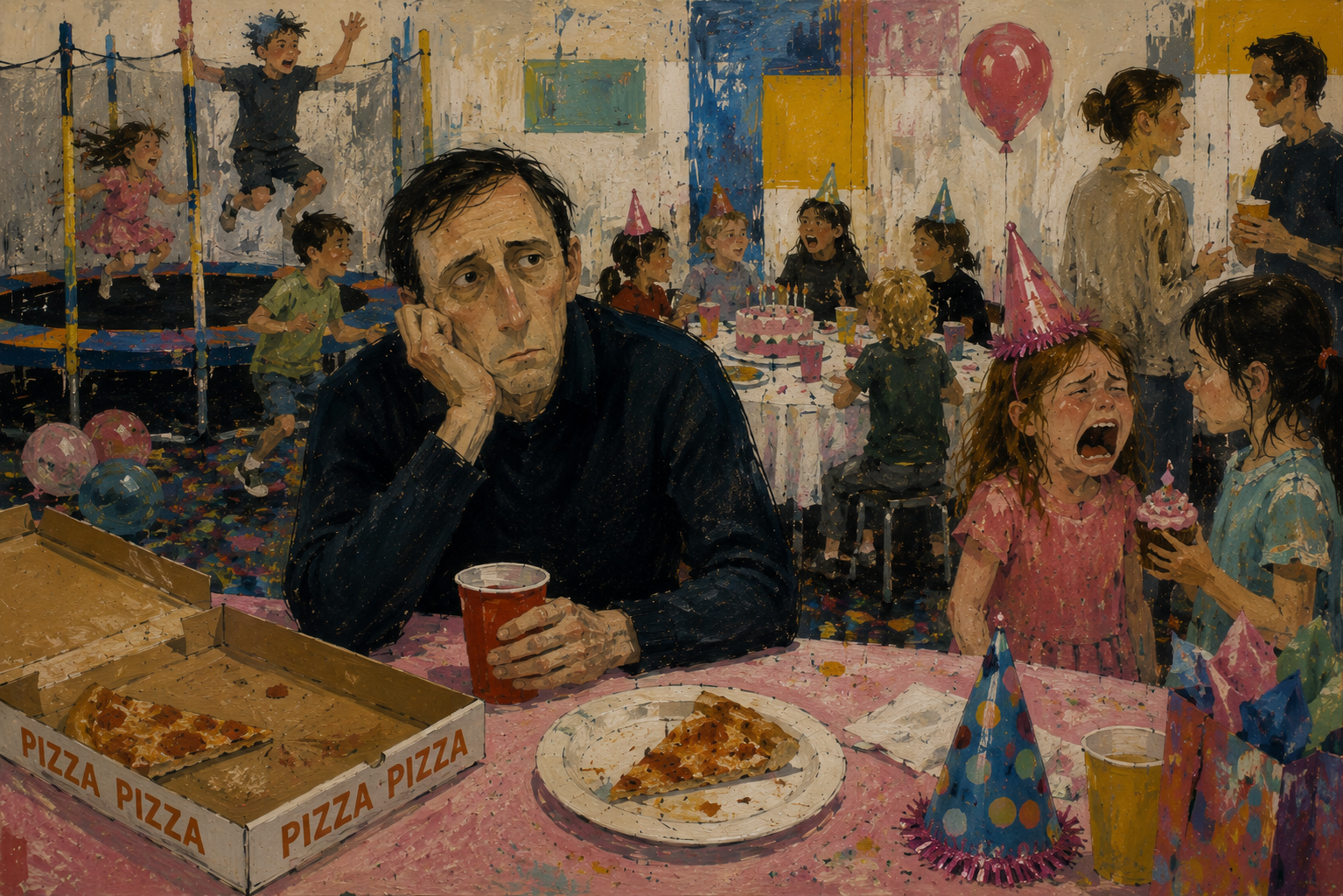
It recalls Happy Meals, ball pits, after-school stops, birthday parties, road trips, grandparents, exhausted parents, early jobs, teenage hangouts, and the first time you realized fries were better when stolen from the bag before the meal was distributed.
This is nostalgia without ceremony. Nobody needs to frame it. Nobody needs to say, “I am experiencing a longing for a simpler time.” You just eat fries and stare at a parking lot. Perfect. Emotionally efficient. Less humiliating than journaling.
They Are Cheap Enough to Feel Casual, Powerful Enough to Feel Necessary
A luxury food has to justify itself. McDonald’s fries do not. They are affordable enough to feel casual and emotionally potent enough to feel essential. That is a dangerous combination.
Expensive food comes with pressure. You must appreciate it. You must taste each bite. You must use words like “balanced” and “bright.” McDonald’s fries do not care if you appreciate them correctly. They just want to be eaten while hot.
That lack of pretension is part of their power. They do not ask you to be better. They meet you where you are: tired, hungry, stressed, driving, parenting, traveling, avoiding cooking, or saying “just a small fry” as if you are not about to experience a minor religious event.
The Real Emotional Formula
The emotional power of McDonald’s fries is not mysterious once you admit the ingredients are bigger than the ingredient list.
The formula is:
Potato.
Oil.
Salt.
Heat.
Smell.
Memory.
Consistency.
Scarcity window.
Red carton.
Car eating.
Childhood.
Shared theft.
Global familiarity.
Zero pretension.
A tiny bit of industrial sorcery.
That is why they work. Not because they are the best fries on Earth in some objective culinary sense. Plenty of restaurants make technically better fries. Thicker fries. Duck-fat fries. Belgian fries. Triple-cooked fries. Fries with aioli, herbs, parmesan, malt vinegar, beef dripping, rosemary, and a small essay about the potato farmer.
Those fries may be better.
They are not more emotionally powerful.
McDonald’s fries are not trying to win a chef competition. They are trying to sit in the passenger seat of your life and smell like everything might be okay for the next four minutes.
McDonald’s Fries Are Emotionally Powerful Because They Never Pretended to Be Just Food
McDonald’s fries are more emotionally powerful than most relationships because they deliver what many relationships struggle with: consistency, warmth, timing, pleasure, familiarity, and salt.
They know who they are. They show up in the same red carton. They smell like memory. They taste like childhood and road trips and small, private relief. They are available almost everywhere, yet their perfect state lasts only minutes, which makes them feel urgent and precious, like joy with a sodium warning.
They are not complicated. That is the point.
A McDonald’s fry does not need to discuss where this is going. It does not need space. It does not ask you to meet its parents. It simply arrives hot, crisp, salty, and emotionally overqualified for a side dish.
And if that is not love, it is at least a more dependable arrangement than whatever Darren was offering.