Why The Great British Bake Off Is the Best Show for Kids Who Want to Bake
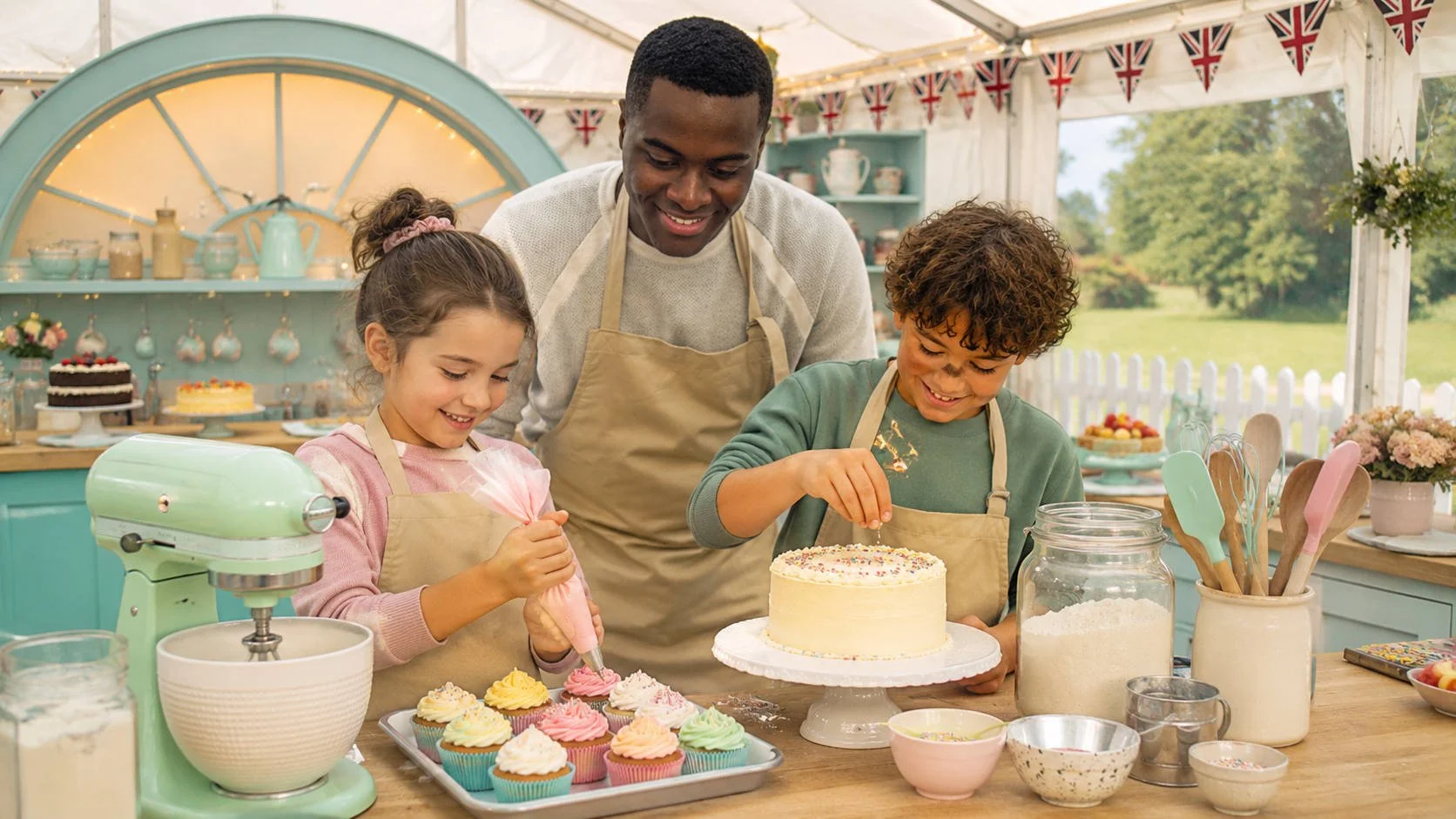
There are children’s cooking shows that treat food like a glitter bomb detonated in a daycare. There are adult cooking competitions where contestants behave like someone hid their mortgage inside a scallop. And then there is The Great British Bake Off, a show where amateur bakers enter a tent, make pastry, quietly panic, receive feedback from adults in linen, and somehow restore your faith in civilization for 58 minutes.
This is why The Great British Bake Off is the best show for kids who want to bake. Not because it is the loudest. Not because someone screams “MY GANACHE!” while a violin shrieks like a Victorian widow. Not because the prize is a private island made of fondant. The show works because it makes baking look hard, human, creative, emotional, and still worth doing.
The official Bake Off site describes the show as a competition where passionate amateur bakers compete across 10 episodes to be crowned the UK’s Best Amateur Baker, with challenges growing more difficult as the series unfolds. Each week tests a different baking skill, because apparently the British looked at cake and thought, “Yes, but could this also become a polite endurance sport?”
For kids who want to bake, that structure is gold. Sticky, flour-dusted, slightly collapsed-in-the-middle gold.
The Great British Bake Off Makes Baking Look Possible, Not Perfect
The worst thing for a kid learning to bake is perfection culture. Nothing kills curiosity faster than watching some dead-eyed internet baking wizard produce a mirror-glaze cake so reflective it could show a child their future student debt.
Bake Off is different. The bakers are good, often extremely good, but they are amateurs. They have normal jobs, normal nerves, normal mistakes, and normal moments where their pastry behaves like it was raised by wolves. The official site emphasizes that the show follows amateur bakers from different backgrounds and corners of Britain as they prove their baking skills over the course of the competition.
That matters for kids. A child watching Bake Off does not just see “experts being expert.” They see people learning under pressure. They see cake crack. They see bread under-prove. They see a custard wobble with the moral uncertainty of a politician near a microphone.
And then they see the baker survive.
That is the lesson. Not “be perfect.” Not “turn every cupcake into a résumé.” The lesson is: try the thing, mess up the thing, learn why the thing betrayed you, and bake again. This is a much healthier message than the standard internet tutorial economy, where everyone acts like their first macaron came out pristine and not like a tiny almond crime scene.
The Signature, Technical, and Showstopper Challenges Are Basically a Baking Curriculum Wearing a Tent Hat
The genius of The Great British Bake Off is its three-part challenge structure. The official format includes the Signature Bake, where bakers show personality and baking ability; the Technical Bake, where everyone works from the same basic recipe and limited instructions; and the Showstopper Bake, where bakers create elaborate, impressive bakes judged on taste and appearance.
For kids, this is basically a baking class disguised as television. A suspiciously charming one. The kind of class where nobody says “learning objective,” thank God.
The Signature Bake teaches kids that baking can be personal. You can take a basic idea and make it yours with flavors, decorations, family recipes, or whatever combination of chocolate and chaos currently defines your personality.
The Technical Bake teaches the brutal truth: reading matters. Measurements matter. Timing matters. Instructions matter. Yes, the same boring things adults keep saying while children roll their eyes so hard they practically laminate their own skulls. Baking is where math and reading stop being abstract school subjects and become the difference between brownies and a tray of hot regret.
The Showstopper teaches ambition. It says, “What if cake had architecture?” This is dangerous, obviously. Children already believe pillows can become forts and cardboard boxes can become spaceships. Give them fondant and suddenly the kitchen becomes a municipal construction zone.
But that ambition is useful. Kids learn that creative projects require planning, patience, problem-solving, and the emotional stability to not throw sprinkles at a wall when the buttercream splits.
Kids Learn That Baking Is Science, Not Just Snack Sorcery
Baking is science with snacks at the end, which is frankly how all science should have been introduced. Nobody would have complained about chemistry if every lab ended with cinnamon rolls.
The American Academy of Pediatrics’ HealthyChildren.org notes that cooking with kids naturally teaches math concepts like counting, measurement, and fractions, while also creating opportunities to explain how food changes with temperature. It also points out that following a recipe helps build planning and project-completion skills.
Bake Off shows this constantly. Dough rises or does not rise. Butter melts when it should not. Sugar caramelizes. Meringue collapses. Chocolate seizes because chocolate is apparently emotionally fragile and needs a support animal.
For kids, this is fantastic. They learn that baking has causes and effects. Cookies spread because the dough was too warm or the butter ratio was off. Cakes sink because they were underbaked or overmixed. Bread turns dense because yeast is alive and, like most living things, becomes uncooperative when mistreated.
This beats telling kids “science is everywhere,” which is true but useless in the same way “money matters” is true while your child is buying a plastic dinosaur with your credit card. Bake Off shows science actually doing something. Usually something edible. Occasionally something humiliating.
The Show Is Competitive Without Becoming a Tiny Dessert War Crime
One of the best things about The Great British Bake Off is that it manages to be a competition without turning everyone into frosting-covered hyenas.
Common Sense Media rates The Great British Baking Show age 8+ and describes it as a polite, whole-family competition with friendly competition, baking technique, creativity, and judges who are honest but polite. It also notes there is no major drama between contestants and judges, which is apparently a miracle in reality television, where conflict is usually manufactured like off-brand cereal.
This is why it works for kids. Children already understand competition. They live in a world where someone is always faster, taller, louder, better at math, or inexplicably able to draw horses that do not look like haunted furniture. What they need is a model of competition that does not involve cruelty.
Bake Off shows people competing while still helping each other, encouraging each other, and occasionally looking genuinely devastated when someone else’s bake fails. Imagine that: rivalry without villainy. Television producers must have required smelling salts.
For kids who bake, this teaches something important: another person’s success is not an attack. Someone else making a better cake does not mean your cupcakes should be escorted out by security. It means you learn, improve, and maybe ask how they got their sponge so even instead of silently wishing their piping bag would explode.
Bake Off Gives Kids Better Feedback Than “Good Job, Sweetie”
Children get a lot of useless praise. “Amazing!” “Perfect!” “Best cookie ever!” Adults say this because they love their children and because nobody wants to tell a seven-year-old their biscuit has the texture of a yoga mat.
But kids who want to bake need real feedback. Kind feedback, yes. Not “this éclair looks like it died in committee.” But actual, specific feedback.
That is where Bake Off shines. The judges discuss texture, flavor, timing, structure, and presentation. The official show page describes the Technical Bake as a test of technical knowledge and experience, while the Showstopper requires professional-standard taste and appearance.
This helps kids understand that baking is not magic approval. It is a set of fixable details. Too dry? Bake less or adjust fat. Too bland? Add salt, acid, spice, or flavoring. Too messy? Practice shaping. Too burnt? Maybe do not treat the oven like a dragon you can negotiate with through vibes.
Good feedback gives kids power. It turns “I’m bad at baking” into “I need to work on rolling dough evenly.” One is a doom statement. The other is a task. Children can handle tasks. Doom statements are for adults opening property tax bills.
The Show Encourages Creativity Without Letting Kids Become Frosting Goblins
Kids love decorating. This is beautiful and also terrible. Give a child access to sprinkles and they will apply them the way a road crew applies gravel. Their design philosophy is usually “What if more?” followed by “What if all?”
The Great British Bake Off is useful because it shows creativity with constraints. A bake has to look good, yes, but it also has to taste good. It has to be baked properly. It has to stand up. It has to not ooze across the table like a dessert with legal problems.
The Showstopper challenge is especially valuable here because it links imagination to execution. Kids see that big ideas need structure. A gingerbread house requires planning. A tiered cake needs support. A decorative loaf still has to be bread, not a sculpture of bread having an identity crisis.
This is a crucial lesson for young bakers: creativity is not just throwing marshmallows at a cupcake and declaring it “unicorn galaxy volcano.” That may be art, technically, but so is a traffic cone in a museum if you stand near it confidently enough.
Junior Bake Off Proves Kids Can Actually Do This
For children who want to see bakers their own age, Junior Bake Off makes the case even clearer. The official Bake Off site announced that the 2026 Junior Bake Off series features 16 junior bakers competing in the iconic tent, with Harry Hill hosting and Liam Charles and Ravneet Gill judging. It also lists the junior bakers’ ages, ranging from 9 to 15.
That is a big deal. A child watching adult bakers might think, “That looks fun someday.” A child watching junior bakers thinks, “Hold on, this person is 11 and making profiteroles while I am being told not to microwave grapes.”
Representation matters, even in pastry. Especially in pastry. Kids need to see that baking is not just something done by grandmothers, professionals, or suspiciously calm people on Instagram with marble countertops and no visible bills.
The junior version also shows that kids can have serious food ideas. The official profiles include young bakers inspired by family recipes, different cultures, science experiments, technical recipes, and flavors from Japanese, German, Irish, Chinese, and other baking traditions.
This gives children permission to treat baking as both fun and real. Not “cute little kid activity.” Real skill. Real effort. Real pride. Real mess. So much real mess. Parents, hide nothing white.
Baking Helps Kids Build Confidence, Which Is Annoying Because Now They’ll Want Their Own Apron
There is actual evidence that cooking programs can help kids feel more capable in the kitchen. A 2024 systematic review of children’s cooking interventions found that cooking knowledge, cooking self-efficacy, and child involvement in cooking were among the most common positive outcomes, though the review also noted that improvements in dietary intake were less consistent.
In other words, teaching kids to cook does not instantly transform them into kale evangelists. Shocking. A child who learns to whisk does not immediately renounce nuggets and begin lecturing the household on fiber. But cooking can build skills and confidence, which is the point.
Health Canada’s food guide says involving kids in meal planning and preparation can teach food skills, increase self-confidence, encourage picky eaters to try foods they helped prepare, and build life skills like budgeting, organizing, reading recipes, following instructions, and measuring ingredients.
Bake Off supports that mindset because it makes the process visible. Kids see bakers measure, test, wait, adjust, decorate, present, and respond to feedback. That is competence being built in public. It is not glamorous. It is flour on a shirt and a person whispering to custard.
And that is exactly why it works.
The Great British Baking Show Is Family-Friendly, But Not Babyish
One reason Bake Off is great for kids is that it does not talk down to them. It is gentle, but not stupid. Warm, but not sugary enough to require dental intervention. It respects craft.
Netflix lists The Great British Baking Show as “Family Time TV” and describes it as relaxing, feel-good, family, critically acclaimed, and cooking-focused. It also rates the current listing TV-14, while Common Sense Media recommends it for age 8+ and flags only mild issues like occasional innuendo, rare mild language, and alcohol as an ingredient. Parents should still use judgment, because apparently no media rating can replace a functioning adult brain.
The key point is that the show gives kids something aspirational without drowning them in adult nastiness. There is tension, but not cruelty. There are jokes, but not constant filth. There is disappointment, but not public emotional demolition.
This is rare. Most reality television behaves like it was raised in a parking lot behind a nightclub. Bake Off behaves like it was raised by a librarian who owns nice jam.
Useful Tips for Kids Who Want to Bake Like Bake Off Contestants
Watching the show is great. Actually baking is better. Sorry, couch. Your reign of passive snack observation must end.
Start with recipes that teach core skills. Muffins teach mixing. Cookies teach measuring and timing. Banana bread teaches patience and the noble art of using fruit that has crossed into moral ambiguity. Cupcakes teach portioning and decorating. Bread teaches that yeast is alive, needy, and apparently very particular about room temperature.
The Academy of Nutrition and Dietetics says many 9- to 12-year-olds can work independently in the kitchen with adult supervision, including following recipes, measuring accurately, baking foods in the oven, simmering ingredients, and slicing or chopping vegetables, depending on whether they can follow safety rules.
A good at-home Bake Off plan for kids is simple:
Pick a Signature Bake: something familiar, like chocolate chip cookies, but with one personal twist.
Try a Technical Bake: follow a recipe exactly, no improvising like a tiny chaos chef.
Create a Showstopper: decorate the final version with a theme, but keep it edible. Edible is important. Glitter glue is not a food group, no matter what craft stores imply.
Also, clean as you go. This is not optional. Baking without cleaning is how kitchens become archaeological sites.
Why The Great British Bake Off Is Better Than Most Kids’ Baking Content
A lot of kids’ baking content is just sugar plus yelling plus editing. It treats baking like entertainment confetti. Fine for occasional fun, but not ideal if a kid actually wants to learn.
Bake Off teaches patience. It teaches that butter temperature matters. It teaches that decoration cannot rescue a bad sponge, though many brave fools have tried. It teaches that flavor, texture, timing, and structure all matter. It teaches that failure is not the end; it is just the episode before improvement.
It also quietly teaches restraint, which children need because their instinct is to add chocolate chips to everything until the dough becomes a gravel driveway. Restraint is the difference between “delicious lemon cake” and “citrus brick wearing frosting pants.”
Most importantly, Bake Off makes baking feel like a craft, not just content. That is the difference. Content is consumed. Craft is practiced. Content says, “Look at this perfect thing.” Craft says, “Here is how this thing works, here is where it went wrong, and here is how to try again without sobbing into the measuring cups.”
The Final Crumb: Bake Off Makes Kids Want to Try
The best show for kids who want to bake is not necessarily the one with the biggest cakes, brightest colors, or most dramatic timer sound effects. It is the one that makes baking feel inviting enough to start and serious enough to keep practicing.
That is The Great British Bake Off.
It shows kids that baking is science, art, patience, reading, math, culture, memory, confidence, and occasionally a butter-based disaster with a charming accent. It gives them a model for competing kindly, failing usefully, receiving feedback without turning into a soufflé of wounded ego, and improving one bake at a time.
Will your child watch Bake Off and immediately become a calm, precise, flour-dusted prodigy? No. They will probably overfill cupcake liners and use every bowl you own. They may ask for a piping bag and then produce something that looks like toothpaste fleeing a crime scene.
But they will learn.
They will measure. They will taste. They will ask questions. They will notice texture. They will understand that recipes are instructions, not decorative paragraphs. They will discover that food comes from effort, not just packaging. They may even clean up, though let’s not start writing fantasy novels.
The Great British Bake Off is the best show for kids who want to bake because it treats baking as joyful work. Not magic. Not perfection. Not a blood sport with spatulas. Work. Warm, funny, messy, generous work.
And if a kid learns that early, congratulations. You have not just created a young baker. You have created a future adult who knows how to read a recipe, fix a mistake, share food, and not act like a collapsed sponge cake is a personal attack from the universe.
That is not just good television. That is a public service with buttercream.