Why Worst Cooks in America Is Basically Therapy for Bad Home Cooks
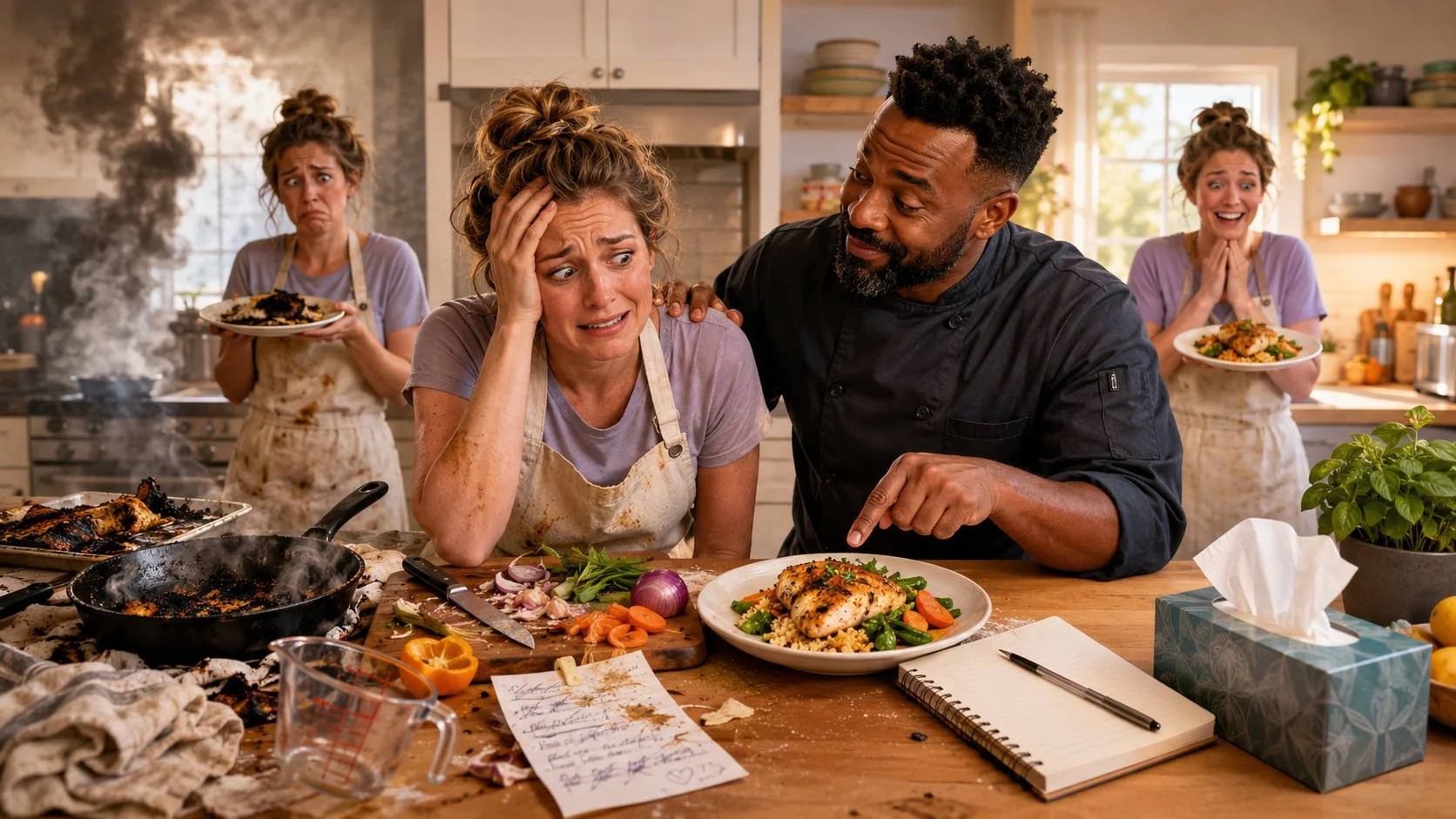
There are cooking shows that make food look elegant, effortless, and spiritually moisturized. A chef glides through a marble kitchen, whispers something about “brightness,” and suddenly a halibut has achieved enlightenment. Then there is Worst Cooks in America, the Food Network show where grown adults confront onions like they’re haunted artifacts and raw chicken like it just served them legal papers.
And honestly? Good. Wonderful. Finally, a cooking show for the rest of us—the people who have looked at a recipe that says “season to taste” and thought, Whose taste? Mine? The taste that made me put cumin in pancakes?
Food Network describes Worst Cooks in America as a show where two chefs transform “hopeless cooks” from “kitchen disasters to kitchen masters,” with the last recruit standing winning $25,000. That is the official premise, but emotionally, it is a televised support group for people whose stovetops have seen things no insurance adjuster should have to process.
And no, it is not actual therapy. Nobody is lying on a couch discussing childhood trauma while julienning carrots. But for bad home cooks, it does something therapy-adjacent: it exposes the fear, names the shame, breaks the disaster into smaller disasters, and then teaches people how not to serve salmon with the texture of a wet envelope.
Worst Cooks in America Is Kitchen Therapy Disguised as Competitive Chaos
The brilliance of Worst Cooks in America is that it understands something most glossy cooking content refuses to admit: bad cooking is rarely just about food. It is about embarrassment. It is about panic. It is about standing in front of a pan that is smoking like a Victorian factory and deciding the best plan is to scream at garlic.
The show takes people who have spent years treating the kitchen like a danger zone and puts them in culinary boot camp. In Season 30, Food Network described the contestants as celebrity recruits trading scripts, dancing shoes, and stage personas for “spatulas, ladles and measuring cups,” entering a competitive culinary boot camp with Jeff Mauro and Tiffany Derry as hosts and mentors. The winner is named the most-improved chef and earns $25,000 for charity, because apparently the only thing more dramatic than burning dinner is burning dinner for a cause.
This format works because it is structured humiliation with a lesson plan. That sounds cruel, because it is, but only in the way a bathroom scale is cruel: rude, necessary, and somehow always waiting for you at your weakest moment.
Bad home cooks do not need another perfect chef telling them to “just relax.” Relax? Brenda, the oil is spitting like it owes the pan money. They need someone to say, “Yes, this is a mess. Now here is why. Now do it again, but less like a raccoon found a Williams Sonoma gift card.”
That is where the therapeutic magic sneaks in wearing a chef coat.
Bad Home Cooks Need Shame Reduction, Not Another Recipe Written by a Herb Influencer
The average bad home cook does not suffer from a lack of recipes. The internet has recipes the way a toddler has opinions: endless, sticky, and mostly unhelpful at dinner time. The problem is not access. The problem is confidence.
Research actually backs this up. A systematic review in BMC Nutrition found that culinary interventions, including cooking classes, were associated with improved attitudes, self-efficacy, and healthier dietary intake in adults and children. In normal-person language: when people practice cooking in a structured way, they tend to feel less useless around food. Stunning. Who knew that learning skills could make people feel skillful? Alert the philosophers.
This is why Worst Cooks in America feels cathartic. It takes the private shame of being bad at cooking and drags it into the fluorescent light, where everyone can see it wobble around and lose a knife skills challenge. The viewer at home gets to think, “Wait. I’m not the only one who thought broiling meant yelling encouragement at the oven?”
That matters. Shame thrives in secrecy. Bad cooking becomes part of your identity: I’m just not a cooking person. Translation: “I once ruined pasta in 2014 and have since built a whole personality around takeout.”
The show says: no. You are not cursed. You are undertrained. There is a difference. A cursed person needs an exorcist. An undertrained person needs a cutting board, a timer, and someone to explain that “medium heat” is not the burner equivalent of a motivational poster.
Useful tip, because we are being productive against our better judgment: stop saying “I’m a terrible cook” and start naming the specific failure. “I burn garlic.” “I underseason chicken.” “I overcrowd the pan.” “I panic when a recipe has more than seven verbs.” Specific problems can be fixed. A personality diagnosis delivered by your sad scrambled eggs cannot.
The Show Is Exposure Therapy, Except the Monster Is Raw Chicken
One of the reasons Worst Cooks in America works is repetition under pressure. The recruits face knives, heat, timing, seasoning, raw proteins, and plating—the same kitchen demons that make home cooks order delivery and pretend it was a “busy week” for the eighth week in a row.
This is basically exposure. Not clinical exposure therapy, obviously, because again, no licensed therapist is asking you to butterfly a chicken breast while processing your attachment style. But the emotional pattern is similar: you are afraid of the thing, so you do the thing in a controlled environment until the thing stops looking like a goblin in a saucepan.
And what is the scariest thing for many home cooks? Meat. Specifically chicken. Chicken is the beige little tyrant of the home kitchen. Undercook it and you’ve created a gastrointestinal escape room. Overcook it and you’ve invented edible drywall. No wonder people panic.
Here is a revolutionary cooking tip from the year “we should have all learned this by now”: buy a food thermometer. FoodSafety.gov says to use a food thermometer to check that meat reaches a safe internal temperature, and lists chicken, turkey, and other poultry at 165°F. This tiny metal stick can save you from both foodborne illness and the emotional collapse of slicing open chicken 14 times “just to check.”
A thermometer is confidence in wand form. Use it. Stop poking chicken and asking the universe for signs.
Culinary Boot Camp Works Because It Turns Chaos Into Steps
The kitchen is terrifying when everything happens at once. Water boiling. Oil heating. Timer screaming. Dog barking. Garlic burning. You, standing there with a wooden spoon like a medieval peasant trying to negotiate with fire.
Worst Cooks in America breaks that chaos into skills. Knife work. Mise en place. Heat control. Seasoning. Timing. Plating. The show’s finalists are eventually asked to cook a three-course restaurant-quality meal judged by food experts, which is a hilarious escalation from “please stop microwaving macaroni into a geological sample,” but that escalation is the point.
Bad cooks often fail because they treat dinner like one giant event. Good cooks treat dinner like a sequence. Chop first. Preheat. Salt early. Taste often. Clean as you go. Start the rice before the stir-fry. Do not discover the recipe needs lemon zest after the lemon has already been sacrificed to your Diet Coke.
This is where the therapy comparison really earns its little chef hat. Therapy often involves slowing down a mess and identifying patterns. Cooking improvement does the same thing. Why did the meal fail? Was the pan too cold? Did you add everything at once like a soup-themed avalanche? Did you confuse “tablespoon” and “the largest spoon in the drawer”? Did you attempt risotto while emotionally unavailable?
The show teaches that failure is data. Embarrassing data, yes. Data wearing Crocs and holding a burnt pork chop. But still data.
The Recruits Are Us, Just Louder and More Mic’d
Watching Worst Cooks in America is comforting because the recruits are not monsters. They are not culinary criminals. They are regular people who somehow made decisions like “What if I put this fish in a blender?” and then had the courage, or contractual obligation, to do it on camera.
That is the secret appeal. The show is not funny because the recruits are uniquely terrible. It is funny because they are familiar. Their mistakes are our mistakes, inflated to parade-float size and pushed through a studio kitchen while professional chefs try not to openly detach from reality.
Every bad home cook has a private blooper reel. The pasta that fused into one starch brick. The steak that came out gray and sweating. The cake that collapsed like it had read the news. The soup that needed salt, then needed more salt, then somehow crossed an invisible border and became the Dead Sea with onions.
The show makes those moments survivable. It says: look, everybody starts somewhere. Unfortunately, some people start by confusing sugar and salt, but civilization has survived worse. Probably.
And research supports the idea that structured cooking programs can build confidence. A 2022 study of a seven-week food literacy cooking program found significant improvements in cooking confidence and satisfaction among participants, along with small improvements in mental and general health. So yes, cooking practice can make people feel better. Imagine that: learning how not to assault broccoli with boiling water may have emotional benefits.
Why Bad Home Cooks Should Watch Worst Cooks in America Like Homework, Not Just Schadenfreude Dessert
There are two ways to watch Worst Cooks in America. The first is as pure entertainment: you sit there in pajama pants judging someone for burning toast while eating cereal for dinner over the sink. This is America’s proudest civic tradition.
The second way is better: watch it as a diagnostic tool.
When a recruit fails, ask why. Not “because they are a walking kitchen evacuation notice,” although fair. Ask what actually happened. Did they skip prep? Misread instructions? Forget to taste? Use too much heat? Try to multitask before they had one task under control? These are not just TV mistakes. These are the same tiny gremlins ruining weeknight dinners everywhere.
Here are a few actually useful takeaways, because sarcasm without utility is just a Yelp review with delusions of grandeur:
First, cook the same simple dish repeatedly. Do not attempt a new recipe every night like you are speed-dating failure. Pick one dish—omelet, roast chicken thighs, pasta with pan sauce, stir-fried vegetables—and make it until you understand it. Repetition is how confidence stops being a rumor.
Second, prep before heat. Chop the onion before the pan is hot. Measure the spices before the oil is smoking. Get everything ready before the stove turns your kitchen into a timed escape room designed by an angry culinary school instructor.
Third, season in layers. Salt at the end is not seasoning; it is a last-minute apology. Add a little salt as you cook, taste, then adjust. Your food should not need a sodium rescue helicopter at the table.
Fourth, use timers and thermometers. Your instincts are not useless, but if your instincts got you here, maybe give them a supervisor. A timer is not weakness. A thermometer is not cheating. They are tools, not emotional crutches, although frankly, use those too.
Fifth, clean while cooking. Nobody is saying you need to sanitize your soul between stirring and sautéing. Just toss scraps, wipe the board, rinse the bowl. A chaotic counter creates a chaotic brain, and a chaotic brain thinks “maybe raisins belong in this.”
The Real Therapy Is Learning That Competence Is Built, Not Bestowed by the Pasta Fairy
The most therapeutic thing about Worst Cooks in America is that it rejects the myth of natural talent. Yes, some people have better instincts. Some people grew up cooking. Some people can look in a fridge and produce dinner instead of staring into it like it’s a portal to Narnia. Good for them. May their basil never wilt.
But cooking is not sorcery. It is a stack of learnable behaviors. Hold the knife like this. Salt like that. Do not crowd the pan. Let meat rest. Taste the sauce. Read the whole recipe before beginning, a concept so obvious it should be printed on every oven door and possibly on certain people’s foreheads.
Bad home cooks do not need to become chefs. They need to become calm enough to make dinner without acting like the skillet is a courtroom witness. That is the emotional victory. Not a perfect soufflé. Not hand-shaped pasta. Not plating foam like a tiny edible bubble bath. Just dinner that is safe, seasoned, and unlikely to be discussed later in a family group chat.
Worst Cooks in America is basically therapy because it gives bad cooks what they actually need: exposure, structure, feedback, repetition, and the comforting sight of someone else making a worse decision with shrimp.
It says the kitchen is not a temple for the gifted. It is a room with heat, knives, food, and consequences. Learn the rules and the consequences become dinner. Ignore the rules and the consequences become content.
And really, that is beautiful. Stupid, loud, occasionally charred, but beautiful.