The Caitlin Clark Gym-Day Snack Guide for Playing Back-to-Back Basketball Games
Caitlin Clark basketball culture has turned ordinary gym energy into something else entirely. Suddenly every teenager with a ponytail, a deep three, and the confidence of a tax auditor is pulling from somewhere near the volleyball line. Parents are in bleachers whispering, “That was too far,” right before the shot drops and everyone has to pretend they believed in it. Beautiful. Delusional. Very modern basketball.
Clark is currently listed by the WNBA as a guard for the Indiana Fever, and the league named her the 2024 Kia WNBA Rookie of the Year after a season in which she averaged 19.2 points and a league-high 8.4 assists while setting a WNBA single-season assists record. So yes, if your teen wants to model their game after her pace, vision, and audacity, understandable. If your teen thinks that means they can play two games on one granola bar and vibes, less understandable. Frankly, offensive to carbohydrates.
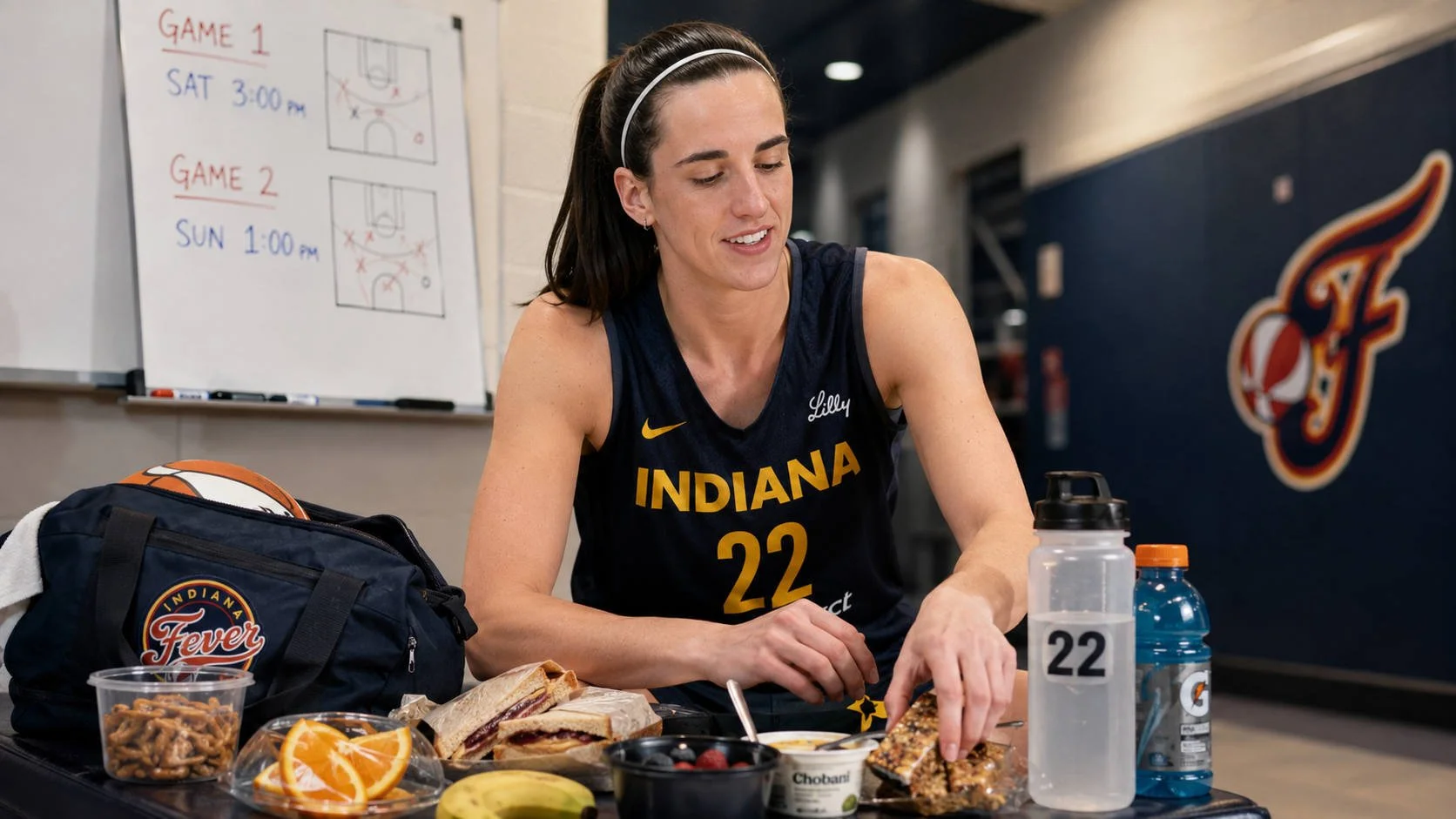
This is not a guide to what Caitlin Clark personally eats. Nobody here has raided her gym bag, because that is weird and probably frowned upon by security. This is a Caitlin Clark-inspired guide for the actual problem parents and teen athletes face: what do you eat between back-to-back basketball games when you need energy, but you do not want to feel like you swallowed a concession stand?
Basketball Is Stop-and-Go, Not Sit-and-Snack
Basketball looks like chaos because it is. Sprint, stop, cut, jump, defend, run, shoot, crash, jog, explode, repeat until everyone is sweaty and one referee has made a decision that apparently ends civilization.
That kind of stop-and-go sport leans hard on carbohydrates. A basketball-specific sports nutrition review from the Gatorade Sports Science Institute describes carbohydrate as the muscle’s preferred fuel for high-intensity basketball activity and notes that fuller glycogen stores help athletes sprint, jump, and run longer before the dreaded “heavy legs” arrive. Heavy legs, for the uninitiated, are what happens when your athlete starts moving like their shoes were filled with mashed potatoes.
So the between-game snack should not be a random act of pantry violence. It should refill just enough energy for the next game without turning the stomach into a storage unit.
The goal is simple: quick carbs first, a little protein if there is enough time, fluids always, heavy food never unless the next game is far away.
The Between-Game Rule: Feed the Clock, Not the Appetite Monster
After game one, teenagers often report one of two conditions: “I’m starving” or “I’m not hungry.” Both are annoying. Both may be true. Tournament basketball does not care.
The rule is based on time:
If the next game is less than an hour away, go light and carb-focused.
If the next game is one to two hours away, add a little protein.
If the next game is three or more hours away, eat a real mini-meal.
Nemours KidsHealth gives the boring-but-correct version: meals 3 to 4 hours before activity should include plenty of carbs and some protein while staying low in fat, and if kids eat less than three hours before a game or practice, the food should be lighter and easy to digest, with carbs like fruit, crackers, or bread.
Translation: the closer the next tipoff gets, the less your athlete needs a cheeseburger the size of a steering wheel. I realize this is devastating to the concession stand economy.
The 20-Minute Turnaround Snack
Some gyms schedule games like they are trying to break families psychologically. Your team finishes one game, the coach gives three sentences of feedback, and suddenly warmups for the next game are starting. Wonderful. Very sane. Everyone loves sprinting through a crowded hallway holding a water bottle and half a banana.
When the gap is 20 to 30 minutes, do not attempt a meal. Do not attempt a sandwich. Do not attempt pizza. Do not hand your child a protein bar dense enough to repair drywall.
Use tiny, easy carbs:
Half a banana.
A few pretzels.
Applesauce pouch.
Graham crackers.
A few orange slices.
A small handful of dry cereal.
A few crackers.
Water.
This snack is not meant to fill them up. It is meant to stop the energy cliff. Think of it as a basketball timeout for the stomach: quick, useful, and not a place for pulled pork.
UChicago Medicine recommends simple starchy snacks around game time, including bagels, graham crackers, dried fruit, sliced oranges, and half a banana, while warning that fatty foods digest slowly and can make athletes feel sluggish. This is a polite medical way of saying: maybe do not load a teen guard with nachos before asking them to full-court press.
The 60-Minute Between-Game Snack
If there is about an hour between games, you can do slightly more. Still not a meal. Still not a burger. Still not “just a slice” of pizza, which is how every gym lobby becomes a mozzarella-based trap.
Good one-hour snacks:
Banana with pretzels.
Applesauce pouch plus crackers.
Mini bagel with a little jam.
Granola bar that is not a candy bar wearing hiking boots.
Dry cereal plus water.
Orange slices plus pretzels.
Fig bar.
Small smoothie if your athlete tolerates it.
Nationwide Children’s recommends water as the default for young athletes and says sports drinks are better reserved for after more than 60 minutes of moderate physical activity. It also lists quick game-day snack ideas like fruit, trail mix, apple slices with peanut butter, mini yogurt parfaits, mini deli sandwiches, and veggies with hummus. Very rude of them to provide normal food instead of a $6 “performance cube,” but the experts have spoken.
At the one-hour mark, keep fat and protein modest. Peanut butter can work in small amounts. A giant scoop of peanut butter on a bagel is not a snack; it is a digestive sandbag.
The 90-Minute to Two-Hour Gap
This is the sweet spot. The athlete has enough time to eat something more substantial, but not enough time to pretend lunch is Thanksgiving.
Good options:
Half a turkey sandwich.
Peanut butter and jelly sandwich.
Greek yogurt with granola.
Chocolate milk plus pretzels.
String cheese with crackers and fruit.
Turkey and cheese wrap cut into small pieces.
Rice cup with chicken.
Mini bagel with cream cheese and fruit.
Hummus with pita and grapes.
EatRight suggests portable game snacks like fruited yogurt, peanut butter or almond butter sandwiches, turkey and cheese wraps cut into small pieces, string cheese with mini pretzels, and cold water. It also notes that snacks should be easy to digest, because heavy greasy snacks sit in the stomach and make themselves everyone’s problem.
This is where parents should use snack boxes instead of handing over whole packages. A snack box makes the portion visible. A full bag of pretzels makes your teenager discover that “just a few” means “I ate enough sodium to preserve a ham.”
The Three-Hour Gap: Actual Food Is Allowed
If there are three hours before the next game, congratulations. The bracket gods have briefly stopped being awful. This is when a real mini-meal makes sense.
Good three-hour meals:
Chicken rice bowl.
Turkey sandwich with fruit.
Pasta with simple sauce and grilled chicken.
Bagel with egg and fruit.
Bean and rice bowl.
Chicken wrap with pretzels.
Oatmeal with banana and yogurt.
Burrito bowl, but not the one with every topping in the building.
Children’s Health recommends a balanced meal 2 to 3 hours before game time with carbohydrates, protein, and fruit or vegetables, with examples like chicken sandwiches, turkey wraps with hummus, whole wheat pasta with sauce and grilled chicken, and brown rice with protein and vegetables. For tournaments, it specifically recommends packing balanced snacks between games, such as PB&J, turkey and cheese sandwiches, pretzels or crackers with nut butter, fruit with jerky, chocolate milk, or Greek yogurt.
Notice what is missing from that list: “giant order of loaded fries.” Tragic, yes. But perhaps the fries can wait until the final buzzer, where they belong.
Hydration: Water First, Sports Drink When the Gym Day Earns It
Basketball gyms are weird little climate boxes. One court is freezing. One court is a sauna. One court smells like popcorn, rubber, and parental tension. Hydration matters because even indoor athletes sweat, and teen athletes are not always famous for remembering water exists unless someone else screams it at them.
Water should be the default. Bring a bottle. Refill it. Label it. Guard it from siblings, who are basically beverage pirates in Crocs.
Sports drinks can be useful during long tournament days, repeated games, hard play, heavy sweating, or hot gyms. They are not necessary for every short game, and they are not the same as energy drinks. UChicago Medicine recommends avoiding energy drinks for young athletes and notes that sports drinks can be useful on the sidelines for electrolytes, while other pediatric guidance suggests sports drinks are more appropriate when exercise is intense, long, or in heat.
Energy drinks should not be in the gym bag. The teen who says, “But everyone drinks them,” has made a compelling argument for why everyone needs supervision.
The Caitlin Clark Snack Principle: Pass the Ball, Don’t Hog the Meal
Clark’s game is built on pace, spacing, passing, shooting, and seeing the floor before everyone else realizes there is a floor. Apply that same logic to snacks.
Do not let one giant food item dominate the whole day. The between-game snack should pass the ball.
Carbs do the quick-energy work.
Protein helps the snack last when there is enough time.
Fluids keep the engine from turning into dust.
Salt can help heavy sweaters when the day is long.
Fruit adds quick carbs and fluid.
A little fat is fine when there is time, but too much before the next game is like putting ankle weights on digestion.
A smart snack is not one heroic item. It is a tiny lineup.
Pretzels plus fruit.
Yogurt plus granola.
PB&J plus water.
Chocolate milk plus banana.
Turkey wrap plus grapes.
Crackers plus cheese and apple.
Basketball is not won by one player dribbling into traffic forever, despite what certain eighth-grade guards believe. Snacks work the same way.
The Best Snack Bag for Back-to-Back Games
Here is the practical gym-day packing list.
For quick carbs: bananas, applesauce pouches, pretzels, graham crackers, fig bars, dry cereal, orange slices, crackers, fruit snacks, mini bagels.
For carb-plus-protein snacks: PB&J, turkey wraps, yogurt tubes, Greek yogurt cups, string cheese with pretzels, chocolate milk, hummus and pita, trail mix, peanut butter crackers.
For fluids: water bottles, backup water, sports drinks for long/hot/repeated-game days, and maybe electrolyte packets if your athlete already tolerates them.
For sanity: napkins, wipes, a small trash bag, cooler packs, labels, and snacks for parents because parents who forget to eat become bleacher gargoyles.
Scottish Rite for Children notes that young athletes in stop-and-go sports like basketball can burn through energy stores during games and tournaments, especially if they do not eat properly earlier or bring appropriate snacks. It recommends a balanced meal 3 to 4 hours before the event, an easy-to-digest carbohydrate snack just before, and fluids throughout the day.
In other words, the snack bag is not overpacking. It is defense.
What Not to Eat Between Basketball Games
Some foods are good foods at the wrong time. This is important, because teenagers hear “not before the next game” and act like you have banned joy from the universe.
Save these for after the final game:
Pizza.
Burgers.
Chicken tenders and fries.
Nachos.
Huge burritos.
Heavy pasta with cream sauce.
Milkshakes.
Donuts.
Big bags of chips.
Full candy bars.
Anything spicy enough to make the second half about regret.
These foods are not evil. They are just bad bench players for the between-game window. They show up slow, heavy, and messy, then expect the carbs to do all the running. Pathetic.
The post-tournament meal can be fun. Team pizza after the final game is a cultural institution. Team pizza between games is how a roster becomes a group of sleepy cheese statues.
If the Athlete Is Too Nervous to Eat
Some teen athletes cannot eat much between games. Nerves, heat, intensity, and gym chaos can flatten appetite. This is not the moment for a parent to yell, “EAT THE WRAP,” across a hallway like a sandwich sheriff.
Use smaller, softer, drinkable options:
Applesauce pouch.
Smoothie.
Chocolate milk.
Yogurt tube.
Banana.
Pretzels.
Sports drink if the day calls for it.
A few bites of PB&J.
The goal is not to force a full meal. The goal is to keep energy coming in small, tolerable doses. If your athlete can only handle little bites, pack little bites. Basketball has enough drama without turning a turkey sandwich into a family conflict.
If the Athlete Wants Candy
Candy is not automatically illegal in sports. Quick sugar can be useful in certain moments, especially late in long tournament days. But candy should not be the whole between-game strategy unless your team’s offense is based on a 14-minute sugar spike followed by emotional collapse.
A few gummies late in the day? Fine.
A full candy bar as “lunch”? No, professor Wonka.
Better sweet options: fruit snacks paired with pretzels, a fig bar, banana, applesauce, chocolate milk, or a granola bar that has some actual food structure. If candy is included, treat it like a quick top-off, not the foundation of the basketball empire.
The Halftime and Bench Snack
Most players do not need much during a single game, but for intense play, long tournaments, or athletes who play heavy minutes, small sideline options can help.
Good bench snacks:
Orange slices.
Half banana.
Pretzels.
Applesauce.
Sports drink.
Small bites of fig bar.
UChicago Medicine lists mid-game options like small bagels, graham crackers, dried fruit, sliced oranges, and half a banana. That is the level. Not a cheesesteak. Not a burrito. Not a full protein shake that requires a blender and an ego.
Halftime is for adjustments, fluids, and tiny fuel. It is not a catered lunch.
The After-Game Reset If There Is Another Game Coming
If the first game was hard and another game is coming in a few hours, the athlete needs a recovery snack soon. Not necessarily a huge meal, but something with carbs and protein.
Good recovery snacks:
Chocolate milk.
Greek yogurt with granola.
PB&J.
Turkey wrap.
Banana with peanut butter.
Crackers with cheese.
Smoothie with yogurt.
Rice bowl if the next game is far enough away.
Children’s Health recommends a snack with protein and carbohydrate within 30 to 45 minutes after exercise, then a balanced meal one to three hours later. That framework is especially useful when the bracket says, “Congratulations, now do it again.”
The post-game reset is where parents often fail because the athlete says, “I’m fine,” and then 40 minutes later they are a pale ghost asking for Skittles near court three.
Do not trust “I’m fine” from a teenager after a full basketball game. Teenagers also say they know where their shoes are.
The Final Caitlin Clark Gym-Day Snack Plan
For back-to-back basketball games, the snack plan should look like this:
Before game one, eat a real meal if there is time: carbs, some protein, low-to-moderate fat, familiar foods.
If the gap is under 30 minutes, use tiny carbs and water.
If the gap is about an hour, use quick carbs like bananas, pretzels, applesauce, crackers, or a fig bar.
If the gap is 90 minutes to two hours, add light protein: yogurt, PB&J, turkey wrap, cheese and pretzels, chocolate milk, hummus and pita.
If the gap is three hours or more, eat a real mini-meal: sandwich, rice bowl, pasta, wrap, or breakfast bowl.
Hydrate all day. Use sports drinks when the day is long, hot, intense, or sweaty enough to earn them. Skip energy drinks unless your goal is to make a gym full of parents collectively sigh.
And after the final game, yes, go get pizza if that is the tradition. Eat the fries. Celebrate. Be normal. The point is not to turn teen basketball into a nutrition monastery with scoreboards.
The point is to stop letting back-to-back games be fueled by vending-machine roulette and one banana that has been bruised beyond recognition at the bottom of a backpack.
Caitlin Clark-style basketball is fast, spaced, confident, and relentless. The snack plan should be the same: quick, smart, portable, and ready before the defense realizes what happened.