
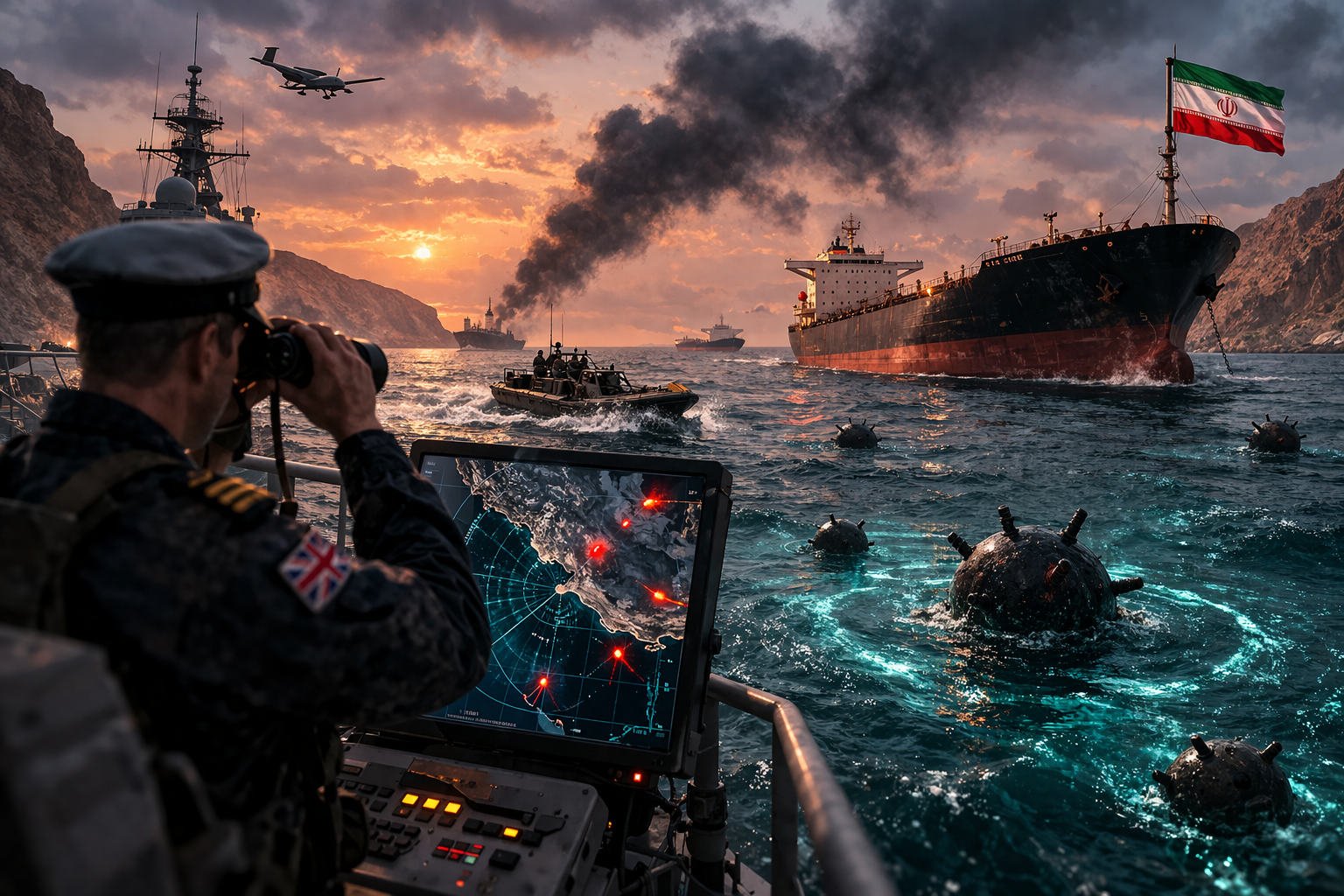
The warnings around the Strait of Hormuz are getting harder to dismiss. British Defence Secretary John Healey said Thursday that the indications are becoming stronger that Iran may have started mining the strait, as London weighs additional deployments to the Gulf and tries to respond to a rapidly worsening maritime threat. Reuters separately reported a day earlier that Iran had deployed about a dozen mines in the waterway, citing two sources familiar with the matter, while Bloomberg reported Healey saying the signals had become “clearer and clearer.”
That matters because Hormuz is not just another shipping lane. About a fifth of the world’s oil and LNG normally passes through the narrow channel along Iran’s coast, and the current war has already pushed it into near paralysis. Reuters reported that Iran’s mine deployment would complicate any reopening of the strait, while the U.S. military says it has already targeted Iranian mine-laying vessels and eliminated 16 of them.
Healey’s comments come at a moment when Britain is trying to manage a shrinking naval margin for error. Reuters reported that the Royal Navy’s last minehunter based in Bahrain, HMS Middleton, returned to Britain on March 1 because it was no longer certified to sail. Healey said the UK still has autonomous mine-hunting systems in the region and is considering additional options it could deploy alongside allies.
That is a revealing posture. It suggests London is not treating the mine threat as speculative background noise. It is treating it as a real enough operational problem to justify new planning even after withdrawing its last crewed minehunter from the Gulf. And that makes sense, because once a chokepoint like Hormuz enters a mining phase, reopening it becomes much more difficult than simply deterring missiles or escorting a few ships through under fire. Mines slow traffic, terrify insurers, complicate clearance operations, and keep commercial operators away even after the first headlines fade. Reuters reported that one source familiar with the mining said most of the mines’ locations were known, but declined to say how the United States planned to deal with them.
The economic consequences are already visible. Reuters reported that oil rose about 9% on Thursday, with Brent climbing to $100.03 and WTI to $95.25, after Iran stepped up attacks on oil and transport facilities and its new supreme leader said the closure of Hormuz should continue. Brent had already surged as high as $119.50 earlier in the week before briefly pulling back on hopes of de-escalation.
The bigger problem is that the market is no longer dealing with a simple war premium. It is increasingly dealing with a physical supply crisis. The International Energy Agency said Thursday that the Middle East war is creating the biggest oil-supply disruption in history, with global supply expected to fall by 8 million barrels per day in March because of the Hormuz blockade. The IEA also said Gulf producers including Iraq, Qatar, Kuwait, the UAE, and Saudi Arabia have cut at least 10 million barrels per day of production, and warned that shut-in fields could take weeks or even months to return to normal.
That is why even cautious language from officials like Healey lands so heavily. If Iran really has begun laying mines, the issue is no longer just whether the strait is dangerous today. It is whether the world’s most important energy artery can be made commercially usable again any time soon. Reuters reported that Iran’s mine deployment came after the U.S.-Israeli war had already effectively halted oil and LNG exports through the chokepoint. Once mines are in the water, even a reduction in airstrikes or drone attacks does not automatically restore confidence. Shipowners still need routes cleared, insurers still need reassurance, and navies still need time.
The military risks are widening alongside the market risks. Reuters reported Thursday that two tankers were ablaze in an Iraqi port after suspected Iranian explosive-laden boat attacks, while three other ships were struck in the Gulf. Healey called the situation a major escalation by Iran and said it was already affecting oil prices and the cost of living. That is the crux of the story now: this is no longer a contained naval scare. It is a broader campaign against shipping and energy infrastructure that is feeding directly into global prices.
The cleanest way to understand Britain’s warning is this: the question is no longer whether Hormuz is under threat. It clearly is. The question now is whether that threat has hardened into something slower, stickier, and more expensive to reverse. If Healey is right that the signals are growing clearer, then the strait is moving from blockade crisis to mine-clearance crisis. And that is a far uglier place for the global economy to be.
Oil to $200? We’ll see.