
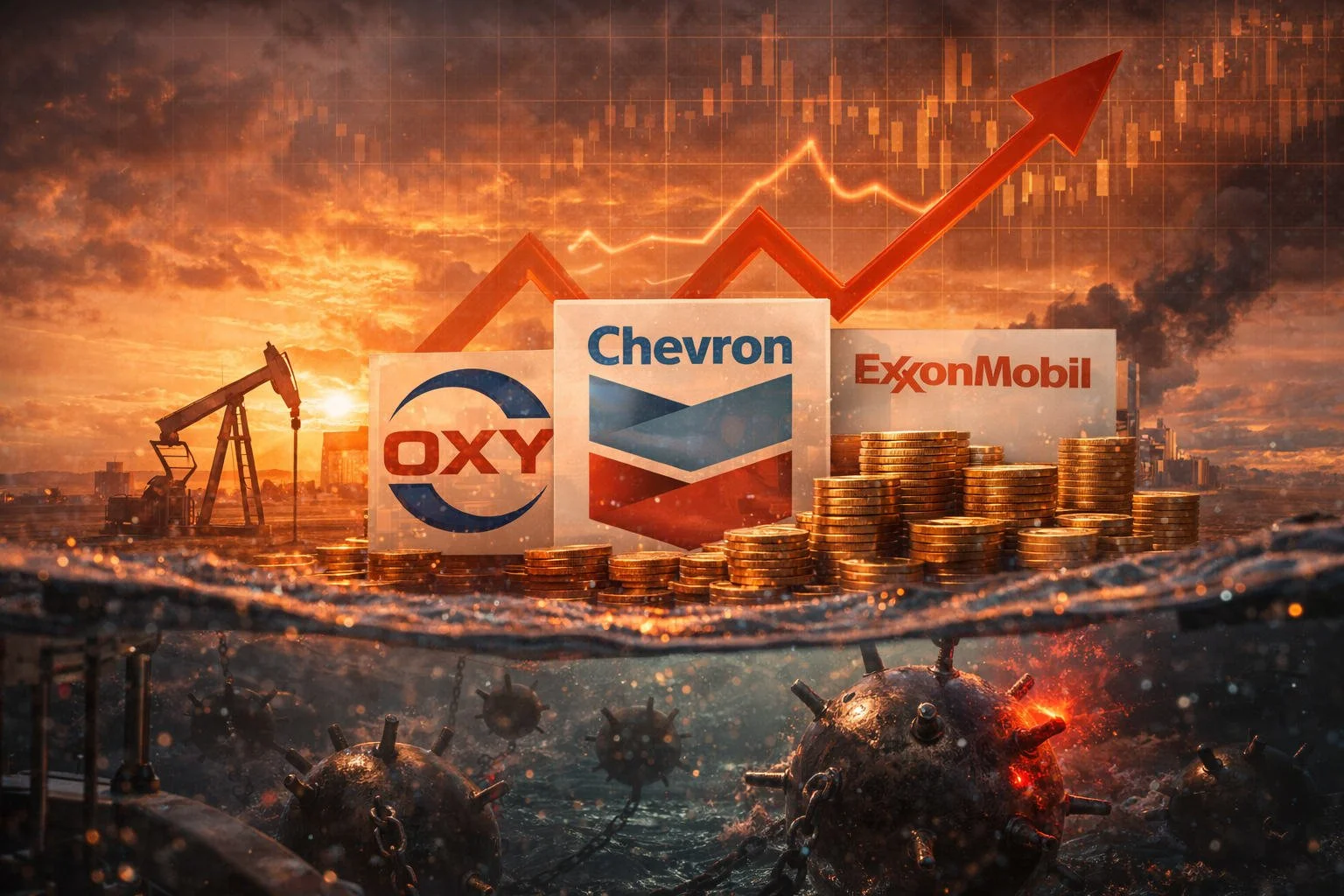
For most of the Iran war, the oil market and the oil-stock market were telling two different stories. Crude was screaming higher, but the majors were oddly restrained, which implied traders still thought the spike would fade fast. Reuters noted just a few days ago that the majors’ muted reaction suggested investors expected a relatively swift end to the Hormuz disruption. That is starting to change.
Occidental Petroleum is one of the clearest examples. OXY rose to $58.91 on Thursday, up about 6.0% on the day. Chevron climbed to $198.42, up about 3.5%. ConocoPhillips rose to $120.71, up about 3.1%, and Exxon Mobil gained to $154.75, up about 2.1%. This is not the kind of action usually seen when the market thinks oil will give back the whole move next week.
What changed is that the physical oil story keeps getting worse. Reuters reported Thursday that Goldman Sachs raised its oil-price forecasts after extending its assumption for severely reduced Hormuz flows from 10 days to 21 days, followed by a slower 30-day recovery. Reuters also reported that the International Energy Agency now calls the current Middle East war the largest oil supply disruption in history, with global supply expected to drop by 8 million barrels per day in March.
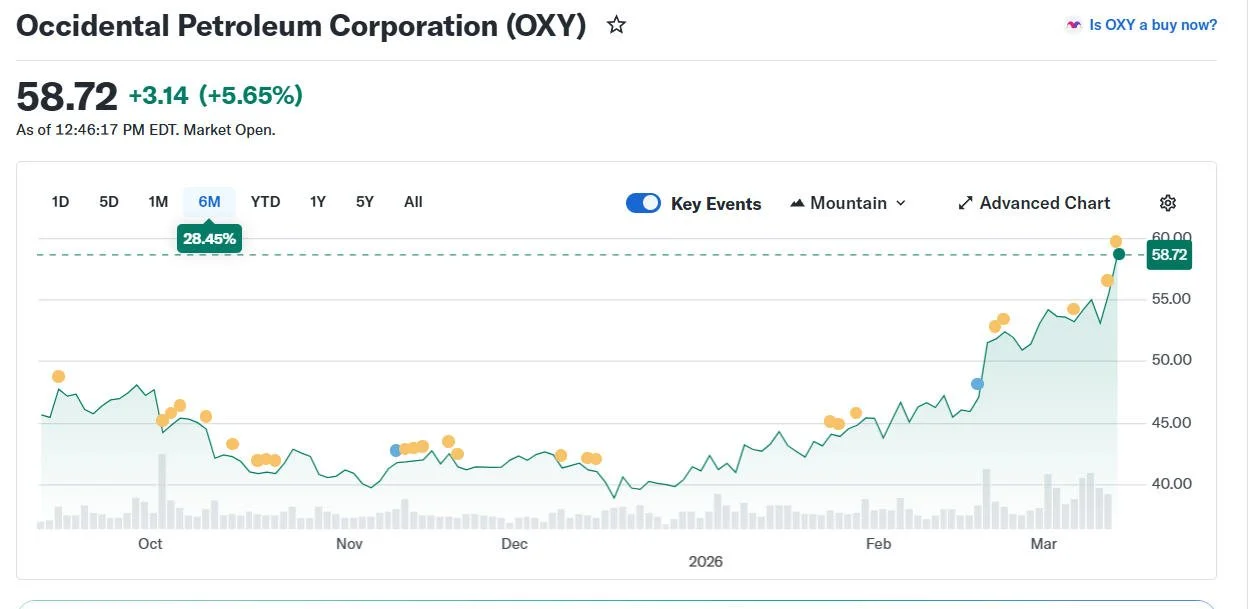
$OXY six month chart
That is the kind of backdrop that can push energy stocks into a different regime. A one-day oil spike is good for traders. A multi-week physical disruption is good for producer cash flow, balance sheets, buybacks, and investor sentiment. Once the market starts believing the bottleneck is real and persistent, oil equities stop looking like a short-term panic trade and start looking like one of the few obvious winners in a market full of losers. Reuters reported that oil moved back above $100 on Thursday as attacks expanded and the Hormuz shutdown persisted.
OXY, in particular, makes sense as a bullish expression of that view. Reuters previously pointed out that U.S. shale producers are relatively insulated from direct Middle East operating risk while still fully benefiting from a higher global crude price. That is a powerful combination in a war-driven oil rally: less geopolitical exposure on the ground, but full leverage to the commodity price that the whole world pays.
The key signal here is not just that crude is high. It is that equities are finally confirming it. Earlier in the shock, the market seemed to be saying, “yes, oil is spiking, but no, we do not believe this lasts.” The rally in OXY and the majors looks more like, “this may last longer than we thought, and we need to own the companies that print cash when oil stays elevated.” That is a meaningful shift in tone, especially since it is happening while the broader market is under pressure. Reuters reported that energy shares were gaining even as Wall Street struggled under the weight of fresh Middle East escalation.
The bullish case gets stronger if Hormuz remains impaired long enough to push inventories lower and keep refiners and consumers competing for supply. Reuters reported that Brent and WTI have surged more than 36% and 39%, respectively, since the war began, briefly topping $119 per barrel. Reuters also noted that if very low Hormuz flows persist through March, daily oil prices could exceed their 2008 record highs. That is not a normal oil wobble. That is the kind of setup where investors stop asking whether the spike is overdone and start asking which producers still have room to rerate.
There is still a difference between “higher for longer” and “high forever.” Goldman’s updated fourth-quarter forecast is still well below today’s panic highs, which means even the bullish banks expect some normalization over time. But the important shift is that the market appears to be moving away from the idea that this was just a brief headline spike. The OXY breakout, and the catch-up rally in Chevron, Exxon, and ConocoPhillips, look much more like Wall Street beginning to price a longer oil shock rather than a passing scare.