
Iran Has Deployed a Dozen Naval Mines in the Strait of Hormuz
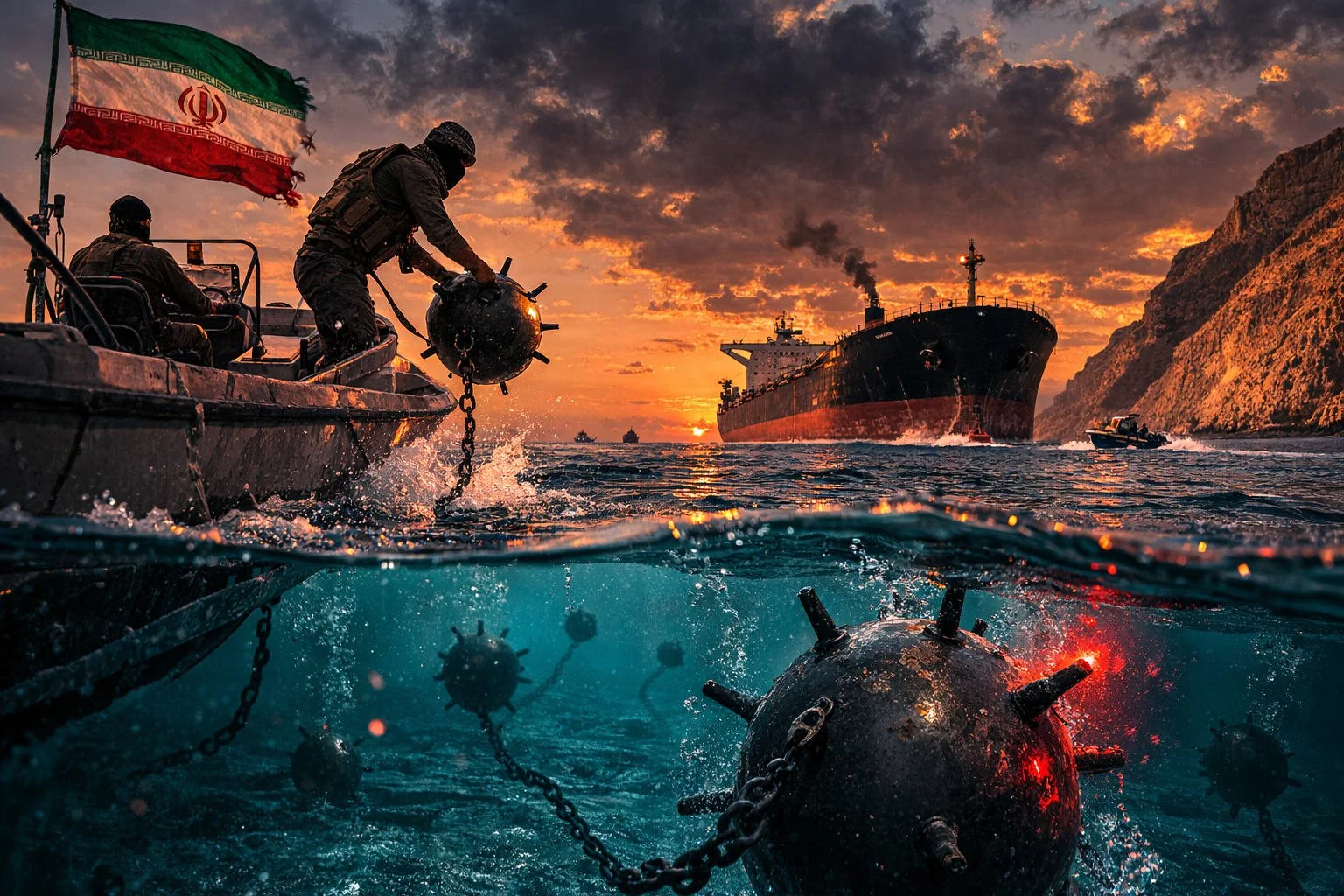
Iran has reportedly taken one of the most dangerous steps available in a Gulf war: laying naval mines in the Strait of Hormuz. Reuters reported Wednesday that Iran deployed about a dozen mines in the narrow waterway, citing two sources familiar with the matter, in a move likely to complicate any effort to reopen the strait to commercial shipping. One source told Reuters that the locations of most of the mines are known, but the report did not say how the United States plans to deal with them.
That matters because Hormuz is not just another busy sea lane. It is the single most important chokepoint in the global energy system. Reuters reports that around a fifth of the world’s oil and LNG normally passes through the strait, and that the wider war has already effectively shut it down. A separate Reuters graphics report says top Middle East producers including Saudi Arabia, Iraq, and Kuwait have been forced to cut production because they cannot keep loading tankers indefinitely while storage fills up.
The mine deployment changes the story from a shipping disruption into something closer to a physical denial problem. Threats, missile fire, and attacks on merchant ships can already keep shipowners away. Mines make the route harder to trust even after the shooting eases, because reopening a mined waterway is slower, more technical, and much more psychologically difficult for insurers, tanker operators, and navies. Reuters reported that the United States has already struck 16 Iranian mine-laying vessels, but the Navy has still declined to provide protective escorts to commercial ships through the strait.
The oil-market implications are obvious. Reuters reported that oil prices jumped earlier this week to nearly $120 a barrel before pulling back, and that prices rose again Wednesday as traders absorbed renewed evidence that supply disruption in the Gulf is not ending quickly. Iran’s military command has openly warned the world to prepare for $200 oil, while the International Energy Agency has recommended a 400 million barrel strategic stock release, the biggest in its history, to blunt the shock.
The real danger is not just today’s price spike but the possibility of a more durable supply shock. Reuters’ graphics analysis says spare capacity elsewhere in the world is not sufficient to plug the gap if shipments through Hormuz stay frozen. That means refineries worldwide would have to start drawing down inventories to keep producing fuel, while gasoline, diesel, jet fuel, petrochemicals, fertilizer, and LNG prices remain under pressure. Once a choke point like Hormuz becomes both blockaded and mined, the market stops asking when the next tanker can squeeze through and starts asking how long the whole system can function in emergency mode.
There is also a military escalation risk embedded in the mining itself. Reuters reported that President Donald Trump demanded Iran immediately remove any mines in the strait and warned of unspecified military consequences if it failed to do so. That means the sea lane has become more than an economic battleground; it is now a red line inside a wider war. Every mine that remains in the water raises the odds of further U.S. strikes, more attacks on Iranian naval assets, and a longer conflict over who controls the Gulf’s most critical passage.
The broader economic consequences could spread well beyond oil charts. Reuters reported that the United Nations is already warning that disrupted shipping through Hormuz is straining global humanitarian operations, lifting energy and food costs, and complicating deliveries into crisis zones. If the mining keeps the strait effectively closed, the fallout will not stay confined to energy traders and tanker owners. It will move into freight costs, industrial supply chains, inflation, and food prices in countries far from the Gulf.
The significance of the latest report is simple: this is no longer just a war of threats around Hormuz. If about a dozen mines are now in the channel, the world’s most important energy artery has become harder to reopen, more dangerous to enter, and more likely to keep global markets on edge. That is why this development matters so much. It pushes the crisis one step further away from a temporary blockade and one step closer to a prolonged economic siege.