
What a Dietitian Would Order at Taco Bell
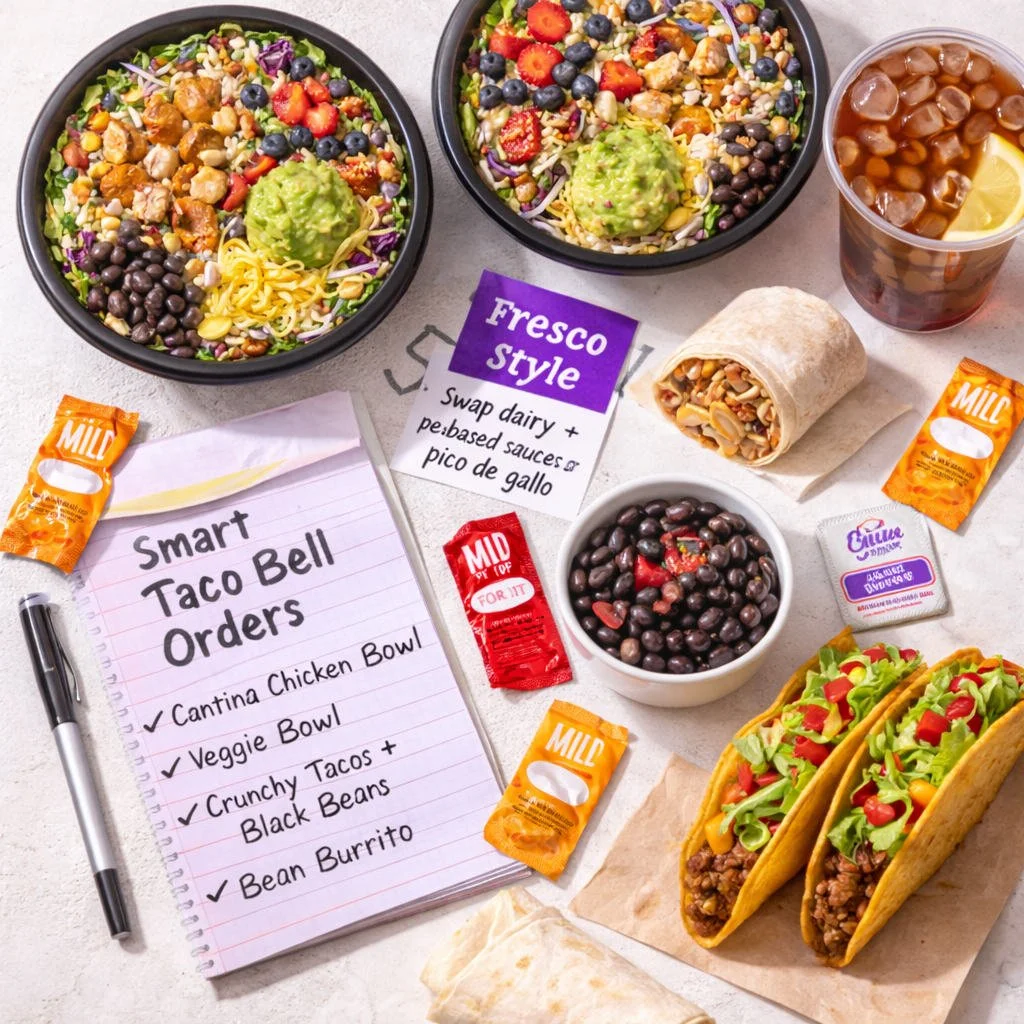
Taco Bell is one of the easier fast-food chains to navigate if you are trying to eat a little better. That sounds ridiculous until you look at how customizable the menu is. Taco Bell has an official nutrition calculator, and the company’s help center specifically points people there to see the nutrition impact of customizations. That matters, because Taco Bell is one of those places where a few smart swaps can change the whole order.
If a dietitian were ordering at Taco Bell, the strategy would be pretty simple: start with protein, add fiber where you can, and avoid letting cheese, creamy sauces, chips, and sugary drinks quietly turn a decent meal into a heavy one. The menu is also built for modifications. Taco Bell still offers “Fresco” on current menu pages for items like the Crunchy Taco and Crunchwrap Supreme, where dairy and mayo-based sauces are replaced with pico de gallo. That is exactly the kind of small tweak a dietitian would use.
The best overall healthy Taco Bell order is probably the Cantina Chicken Bowl. This is the item dietitians keep coming back to. EatingWell’s recent dietitian roundup called it the healthiest item to order at Taco Bell, and the nutrition breakdown is strong for fast food: 480 calories, 24 grams of protein, 10 grams of fiber, and 1,170 milligrams of sodium. Taco Bell’s own menu also positions it as a high-protein bowl, with slow-roasted chicken, rice, black beans, cabbage, pico de gallo, guacamole, and cheese. In plain English, it looks more like an actual meal than a lot of fast-food orders do.
That bowl is not perfect. The sodium is still high. But this is where dietitian logic is different from internet “clean eating” logic. The goal is not to pretend Taco Bell is a salad bar. The goal is to leave with something filling, high in protein, and not absurdly calorie-dense. The Cantina Chicken Bowl does that better than most of the menu. EatingWell also recently highlighted it as Taco Bell’s top high-protein pick, noting that it can be bumped to 32 grams of protein with extra chicken.
If you want the best healthy vegetarian Taco Bell order, the Veggie Bowl is probably the move. EatingWell’s dietitian-backed guide lists it at 410 calories with 12 grams of protein and 11 grams of fiber. It is also one of the easier items to improve with customization. That same piece notes that going light on cheese and removing sour cream can cut it to around 370 calories while also reducing sodium. That is a very dietitian-style fast-food move: keep the beans, rice, and vegetables, then trim the extra creamy stuff.
If you want something smaller, cheaper, or more snackable, the Crunchy Taco is one of the better low-calorie Taco Bell orders. EatingWell’s dietitians call it surprisingly reasonable at 170 calories, 8 grams of protein, and 310 milligrams of sodium. One taco is more of a snack than a meal for most adults, but two Crunchy Tacos is still a much more controlled order than drifting into nachos or a heavier specialty item.
A very smart Taco Bell combo, and one a dietitian could absolutely build, is two Crunchy Tacos plus a side of Black Beans. Taco Bell lists Black Beans at just 50 calories, and beans are one of the easiest ways to add some fiber and staying power without piling on fried extras. That kind of order is simple, fairly budget-friendly, and much more balanced than the classic “chips plus burrito plus sweet drink” spiral.
For a budget vegetarian order, the Bean Burrito deserves a mention too. Taco Bell lists it at 360 calories, and EatingWell’s dietitian roundup calls it a filling meatless option with a good mix of protein, carbs, fat, and fiber. It is not the leanest thing on the menu, but it is one of the more satisfying lower-cost vegetarian choices if you want something that feels like a real meal.
The biggest Taco Bell advantage is customization. Fresco-style swaps are still visible on live menu pages, and Taco Bell’s own nutrition tools are designed around changing ingredients and immediately seeing the nutrition impact. So a dietitian is likely to do things like remove sour cream, go light on cheese, skip creamy sauces, or use pico de gallo and beans to keep flavor and fullness up without pushing calories too hard. That is part of why Taco Bell works better for this kind of article than a lot of chains do.
Where people get into trouble at Taco Bell is usually not the tacos. It is the extras. A Crunchwrap Supreme is 530 calories. A Chicken Quesadilla is 500 calories. Nachos BellGrande comes in at 730 calories, and even Chips and Nacho Cheese Sauce adds another 220 calories. None of these are shocking if you know Taco Bell, but they are exactly the kinds of items that make it easy to overshoot without feeling like you ordered that much food.
The drinks can mess you up too. Taco Bell’s breakfast menu shows a regular iced coffee at just 10 calories, which is a much smarter move than the Iced Cinnabon Delights Coffee at 160 calories. On the regular drink menu, the fruit-flavored Agua Refrescas are listed at 170 calories, and a large MTN DEW Baja Blast Freeze is 190 calories. A dietitian would probably keep the drink boring on purpose, because this is one of the easiest places to waste calories without getting any fullness back.
So what would a dietitian actually order at Taco Bell? Most likely one of these: Cantina Chicken Bowl, Veggie Bowl with light cheese and no sour cream, two Crunchy Tacos with Black Beans, or a Bean Burrito when budget matters. If they want to improve almost anything on the menu, they are likely using Fresco-style swaps, skipping creamy add-ons, and keeping the drink simple.
That is really the Taco Bell formula. The best healthy Taco Bell order is not the saddest one. It is the one that gives you some protein, some fiber, and enough satisfaction that you do not end up chasing it with nachos, a Freeze, and regret 20 minutes later.