
Strait of Hormuz Explained: Why the World’s Oil Route Matters Right Now
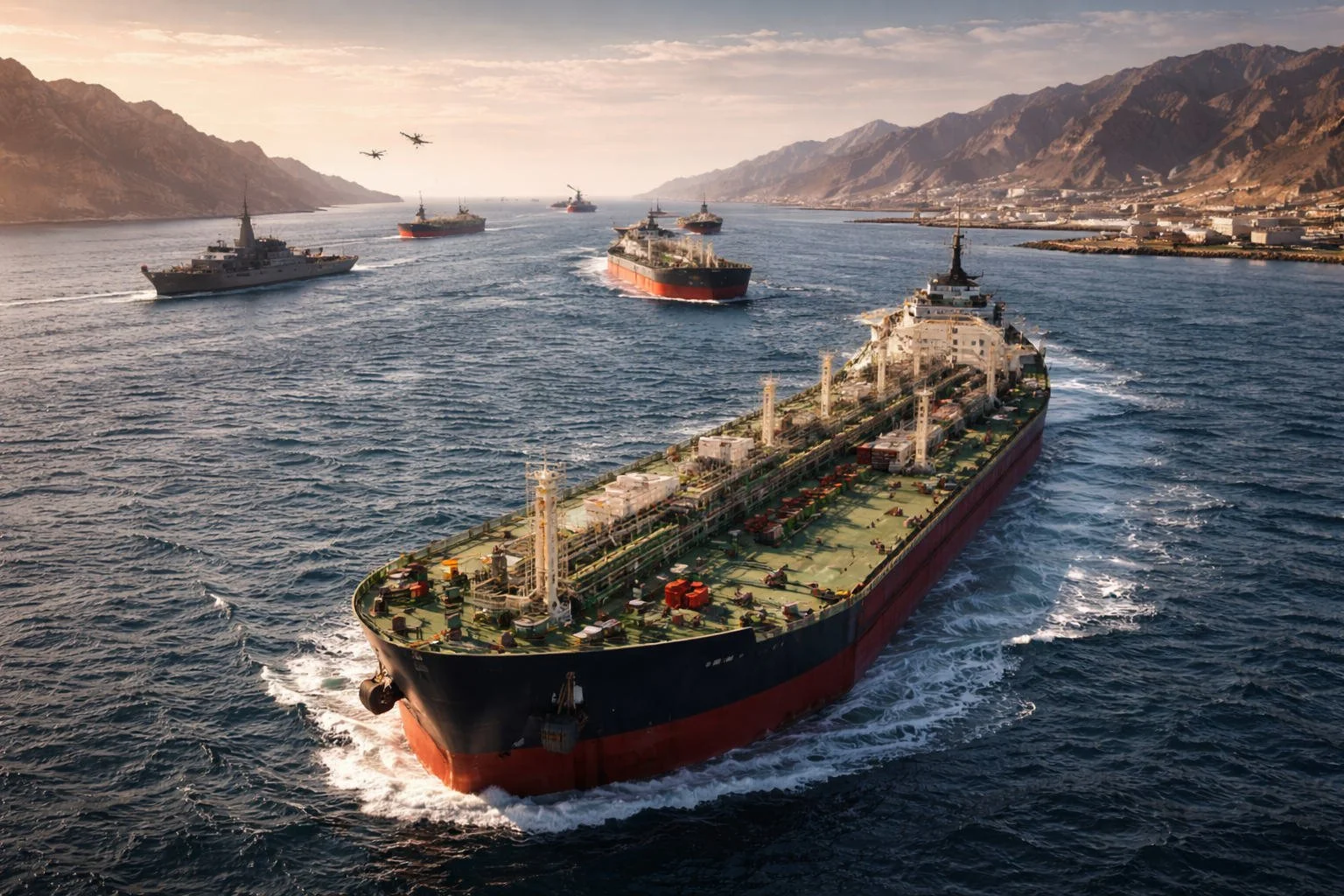
If you’ve ever wondered why a narrow stretch of water can move markets, spike gas prices, and drag multiple countries into crisis headlines, the answer is often the same: the Strait of Hormuz.
Right now, with the US–Israel war with Iran shaking the region, Hormuz isn’t just a geography lesson—it’s a live wire in the global economy. When ships hesitate to sail through it (or can’t), the world feels it fast.
Where is the Strait of Hormuz?
The Strait of Hormuz sits at the mouth of the Persian Gulf, between Iran on the north side and Oman’s Musandam Peninsula on the south side. It connects the Gulf to the Gulf of Oman and the Arabian Sea—meaning it’s the main “exit door” for energy exports from several major oil and gas producers.
In practical terms: if you want to ship oil and LNG out of the Persian Gulf by sea, Hormuz is the funnel.
Why it’s a chokepoint (and why “narrow” is a big deal)
On a map, the strait looks like a simple passage. In real life, it’s one of the most bottlenecked pieces of water on Earth:
At its narrowest, it’s about 21 miles (33 km) wide.
The actual shipping lanes are only about 2 miles (3 km) wide in each direction, separated by a buffer zone.
That matters because tight lanes are easier to disrupt. You don’t need to “block the whole ocean” to cause chaos—you just need enough danger in a small corridor that insurers, shipowners, and crews decide it isn’t worth the risk.
How much oil goes through the Strait of Hormuz?
This is the stat that explains almost everything:
In 2024, oil flows through Hormuz averaged about 20 million barrels per day—roughly 20% of global petroleum liquids consumption.
It also represents more than a quarter of global seaborne oil trade in some measures.
That’s why you’ll hear Hormuz described as the world’s most important oil transit chokepoint. When that artery tightens, prices react—even if supplies haven’t technically “run out” yet.
It’s not just oil: Hormuz also matters for LNG
Oil gets most of the attention, but liquefied natural gas (LNG) is a huge part of the story:
In 2024, about 20% of global LNG trade transited Hormuz, primarily from Qatar.
So if Hormuz is disrupted, it can hit oil prices and natural gas prices—especially in regions that rely heavily on seaborne LNG.
Who depends on Hormuz the most?
A lot of people assume the United States is the most exposed. In reality, the largest demand shock risk is often Asia, because so much Gulf energy is shipped east.
Key exporters whose seaborne flows heavily involve Hormuz include:
Saudi Arabia
United Arab Emirates
Kuwait
Iraq
Qatar (LNG)
Iran (when it can export)
And on the buyer side, much of that energy ends up in:
China
India
Japan
South Korea
The takeaway: Hormuz problems don’t stay “regional.” They hit the world’s biggest energy importers quickly.
What does “closure” actually mean?
People talk about Iran “closing” the Strait of Hormuz like it’s a door with a lock. In practice, “closure” can be any of the following:
Direct attacks on ships (even a few incidents can freeze traffic)
Mines or mine threats (slow to clear, scary for insurers)
Missile/drone threats that force rerouting or naval escorts
Insurers canceling war-risk coverage, making voyages financially impossible
A de facto shutdown where ships simply won’t transit
So Hormuz can be “effectively closed” without a single official announcement—if the risk environment becomes intolerable.
Why Hormuz matters right now (March 2026)
This is where today’s war makes the strait feel urgent instead of theoretical.
In the last few days, reporting has described:
damaged vessels and casualties among seafarers,
a large number of ships stranded in regional waters,
and marine insurers pulling or canceling war-risk coverage in the area.
That’s the recipe for a self-reinforcing shutdown: risk rises → insurance disappears → shipowners stop transiting → delays pile up → prices spike.
Even before any total blockade, shipping disruptions alone can push energy costs higher—because markets price in uncertainty, not just barrels.
Can the world bypass the Strait of Hormuz?
Only partially—and that’s the scary part.
There are pipelines that can bypass Hormuz, but they don’t come close to replacing the full volume:
Saudi Arabia has the East–West pipeline to the Red Sea.
The UAE has a pipeline to Fujairah (outside the Gulf).
Iran built the Goreh–Jask route to reach the Gulf of Oman, but capacity and usage have been limited.
Even combined, bypass options are a fraction of what typically moves through Hormuz by sea—meaning a serious disruption still creates a global supply and logistics shock.
What happens if disruption lasts more than a few days?
When Hormuz stays risky, the effects stack up:
Oil prices rise (and so do gasoline, shipping, and food costs downstream)
Freight rates surge as shipowners demand huge premiums to enter the region
Delivery times stretch as cargo reroutes from farther-away sources (U.S., West Africa, elsewhere)
LNG markets tighten, especially where LNG is a major part of power generation
Inflation pressure returns, because energy touches everything
In other words: even if the war is “far away,” the economic shock can show up at home.
What to watch next (simple signals)
If you’re tracking the risk to Hormuz and global oil markets, these are the telltales:
Are commercial tankers transiting normally, or avoiding the passage?
Are insurers restoring coverage—or tightening it further?
Do we see naval escorts/convoys becoming routine?
Are attacks shifting toward ports, tankers, and export terminals?
Are major Gulf producers publicly rerouting volumes via pipelines?
If those signals trend worse, the risk premium stays in prices.
Bottom line
The Strait of Hormuz matters because it’s the single most important bottleneck for moving Persian Gulf energy to the world. It’s narrow, hard to bypass, and sensitive to disruption—especially during a shooting war.
That’s why it dominates headlines whenever the region ignites: Hormuz isn’t just a place. It’s a global economic pressure valve.