What Gymshark Reveals About Protein Culture and Body Branding
Gymshark is not really selling leggings. That would be too simple, and apparently civilization has matured past “pants are pants.”
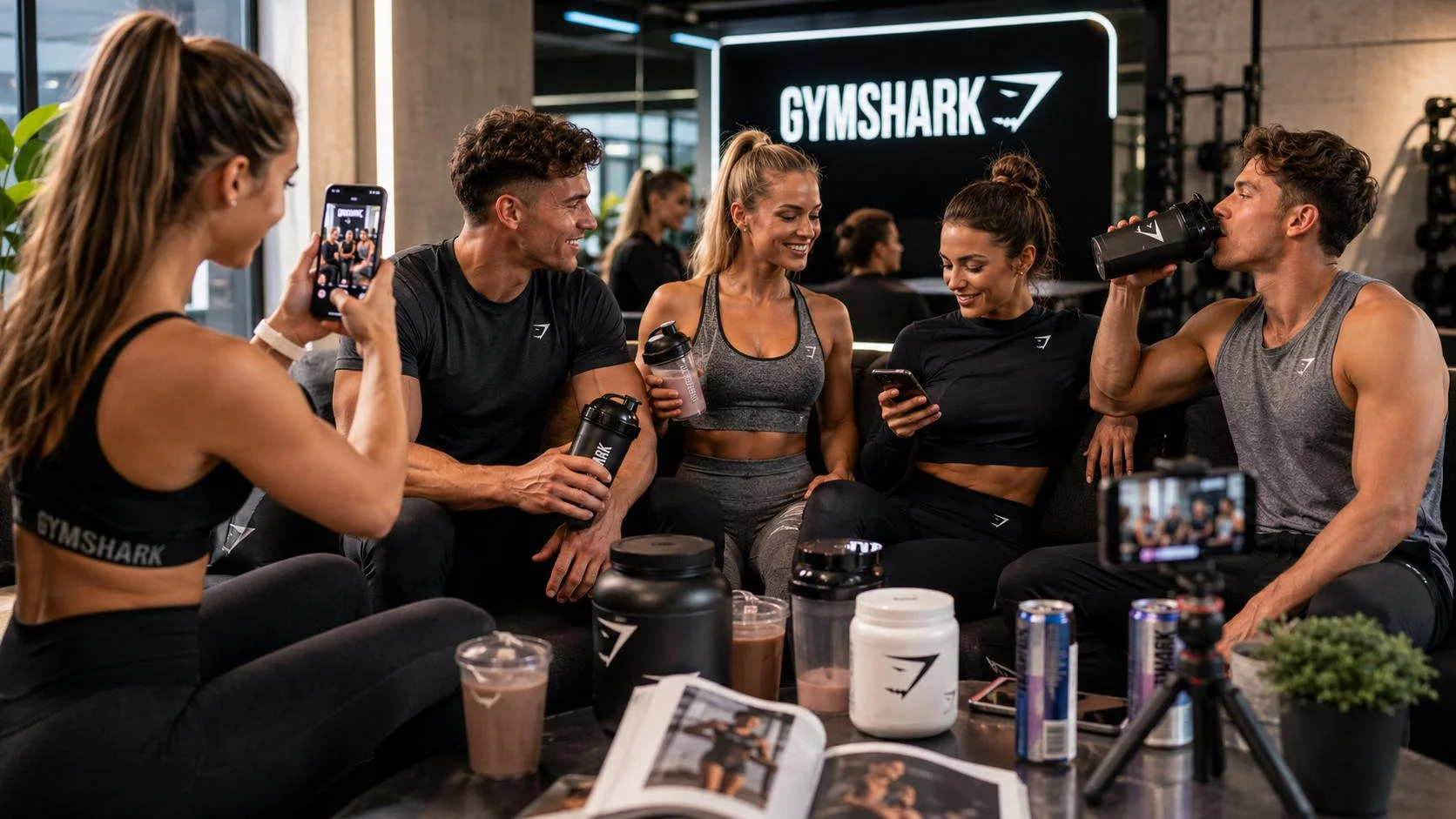
Gymshark sells the idea that your body is a project, your gym outfit is a declaration, your protein intake is a personality trait, and your progress should probably be photographed under lighting so aggressive it looks like your shoulders are being interrogated. It is not just activewear. It is the uniform of modern fitness identity: lift, eat protein, post progress, repeat until your camera roll looks like a hostage archive of your own hamstrings.
The brand’s own language gives the game away. Gymshark says it exists to “unite the conditioning community,” defining conditioning as what people do today to prepare for tomorrow. It also says its legacy began in 2012 in a Birmingham garage with a sewing machine, screen-printer, and wildly unreasonable ambition, which is exactly the kind of founder myth every billion-pound fitness brand needs before it starts selling contour leggings to people who own three shaker bottles and one chair covered in laundry.
Gymshark Turned the Gym Body Into a Brand Asset
Gymshark’s original genius was brutally simple: make gym clothes that made gym people look like gym people. Revolutionary, apparently. The official Gymshark story says early gym clothing was too baggy and rigid for what the founders wanted, so the first business plan became making fitted, lightweight, “physique-enhancing” product. Translation: clothes that say, “Yes, I have delts, and no, I will not be quiet about them.”
That phrase — physique-enhancing — is the whole modern fitness economy in a compression shirt. The clothing does not merely cover the body. It frames the body. It edits the body. It says the body is the product, and the outfit is the packaging.
This is what Gymshark reveals about body branding: the gym is no longer just a place to train. It is a showroom where effort becomes visible. The sports bra, stringer, oversized pump cover, seam-contour leggings, lifting belt, crew socks, and tiny tripod all work together to say, “I am becoming something, and I brought evidence.”
Very healthy. Very normal. Very “please validate my glute activation.”
Protein Culture Became the Edible Half of the Gymshark Uniform
Gymshark is not mainly a protein company, but it lives inside protein culture like a fish in electrolyte water. The outfit says “I train.” The protein says “I am serious.” Together, they form the modern fitness starter pack: Gymshark shorts, white socks, pre-workout facial expression, and a protein shake mixed with the rage of a person late for leg day.
This is not happening in a tiny bodybuilding corner anymore. Protein has escaped the gym bag and invaded regular food like a macro-obsessed raccoon. Empower’s 2025 protein spending survey found that 49% of Americans think protein has become a premium ingredient, 46% buy dedicated high-protein products like shakes, powders, and bars, and younger consumers spend far more on protein products than older generations — Gen Z at $75 per week versus Boomers at $27.
The supplement market reflects the same protein stampede. Grand View Research estimated the global protein supplements market at $29.78 billion in 2025 and projected it to reach $63.22 billion by 2033, driven by fitness awareness, product innovation, e-commerce, digital marketing, and sports nutrition growth.
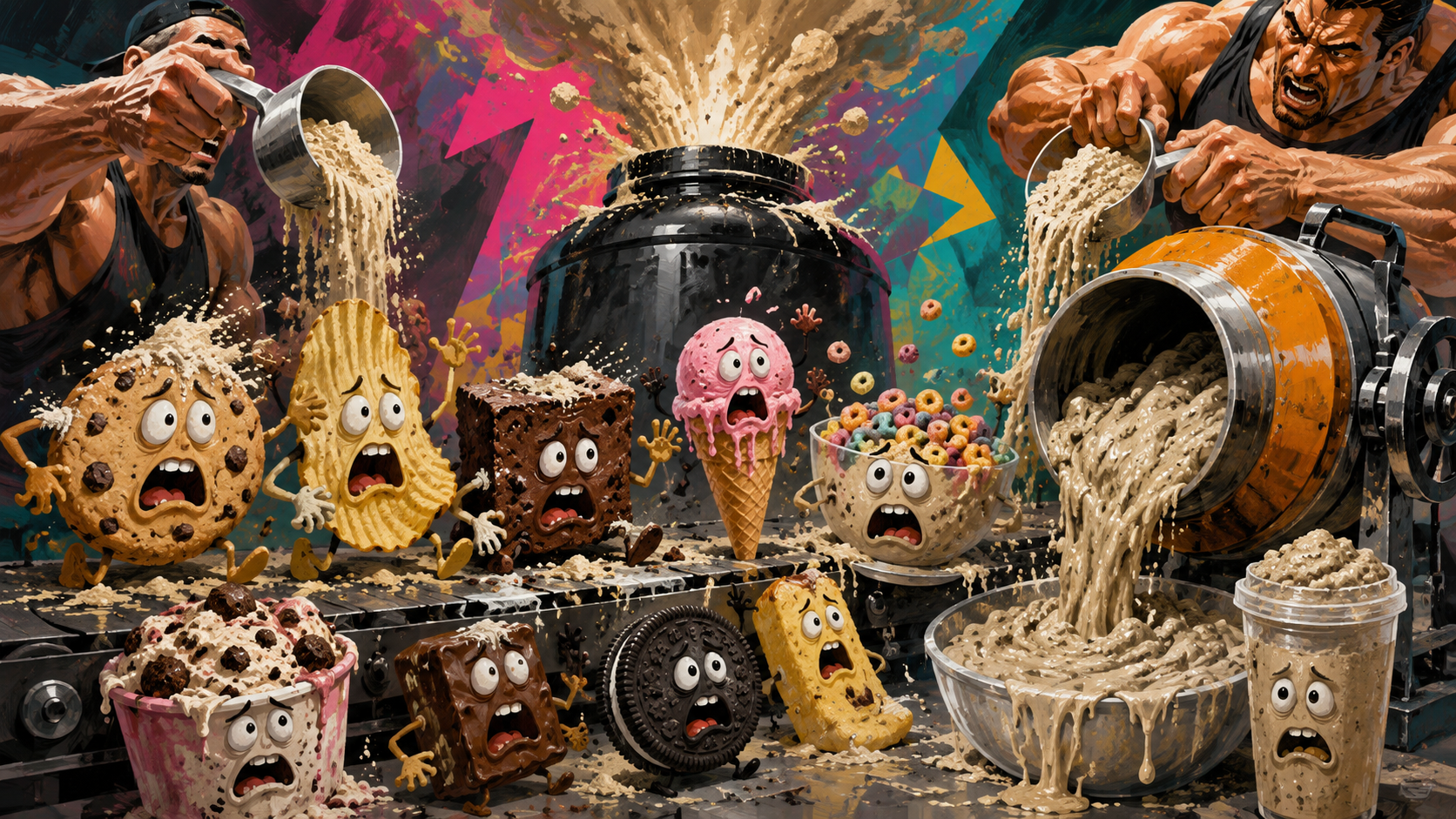
So when people joke that every snack is now “high protein,” they are not wrong. Protein has gone from nutrient to premium lifestyle token. Yogurt has protein. Coffee has protein. Chips have protein. Pasta has protein. Somewhere, a protein-enhanced candle is probably in development because the human body must recover from ambient lighting.
Gymshark 66 Shows the New Fitness Loop: Habit, Post, Repeat
Gymshark understands that modern fitness is not just about results. It is about documented effort. The company’s Gymshark66 challenge asks people to pick three daily habits across mind, movement, and nutrition, then check them off every day for 66 days. Its nutrition examples include “more protein,” less caffeine, or actually eating fruit and vegetables, which is charming because apparently produce now needs to be mentioned like a forgotten side character.
The athlete pathway makes the social-media logic even clearer. Gymshark’s “How To Become A Gymshark Athlete” page says entrants should post their Gymshark66 journey on Instagram or TikTok, tag @gymshark, use #Gymshark66, keep their profile public, and post weekly progress. The brand says it looks for people who show up every day, form positive habits, inspire others, and bring something unique.
That is not just a fitness challenge. That is a body-branding internship.
The old gym culture was: train hard and maybe someone notices.
The new gym culture is: train hard, film it, caption it, tag it, optimize it, and perhaps one day your quads will receive corporate recognition.
Protein Culture Is Not Fake. It Is Just Overmarketed Into a Small Religion.
Protein matters. Let’s not pretend the entire thing is nonsense. Muscles require protein. Recovery requires protein. Active people often need more protein than sedentary people. The International Society of Sports Nutrition states that 1.4 to 2.0 grams of protein per kilogram of body weight per day is sufficient for most exercising individuals trying to build or maintain muscle mass.
So the protein people are not wrong. They are just frequently unbearable.
There is a useful version of protein culture: eat enough protein to support your training, include it across meals, do not live on cereal fumes, and maybe stop calling coffee breakfast unless you are a Victorian ghost with a deadlift program.
Then there is the internet version: protein-maxxing, double-protein everything, dry chicken worship, cottage cheese hidden inside foods where cottage cheese should need a warrant, and influencers treating 180 grams of protein like the only thing standing between you and moral collapse.
Protein went from “helpful nutrient” to “proof I am disciplined.” That is the Gymshark-adjacent cultural shift. The macro became a badge.
The Body Is Now a Resume
Gymshark’s success makes more sense when you understand that modern fitness does not merely sell health. It sells legibility.
A visible gym body tells a story people can read quickly: discipline, control, effort, time, money, consistency, maybe suffering, possibly one too many conversations about creatine. Gymshark clothing sharpens that story. Protein culture feeds it. Social media distributes it. Congratulations, your torso now has a communications strategy.
That is body branding. It is not enough to be active. You must look active. It is not enough to eat well. You must visibly participate in the rituals: shaker cup, meal prep, gym check-in, progress photo, macro screenshot, “high-protein grocery haul,” and the tragic little phrase “getting my steps in.”
Gymshark did not invent this. It just understood it early and sold the costume.
Influencer Fitness Works Because It Motivates and Messes With You at the Same Time
Fitness influencers are effective because they offer proof. You see the body, then the workout, then the outfit, then the protein shake, then the discount code, and your brain says, “Ah, a system.” It may be a system. It may also be genetics, lighting, editing, paid sponsorship, youth, time, and a metabolism that has never been betrayed by a 9-to-5 job.
Research captures this double edge. A 2022 study on social media fitness influencers found that perceived trustworthiness, expertise, attractiveness, and motivating power can increase users’ intentions to exercise. It also found that more negative body image increased exercise intentions among female users. So yes, fitness content can motivate people, but sometimes the motivation arrives wearing a tiny backpack full of insecurity.
A systematic review of “fitspiration” content found that fitspo is associated with negative body image, especially among younger audiences more exposed to it. That is the part the inspirational quote graphic leaves out because “Believe in yourself, also you may feel worse about your body now” does not fit nicely over a squat rack photo.
Protein, Supplements, and the “Perfect Me” Problem
The deeper issue is that protein culture can become a gateway from “I want to recover better” to “I am constructing the perfect body because the internet keeps showing me people who look like anatomy charts with ring lights.”
A study of 2,269 young male gym users in the Netherlands found that 83% used ergogenic dietary supplements, mainly protein and creatine, while image-centric social media use was associated with supplement use, anabolic steroid use, and more dissatisfied body image.
That does not mean protein powder is evil. Protein powder is not Voldemort in a tub. It is just powdered food. The problem is the culture around it: the constant implication that your normal body is a disappointing beta version and every scoop, rep, cut, bulk, and product drop moves you closer to becoming the person strangers might finally approve of.
That is where protein culture stops being nutrition and starts being body anxiety with a shaker ball.
Gymshark Knows It Has to Broaden “Strong”
To its credit, Gymshark has clearly tried to move beyond “only shredded people may enter.” Its “Every Strong Belongs” campaign says strength is not one size fits all, that strength is more than muscle, and that different forms of strength can be physical, mental, emotional, or community-based.
That matters because the gym can be intimidating as hell, especially if your entire feed suggests everyone else was born knowing how to hip thrust under nightclub lighting. Gymshark’s own 2025 article on gym anxiety cited a survey of 1,000 women in which 88% reported some form of gym anxiety and 66% said they had skipped a workout because of it.
So Gymshark is selling confidence while also operating in an ecosystem that can manufacture insecurity. Fun little paradox. Very retail. Very “buy the leggings that help solve the anxiety caused partly by the visual culture that made leggings a social requirement.”
The Business Is Big Because the Identity Is Big
Gymshark’s growth shows how profitable this body-branding world has become. The brand reported its thirteenth consecutive year of growth for the year ending July 31, 2025, with sales reaching £646 million, up from £607.3 million in FY24. Pre-tax profit dipped to £7 million, which founder and CEO Ben Francis attributed to continued investment and laying foundations for future growth.
This is not a niche gymwear brand anymore. It is a giant cultural machine built around the idea that fitness is a community, a wardrobe, a content category, a personal transformation arc, and a shopping habit.
General Atlantic’s 2020 investment valued Gymshark at more than £1 billion, describing the company as a fitness community and apparel brand, not merely a clothing seller.
That framing is important. The money is not just in fabric. It is in belonging.
What Gymshark Reveals About Protein Culture
Gymshark reveals that protein culture is not only about protein. Protein is the edible symbol of effort. It says, “I am participating.” It says, “I know the rules.” It says, “I am not just eating lunch; I am supporting hypertrophy, thank you very much.”
Protein has become a tiny daily performance of seriousness. A high-protein yogurt is not just yogurt. It is yogurt with ambition. A protein bar is not just a snack. It is a snack wearing a tank top. A double-chicken bowl is not just lunch. It is lunch that wants you to know it has goals.
And because Gymshark’s world is built around visible progress, protein becomes the backstage pass. The clothes show the body. The workouts build the body. The protein explains the body. The post advertises the body. The discount code monetizes the body.
Beautiful. Horrifying. Efficient.
How to Use Protein Culture Without Letting It Brand Your Soul
The useful version is simple: eat enough protein for your actual life, not for the imaginary influencer version of yourself who wakes up at 5 a.m. glowing and meal-preps bison.
Use protein as support, not identity. You are allowed to eat a high-protein breakfast without becoming the mayor of Macro Town. You are allowed to wear Gymshark without photographing every hamstring. You are allowed to train for strength, health, stress relief, sport, confidence, or the noble goal of carrying groceries in one trip.
Do not let clothing become a body audit. If the outfit helps you feel comfortable and capable, great. If it makes you spend half the workout checking whether your body looks acceptable under fluorescent lighting, that outfit has become a tiny textile bully.
Be suspicious of any fitness content that makes you hate yourself into action. Motivation built on self-disgust has the structural integrity of a protein pancake: impressive for 12 seconds, then sad and rubbery.
And please, eat vegetables. Protein is great, but fiber exists. Micronutrients exist. Carbs exist. Joy exists. Your body is not a protein storage facility with Wi-Fi.
Final Verdict: Gymshark Sells the Fitness Identity Kit
Gymshark reveals that modern fitness is no longer just about training. It is about identity management.
The brand grew by understanding that people do not merely want workout clothes. They want clothes that make effort visible. They want to belong to a community. They want a body that says something before they do. They want protein because protein feels like proof. They want progress, but they also want progress to look good under a logo.
At its best, this culture motivates people to move, eat better, build confidence, find community, and take themselves seriously. At its worst, it turns the body into a never-finished branding project and makes every meal feel like a performance review conducted by a protein bar.
Gymshark did not create protein culture or body branding. It just put them in fitted fabric and sold them back to a generation that learned discipline through mirror selfies.
The shark logo says “we do gym.”
The culture says, “We do gym, we track protein, we post evidence, we compare bodies, we buy the outfit, and then we call it self-improvement.”
Which it can be.
As long as the body stays a home, not a billboard.