Why Top Chef Portions Make More Sense in the GLP-1 Era
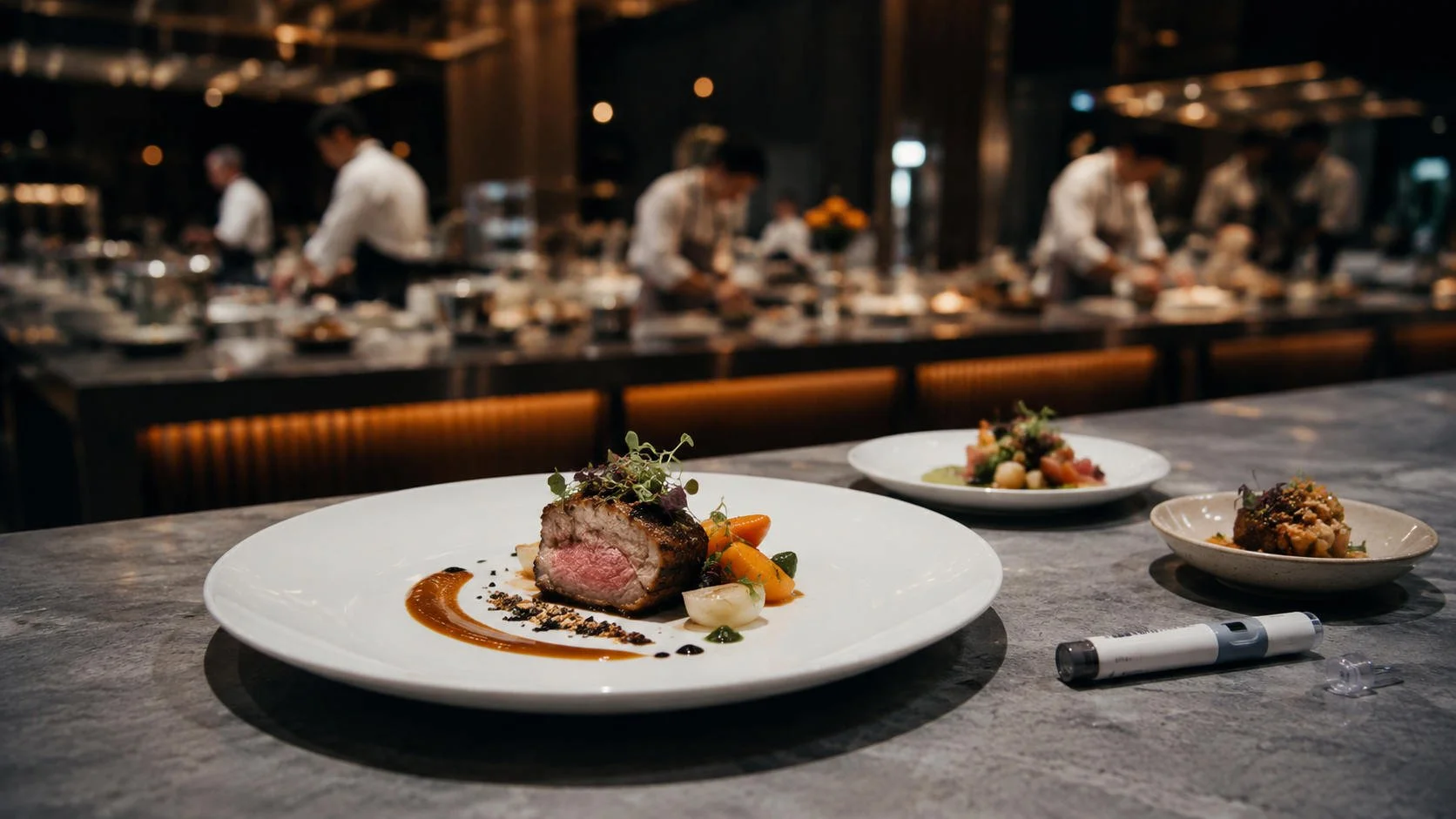
The joke about Top Chef portions used to be easy: three scallops, one smear of purée, a garnish applied with tweezers, and a judge saying, “I wish there were more acid,” because apparently even dinner needs emotional instability.
For years, viewers looked at those little competition plates and thought: adorable. Pretentious. Where is the rest of the food? Is the entrée hiding behind the microgreen? Did someone mug the plate on its way to the table?
But now we are in the GLP-1 era, and suddenly Top Chef portions look less like culinary theater and more like prophecy in a sauce swoosh. The show’s best plates are not built around stuffing a person into a booth until they ask for a shipping container of leftovers. They are built around impact: a few bites, intense flavor, smart protein, vegetables that actually do something, texture, restraint, and enough composition to make the plate feel complete without requiring a nap, a doggy bag, and a short apology to your digestive system.
This is not medical advice. This is food culture. Ask actual medical professionals about actual medication, because your doctor went to school and TikTok went to brunch.
Top Chef Was Portion-Control Television Before Portion Control Got a Brand Deal
Top Chef is not a normal restaurant. It is a pressure cooker where chefs serve judges who may taste a parade of dishes in one sitting while production captures every foam, flaw, and facial micro-expression. Bravo’s current Season 23 is set in the Carolinas, with Kristen Kish hosting and Tom Colicchio and Gail Simmons judging, which means the show is still doing its core thing: making talented cooks compress skill, story, regional context, and panic into one plated argument.
The portions make sense because the food is judged by concentration, not mass. Tom Colicchio has said his criteria start with whether something is cooked and seasoned properly, then whether it fits the challenge and is interesting. Notably absent from that list: “Did the chef provide enough chicken to sedate a linebacker?”
Behind the scenes, the show is even more engineered than viewers realize. Bravo says chefs choose plateware, production has amassed more than 5,000 plateware items, and cook times are staggered so dishes come out hot and fresh. That is not dinner; that is a NASA launch for risotto.
And yes, the portions can be small. Eater’s behind-the-scenes account of a Top Chef Restaurant Wars taping noted that portions were “pretty small,” that even a three-course meal did not feel like a full dinner, and that the judges received the same half-portion of one dish as other diners. So no, your television was not broken. The plates really were doing that tiny little chef math.
The GLP-1 Era Changed What “Enough” Feels Like
GLP-1 has become the shorthand for a wave of medications used for diabetes and weight management, including semaglutide and tirzepatide. NIDDK lists semaglutide under Wegovy and tirzepatide under Zepbound among FDA-approved long-term medications for chronic weight management; it explains that semaglutide mimics GLP-1 to target brain areas regulating appetite and food intake, while tirzepatide mimics GIP and GLP-1 to target those appetite and food-intake pathways.
This is no longer some obscure pharmaceutical subplot. A 2025 KFF poll found that 12% of U.S. adults said they were currently taking a GLP-1 drug such as Ozempic or Wegovy for weight loss or a chronic condition, and 18% said they had taken one at some point. That is not a fringe trend. That is a dinner-table redesign with side effects, insurance arguments, and a thousand restaurant menus nervously checking portion sizes.
The key shift is appetite. Many people on these medications still like food. They still go to restaurants. They still want flavor, atmosphere, and social life. They just may not want to eat a plate large enough to count as upholstered furniture.
The National Restaurant Association reported in May 2026 that GLP-1 users are not abandoning restaurants; 87% say they enjoy going to restaurants and 71% consider restaurants essential to their lifestyle. But their ordering behavior is changing: smaller portions, high-protein items, vegetables, personalization, and snack-sized options are becoming more relevant. More than nine in ten GLP-1 users said they would order items aligned with their preferences, and 76% said they would pay a premium for such options.
Translation: people still want to eat out. They just do not necessarily want the entrée equivalent of a sectional sofa.
Top Chef Portions Make Sense Because They Respect the Bite
The best Top Chef plate is usually not about abundance. It is about the bite. One bite with acid, fat, salt, texture, temperature, aroma, and balance. One bite that tells the story before the judge starts making the face. You know the face. The “this needed crunch” face. The “the fish is hammered” face. The “I am about to destroy your self-esteem using the word ‘muddy’” face.
That kind of food is built for smaller appetites because it does not rely on quantity to feel satisfying. It relies on precision.
This is where the GLP-1 era makes Top Chef portions feel more modern than the average restaurant entrée. If a diner’s appetite is smaller, the giant-plate model becomes clumsy. More food is not automatically more value. Sometimes more food is just future waste wearing parsley.
A Top Chef-style portion says: here is the thing. Not twelve ounces of it. Not a casserole pan of it. The thing. Focused. Finished. Stop demanding that value be measured by how much mashed potato can be physically supported by ceramic.
The Old Restaurant Model Confused Volume With Generosity
American restaurants have spent years treating large portions like emotional compensation. Didn’t get enough attention as a child? Here is a pasta bowl with the square footage of a studio apartment. Feeling uncertain about value? Here is a chicken parm the size of a laptop. Want dessert? Here is a cake slice engineered by civil authorities.
Oversized portions are not just a cultural joke; they are measurable. A Tufts-linked multi-country restaurant study found that 94% of full-service meals and 72% of fast-food meals studied across five countries contained 600 calories or more, and full-service meals averaged more calories than fast-food meals. The researchers warned that large restaurant meals make overeating easy when they are only one of several meals and snacks in a day.
Now GLP-1s are forcing a rude little question: what if the person does not want all that? What if a huge plate no longer feels generous? What if it feels like a threat with garnish?
This is where Top Chef looks smarter than the bottomless-breadstick industrial complex. The show’s plates are designed to make a point, not bury the diner.
Smaller Portions Do Not Have to Mean Sad Portions
Here is where restaurants often panic and get stupid. They hear “smaller portions” and immediately imagine half a grilled chicken breast, three steamed vegetables, and a lemon wedge sitting there like it lost custody of flavor.
No. Wrong. Shameful. Go stand in the walk-in and think about what you’ve done.
A smaller portion only works if it has intention. The Top Chef lesson is not “serve less.” The lesson is “serve less better.” That means good protein, deliberate fat, acidity, vegetables with actual technique, sauces that do not behave like wet wallpaper, and textures that keep the meal from feeling like medical compliance.
This is especially important because GLP-1 users may prioritize high-protein foods and vegetables, according to the National Restaurant Association’s 2026 findings on changing ordering habits. A smaller portion that is also low in protein, low in fiber, and low in pleasure is not innovation. It is a snack with abandonment issues.
A Top Chef plate, at its best, understands density. Not calorie density necessarily — flavor density. A small dish can feel complete if every element earns its rent. A little braised meat, a sharp sauce, something crisp, something bitter, something creamy, something bright. That is how you make “less” feel like “enough,” instead of “where did the rest of my entrée go, you tiny-plate bandits?”
The GLP-1 Diner Wants Taste Without a Food Coma
A lot of restaurant menus were built for the old appetite fantasy: big entrée, big side, big drink, big dessert, big check, big shame spiral in the parking lot. But GLP-1s are making many diners more sensitive to heaviness, richness, alcohol, and sheer volume. Reuters reported that food companies and restaurants are already adapting with high-protein products, “GLP-1 friendly” labels, and smaller portions as appetite-suppressing drugs shift demand.
That does not mean every restaurant should slap “GLP-1 menu” on a laminated card like a pharmaceutical tapas nightmare. Please, no. The phrase “Ozempic-friendly appetizer flight” sounds like something invented by a consultant who has never enjoyed bread.
The better move is subtler: more appetizer-sized entrées, half portions, protein-forward small plates, vegetable sides that are not punishment, shareable formats, and desserts that do not arrive as structural engineering projects.
In other words: make the menu more like a good Top Chef episode and less like a Cheesecake Factory menu found in the ruins of a civilization.
Waste Is the Quiet Villain Here
GLP-1s also make oversized portions feel dumb because people may leave more food behind. And if there is one thing more annoying than paying too much for dinner, it is paying too much for dinner and then staring at the uneaten half like it is judging you.
ReFED and Datassential reported in January 2026 that portion sizes are a major driver of plate waste, which makes up 70% of restaurant and foodservice food waste. Their findings said nearly half of consumers had been surprised by how large a restaurant meal was, one-third ate past fullness to avoid waste, and 30% wished a purchased restaurant meal had been smaller. Among GLP-1 users, 75% reported feeling guilty about leaving food uneaten, and 75% said they were more likely to visit restaurants offering flexible or customizable portion sizes.
There it is. The customer is not always asking for more. Sometimes the customer is asking for less food, designed better, priced fairly, and served without the restaurant acting like portion flexibility is an attack on the chef’s ancestors.
Top Chef portions work because waste is built out of the fantasy. You taste the dish. You judge the dish. You move on. No one needs to drag home a half-eaten mountain of cream sauce in a sweating plastic container and call it “lunch tomorrow” with dead eyes.
Fine Dining Accidentally Prepared for This Moment
Fine dining has been mocked for tiny portions forever, sometimes correctly. There is a difference between a focused tasting portion and a plate that looks like someone sneezed quinoa onto porcelain.
But the tasting-menu logic suddenly feels relevant: many small experiences, paced carefully, with variety instead of bulk. That is basically the GLP-1 restaurant fantasy, minus the $285 tasting menu and the server explaining moss.
Top Chef operates in that same logic. It is built around sampling, judging, comparing, and moving from one dish to the next. Kristen Kish has compared the judging experience to dining with friends and sharing several plates at once, while noting that the show accounts for serving food at its peak.
That model feels very current: people want to try things. They may not want a full entrée. They may want three bites of something perfect, a vegetable dish, a lean protein, and a dessert shared four ways because dessert is still emotionally important and anyone who says otherwise should be investigated.
Restaurants Need to Stop Treating Smaller Portions Like a Discount Shame Corner
A smaller portion cannot simply be the big plate’s sad little cousin. It needs its own logic.
This is the danger of the GLP-1 era for restaurants: they may shrink food and keep the price insulting, then act surprised when customers notice. Smaller portions work only when they feel intentional, not like shrinkflation with garnish.
The ReFED and Datassential research found that consumers are interested in flexible portion options, and that many would choose restaurants offering customizable portion sizes. That does not mean customers want to be tricked. It means they want control: half entrée, tasting size, protein add-on, vegetable-forward plate, snack item, shared course, or “I would like dinner, not a dare.”
A Top Chef portion is defensible because it is judged on execution. Restaurants should learn that lesson. If you give someone less food, the food has to be better. More careful. More satisfying per bite. More clearly priced. Less “we removed three ounces and added a microgreen, applause please.”
What a Top Chef-Smart GLP-1-Era Menu Would Look Like
A smart menu for this era would not scream “diet.” That word should be locked in a basement with 1990s snack cakes and low-fat ranch trauma.
It would offer:
A protein-forward small plate that can stand alone or be paired with a side. Think grilled fish, chicken thigh, shrimp, tofu, beans, eggs, or lean steak with a sauce that has flavor instead of sadness.
A vegetable plate that eats like a dish, not a garnish pile. Charred cabbage, roasted carrots with yogurt, mushrooms with broth, crispy chickpeas, bitter greens, something with acid and crunch. Vegetables deserve better than being steamed into apology.
A half entrée priced honestly. Not half the food for 91% of the price, you little invoice goblins.
A snack-sized option available outside the kid’s menu, because adults also want small food and should not have to order dinosaur nuggets under an assumed name.
A dessert bite or mini dessert. Not because people on GLP-1s cannot eat dessert, but because a full restaurant dessert often arrives like a structural dare with whipped cream scaffolding.
Basically, a menu that says: you can eat less without being punished. Revolutionary, apparently.
The Real Lesson Is Not “Tiny Food Good”
Let’s be clear before every restaurant starts serving one raviolo under a glass dome and blaming semaglutide.
The lesson is not that all portions should be tiny. The lesson is that portion should match appetite, context, and value. Some people still want a large meal. Some people are not on GLP-1s. Some people are athletes. Some people skipped lunch. Some people came for the full pasta experience and should be allowed to commune with carbohydrates in peace.
But the one-size-fits-all entrée is looking more outdated. The GLP-1 era exposes what Top Chef has always understood: a plate does not need to be huge to be satisfying. It needs to be thoughtful.
The problem was never abundance itself. The problem was treating abundance as the only acceptable proof of value.
Top Chef Saw the Future, and It Was a Smaller Plate With Better Sauce
Top Chef portions make more sense in the GLP-1 era because the culture around appetite is changing. More diners are thinking about protein, vegetables, fullness, waste, price, and whether they actually want the giant entrée they used to order out of habit. Restaurants are still important to GLP-1 users, but ordering habits are shifting toward smaller portions, personalization, and nutrition-aware choices.
That is exactly where Top Chef plating shines. Small does not have to mean stingy. Precise does not have to mean joyless. A dish can be compact and still feel complete if it has flavor, protein, texture, acidity, and intention.
The old restaurant fantasy said value was a mountain of food. The new one might say value is leaving satisfied, not stuffed; impressed, not immobilized; nourished, not buried under Alfredo.
Top Chef plates used to look tiny because the rest of the restaurant world was screaming “more” like a buffet trapped in a midlife crisis.
Now they look strangely reasonable.
Which is annoying, because no one wants to admit the microgreen people had a point.