Why Domino’s Coupons Are Basically a Survival Tool for Broke Nights
A Domino’s coupon is not a “deal.” That is too cute. That makes it sound like a fun little bonus for someone named Chad ordering pizza before pickleball.
No. A Domino’s coupon is emergency infrastructure with pepperoni. It is the thin blue line between “we are having dinner” and “everyone stare into the fridge and pretend shredded cheese is an entrée.” It is what you use when payday is still two calendar squares away, the grocery store has become a luxury obstacle course, and the idea of cooking from scratch makes you want to lie face-down on the kitchen floor like a tragic Victorian ghost.
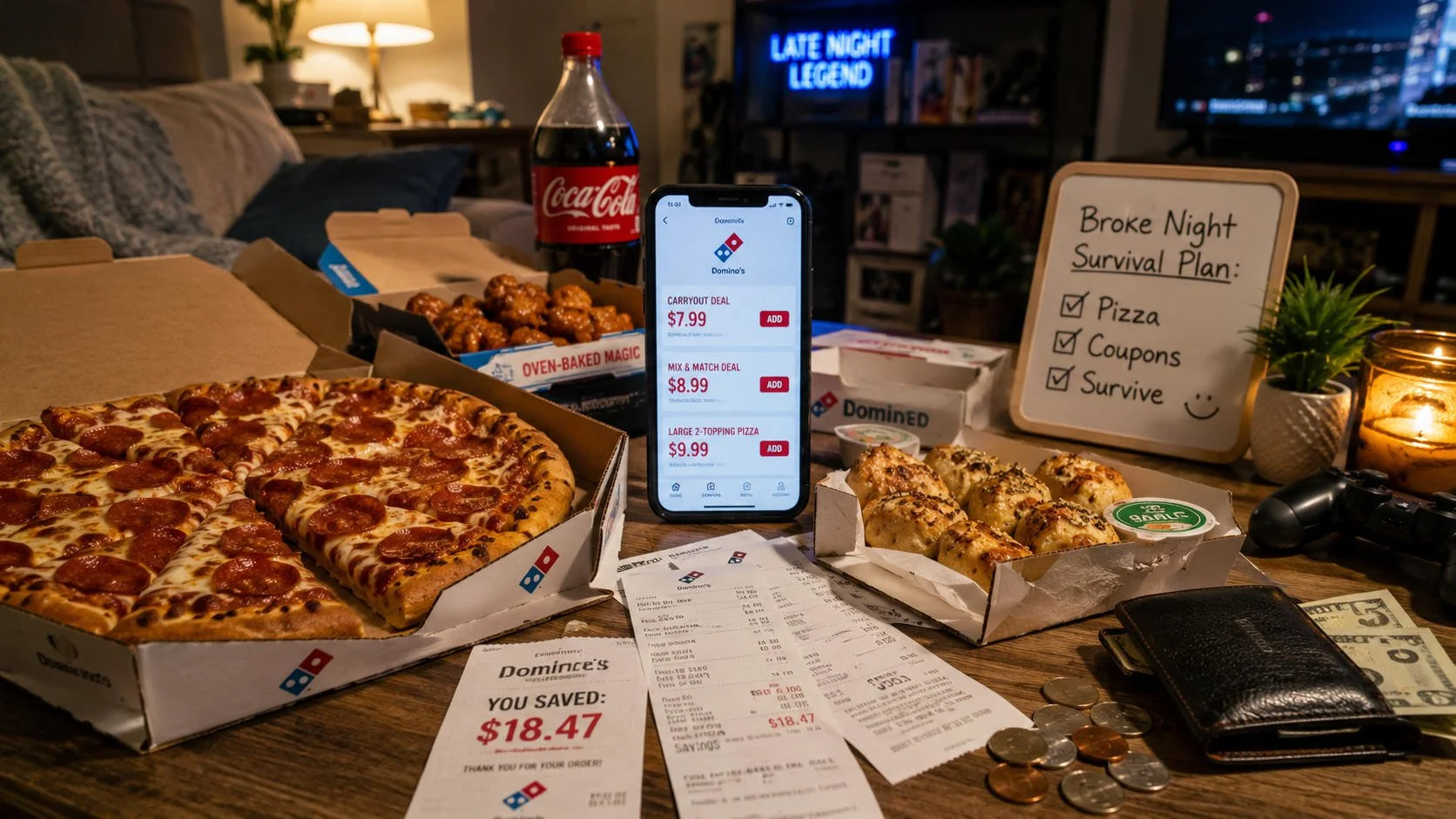
Domino’s coupons are basically a survival tool for broke nights because they solve the three problems broke nights always bring: money, time, and morale. Money is low. Time is dead. Morale is under the couch with a missing sock and one unpaid bill. Then Domino’s appears with a Mix & Match deal, a carryout special, rewards points, and the promise that for one night, dinner can be hot, shareable, and not involve scraping a pan while questioning every financial decision since 2017.
Is Domino’s the cheapest possible food? No. Rice and beans still exist, standing in the pantry like responsible little monks. But cheap is not the only factor. A survival meal has to be affordable, fast, familiar, filling, and capable of feeding multiple people without starting a domestic summit. That is where the couponed pizza becomes powerful. It is not gourmet. It is not wellness. It is not “nourishment” in the candlelit influencer voice. It is dinner that actually happens.
Domino’s Coupons Work Because the Menu Is Built for Broke Math
Domino’s knows exactly what it is doing. The company’s current national deals page advertises a Mix & Match offer where customers can choose any two or more medium two-topping pizzas, sides, and desserts for $6.99 each, with the usual “prices higher for some locations” warning, because of course even pizza deals now need a legal footnote wearing non-slip shoes. Domino’s also lists a Weeklong Carryout deal at $7.99 each for carryout large one-topping pizzas, 8-piece wings, or boneless chicken, plus a Perfect Combo at $19.99 with two medium one-topping pizzas and two 16-piece orders of bread bites.
That matters because broke-night food is not just about the lowest sticker price. It is about the cost per person, the leftover potential, and the mental cost of making the meal happen. Two medium pizzas for $13.98 before tax and fees can feed a few people, especially if at least one person in the house is willing to act like a side salad is a supporting character and not an accusation.
This is the great Domino’s coupon trick: it turns dinner into modular arithmetic. Two pizzas. One side. Maybe bread bites. Maybe carryout to dodge delivery fees. Maybe rewards points for next time. It is not fine dining. It is battlefield logistics with garlic crust.
Broke Nights Are Not About Laziness. They Are About Load-Bearing Exhaustion.
The lazy-person narrative around pizza delivery is one of society’s dumbest little sermons. “Just cook.” Wonderful advice, Professor Apron. Please also provide the groceries, time, energy, clean pans, cooperative children, functioning executive function, transportation, and the emotional stability required to chop an onion after a 10-hour shift.
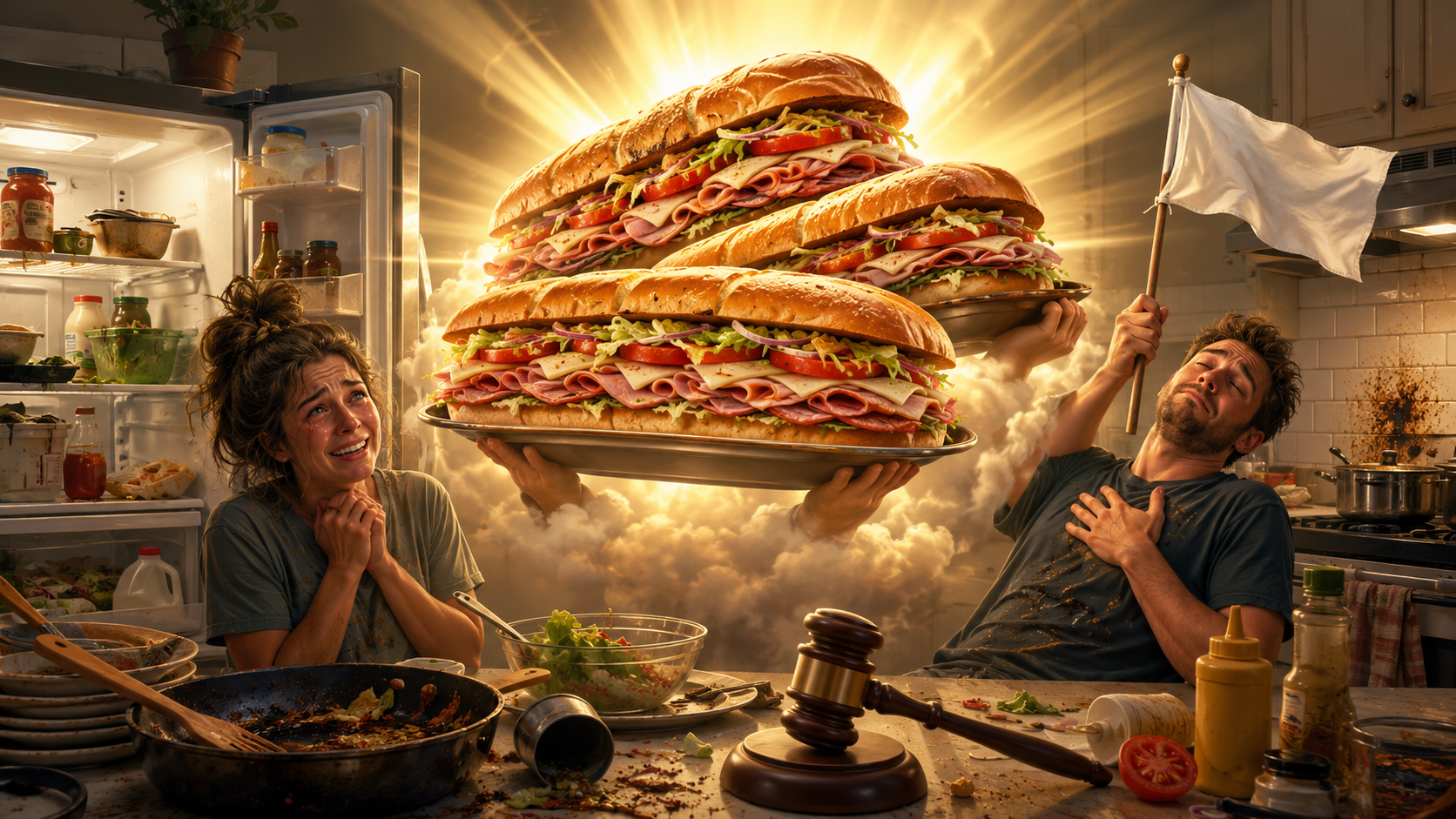
Broke nights are not always nights when there is literally no food in the house. Sometimes there is food, technically. There are oats. There is a frozen mystery brick. There is one egg and a bag of spinach currently liquefying in the crisper drawer like it owes someone money. But there is no coherent meal, no energy to invent one, and no patience left to negotiate with picky eaters or roommates or children or the exhausted adult whose soul just made the Windows shutdown noise.
This is where a coupon matters. It collapses effort. It makes the meal one click, one code, one pickup. It turns “What are we going to eat?” from a household crisis into a solvable problem. And when money is tight, solvable problems are not small things. They are emotional luxury goods.
Food insecurity is not some fringe issue reserved for tragic documentaries with acoustic music. USDA data says 13.7% of U.S. households, or 18.3 million households, were food insecure at some point in 2024; among households with children, the rate was 18.4%. That means millions of people were uncertain about having enough food because money or resources were short. A coupon is not a public policy solution, obviously. Please do not let corporations replace the safety net with bread bites. But on a household level, discounts can become coping tools.
The Grocery Store Is Not Always the Cheaper Hero People Pretend It Is
People love to say “cooking at home is cheaper,” which is generally true and also sometimes the most useless true statement in the room. A bicycle is cheaper than a car, too, but not if you need to move a couch across town in February.
Grocery prices are still pressuring households. USDA’s May 2026 Food Price Outlook reported that food prices in April 2026 were 3.2% higher than a year earlier, with restaurant food up 3.6% and grocery food up 2.9%. Fresh vegetables were especially rude, rising 11.5% year over year, while fresh tomato prices were nearly 40% higher.
So yes, buying ingredients can be cheaper if you already have oil, spices, pans, storage, time, and the ability to use everything before it dies in the fridge. But broke kitchens often do not work like cookbook kitchens. Ingredients spoil. Kids reject unfamiliar meals. A planned dish requires one missing item. A “cheap” recipe suddenly needs eight pantry staples you ran out of last week. The grocery cart becomes a series of tiny betrayals.
A couponed pizza is not always cheaper than cooking, but it is predictable. That predictability is the product. You know the price before checkout. You know people will eat it. You know leftovers can become tomorrow’s breakfast if everyone agrees not to call the authorities. You know one box can feed multiple appetites without requiring a cutting board to enter the conversation.
Carryout Is the Broke-Night Power Move
Delivery is convenient. Delivery is also where the price quietly grows little vampire teeth.
Domino’s own offer details say delivery orders may be subject to minimums and delivery charges, and the delivery charge is not a tip paid to the driver. This is important because the delivery checkout can take a cheap pizza plan and turn it into “why is this suddenly $29?” with the confidence of a magician stealing your watch.
Carryout is usually the broke-night move if you can manage it. It avoids the delivery fee, reduces tip pressure because no driver is involved, and unlocks carryout-specific deals like the current Weeklong Carryout offer. Domino’s also knows carryout matters: its Q1 2026 results showed U.S. same-store sales grew 0.9%, and the company continues to push value and store access as part of its model.
Is driving to pick up pizza glamorous? No. It is not supposed to be. Carryout is not a lifestyle. It is a tactical extraction. You put on shoes, retrieve the food, and return home as the hero of a household that was 14 minutes away from eating cereal for dinner.
Rewards Points Are the Pantry You Forgot Was Digital
The modern coupon drawer lives in apps now, which is annoying because every restaurant wants a permanent apartment in your phone. Still, if you order Domino’s even occasionally, the rewards system matters.
Domino’s revamped its loyalty program so members earn 10 points on every order of $5 or more. Rewards can be redeemed at 20 points for items like a dipping cup, Parmesan Bread Bites, or a 20-ounce drink; 40 points for Bread Twists or Stuffed Cheesy Bread; and 60 points for a medium two-topping pizza, pasta, oven-baked sandwich, or Chocolate Lava Crunch Cakes.
That is not charity. It is customer retention with garlic powder. But if you are broke, customer retention can still feed you. The corporation may be trying to train your behavior like a coupon lab rat, but sometimes the rat gets free cheesy bread, and the rat has rent due.
This is why loyalty programs are now part of eating out on a budget. PYMNTS reported in 2026 that restaurant loyalty-program enrollment reached 48% of diners in 2025, weekly engagement rose to 47%, and 93% of loyalty members check for deals before deciding where or what to eat. That is not “brand love.” That is people searching for discounts before dinner because money has become a haunted little spreadsheet.
Domino’s Literally Marketed the “Emergency Pizza,” Because It Knows
Domino’s has not been subtle about this. Its “Emergency Pizza” campaign described a free medium two-topping pizza as something customers could redeem when life threw something at them — burned dinner, traffic, a bad day, whatever else the universe dragged in wearing muddy boots. The program’s FAQ framed it as a pick-me-up during uncertainty and said the free pizza could be combined with deals like Mix & Match or Weeklong Carryout, though that specific listed campaign period ended in January 2025.
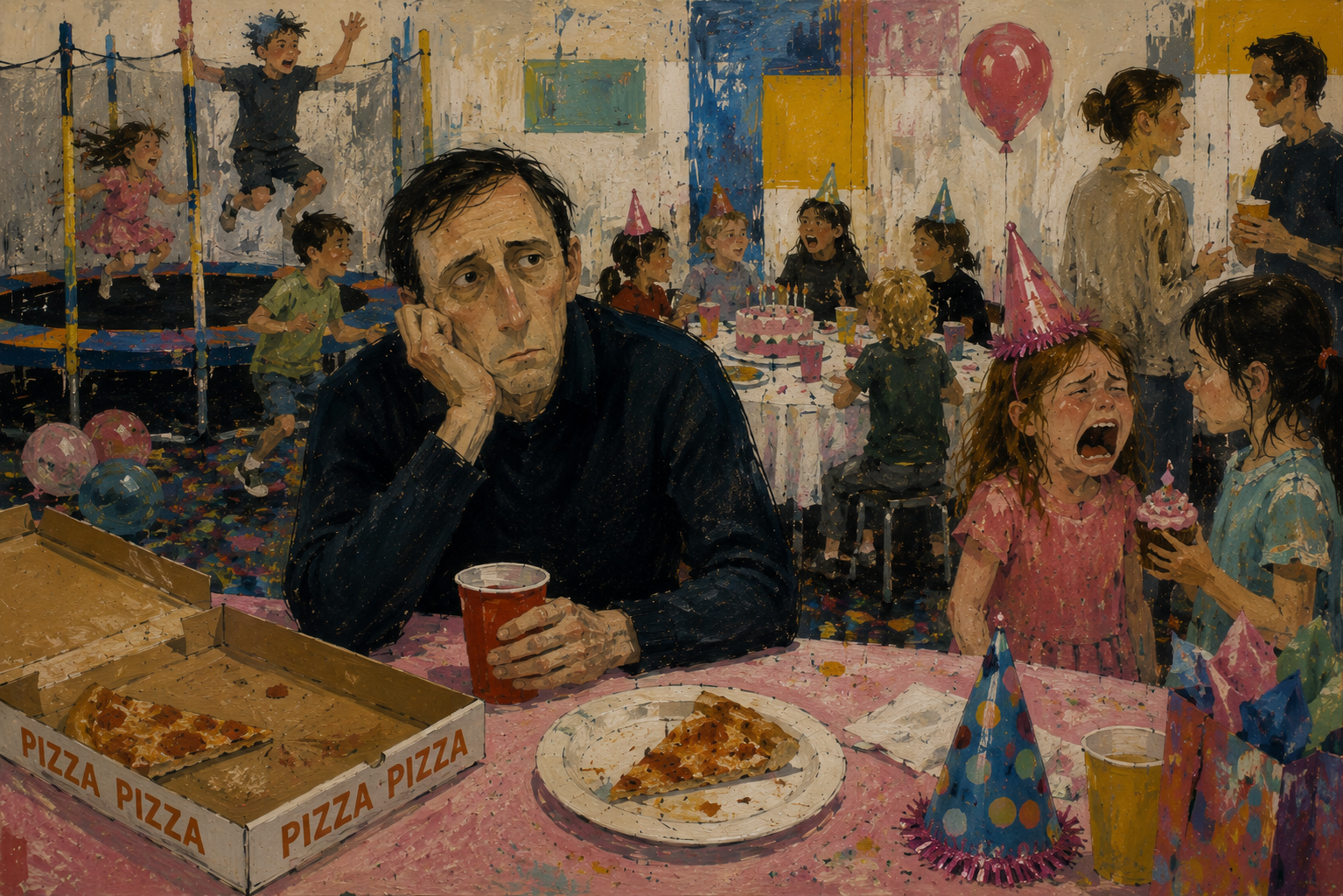
That campaign worked because it named the thing everyone already knew: pizza is often used as an emergency solution. Not a grand emergency, not “the house is on fire,” but the smaller humiliating emergencies that make up adult life. The chicken didn’t thaw. The paycheck is late. The kids are melting down. The sink is full. You forgot groceries. Your brain has become damp cardboard. Dinner must happen anyway, because apparently humans require food every single day, which feels excessive.
Domino’s did not invent the pizza emergency. It branded it. Which is both cynical and, annoyingly, accurate.
The Coupon Makes Pizza Feel Like a Controlled Splurge
Part of why coupons work emotionally is that they let broke people have something that feels like a treat without the full guilt hangover. A full-price pizza order can feel reckless. A couponed pizza order feels strategic. Same box. Different psychological outfit.
This is important because poverty and tight budgets do not just restrict food. They restrict pleasure. Every purchase becomes a little courtroom. Do you need it? Can you justify it? Is this responsible? What if something happens tomorrow? What if the car makes that noise again? What if the electric bill does its monthly jump scare?
A coupon gives permission. It says: this is not a splurge; this is a plan. This is not waste; this is value. This is not giving up; this is getting through the night with hot food and leftovers. The coupon transforms pizza from “irresponsible takeout” into “discounted meal solution,” which is basically the closest fast food gets to therapy.
The Best Domino’s Coupon Strategy for Broke Nights
The smartest broke-night Domino’s order is usually not the most exciting one. Sorry. The most exciting order includes specialty crust, wings, pasta, lava cakes, drinks, extra sauces, and enough sides to make the table look like a Super Bowl party hosted by poor impulse control. That order is how a coupon turns into a financial trap wearing mozzarella.
The best strategy is boring and effective: use the Mix & Match deal for two medium two-topping pizzas, or use the Weeklong Carryout deal for a large one-topping pizza if you only need one main item. Check your local coupons before ordering, because Domino’s clearly states prices, participation, delivery area, and charges can vary by store.
For maximum survival value, choose toppings that make leftovers better. Pepperoni survives. Sausage survives. Mushrooms can survive if your household contains adults. Extra vegetables can be useful, but do not turn a broke-night pizza into a wet salad disc unless you know your people will eat it. Leftovers are the point. Tomorrow’s cold pizza is not a failure. It is breakfast wearing yesterday’s confidence.
Skip the drinks unless you truly need them. Soda is where pizza orders go to get weirdly expensive. Tap water is not glamorous, but neither is paying restaurant markup for brown sugar bubbles.
Use rewards points when they actually replace something you were going to buy. A free side is useful if it helps feed the household. A free dessert is nice, but do not let “free” trick you into adding paid items you did not need. That is how the app lures you into coupon math with a little digital harmonica.
Delivery Is for Desperation, Carryout Is for Survival
There are nights when delivery is worth it. No car. Bad weather. Sick kid. No childcare. Exhaustion so severe the idea of leaving the house feels like being asked to climb Everest in Crocs. Delivery exists for those nights, and bless the drivers who make it happen.
But if the mission is budget survival, delivery should be treated like a premium feature. Domino’s makes clear that delivery charges can apply and are not tips. That means delivery adds at least two pressures: the fee and the tip. Tip your driver. Do not punish the worker because the fee structure is annoying. But also understand that delivery can turn a cheap coupon order into a not-cheap order faster than you can say “contactless.”
Carryout is the ugly little secret of pizza savings. You are not paying for the food to come to you. You are going to get it. That is why broke people become deeply familiar with parking lots, warming bags, and the sacred drive home where the pizza smell fills the car and everyone is suddenly optimistic for seven minutes.
Coupons Feed More Than Hunger
The practical part is obvious: pizza feeds people. The emotional part is bigger. A couponed Domino’s order can turn a bad night into a survivable one.
There is relief in opening a box. There is relief in not cooking. There is relief in everyone eating the same thing without debate. There is relief in the smell of hot pizza, even if the crust is not artisanal and the sauce has the depth of a cheerful tomato pamphlet. There is relief in knowing tomorrow has leftovers. There is relief in spending less than full price, because full price feels like a personal insult when your budget is already wearing a neck brace.
This is why broke-night food often becomes nostalgic later. Not because it was the best food. Because it was there. Because it worked. Because it made one night easier when life was busy being a tiny landlord with teeth.
But Let’s Not Pretend Coupons Are Justice
A coupon is helpful. A coupon is not justice. A coupon is not wage growth, rent control, affordable groceries, universal school meals, stronger SNAP benefits, or a functioning social safety net. A coupon is a paper umbrella in a rainstorm. Useful? Yes. Enough? Absolutely not, unless you enjoy being lied to by promotional emails.
The fact that people need coupons to make restaurant food feel possible says something about the broader economy. It says wages, groceries, rent, transportation, and time are squeezing households until “What’s for dinner?” becomes a stress test. It says the restaurant industry has learned that value messaging is not optional anymore. It says the customer is not just hungry. The customer is calculating.
Domino’s is not a charity. It is a massive pizza company. Its Q1 2026 global retail sales reached about $4.74 billion, with more than 22,000 stores worldwide at the end of the quarter. It offers coupons because coupons drive orders, loyalty, and market share. The fact that those coupons also help broke people survive dinner does not turn capitalism into a warm hug. It turns capitalism into a machine that occasionally dispenses bread bites.
Domino’s Coupons Are Broke-Night Armor
Domino’s coupons are basically a survival tool for broke nights because they do what survival tools are supposed to do: reduce panic, stretch resources, solve a problem quickly, and keep people fed.
The Mix & Match deal turns multiple pizzas, sides, or desserts into predictable math. The carryout deal rewards people willing to drive for savings. The Perfect Combo feeds a group without requiring a tactical family budget meeting. Rewards points create future food from present orders. Even the old Emergency Pizza campaign understood the emotional truth: sometimes pizza is not a craving; it is a rescue plan with cheese.
No, Domino’s is not the cheapest food in the world. No, coupons will not fix poverty. No, ordering pizza every night is not a financial strategy unless your budget was written by a raccoon in a casino.
But on the right night — the broke night, the tired night, the nothing-thawed night, the kids-are-hungry night, the paycheck-is-late night — a Domino’s coupon can feel like a tiny act of survival.
Not fancy. Not perfect. Not revolutionary.
Just hot food, discounted enough to matter, arriving in a box that says dinner has been handled.
And honestly, some nights, that is the whole damn miracle.