
Israel Warns Lebanon: Restrain Hezbollah or National Infrastructure Could Be Next
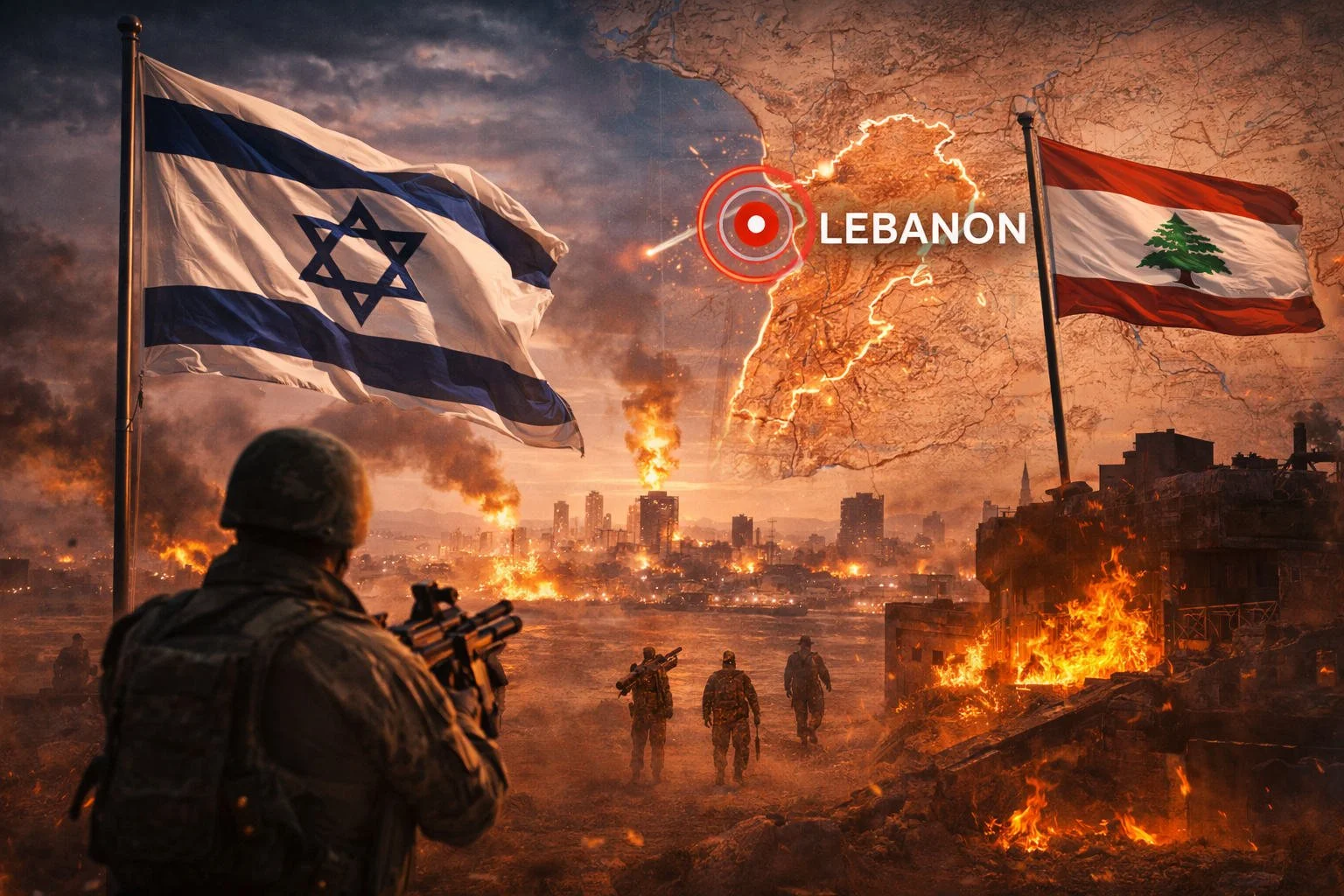
Israel is sharpening its message to Beirut as the Lebanon front grows more dangerous. The warning now taking shape is stark: if Hezbollah is not restrained, Israel may expand the war beyond the group’s launch sites, depots, and command nodes and begin imposing costs on Lebanon’s national infrastructure instead. That would mark a major escalation, because it would shift the conflict from a campaign focused on Hezbollah’s military machine to one that holds the Lebanese state itself responsible for what is launched from its territory. Reuters previously reported that Israeli officials had already conveyed, through indirect channels, that civilian infrastructure including Beirut airport could be targeted if Hezbollah entered a U.S.-Iran war, and Prime Minister Benjamin Netanyahu later publicly warned Lebanon of “disastrous repercussions” if it failed to rein in the group.
That threat lands in a country already under severe strain. Reuters reported this week that Israeli airstrikes hit an apartment block in Beirut’s Aicha Bakkar neighborhood, the second such strike in the capital in four days, as the campaign expanded beyond Hezbollah’s southern strongholds. The same reporting said more than 600 people had been killed in Lebanon and about 800,000 displaced since the latest escalation began, while overcrowded shelters and worsening living conditions deepened the humanitarian crisis.
What makes the warning so consequential is the political logic behind it. Israel has increasingly argued that Hezbollah cannot be treated as a separate problem detached from the Lebanese state. Reuters reported that Lebanon’s government moved on March 2 to ban Hezbollah’s military activities after the group opened fire on Israel, but Israel has continued to question whether Beirut is doing enough to dismantle Hezbollah’s armed infrastructure. The message from Jerusalem is becoming harder to miss: a formal ban is not enough if rockets, drones, and fighters remain active.
If Israel follows through on a threat to strike national infrastructure, the war would enter a different phase. National infrastructure is not just a military concept; it means the systems that keep daily life and state authority functioning—airports, ports, power facilities, telecom networks, roads, bridges, fuel depots, and other critical nodes. Targeting those assets would be intended to force Beirut to choose between confronting Hezbollah and watching the country absorb broader national pain. The danger is that such a strategy can be coercive without being decisive. It may increase pressure on Lebanon’s leaders, but it can also weaken the very state institutions Israel says should take control. That risk is especially high in a country where the government has limited capacity and Hezbollah remains deeply embedded.
The military backdrop makes the warning even more combustible. Reuters reported that Hezbollah’s intervention after the killing of Iran’s supreme leader helped pull Lebanon deeper into the regional war, and that Israel has since widened its air campaign across southern and eastern Lebanon as well as Beirut’s southern suburbs. Strikes have already gone beyond the traditional Hezbollah belt, and the pattern suggests Israel is prepared to broaden both geography and target type if it believes deterrence is failing. Once that happens, escalation can become self-feeding: Israel widens its strikes to raise pressure, Hezbollah answers to show it is not deterred, and Lebanon’s civilian and state systems end up taking the shock.
There is also a diplomatic message built into the warning. By routing such messages through American and Western intermediaries, Israel creates a record that it believes Beirut was put on notice. That matters because if infrastructure is later struck, Israel will likely argue that responsibility lies first with Hezbollah and second with a Lebanese state that failed to act despite repeated warnings. Reuters reported that the United States had earlier conveyed assurances to Lebanon that Israel would not escalate if no hostile acts came from the Lebanese side. The reverse implication is just as important: if hostile acts continue, those assurances no longer hold.
For Lebanon, this is the nightmare scenario. The government is being told to control an armed actor that has long operated beyond full state authority, while the cost of failure may be paid by the entire country. That creates a brutal dilemma. If Beirut cannot or will not move forcefully against Hezbollah, it risks wider destruction. If it does try to force the issue in the middle of war, it risks internal rupture. Either way, the state is being squeezed from both directions—by Hezbollah’s continued military role and by Israel’s readiness to blur the line between the militia and the nation around it.
The broader implication is that the Lebanon front is no longer being managed as a contained border conflict. It is moving toward a model of state-level coercion, where the target is not only the launcher or the commander but the infrastructure that underpins the country itself. In a Lebanon already grappling with mass displacement, repeated strikes in Beirut, and a fragile government trying to prove it still governs, that is the kind of escalation that can turn a punishing war into a national breakdown.