Why Taco Bell Is Still the Best Case Study in Cheap Cravings
Taco Bell is not really a restaurant. It is a laboratory where tortillas, cheese, potatoes, beef, beans, sauce packets, and American financial anxiety are recombined into new shapes until someone in marketing screams, “Yes, but what if it folded like a wallet and cost $2.99?”
That is the genius. Taco Bell does not sell fine food. It sells permission. Permission to eat something crunchy, melty, salty, spicy, and structurally questionable at 11:43 p.m. Permission to spend less than you feared. Permission to confuse “value” with “I deserve a Beefy 5-Layer Burrito because today was a psychological hate crime.”
And somehow, after decades of fast-food inflation, app-only deals, and brands pretending a combo meal is a luxury experience because they added a brioche bun and emotional damage, Taco Bell remains the cleanest case study in cheap cravings.
Not because it is always the cheapest. Not because every item is a deal. Not because your local franchise has not occasionally priced a box like it comes with a tiny deed to the building. But because Taco Bell understands something deep and stupid about Americans: we do not merely want food. We want cravings arranged by price point.
Taco Bell Understands That Cheap Food Needs Drama
A normal value menu says, “Here is a small sad item for a small sad price.”
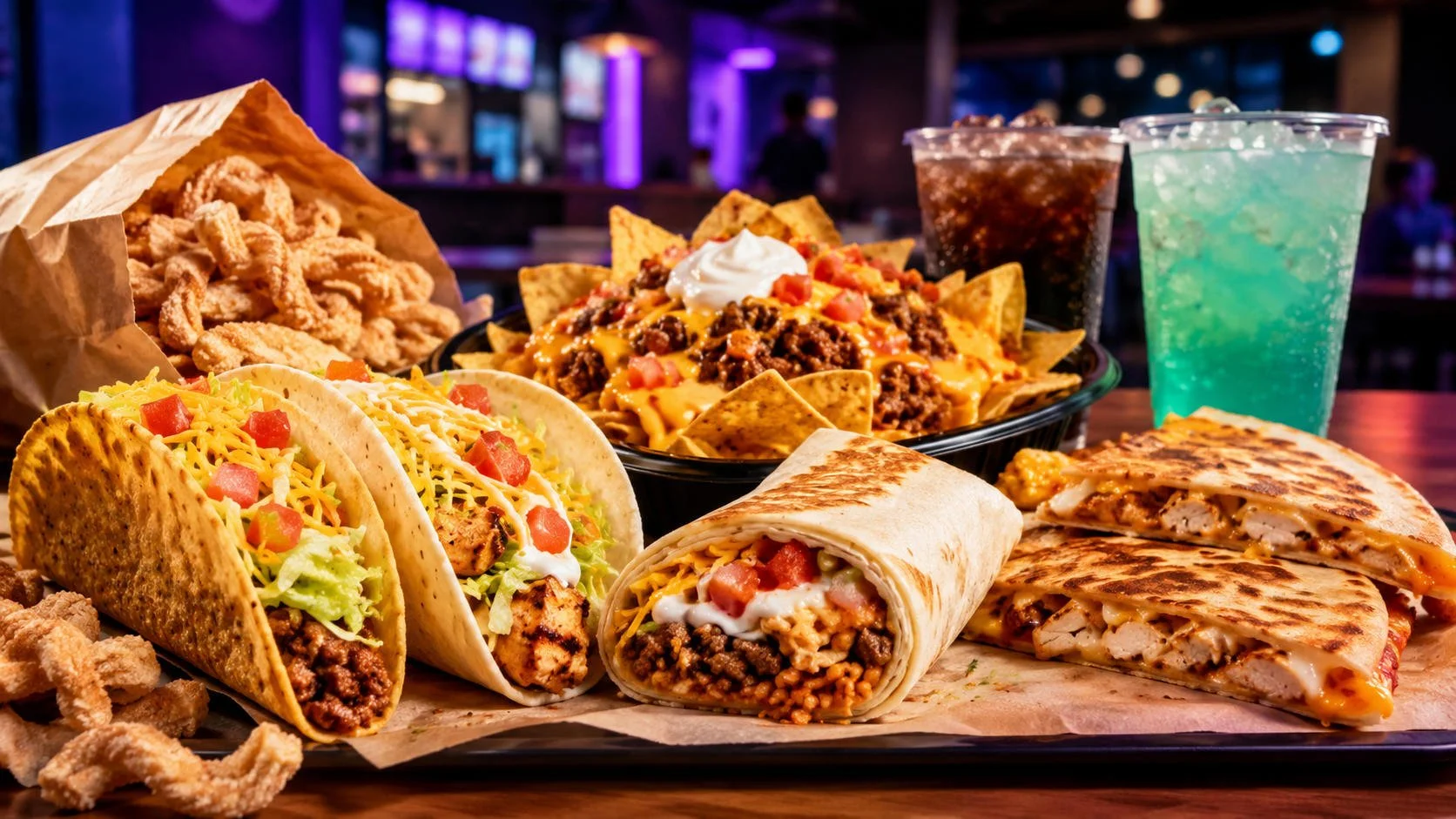
Taco Bell says, “Here is a Cheesy Bean & Rice Burrito, a Spicy Potato Soft Taco, a Mini Taco Salad, and a Beefy Loaded Potato Griller, all hanging out under $3 like a budget committee that discovered nacho cheese.”
In January 2026, Taco Bell launched its nationwide Luxe Value Menu with ten items priced at $3 or less, carrying forward fan favorites from the Cravings Value Menu while adding new items. Its current official value menu includes items like the Mini Taco Salad, Beefy Loaded Potato Griller, Spicy Potato Soft Taco, and Cheesy Bean & Rice Burrito.
That is the Taco Bell trick: cheap does not have to feel tiny. It has to feel like you gamed the system. A $2.99 item cannot just be food. It has to feel like you found a loophole in capitalism and filled it with creamy jalapeño sauce.
Other chains do “value” like they are donating a sandwich under court order. Taco Bell makes value feel like a dare.
The Whole Menu Is Just Seven Ingredients Wearing Different Hats
Taco Bell’s greatest operational achievement is convincing America that a tortilla folded six different ways counts as six different meals.
And you know what? It does. Sort of. Enough. Please stop asking questions; the Crunchwrap is busy being load-bearing.
The menu is modular genius. Beans, beef, chicken, potatoes, rice, cheese, sour cream, nacho cheese, lettuce, tortillas, shells, sauces. That is the machine. Hard shell? Taco. Soft tortilla? Burrito. Tortilla plus tostada shell? Crunchwrap. Tortilla folded like it has student debt? Quesadilla. Potatoes in a taco? Innovation, apparently.
This is why Taco Bell can keep making new things without actually reinventing the kitchen every time. It does not need a whole new supply chain for every limited-time item. It needs a new shape, a sauce, a name, and a marketing team willing to say “Luxe” with a straight face while selling you a potato griller.
This is not culinary evolution. This is edible origami with margin discipline.
Taco Bell Knows Cravings Are About Texture, Not Nutrition
Nobody says, “I’m craving a balanced macronutrient profile from Taco Bell.”
People crave Taco Bell because it hits the snack-brain control panel like a toddler with a mallet: crunchy, creamy, salty, cheesy, spicy, soft, hot, cold, saucy, folded, dipped, demolished.
Food cravings are not random acts of stomach poetry. Harvard’s Nutrition Source describes craveable foods as often containing combinations of sugar, salt, and fat that stimulate reward pathways and send the brain a very scientific message best translated as “eat me, idiot.”
Taco Bell has built a business empire on that exact sentence.
The Crunchwrap Supreme is not famous because it is elegant. It is famous because it is a texture committee meeting: soft tortilla, crisp tostada, seasoned beef, nacho cheese, sour cream, lettuce, tomato, all sealed into a portable hexagon like a hunger envelope. It is not food so much as an engineering rebuttal to dignity.
“Cheap” Changed, But Taco Bell Adapted
Let us be honest: cheap fast food is not what it used to be. The old dollar menu era has been dragged into a cave by inflation and beaten with a receipt.
The Bureau of Labor Statistics reported that limited-service meal prices rose 3.2% over the 12 months ending in April 2026, while food away from home rose 3.6%. So yes, the entire fast-food category has gotten more expensive, because apparently even a taco has to participate in macroeconomics now.
Taco Bell’s answer has not been to pretend inflation is fake. It has been to keep value visible. The brand has a long history of value signaling, including its 59¢-79¢-99¢ value initiative in the early 1990s and the Dollar Cravings menu launched in 2014.
That matters. Taco Bell has spent decades training customers to look for the deal inside the chaos. The price point may have changed from 99 cents to $3, because time is a cruel landlord, but the psychology is the same: come here, assemble a weird little meal, and feel like you beat lunch.
The Value Box Is Taco Bell’s Greatest Scam, Complimentarily
The Taco Bell box is one of fast food’s most elegant traps.
It says: here are multiple items, a side, and a drink. It feels abundant. It feels complete. It feels like a meal engineered by someone who understands that you want variety but do not want to make six decisions because your brain has already been defeated by the day.
Taco Bell’s current Luxe Cravings Boxes come in $5, $7, and $9 versions at participating U.S. locations, with examples like the $5 Classic Luxe Box, $7 Supreme Luxe Box, and $9 Discovery Luxe Box. The $5 box includes a Beefy 5-Layer Burrito, Crunchy Taco, Cinnamon Twists, and a medium fountain drink.
This is brilliant because the box makes value feel dimensional. Not “one cheap thing.” A whole little spread. A tray of emotional negotiation.
The customer thinks, “I got a lot for the money.”
Taco Bell thinks, “Yes, and you also bought the drink.”
Everybody wins, except perhaps the napkin.
The App Turns Cheap Cravings Into a Loyalty Dungeon
Taco Bell has also become very good at turning value into a digital habit. Taco Bell Rewards lets members earn points in the app, kiosk, or drive-thru, redeem rewards, and unlock app exclusives; current sign-up offers include a free selected item such as a Cantina Chicken Crispy Taco, Beefy 5-Layer Burrito, or Soft Taco.
This is not just customer service. This is behavior design with sour cream.
The app remembers you. The app gives deals. The app makes ordering feel customizable and frictionless. The app lets you turn a simple burrito into a deeply personal edible confession. No onions. Add potatoes. Extra sauce. Swap beef. Add beans. Remove shame.
That is how Taco Bell keeps cheap cravings modern. The old value menu was a board on the wall. The new value menu is a relationship with an app that knows you at your lowest.
Taco Bell Wins Because It Sells Low-Stakes Chaos
A lot of fast-food brands are trapped trying to look premium. They want to be “elevated.” They want black packaging, artisan buns, hand-breaded language, and menu boards that look like they were designed by a coffee shop with a podcast.
Taco Bell does not have this problem. Taco Bell is comfortable being ridiculous. It knows its place in the culture: after parties, late nights, road trips, cheap lunches, college budgets, stoner folklore, drive-thru confessions, and “I should not, but I will.”
Its menu history proves the point. Doritos Locos Tacos turned a taco shell into snack-chip cosplay and reportedly surpassed 1 billion units sold by 2014 after launching in 2012. Nacho Fries, first introduced in 2018, became Taco Bell’s most successful menu item launch and had sold over 347 million servings by late 2020.
This is what Taco Bell understands better than almost anyone: novelty does not have to be sophisticated. It has to be obvious, craveable, and just stupid enough to become beloved.
The Best Taco Bell Items Feel Like Someone Lost a Bet in Product Development
Taco Bell’s menu innovation has always had the energy of a brainstorming session that no adult was brave enough to stop.
A taco shell made from Doritos? Sure.
Fries at a Mexican-inspired fast-food chain? Why not.
A Crunchwrap slider with crème brûlée filling? Apparently we live here now.
Taco Bell announced at Live Más Live 2026 that Nacho Fries would permanently join menus later in the year after repeated sell-out runs and fan demand.
The brilliance is that Taco Bell knows its customers do not want authenticity in the academic sense. They want Taco Bell authenticity, which is totally different and legally impossible to define without ranch. It is authentic to the brand’s own nonsense.
A Taco Bell item is good when it sounds like someone asked, “Would this be insane?” and someone else answered, “Yes, but under $3.”
The Brand Is Built Around Cravings, Not Meals
This is the central difference between Taco Bell and most fast food.
McDonald’s sells meals.
Chipotle sells bowls with moral posture.
Chick-fil-A sells efficiency with hymnal lighting.
Taco Bell sells cravings.
That is why its value menu language matters. Cravings Value Menu. Luxe Cravings Boxes. “Live Más.” The brand does not say, “Come eat responsibly.” It says, “You are a creature of impulse. Let us make that affordable.”
Circana data reported by Restaurant Dive found that traffic tied to consumer-perceived value menus rose 1% in Q2 2025, and half of surveyed consumers who had not recently dined out said lower prices would motivate them to visit restaurants, including 54% of respondents with household incomes under $75,000.
That is the market Taco Bell is built for: people who want to eat out, feel squeezed, and still want the tiny luxury of not cooking. The craving is emotional. The price makes it permissible.
Taco Bell Is the Best Fast-Food Example of “Abundance Theater”
A $3 item cannot just be cheap. It has to feel filling. A box cannot just be a box. It has to feel like a haul.
Taco Bell is excellent at abundance theater: layers, sauces, names, combos, boxes, add-ons, substitutions, side cups, packets. It creates the feeling of more without necessarily needing expensive ingredients.
Beans are cheap. Rice is cheap. Tortillas are cheap. Potatoes are cheap. Cheese sauce is cheap-ish magic. Put them together and suddenly the customer is holding something hefty enough to feel like dinner.
That is why the Cheesy Bean & Rice Burrito remains one of the great budget items in American fast food. It is not glamorous. It will not be photographed by someone named Madison next to a linen napkin. But it is warm, filling, salty, creamy, portable, and cheap. That is not a snack. That is an economic argument wrapped in a tortilla.
The Vegetarian Value Is Accidentally Brilliant
Taco Bell has also long been unusually useful for vegetarian fast food, mostly because beans, potatoes, rice, cheese, and tortillas already do half the menu’s labor.
The official Luxe Value Menu notes that certain vegetarian items are certified by the American Vegetarian Association as lacto-ovo vegetarian, while also warning about shared preparation and possible cross-contact.
That caveat matters for strict vegetarians, but the broader point remains: Taco Bell gives plant-based or meat-light customers cheap, customizable options without forcing them to order a sad iceberg lettuce pile named after self-control.
A bean burrito is not a compromise at Taco Bell. It is a core product. That is surprisingly rare in fast food, where vegetarian options often feel like the kitchen was asked to improvise during a fire drill.
Late Night Is Where Taco Bell Becomes Religion
Taco Bell has always understood late-night hunger. Its menu page explicitly positions the chain as serving made-to-order, customizable food from breakfast at select locations to late night.
Late night changes the psychology of value. At noon, you are “choosing lunch.” At midnight, you are negotiating with the remains of your personality.
Taco Bell built a mythology around this with “Fourthmeal,” the old campaign that essentially told America, “You know dinner? Coward. Have another.” A 2008 industry writeup described Taco Bell’s Fourthmeal as a late-night campaign around “crunchy, spicy, melty, grilled” snacks.
That phrase is disgusting and perfect. Crunchy. Spicy. Melty. Grilled. It sounds less like a meal and more like a goblin spell.
But that is exactly why Taco Bell works after dark. It does not ask late-night eaters to be rational. It meets them where they are: hungry, tired, possibly overcaffeinated, and emotionally prepared to call Cinnamon Twists dessert.
Taco Bell’s Success Is Not an Accident
This is where the case study stops being cute and becomes business.
Yum Brands’ 2025 annual report said Taco Bell delivered 7% same-store sales growth for the year, supported by innovation, chicken expansion, and strong consumer demand. The company also reported that Taco Bell’s U.S. loyalty membership grew more than 20% year over year.
In Q1 2026, Yum reported Taco Bell same-store sales growth of 8%, while Yum’s digital system sales mix reached a record 63%.
So no, Taco Bell is not just a meme with nacho cheese. It is a growth machine that has figured out how to combine value, culture, digital ordering, menu innovation, and late-night craving psychology into one surprisingly durable business.
The brand also had 8,757 locations after opening 347 gross-new restaurants across 25 countries in 2024, according to Taco Bell’s 2025 strategy announcement.
That is not a cult following. That is a global tortilla grid.
The Drinks Are Becoming Their Own Craving Machine
Taco Bell also knows the future of cheap cravings is not just tacos. It is drinks.
The brand has been pushing beverage innovation through Live Más Café concepts and specialty drinks, including cold brews and flavored cold foams launched at select Live Más Café locations in 2026. Recent reports said the cold brew lineup started at $4.59 for 16 ounces and $4.99 for 20 ounces at select locations, and Taco Bell has a stated goal of reaching $5 billion in beverage sales by 2030.
This is extremely funny because Taco Bell, the midnight burrito hut of America’s collective emotional decline, is now saying, “What if we also became a café?”
And honestly? It makes business sense. Beverages are margin-rich, customizable, Instagrammable, and habit-forming. Baja Blast already proved Taco Bell could make a drink into a fandom object; PepsiCo said in 2014 that Baja Blast was Taco Bell’s second-largest and fastest-growing fountain beverage and the most requested flavor among Mountain Dew fans.
The taco gets you there. The drink gets you to come back at 2 p.m. like your errands require purple cold foam.
The Best Taco Bell Order Is a Spreadsheet of Desire
The beauty of Taco Bell is that everybody has a “smart” order, which is usually just their personal economic trauma arranged with hot sauce.
The budget person orders from the value menu and refuses to touch combos.
The app person stacks rewards like a coupon wizard in a hoodie.
The vegetarian swaps beef for beans with the calm confidence of someone who has done this 900 times.
The customization gremlin adds potatoes to everything.
The chaos demon orders one premium item, three value items, and a Freeze, then claims this was “basically cheaper than groceries,” which is not true but spiritually understandable.
Taco Bell lets everyone feel like they are hacking the system. That feeling is the product.
Cheap Cravings Work Because They Are Not Trying to Be Good for You
This is not a health article, and thank God, because nobody wants to read “The Moral Complexity of Nacho Cheese” unless they are already trapped in a graduate seminar.
Taco Bell is not health food. Shocking. Someone inform the National Academy of Obvious Developments.
But cheap cravings are not about optimal nutrition. They are about affordability, speed, pleasure, access, and emotional release. The better question is not “Is Taco Bell healthy?” The better question is “Why does Taco Bell remain so good at turning low-cost ingredients into intensely craveable experiences?”
The answer is price, texture, modularity, novelty, customization, sauces, and a brand voice that understands shame is bad for repeat business.
Taco Bell does not scold you. Taco Bell says, “Add nacho cheese?” which is basically therapy if your therapist accepted mobile payment.
Why Taco Bell Is Still the Best Case Study
Taco Bell remains the best case study in cheap cravings because it understands the difference between low price and high perceived value.
Cheap is a number.
Value is a feeling.
Craving is a tiny internal emergency that says, “I need something salty and folded immediately.”
Taco Bell built an entire empire by aligning those three things. It keeps low-price entry points visible. It turns familiar ingredients into endless new configurations. It makes boxes feel abundant. It makes apps feel rewarding. It treats beverages as fandom objects. It uses limited-time items like little edible fireworks. It lets people customize without acting like they asked the kitchen to solve quantum physics.
Most importantly, Taco Bell does not pretend to be something it is not. It is not fine dining. It is not wellness. It is not authentic regional Mexican cuisine, and anyone claiming otherwise should be gently escorted to a library and given a map.
Taco Bell is Taco Bell: a cheap-craving engine powered by tortillas, salt, sauce, texture, novelty, and the national desire to spend less money while making one questionable decision that tastes good.
Taco Bell Is Value With a Crunchwrap Around It
Taco Bell is still the best case study in cheap cravings because it has turned affordability into theater and cravings into architecture.
The chain knows that people want more than low prices. They want abundance. They want choice. They want novelty. They want comfort. They want to feel clever. They want the spicy potato taco to still be there when the rest of the world has betrayed them.
And Taco Bell, in its ridiculous purple-lit wisdom, keeps showing up with a menu that says: here are ten things under $3, three boxes by budget level, sauces by personality disorder, and a mobile app that remembers your worst impulses.
That is not just fast food.
That is cheap-craving strategy, executed with terrifying competence and a side of nacho cheese.