What a Dietitian Would Order at McDonald’s
McDonald’s is not a place most people associate with healthy eating, but that does not mean every order has to be a nutritional disaster. The company publishes a nutrition calculator for its U.S. menu and notes that values are based on average formulations and can vary by restaurant, which is enough to separate the better choices from the obvious calorie bombs.
If a dietitian were ordering at McDonald’s, the strategy would be pretty simple. First, get some protein so the meal actually fills you up. Second, keep the drink simple. Third, avoid the menu items that pile refined carbs, fat, sodium, and sugar into one tray. Recent dietitian roundups land in basically the same place: the Egg McMuffin keeps showing up as the top breakfast pick, while lighter add-ons like apple slices and simpler coffee drinks make more sense than oversized pastries or sweet coffee treats.
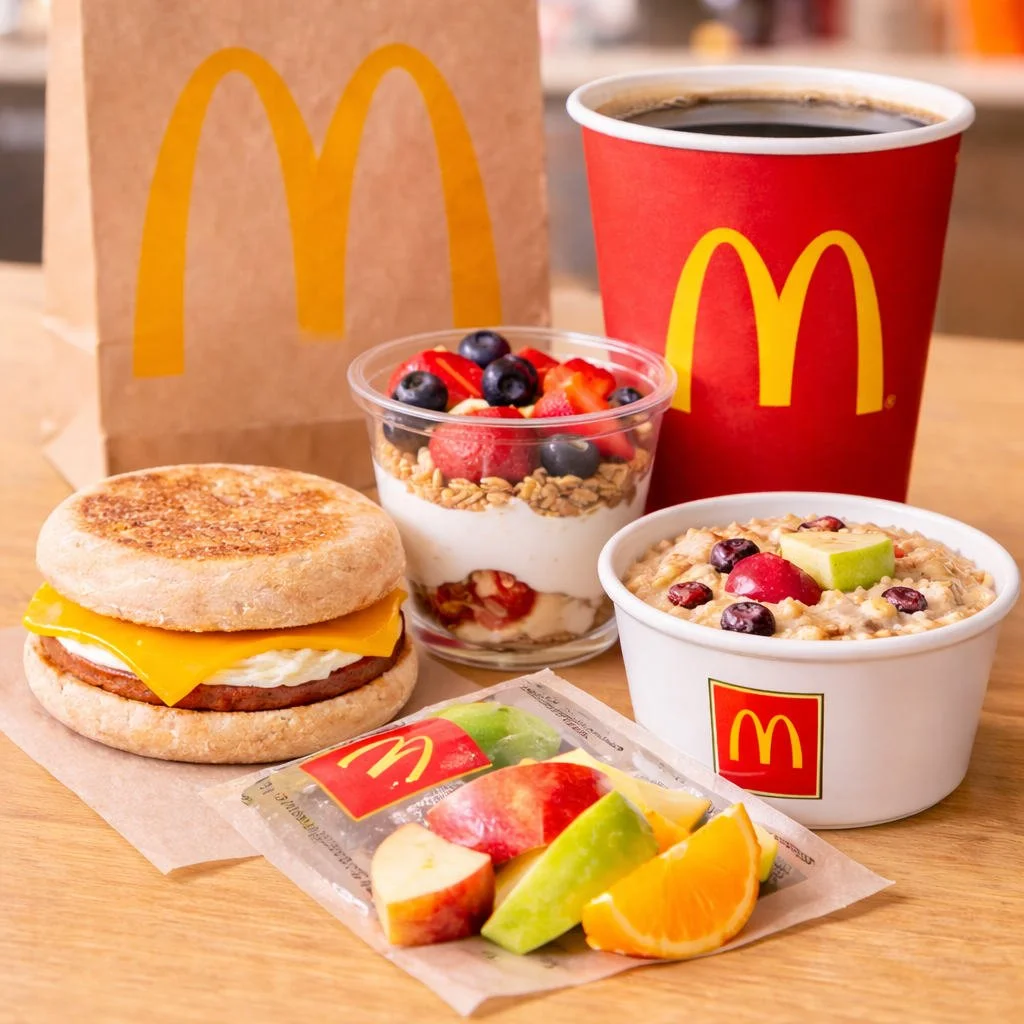
For breakfast, the clearest dietitian-style order is the Egg McMuffin. McDonald’s lists it at 310 calories, and EatingWell’s panel of dietitians highlighted it as the healthiest and most balanced McDonald’s breakfast because it delivers 17 grams of protein without the calorie and saturated fat load you get from biscuit sandwiches and heavier breakfast items. That is the kind of order a dietitian would like because it is simple, familiar, and actually satisfying.
A good breakfast backup is the Fruit & Maple Oatmeal. McDonald’s lists it at 320 calories, and the nutrition snippet shows 6 grams of protein and 4 grams of fibre. EatingWell also included it among the best healthier breakfast choices because it brings in whole grains and fruit. The catch is that it is not especially high in protein, so it is better for someone who wants a lighter breakfast than for someone who needs a meal that will keep them full for hours.
On the drink side, a dietitian is not doing anything glamorous. A small premium roast coffee is just 5 calories, and a small iced latte is 80 calories with 5 grams of protein. That makes them much easier to work into a sensible meal than the sweeter McCafé drinks that people often treat like “just coffee.” Health.com also specifically flags the small latte as one of the better McDonald’s picks.
That matters because McDonald’s coffee drinks can get sugary fast. A small French Vanilla Iced Coffee has 150 calories, a small Iced French Vanilla Latte has 180 calories, and a small Mocha Latte has 290 calories. None of those is forbidden, obviously, but a dietitian would look at them more like dessert than like coffee. If your goal is to eat better, the drink is one of the fastest places to quietly wreck an otherwise decent order.
For lunch, a dietitian at McDonald’s is probably not reaching for a Big Mac first. The more realistic play is a Hamburger or sometimes a Cheeseburger, because portion size matters. McDonald’s lists the Hamburger at 250 calories, and Health.com’s nutrition breakdown puts it at 12 grams of protein and 510 mg of sodium. That is not “clean eating,” but it is a much more manageable lunch than one of the larger burgers, especially if you are trying to keep calories somewhat reasonable.
Another reasonable option is a small portion of Chicken McNuggets instead of a giant burger meal. The official McDonald’s page lists 4-piece Chicken McNuggets at 170 calories, and Health.com includes nuggets among the healthier menu items when portion size is controlled. This is one of those situations where moderation matters more than pretending nuggets are secretly health food. A small serving can fit into a balanced day a lot more easily than a huge combo with fries and a sugary drink.
If a dietitian wanted a side, Apple Slices are the obvious move. McDonald’s lists them at just 15 calories per labelled serving, and Health.com specifically recommends them as a better swap than fries. It is a tiny choice, but those small swaps are usually what make fast-food ordering noticeably better over time.
The flip side of this article is what a dietitian would probably skip most of the time. McDonald’s Sausage McMuffin with Egg has 480 calories and 830 mg of sodium. Hotcakes come in at 580 calories. A Big Mac also lands at 580 calories. Those are not outrageous for a once-in-a-while treat, but they are exactly the kinds of items dietitians tend to warn about because they are easy to eat quickly and do not leave you with much room for sides, drinks, or dessert before the meal gets very heavy.
So what would a dietitian realistically order at McDonald’s? Probably one of these: Egg McMuffin with black coffee, Fruit & Maple Oatmeal with coffee, Hamburger with apple slices and water, or 4-piece McNuggets with apple slices and a plain coffee or unsweetened drink. If they wanted something a little more filling to sip, a small iced latte is still a much smarter choice than the sweeter specialty coffees. That is really the whole formula: keep protein in the meal, keep sugar in check, and do not let the drink turn your order into a calorie trap.
The best way to think about McDonald’s is not “healthy” versus “unhealthy.” It is better choice versus worse choice. A dietitian is not expecting perfection from a drive-thru. They are just trying to leave with something filling, reasonably portioned, and not overloaded with sugar or extra calories. At McDonald’s, that usually means Egg McMuffin, smaller burgers, apple slices, and plain coffee win.