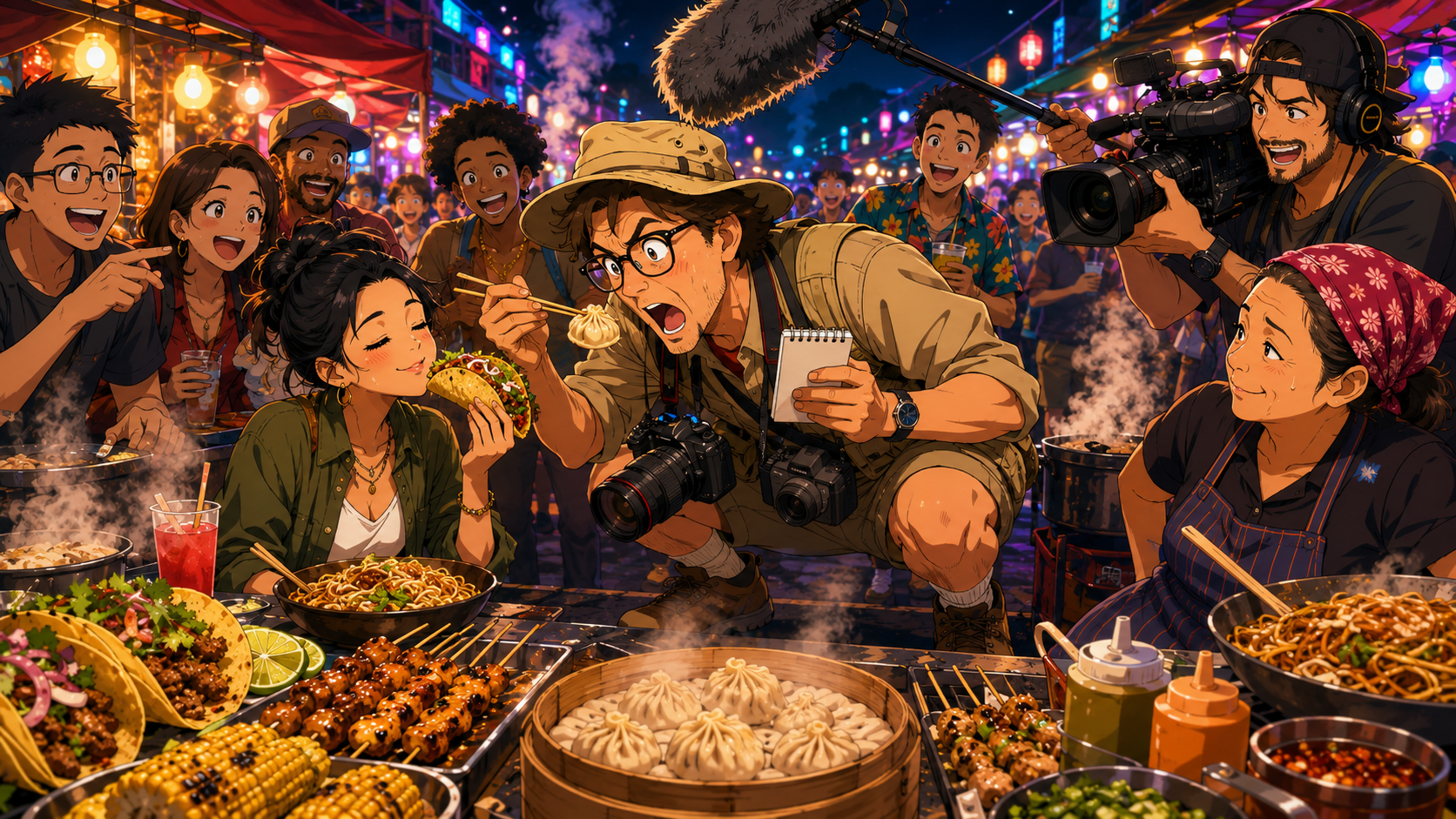
The K-Drama Korean BBQ Date: How to Order, Grill, and Flirt Without Panic
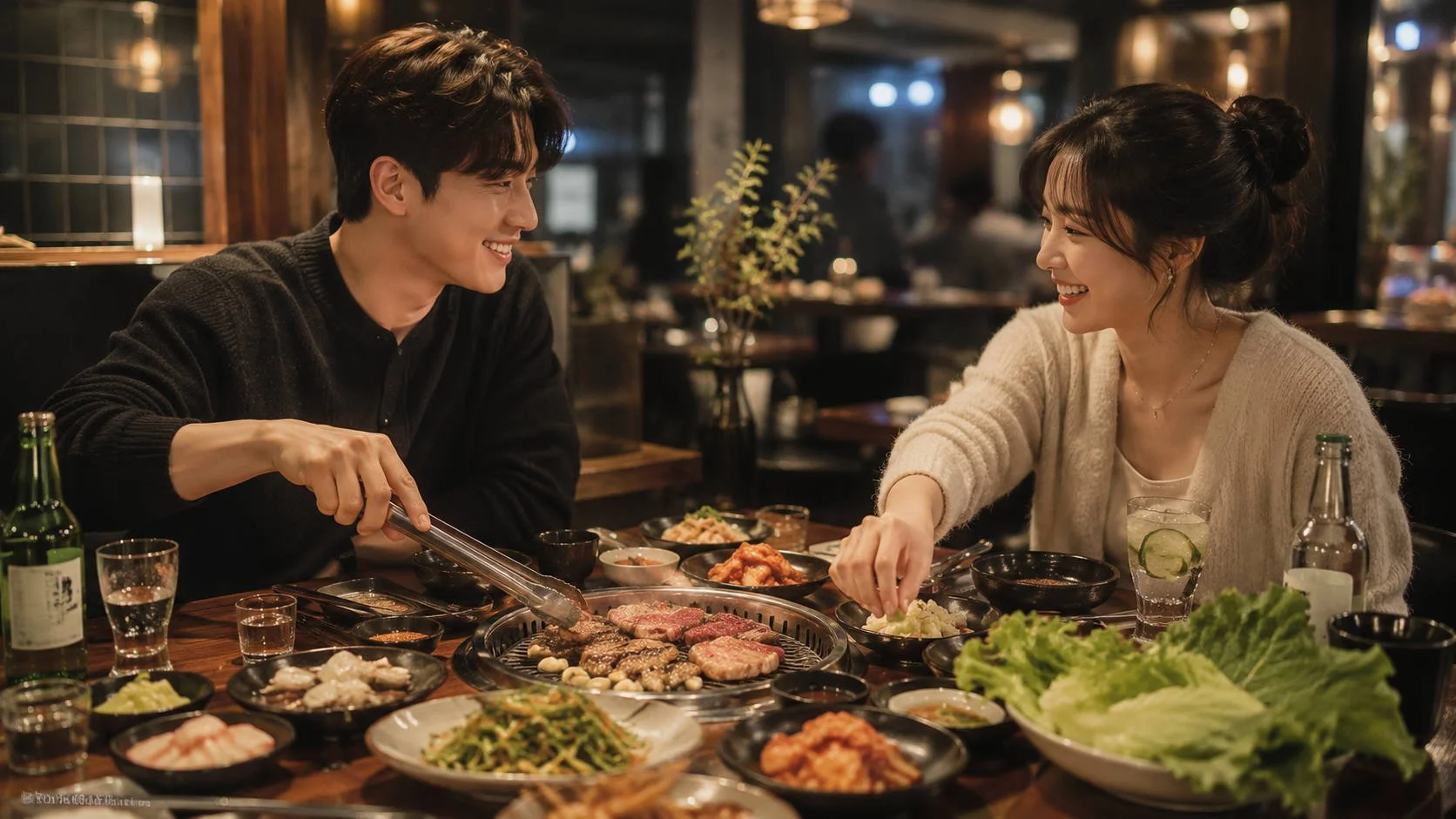
A K-drama Korean BBQ date sounds effortless because television is a filthy liar with flattering lighting. On screen, two beautiful people sit across a glowing grill, laugh softly over pork belly, pour soju with meaningful eye contact, and somehow leave the restaurant smelling like romance instead of charred beef and laundry regret.
Real Korean BBQ is more interactive. There is fire. There are tongs. There are scissors. There are 19 small side dishes, at least one sauce you do not understand, meat arriving raw in public like a dare, and a server who may or may not take one look at you and silently decide you should not be trusted with pork.
But that is exactly why Korean BBQ is a great date. It gives you something to do. It turns dinner into teamwork. It creates tiny chances to be useful, charming, generous, competent, and only mildly covered in sesame oil. It is basically a relationship simulation with grilled meat.
Korean food has become more visible globally through K-dramas, and VisitKorea explicitly notes that the popularity of shows like Kingdom, Squid Game, Vincenzo, and Extraordinary Attorney Woo helped bring the Korean foods enjoyed by protagonists into the spotlight. So yes, the K-drama food effect is real, not just your group chat developing emotional dependence on ramen scenes.
Why Korean BBQ Is a Great Date, Even If You Are Deeply Unqualified
Korean BBQ works because it is not passive. A normal dinner date can become a dead little interview with appetizers. “What do you do?” “Where are you from?” “Do you have siblings?” “How do you feel about cilantro?” Beautiful. A job interview with noodles.
Korean BBQ gives the table a shared mission. Grill the meat. Flip it. Cut it. Wrap it. Dip it. Eat it. Refill banchan. Avoid burning garlic into tiny black coins of failure. The conversation has built-in breaks, which is useful if both of you are nervous and one of you has the social grace of a Roomba trapped under a couch.
VisitKorea describes Korean gogi-jip, or meat restaurants, as a culture rather than just restaurants: diners grill meat directly at the table and eat it with side dishes, stews, noodles, and ssam wraps; many tables have ventilation systems, and some places have staff grill for you. Translation: the restaurant knows this is a smoky little meat ritual and has installed machinery to help everyone survive it.
Pick the Right Korean BBQ Restaurant for a Date
Not every Korean BBQ spot is date-friendly. Some are perfect. Some feel like a meat cafeteria during a fire drill. Some are so loud you will end up flirting by shouting “DO YOU LIKE PORK BELLY?” across a grill hood like a romantic air-traffic controller.
For a first or early date, choose a place with table service, decent ventilation, and a menu that is not 47 laminated pages long. A menu the size of a municipal code book usually means the restaurant is trying to be Korean BBQ, sushi, udon, hot pot, and emotional damage all at once. Chef Samuel Kim of Baekjeong told Business Insider that he avoids non-specialist menu clutter at Korean BBQ, specifically warning against places that try to be a “jack-of-all-trades” with things like udon on huge menus.
A good date-night Korean BBQ restaurant should have clear meat options, solid banchan, lettuce or perilla leaves for wraps, dipping sauces, rice, stew, and staff who are willing to help. If the restaurant looks busy with people actually eating—not just posing in front of neon signs like they are auditioning for a beverage commercial—that is a good sign.
Also, check whether it is all-you-can-eat or à la carte. All-you-can-eat is fun if you are comfortable with chaos and quantity. À la carte is usually better for a date because it feels more intentional and less like two raccoons trying to win a protein-based tax loophole.
What to Wear to a Korean BBQ Date
Do not wear your most delicate outfit unless you enjoy leaving dinner smelling like a brisket had a personal conversation with your sleeves.
Wear something you like but can wash. Dark colors are your friends. Avoid flowy sleeves unless you want to dip them into ssamjang like a tragic medieval banner. Do not wear heavy perfume or cologne because Korean BBQ already has smoke, garlic, sesame oil, kimchi, and grilled meat performing in the air like a full orchestra. Your fragrance does not need to join the cast.
If the restaurant has storage stools or bins, use them. VisitKorea notes that some Korean restaurants have storage chairs to keep food odors off outerwear and protect belongings, which is a tiny miracle of furniture design and proof that civilization occasionally does useful things.
How to Order Korean BBQ for Two Without Looking Like You Were Raised by Menu Panic
Here is the easiest first-date order:
Get one beef option, one pork option, one stew, and let the banchan do its job.
The classic beef choice is galbi, or marinated short rib. It is sweet, savory, familiar, and generally friendly to beginners. The classic pork choice is samgyeopsal, or pork belly. It is fatty, crispy-edged, deeply satisfying, and beloved enough that VisitKorea calls samgyeopsal the “people’s food” of Korean meat dishes.
Bon Appétit’s Korean BBQ guide recommends mixing beef and pork, as well as marinated and unmarinated meats, and specifically says kalbi and samgyeopsal are never a bad move. That is your permission slip. Put it in your pocket before you panic-order chicken because it sounds safe.
Then add kimchi jjigae or doenjang jjigae. Korean BBQ is rich, and stew gives the meal depth and heat instead of turning dinner into a straight-up meat parade with chopsticks. Bon Appétit also recommends ordering one or two soups or stews for the table, especially kimchi jjigae or doenjang jjigae.
The Ideal Beginner Korean BBQ Order
For two people, order:
Galbi or marinated short rib.
Samgyeopsal or pork belly.
Kimchi jjigae or doenjang jjigae.
Rice, if it does not come automatically.
A seafood or kimchi pancake, if you are hungry and trying to impress with range.
Chef Samuel Kim also recommends making room for Korean pancakes and stew at Korean BBQ, saying stew helps push the flavor of the protein. Which is chef language for “please stop eating only meat like a gym bag with teeth.”
Do not order every premium meat because you panicked. You are not building a beef résumé. Two meats plus stew is plenty for a first date unless you both arrived ravenous and emotionally prepared to become a grill crew.
Understand Banchan Before You Accidentally Ignore the Best Part
Banchan are the small side dishes that appear at the table: kimchi, seasoned sprouts, pickled radish, potato salad, fish cake, cucumber, greens, and whatever the restaurant does well. They are not decoration. They are not garnish. They are not tiny bowls of “maybe later.” They are part of the meal.
VisitKorea describes Korean meals as a table of multiple small dishes called banchan, where each diner combines foods however they like. Korean cuisine, in that framing, is a “culture of mixing,” which is a much better philosophy than the Western restaurant model of guarding your entrée like a territorial raccoon.
Bon Appétit notes that banchan are complimentary small plates meant to complement the meal and that you can ask for refills. Do that politely. Do not hoard potato salad like it has classified information.
Date move: ask your date which banchan they like best. This is low-pressure flirting disguised as culinary curiosity. Stunning. We have replaced “so what are your hobbies?” with “are you a kimchi person?” Humanity advances.
How to Grill Without Becoming the Table Clown
First, figure out whether the staff grills for you. At many Korean BBQ restaurants, staff will place, turn, cut, and manage the meat. If they take over, let them. Do not wrestle the tongs back like a man defending a castle. The server is not challenging your masculinity. They are preventing you from turning pork belly into charcoal business cards.
VisitKorea says some meat restaurants have staff grill the meat and tell diners when it is ready, and it encourages diners to ask for help by calling “Yeogiyo,” meaning “Excuse me.” Use that. It is not weakness. It is civilization with syllables.
If you are grilling yourself, follow the basic order of operations. Put meat on the grill with tongs. Do not overcrowd it. Let it sear. Flip when the bottom has color. Use scissors to cut larger strips into bite-size pieces after they firm up. Move cooked pieces to the edge or a clean area. Eat them hot.
Do not poke the meat every seven seconds like it owes you money. Nervous flipping is how you create gray sadness. The grill is a cooking surface, not a fidget toy.
Food Safety, Because Romance Should Not Include Medical Regret
Korean BBQ restaurants usually provide separate tongs or tools for raw meat and eating. Use them correctly. Raw meat tongs are for raw meat. Your personal chopsticks are for eating. This is not difficult unless you are determined to turn dinner into a bacteria relay race.
USDA grilling guidance says to avoid cross-contamination by keeping raw meat separate and using different cutting boards or tools; it also gives safe internal temperatures: whole cuts of beef, pork, lamb, and veal at 145°F with a three-minute rest, ground meats at 160°F, and poultry at 165°F. Restaurant dining is not the same as backyard grilling with a thermometer in your cargo shorts, but the principle remains: raw tools and cooked food should not fraternize.
If chicken is on the menu, be extra careful. Honestly, for a first date, avoid grilling chicken yourself unless the staff handles it. Chicken is not flirtatious. Chicken is homework with salmonella potential.
How to Build Ssam Like a Normal Person
Ssam means a wrap. You take a lettuce or perilla leaf, add a piece of grilled meat, maybe rice, garlic, ssamjang, kimchi, green onion salad, or whatever else makes sense, and eat it in one bite.
VisitKorea describes ssam as fresh vegetables such as lettuce or perilla leaves wrapped around meat with ssamjang, and says the Korean way is to open wide and eat it all at once. This is important because overstuffing a ssam turns it into a collapsing salad burrito and makes you look like you are being attacked by produce.
Build small. Leaf. Meat. Dot of sauce. One extra. Maybe garlic if both of you are already committed to the evening’s flavor consequences. Fold. Eat.
Date move: make your date a ssam if the vibe is right. Not too giant. Not dripping. Not a lettuce grenade. A neat, thoughtful ssam says, “I am generous and have spatial awareness.” A huge overloaded ssam says, “I have mistaken affection for construction.”
The Best Korean BBQ Flirt Is Competence
Korean BBQ flirting is not about dramatic lines. Please do not look across the grill and say, “You’re hotter than this charcoal.” That sentence should be sealed in a barrel and dropped into the sea.
The flirt is competence. Offer to grill. Ask what they like. Notice when their glass is empty. Pass the banchan. Make them a good bite. Laugh when something splatters. Do not dominate the grill like you are auditioning for a meat dictatorship.
Try these:
“Do you want the crispy piece?”
“Should we do galbi first or pork belly?”
“I’ll grill if you build the first wrap.”
“This banchan is absurdly good. Do you want the last bite?”
“Careful, that garlic is now basically a tiny lava coin.”
See? Flirting. No poetry slam required.
How to Drink Soju Without Acting Like a K-Drama Extra in Crisis
Soju is common with Korean BBQ, but it is not mandatory. You can skip alcohol and still have a perfectly good date, despite what the green bottles and your worst friend may suggest.
If you do drink, know the basics. Food & Wine explains that green-bottle soju is commonly seen at Korean BBQ restaurants outside Korea, and traditional etiquette includes accepting a glass with both hands, not pouring for yourself, and letting others refill your glass; leaving some soju in the glass can signal you do not want more.
Bon Appétit also says to keep your neighbor’s glass full, never pour your own drink, and pour using both hands as a gesture of respect. This is not just drinking. This is social choreography with alcohol and small glasses.
Date move: pour for your date with two hands. Let them pour for you. Do not turn it into a lecture. A simple “Korean drinking etiquette says we pour for each other” is enough. Anything longer and you risk becoming a cultural footnote with cologne.
What to Do If You Do Not Drink
Order soda, iced tea, barley tea, sparkling water, or whatever nonalcoholic option they have. Nobody worth dating will care.
You can still follow the hospitality rhythm. Refill water. Share food. Offer the good piece of meat. The emotional purpose is not alcohol. The emotional purpose is care. Shocking, I know. Someone tell the men who think romance is just buying appetizers and hoping eye contact does the rest.
The Table Etiquette That Actually Matters
Do not stick chopsticks upright into rice. Do not wave scissors around while telling a story like a deranged kitchen magician. Do not eat directly from shared banchan bowls with sauce-covered chopsticks if serving utensils are available. Do not lick your fingers and then grab lettuce. Were you raised in a raccoon conservatory?
Korean dining commonly uses both spoons and chopsticks; VisitKorea notes that at Korean tables, the spoon is important for rice, soup, mixing, and moving food, and it is fine to use it alongside chopsticks. It also notes that many restaurants have table drawers with spoons, chopsticks, and napkins, and call buttons for service.
If you need help, press the call button or say “Yeogiyo.” Do not sit there silently suffering while the grill turns into a crime scene. Servers cannot read smoke signals, even in a barbecue restaurant.
How to Pace the Meal
Start with banchan. Let the grill heat. Cook one meat at a time. Eat while it is hot. Do not grill everything at once unless your kink is dry meat and managerial confusion.
Beef first is often clean and quick. Pork belly can take longer and releases more fat. Marinated meats may char faster because sugars in marinades are little arsonists. Watch them.
Order stew after the first wave of meat or have it arrive early if you want the table to feel complete. If the restaurant offers fried rice at the end on the grill, consider it. Korean BBQ often has finishers—stew, noodles, rice—that turn the meal from “we ate meat” into “we had dinner like adults with a plan.”
VisitKorea specifically mentions soybean paste stew or fried rice as ways to finish a Korean BBQ meal, which is exactly the kind of carb-based closure a date deserves after everyone has battled pork fat for an hour.
What Not to Do on a Korean BBQ Date
Do not pretend to be an expert if you are not. Confidence is attractive. Fake expertise is a beige little tragedy wearing a button-up shirt.
Do not lecture your date about authenticity. If you say “actually, in Korea…” more than twice, the grill should be allowed to vote you off the table.
Do not order only the cheapest meat and then complain. Budget is fine. Stinginess is not. Korean BBQ is meant to be shared; choose fewer good things rather than building a bargain-bin meat avalanche.
Do not use your personal chopsticks to handle raw meat. Again. Because apparently this needs repeating until the bacteria union files a grievance.
Do not overstuff ssam and then chew with the expression of a man regretting architecture.
Do not get drunk trying to cosplay a drama scene. K-drama romance is edited. Your slurred thoughts about your ex will not be.
What If the Date Is Awkward?
Great news: Korean BBQ has built-in rescue tasks.
Silence? Flip meat.
Awkward pause? Ask which banchan they like.
Nervous energy? Build a wrap.
Conversation dying? Debate beef versus pork like civilized people.
Need a joke? Blame the garlic.
This is why Korean BBQ is superior to a candlelit restaurant where the only activity is staring at each other while a waiter describes seasonal carrots. At Korean BBQ, the food gives you movement. Even mediocre chemistry gets a little help from sizzling pork belly, which is more than can be said for most dating apps.
How to End the Date Smoothly
Do not rush the check immediately after the last bite unless the date has clearly died and you are both politely attending its funeral.
Let the meal settle. Order a small dessert elsewhere, go for coffee, or take a walk if the area is nice. Korean BBQ is rich and smoky, so a walk afterward is useful. It gives the evening a second act and lets both of you stop smelling like a delicious chimney in motion.
If the date went well, say something specific: “That was fun. I liked grilling together.” Not “we should do this again sometime,” the vague foghorn of cowardice. Say, “I’d like to do this again.”
If it went badly, at least you got pork belly. Dating is a cruel economy. Take your protein and move on.
The Perfect K-Drama Korean BBQ Date Plan
Book a place with good ventilation and table service.
Wear washable date clothes.
Order galbi, samgyeopsal, stew, rice, and maybe pancake.
Let staff grill if they offer.
Use tongs for raw meat and chopsticks for eating.
Build small ssam.
Pour drinks for each other if drinking.
Ask questions through the meal instead of interrogating your date like a podcast host with unresolved issues.
End with a walk, coffee, or dessert.
That is it. That is the whole beautiful system. No panic required.
Korean BBQ Is the Best Date If You Stop Trying to Perform
A K-drama Korean BBQ date works because it is social, interactive, generous, and just chaotic enough to be memorable. It lets you share food without making sharing feel precious. It gives you a grill to manage, banchan to explore, ssam to build, drinks to pour, and tiny moments of competence where romance can sneak in disguised as “here, take the crispy piece.”
The trick is not to become a grilling tyrant, a fake culture professor, or a panicked utensil goblin. Order simply. Ask for help. Cook carefully. Share generously. Flirt through attention, not theatrics.
Korean BBQ is already doing most of the work. The grill glows. The meat sizzles. The side dishes multiply like a delicious little committee. The date has motion, warmth, and built-in reasons to laugh.
All you have to do is not turn pork belly into a personality crisis.
And if you can make one clean, well-balanced ssam for your date without dropping kimchi into your lap, congratulations. You have achieved more romantic competence than half the leading men on television, and you did it with lettuce.