
Viral Japanese Egg Sandwiches: What Makes Them Good and How to Pick One
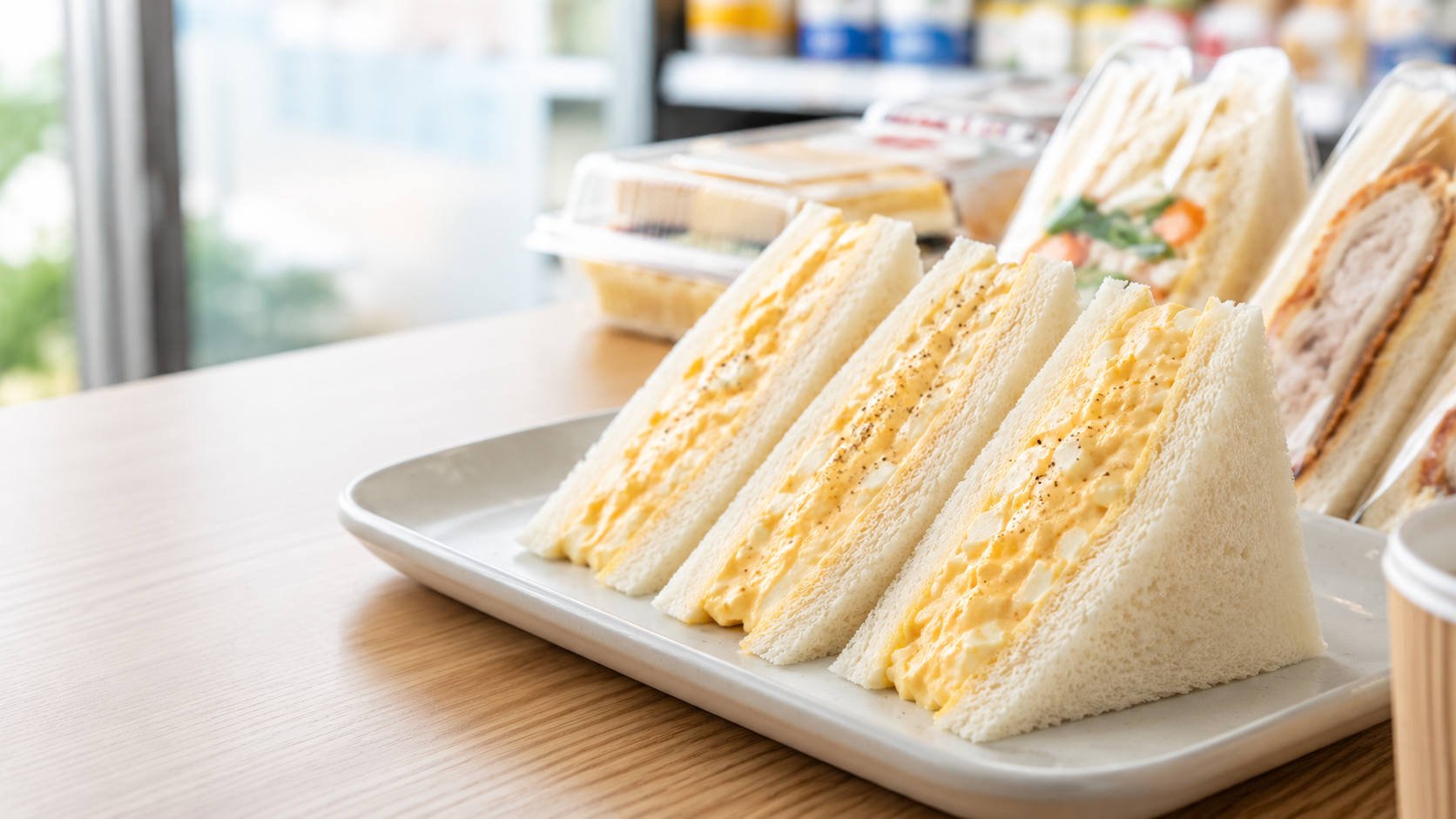
Japanese egg sandwiches should not be famous. On paper, they are ridiculous. Egg salad. White bread. Plastic packaging. Convenience-store lighting. The entire concept sounds like something you buy at an airport when your flight is delayed and your standards have been beaten unconscious by Gate B14.
And yet, the Japanese tamago sando—especially the konbini version from 7-Eleven, Lawson, FamilyMart, and friends—has become a minor global obsession. Travelers talk about it like they found spiritual clarity between two pieces of bread. TikTok treats it like a national monument with mayonnaise. 7-Eleven even launched a Japanese-style egg salad sandwich in U.S. stores in late 2025, describing it as inspired by the viral version sold in Japan and made with milk bread and Kewpie mayonnaise. So yes, the humble egg sandwich has crossed the ocean. Civilization is fragile, but at least the bread is soft.
The reason it works is not mystery. It is engineering. Soft bread. Creamy yolk-heavy filling. Just enough salt. A little sweetness. A cold temperature. A tidy triangle. No crust trying to make the sandwich feel like it has responsibilities. Japanese egg sandwiches are good because they do a small thing with ruthless precision, while most Western convenience-store sandwiches taste like they were assembled during a corporate hostage negotiation.
Why Japanese Egg Sandwiches Went Viral
The Japanese egg sandwich went viral because it is one of those foods that looks too simple to justify the hype, then annoyingly does. It is not towering. It is not oozing cheese. It is not wrapped in gold leaf, thank God. It just sits there in a plastic sleeve, quietly humiliating every overpriced café sandwich that ever needed microgreens to feel alive.
7-Eleven Japan’s English visitor page lists the egg salad sandwich as one of its bestsellers, describing it as “rich, creamy, and downright tasty.” That is not internet folklore. The chain itself is leaning into the fact that tourists arrive ready to worship at the chilled sandwich case like pilgrims with jet lag.
The viral appeal is also visual. The sandwich looks clean. Pale bread. Yellow filling. Neat triangle. No lettuce wilting like a damp apology. No tomato slice leaking into the bread like a crime scene. No chaotic deli counter scoop slapped between bread and called “homestyle,” which often means “we lost control of moisture in 2006.”
Japanese egg sandwiches are Instagrammable because they look almost fake. Like a sandwich designed by a minimalist egg cult.
The Bread: Softness Is the Whole Point
The first rule of a good Japanese egg sandwich is that the bread must be soft enough to make normal white bread feel like upholstery.
The ideal bread is often described as shokupan, Japanese milk bread: soft, slightly sweet, fine-crumbed, and pillow-like. When 7-Eleven introduced its Japanese-style egg salad sandwich to the U.S., it specifically called out soft milk bread as part of the build, along with hard-boiled eggs and Kewpie mayonnaise.
This matters because the bread is not just a container. It is texture control. The sandwich is supposed to feel plush. Tender. Almost cloudlike. You bite into it and the bread gives way immediately, like it has no interest in fighting you. That is the opposite of the tragic gas-station sandwich, where the bread is either dry enough to qualify as insulation or wet enough to need a structural engineer.
The crust is usually removed, or at least not the star. This is not childish. This is correct. The crust would ruin the texture. It would bring chewiness to a sandwich whose entire point is creamy softness. A crust on a tamago sando is like putting dress shoes on a baby. Technically possible. Morally suspicious.
The Filling: Creamy, But Not Slop
The filling is where the sandwich either becomes famous or becomes picnic-bin garbage.
A good Japanese egg sandwich filling is creamy but structured. You want smooth yolk, chopped egg white, and a spread that holds together without becoming yellow wallpaper paste. There should be enough egg pieces to remind you that actual eggs died for this, but not so many that the sandwich turns into a chunky cafeteria incident.
7-Eleven Japan’s current “Kodawari THE Tamago Sandwich” product page says its egg salad uses boiled egg, mayonnaise, salt, and pepper for a simple seasoning meant to let the egg’s natural flavor come through. It lists the sandwich at 270 yen before tax, 291.60 yen with tax, with 388 calories and 11.3 grams of protein.
That simplicity is the whole trick. Japanese egg sandwiches do not usually need celery, mustard, onion, relish, paprika, garlic powder, pickle juice, secret seasoning, or whatever else people add when they are afraid an egg might taste like an egg. American egg salad often arrives wearing too many accessories, like a suburban aunt at a craft fair. The Japanese version is much calmer. Egg. Mayo. Salt. Soft bread. Done.
It is food confidence, not food boredom.
The Mayo: The Kewpie Effect
The mayonnaise matters because mayonnaise always matters. Ignore this truth and you end up with egg salad that tastes like office fridge despair.
Kewpie mayonnaise is one of the big reasons people associate Japanese egg sandwiches with richer, creamier flavor. Kewpie says its mayonnaise is made using only egg yolks, not whole eggs, which gives it a richer flavor and deep umami taste. The company also says its fine oil-particle emulsification helps create an ultra-creamy texture.
That does not mean every konbini egg sandwich in Japan is literally made with retail Kewpie from the red-capped bottle. Convenience-store supply chains are not someone’s home kitchen wearing an apron. But the flavor logic is similar: yolk-rich creaminess, mild acidity, salt, umami, and smooth texture. It is mayonnaise designed to support egg rather than drown it in greasy confusion.
The U.S. 7-Eleven Japanese-style egg salad sandwich explicitly uses Kewpie mayonnaise, which shows how central that flavor association has become to the global tamago sando mythology.
Why Cold Makes It Better
Japanese egg sandwiches are cold. This is correct. Do not heat one unless you enjoy turning sandwich architecture into warm mayonnaise regret.
The chilled temperature makes the filling firmer, the bread softer by contrast, and the whole sandwich cleaner to eat. It also makes the flavors feel calmer. Egg salad at room temperature can start making threats. Cold egg salad behaves.
This is also why you should eat the sandwich reasonably soon after buying it and not carry it around all day in a tote bag like a protein-based souvenir. The FDA says cooked eggs and egg dishes should not be left out of the refrigerator for more than two hours, or more than one hour when temperatures are above 90°F. Your tamago sando is food, not a pocket pet.
In Japan, packaged ready-to-eat foods like sandwiches usually carry a use-by date, or 消費期限. Tokyo’s intercultural living guide explains that use-by dates show when foods like sandwiches, lunch boxes, cakes, and prepared foods can be eaten safely, and that these foods should not be eaten after the indicated date or time.
So yes, check the timestamp. Do not become the tragic tourist who treats an egg sandwich like shelf-stable trail mix.
7-Eleven vs Lawson vs FamilyMart: The Big Three Egg Sandwich Personalities
The three big konbini chains all sell egg sandwiches, and each one has its own tiny personality. This is extremely funny because we are discussing egg salad in plastic wrappers, but here we are, knee-deep in mayonnaise anthropology.
7-Eleven: The Clean Classic
7-Eleven Japan’s egg sandwich is the one most tourists chase first, partly because 7-Eleven is everywhere and partly because travel content has crowned it the main character. The official product page describes simple egg salad made with boiled egg, mayonnaise, salt, and pepper, and its English visitor site calls the egg salad sandwich one of its bestsellers.
This is usually the safest first pick. It is creamy, balanced, and built to be broadly lovable. It is the sandwich equivalent of a very polite person who still somehow has better texture than everyone else in the room.
Pick 7-Eleven when you want the classic viral version and do not feel like turning lunch into a comparative research project. Though, obviously, turning lunch into a comparative research project is exactly what the internet was invented for, after complaining.
Lawson: The Richer, Slightly Heavier Option
Lawson lists its standard egg sandwich at 297 yen with 302 calories per package. It also sells related versions like tuna-egg, ham-egg, and mixed sandwiches, because apparently egg is not content to remain in its lane and must socialize with deli meats.
Lawson’s egg sandwich often has a reputation among travelers for being rich and satisfying. If 7-Eleven feels like the clean benchmark, Lawson can feel a bit more indulgent. Not sloppy, necessarily. Just more “yes, this is mayonnaise and I’m not ashamed.” A noble position.
Pick Lawson when you want creamy comfort and do not mind the sandwich feeling a little more substantial.
FamilyMart: Chunky, Egg-Forward, Less Precious
FamilyMart’s “Koku Uma Tamago Sando” is listed at 276 yen before tax, 298 yen with tax, and the official description emphasizes a handmade-feeling, chunky egg texture.
That “chunky” detail matters. Some people want their tamago sando nearly mousse-like. Other people want visible egg pieces because they do not trust food that looks like it was passed through a luxury printer. FamilyMart is a good pick for the second group.
Pick FamilyMart when you want a more rustic egg texture without abandoning the soft-bread cult entirely.
How to Pick the Best Japanese Egg Sandwich From the Fridge
Do not just grab the first sandwich like a starving vending-machine raccoon. The difference between a good konbini egg sandwich and a great one is often freshness, condition, and format.
Start with the date and time. Look for 消費期限 if you can. For sandwiches, that matters more than the broader “best-before” idea because they are perishable ready-to-eat foods. The Tokyo guide specifically names sandwiches as foods that carry use-by dates, and says it is best not to eat them after that date or time.
Check the bread. It should look soft, not compressed into dense little slabs. If the corners look dry or the package has been smashed under ten other sandwiches by a person with forklift hands, keep looking. The bread is half the sandwich. Bad bread turns tamago sando into egg paste on sadness foam.
Look at the filling. You want a generous center, but not one that has smeared everywhere like the sandwich was assembled during an earthquake. Good egg filling should look thick and creamy. If it looks watery or separated, pick another one. This is not a soup sandwich, despite humanity’s ongoing interest in ruining texture.
Check the edges. The bread should not be wet. A little moisture is normal in a chilled sandwich, but soggy edges mean the filling has begun a hostile takeover. Nobody wants egg salad bread pudding unless they are being punished.
Choose based on texture preference. Smooth, creamy filling? 7-Eleven or Lawson may be your move. Chunkier, more egg-white texture? FamilyMart’s own description points you that way.
The Best Time to Buy One
The best time to buy a Japanese egg sandwich is when turnover is high: morning commute, lunch rush, or early evening restock windows. Exact restock schedules vary by store, so do not lurk around the chilled case demanding supply-chain secrets from a cashier who is trying to scan six bentos and a utility bill. But in general, busy stores move product faster.
Station-area konbini are often strong bets because the turnover is brutal in the best way. Office districts, train stations, tourist corridors, and big urban locations tend to sell through sandwiches quickly. A lonely rural shop at 11:47 p.m. may still have perfectly fine food, but maybe do not expect the freshest triangle of your life to be waiting there under one fluorescent bulb like a tiny egg ghost.
Also, buy the sandwich before you are starving. Hunger turns every sandwich into divine revelation. If you want to judge one properly, eat it when you are hungry but still capable of standards.
What Makes a Bad Japanese Egg Sandwich?
A bad Japanese egg sandwich is not usually disgusting. This is Japan, not a forgotten cooler at an American gas station called “Fuel Barn.” The bad ones are more subtle. They are just disappointing.
Bad bread is the biggest offender. Too dry, too dense, or too chewy, and the sandwich collapses emotionally. The entire tamago sando experience depends on softness. If the bread has the mouthfeel of a hotel pillowcase, the sandwich is dead.
Bad filling is next. Too much mayo and you get yellow cream with egg rumors. Too little mayo and you get chopped boiled egg in a bread folder. Too sweet and it tastes like dessert made a wrong turn. Too salty and it becomes a sodium pamphlet.
Bad ratio is the silent killer. The filling should be generous but not absurd. A sandwich with too little egg is just bread doing a costume change. A sandwich with too much egg can squeeze out the sides like it is trying to escape.
Bad temperature matters too. Too warm and the sandwich gets creepy. Too cold and the filling dulls out. The sweet spot is chilled but not fridge-burned into numbness.
Which Egg Sandwich Should a First-Timer Buy?
Buy the 7-Eleven egg salad sandwich first. Yes, that is the obvious answer. Sometimes the obvious answer is obvious because it is correct, not because society has failed.
7-Eleven Japan itself promotes the egg salad sandwich as a bestseller, and the product page shows a simple formula: boiled egg, mayonnaise, salt, and pepper. It is the clean baseline. The standard reference. The sandwich that lets you understand why people became so emotionally unstable about convenience-store eggs in the first place.
Then buy Lawson and FamilyMart on different days, because doing all three at once is funny but also makes you look like you are conducting an egg intervention in a hotel room. Compare texture. Compare sweetness. Compare filling density. Compare whether one chain’s bread makes you quietly nod like a person who has lost all proportion.
The correct winner is personal. The correct method is tasting. The internet can guide you, but your mouth is the final committee, unless your mouth has bad opinions, in which case I am sorry for your difficult life.
The Premium Egg Sandwich Problem
Some shops and cafés in Japan sell premium egg sandwiches with thick omelets, soft-boiled egg centers, truffle, katsu, or luxurious fillings. These can be excellent. They can also be completely beside the point.
The konbini tamago sando is great because it is cheap, accessible, and precise. It is not trying to be brunch. It is not trying to justify a reservation. It is not wearing a tiny herb garnish and asking to be described as “elevated.” It is just an egg sandwich doing its job better than expected.
A fancy egg sandwich can be wonderful. But if it costs five times as much, it needs to deliver five times the joy, and most foods fail that math because joy is not a simple linear spreadsheet, despite what tasting menu accountants would like to believe.
Start with the convenience-store version. That is the cultural object. The café version is a remix.
What to Drink With It
The correct drink is coffee, tea, or milk. This is not complicated. A cold egg sandwich and canned coffee is one of Japan’s great low-budget travel breakfasts. Iced tea works if you want something lighter. Milk works if you are emotionally committed to softness as a lifestyle.
Avoid overly sweet drinks unless you want the entire meal to feel like it was curated by a child with a convenience-store gift card. The sandwich is already slightly sweet from the bread and creamy from the mayo. Pairing it with a sugar bomb can push the whole experience into nursery-food territory.
A black coffee with a tamago sando is basically the convenience-store version of balance. The coffee says, “I am an adult.” The sandwich says, “Are you though?”
How to Eat It Without Looking Like a Tourist Disaster
Peel the wrapper carefully. Japanese sandwich packaging is usually designed to protect structure, not to survive being attacked by a jet-lagged raccoon. Do not squeeze the middle. Do not hold it vertically for ten minutes while filming. Do not bite directly into the filling-heavy center unless you enjoy egg salad escaping like a yellow landslide.
Eat over the wrapper. This is not because the sandwich is messy. It is because you are less coordinated than you think, especially while standing outside a train station with luggage and misplaced confidence.
Take the first bite from the corner, not the middle. Let the sandwich introduce itself. It is not a burrito. It does not need aggression.
Should You Try the U.S. or Canada Versions?
Yes, but manage expectations like an adult with access to disappointment.
7-Eleven introduced its Japanese-style egg salad sandwich nationwide in participating U.S. 7-Eleven, Speedway, and Stripes locations in December 2025, saying it was inspired by the viral Japanese product and made with soft milk bread and Kewpie mayonnaise. 7-Eleven Canada also announced a Tamago Sando Egg Salad Sandwich inspired by 7-Eleven Japan’s best-selling sandwich, made with cage-free eggs, Japanese Kewpie mayonnaise, and shokupan-style milk bread.
That is great. More egg sandwiches for everyone. But the Japan version has the advantage of context: local supply chains, fast turnover, Japanese bread expectations, refrigerated convenience-food culture, and the fact that you are probably walking 20,000 steps a day while hallucinating snacks near a train station.
A sandwich eaten in Tokyo after arriving from a red-eye flight has unfair emotional seasoning. The same sandwich eaten in a North American parking lot beside a gas pump has to work harder. That is not the sandwich’s fault. That is geography being rude.
How to Make One at Home
You can make a solid tamago sando at home, but the bread will judge you if you cheap out.
Use soft milk bread or the fluffiest white sandwich bread you can find. Boil eggs. Mash yolks with Japanese mayonnaise, salt, a tiny pinch of sugar if needed, and maybe a splash of milk or cream if you want softness. Chop whites and fold them in. Spread gently. Cut crusts if the bread demands it. Wrap and chill briefly so the sandwich settles.
The goal is not “more ingredients.” The goal is restraint. If your egg salad has 14 components, you are no longer making a tamago sando. You are making an American deli salad that has been given a passport and emotional problems.
Use Kewpie or another egg-yolk-rich Japanese-style mayo if possible. Kewpie’s own explanation of its egg-yolk base and creamy emulsification helps explain why it makes this kind of sandwich feel richer and smoother than many standard mayonnaises.
The Hype Is Annoying, but the Sandwich Is Good
The Japanese egg sandwich went viral because it is the rare internet-famous food that does not need fireworks, stunt cheese, novelty colors, or a topping that looks like it came from a craft drawer. It is just soft bread and egg salad, done with enough precision that people lose their minds and start writing travel poetry about convenience stores.
What makes it good is balance: soft bread, creamy egg, mild seasoning, yolk-rich mayo logic, cold temperature, clean packaging, and a texture so gentle it makes most grab-and-go sandwiches feel like construction materials.
How do you pick one? Check the use-by date. Look for soft, unsmashed bread. Choose the filling texture you like. Start with 7-Eleven for the classic, Lawson for rich comfort, and FamilyMart for chunkier egg texture. Eat it cold. Eat it soon. Do not carry it around all day like an edible keychain.
The tamago sando is not life-changing. Let’s not become ridiculous. It will not fix your relationship, pay your rent, or explain why Japanese train stations are somehow both confusing and perfect.
But it may be the best convenience-store egg sandwich you have ever eaten.
And frankly, for a triangle of bread and egg in a plastic wrapper, that is already an outrageous achievement.