What Travis Kelce Says About Tailgate Food Becoming Mainstream Celebrity Culture
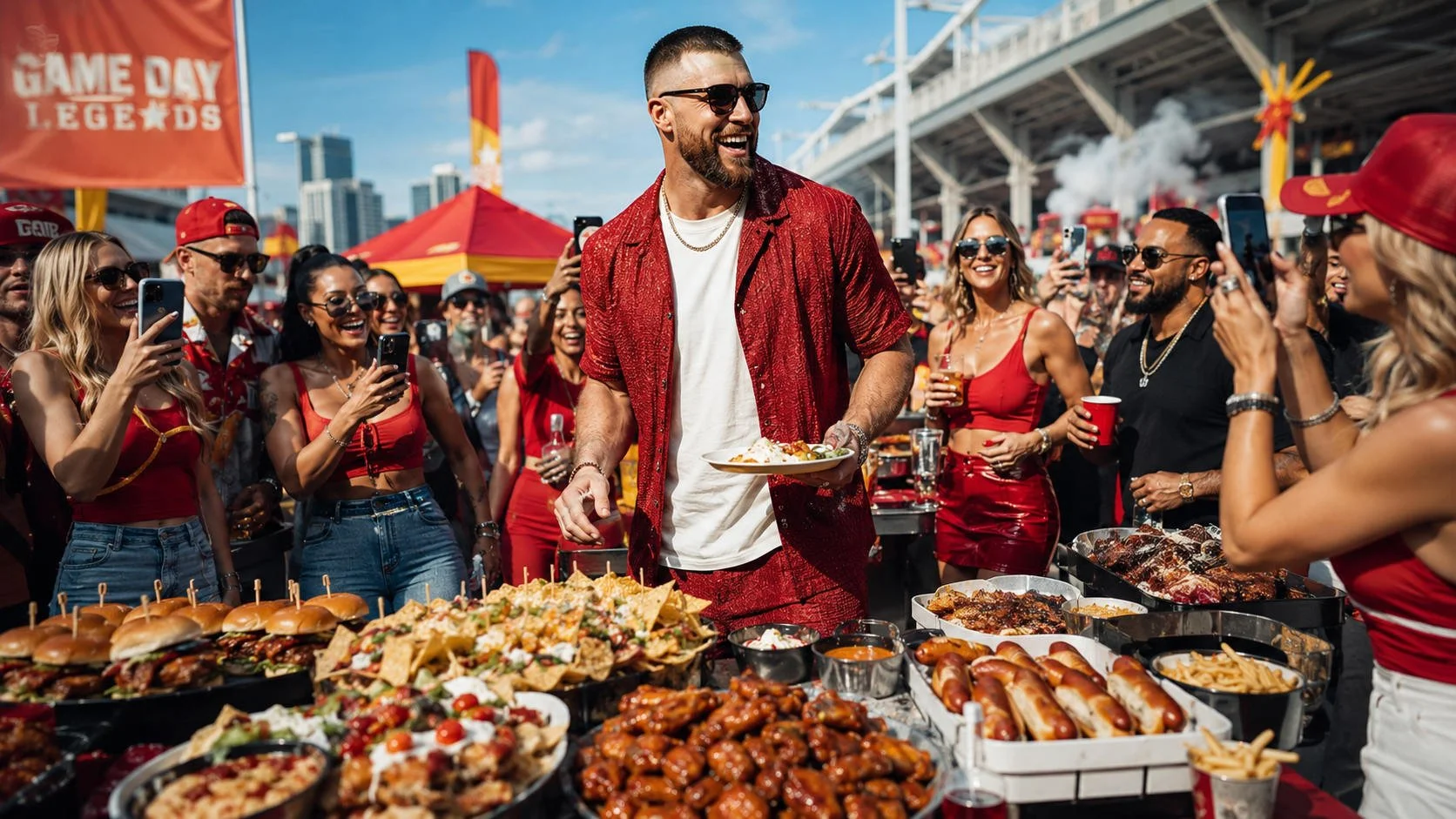
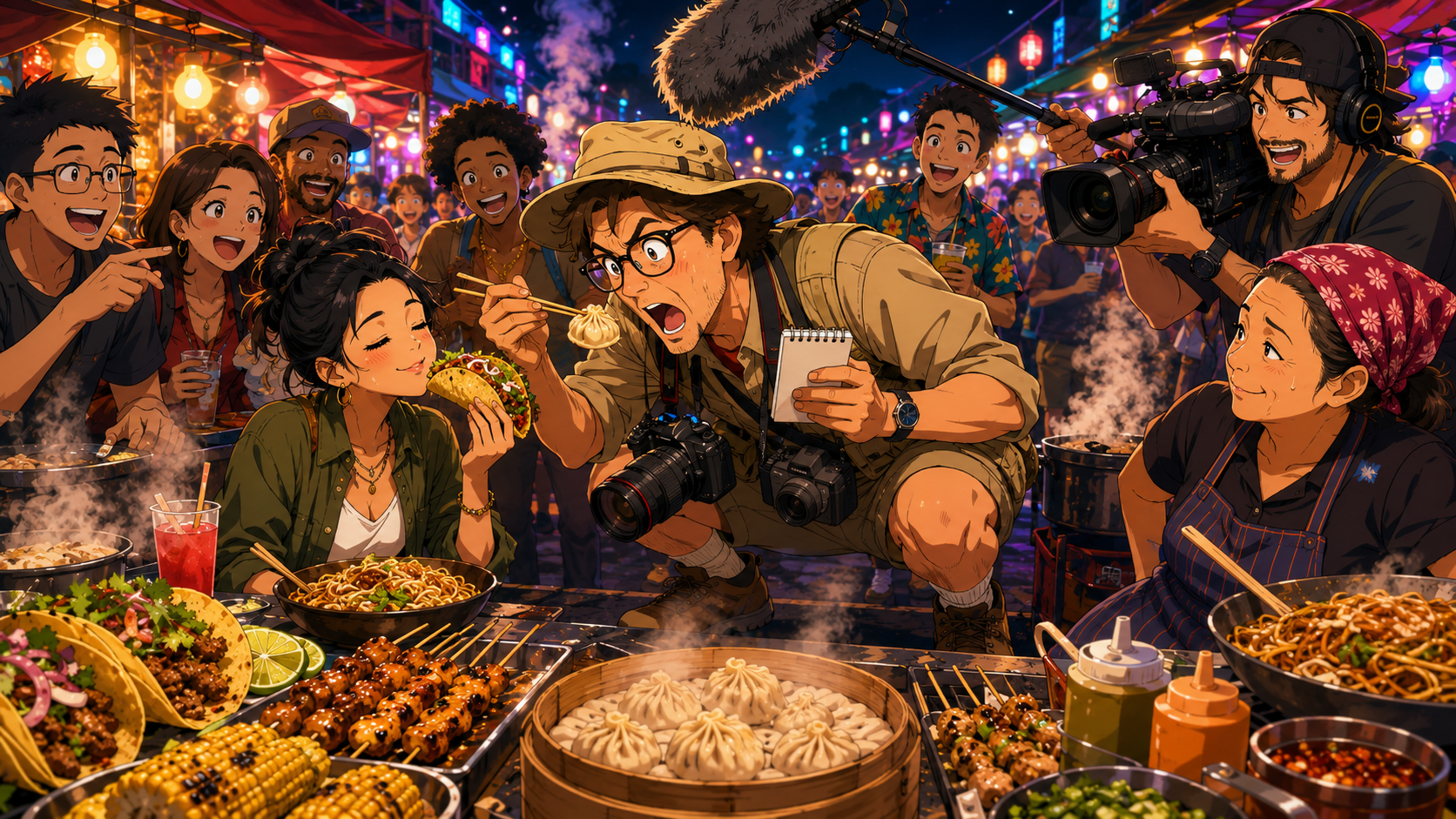
There was a time when tailgate food knew its place. It lived in parking lots. It came off folding tables. It was served from foil pans by uncles with tongs, cargo shorts, and suspicious confidence around open flame. It was not trying to be famous. It was not “activating a lifestyle vertical.” It was not available in the refrigerated aisle with a celebrity face slapped on it like a brisket-based hostage note.
Then Travis Kelce happened.
Not single-handedly, obviously. The man did not personally drag baked beans into the celebrity economy like a tight end pulling a defender across the middle. But Kelce is a near-perfect symbol of what tailgate food has become: not just game-day fuel, but branded content, grocery product, podcast conversation, beer identity, steakhouse ambition, and Super Bowl spectacle. The parking lot got a publicist. The nacho dip got a media plan. The cooler full of light beer started asking about distribution rights.
Kelce entered his 14th season with the Kansas City Chiefs in 2026, according to the team’s official bio, which means he has spent more than a decade inside one of America’s loudest food-football ecosystems: Kansas City barbecue, Arrowhead tailgates, stadium rituals, and fans who treat smoked meat less like food and more like civic infrastructure.
Travis Kelce Turned Tailgate Food Into a Grocery Aisle Personality
The clearest example is Travis Kelce’s Kitchen, his line of refrigerated, heat-and-eat meals launched with Golden West Food Group. The products included items like Bacon Mac & Cheese, Brisket Burnt Ends & BBQ Sauce, BBQ Baked Beans with Burnt Ends, and Sliced Brisket in BBQ Sauce — basically the tailgate food pyramid if the USDA had been replaced by a man holding barbecue tongs and yelling “let’s go.” The line launched exclusively at select Walmart stores, with dishes inspired by Kansas City flavors.
Kelce’s own launch quote was pure regional-food branding: he said the meals brought the “heart & soul of Kansas City” into every dish. That is the modern tailgate-food move right there. You are not just eating mac and cheese with brisket. You are buying a microwavable civic identity in a black plastic tray. Congratulations, your lunch now has hometown pride and a licensing agreement.
This is what Kelce says about the moment: tailgate food is no longer stuck at the event. It travels. It scales. It goes to Walmart. It gets a celebrity founder, a foundation tie-in, a regional flavor story, and packaging that says, “Yes, this was once parking-lot food, but now it has meetings.”
Tailgate Food Became Mainstream Because the Super Bowl Became a Snack Holiday With Football Attached
The Super Bowl is still technically a football game, in the same way Thanksgiving is technically about gratitude and not eating until your body files a complaint. The food is not incidental. It is the whole operating system.
The National Retail Federation’s 2026 Super Bowl survey found that a record 213.1 million U.S. adults planned to tune in, with 121.1 million planning to throw or attend a party and total spending expected to hit a record $20.2 billion. That includes food, drinks, apparel, decorations, and other purchases, but let’s not insult ourselves by pretending the centerpiece is a commemorative napkin. It is snacks. It has always been snacks.
The National Chicken Council projected Americans would eat 1.48 billion wings during Super Bowl LX in 2026, which is the kind of number that makes poultry sound less like agriculture and more like a military operation. SNAC International, using Circana data, reported that savory snack food sales reached $742 million during Super Bowl week 2025, with potato chips, tortilla chips, pretzels, popcorn, cheese snacks, and corn snacks all doing their patriotic duty in the national sodium pageant.
So when Kelce puts his name on barbecue meals, he is not randomly wandering into food. He is walking into one of the biggest annual food rituals in America wearing cleats and a grin. Tailgate food already had the demand. Celebrity culture just gave it a bigger megaphone and, tragically, more fonts.
The Parking Lot Became a Lifestyle Brand
Tailgating used to mean you had a grill, a cooler, and a friend named Dave who was legally not allowed to make chili indoors anymore. Now it means products, kits, partnerships, livestreams, and merch. The NFL and Goldbelly launched officially licensed Super Bowl LIX Tailgate Kits in 2025, delivering New Orleans-inspired game-day food experiences nationwide with items like king cake, beignet mix, hurricane mix, muffuletta components, pralines, and official Super Bowl party supplies.
Read that again slowly and feel your soul leave through the nearest branded plastic cup: officially licensed tailgate kits. The tailgate has become something you can ship to a couch. The NFL looked at people cooking in parking lots and thought, “What if this came with souvenir cups and a checkout page?”
This is not necessarily bad. It is convenient. It lets fans who are nowhere near the host city participate in the food culture. It also proves that “tailgate” no longer means “outside a stadium.” It means a packaged vibe. It means regional food, sports ritual, and commerce duct-taped together with festive napkins.
Kelce fits this perfectly because his food brand does the same thing with Kansas City barbecue. It takes a local food identity and makes it portable. Is a refrigerated brisket tray the same as standing outside Arrowhead while smoke rolls across a parking lot like a meat-scented weather system? No. Obviously not. But celebrity food branding does not sell the thing itself. It sells access to the feeling of the thing, reheated in five minutes because adulthood is a garbage schedule.
Garage Beer Is Tailgate Culture in a Can, Because Subtlety Is Dead
Kelce’s food-adjacent empire does not stop at barbecue trays. In 2024, Jason and Travis Kelce acquired an ownership stake in Garage Beer, a light lager brand. Brewbound reported that the brothers bought into the company, and other industry coverage described them as owners and operators of the Ohio-founded beer brand.
This is almost too on the nose. A football star and his brother investing in a brand called Garage Beer is not a business move so much as a national mood board. It says: this beer is for game day, garages, driveways, folding chairs, dads, brothers, podcast listeners, and people who believe “crisp” is a personality trait.
Tailgate food becoming celebrity culture needs beverages too. You cannot build a whole sports-food identity on brisket alone. Well, Kansas City might try, but eventually someone needs to hydrate badly.
Garage Beer works because it is not pretending to be precious. It is not a barrel-aged farmhouse saison brewed by monks who communicate only through tasting notes. It is light beer with an athlete-celebrity wrapper. That is exactly the mainstreaming of tailgate culture: simple products, big personalities, nostalgic settings, and enough self-awareness to make the whole thing feel like a joke that still clears revenue targets.
New Heights Made the Tailgate a Media Format
The Kelce brothers’ podcast, New Heights, is another reason Travis Kelce became the human bridge between tailgate culture and celebrity culture. Amazon’s Wondery announced a landmark deal with the show in 2024, and Reuters reported that the three-year agreement was worth more than $100 million.
That matters because tailgating is not just food. It is talk. It is arguing about referees, ranking wings, reliving plays, gossiping about athletes, and pretending your dip recipe has strategic importance. A podcast turns that social energy into media. It puts the pregame banter in people’s headphones all week instead of just before kickoff.
Kelce’s brand lives in that overlap: football credibility, brotherly trash talk, celebrity attention, and food-and-drink products that feel like they belong in the same universe. A fan does not have to attend a Chiefs game to participate. They can listen to the podcast, buy the beer, microwave the burnt ends, watch the livestreamed tailgate concert, and feel like they are part of the party while sitting on a couch surrounded by chip crumbs like a defeated woodland animal.
The Super Bowl Tailgate Is Now a Celebrity Stage
The word “tailgate” used to evoke smoke, coolers, and parking-lot chaos. Now it also means celebrity performance. In 2025, the NFL announced that Post Malone would headline the Super Bowl LIX YouTube Tailgate Concert, calling it the league’s “ultimate pregame party” and livestreaming it on YouTube before kickoff.
There it is. The tailgate became content. Not metaphorically. Literally. Livestreamed. Sponsored. Celebrity-headlined. Distributed globally. The folding table became a broadcast property.
This is why Travis Kelce is such a useful symbol. His world is no longer just football. It is football plus celebrity, food, fashion, podcasting, dating discourse, beer, business, and restaurant openings. He exists in the same cultural blender that turned the Super Bowl into a game, a concert, an ad festival, a gambling event, a snack holiday, a fashion runway, and a celebrity attendance audit.
Nielsen said Super Bowl LIX drew 127.7 million viewers in 2025, making it the largest audience for a Super Bowl and for a single-network telecast in TV history. When that many people are watching, the food is not background. It is a parallel marketplace. It is content in bowls.
Taylor Swift Didn’t Invent This, But She Put a Stadium Light on It
You cannot talk about Kelce and mainstream celebrity culture without mentioning the Taylor Swift effect, because pretending that did not reshape the audience would be like pretending nachos are mostly about corn integrity. A 2026 study using NFL game ratings from the 2022 and 2023 seasons found that the Chiefs’ TV audience increased by about one-third beginning with Swift’s first attendance at a Chiefs game in the third week of the 2023 season.
This matters for food because celebrity attention changes who the “game-day consumer” is imagined to be. The old tailgate stereotype was aggressively narrow: dudes, grills, beer, meat, face paint, and one guy making ribs like he was defending a dissertation. The newer version includes Swifties, casual fans, fashion watchers, podcast listeners, celebrity-news readers, home entertainers, TikTok snack-table builders, and people who care less about third-down conversion rates than what everyone served during the watch party.
That does not dilute tailgate food. It expands it. More people at the party means more dips, more drinks, more themed menus, more grocery launches, more athlete brands, and more opportunities for a corporation to invent something called “game day flavor innovation” while everyone begs for mercy.
1587 Prime Shows the Other Direction: Tailgate to Steakhouse
Kelce’s food image also runs upward, from parking-lot barbecue to luxury dining. He and Patrick Mahomes co-founded 1587 Prime in Kansas City with Noble 33, a steakhouse whose name combines their jersey numbers. The restaurant’s official site describes it as co-founded by the two Chiefs stars and built around sourced cuts, atmosphere, and legacy transformed into something new.
This is the celebrity-food ladder in one career: Walmart barbecue trays on one rung, light beer on another, upscale steakhouse at the top. Tailgate food has become mainstream not by staying humble, but by stretching across class codes like a very confident piece of mozzarella. Same athlete. Same football aura. Different price points.
At the low end, you get brisket mac and cheese in a tray. At the high end, you get steakhouse reservations and cocktails. In the middle, you get beer, podcast ads, and game-day snacks. The common ingredient is not beef. It is celebrity trust. Or at least celebrity recognition, which is trust’s louder, less qualified cousin.
Why Tailgate Food Was Perfect for Celebrity Culture
Tailgate food was always going to go mainstream because it has everything modern celebrity branding loves.
It is communal. People eat it in groups, which means it photographs well and spreads through social media without anyone needing to explain why there are seven dips on one table.
It is nostalgic. Wings, barbecue, burgers, chips, queso, beer, sliders, hot dogs, baked beans, and mac and cheese all carry the emotional subtlety of a marching band falling down stairs. You know what they are. You want them. You do not need a sommelier named Braden telling you the queso has “notes.”
It is regional. Kansas City barbecue, Philly cheesesteaks, Buffalo wings, New Orleans tailgate kits — these foods let brands sell place as flavor. Regional pride becomes a SKU. Somewhere, a brisket is wearing a visitor badge in a marketing department.
It is flexible. Tailgate food can be homemade, ordered, delivered, shipped, frozen, refrigerated, catered, branded, premium, cheap, spicy, nostalgic, ridiculous, or served in a helmet-shaped bowl by someone who should not own servingware.
It is already excessive. Celebrity culture loves excess. Tailgate culture was already a place where a person could build a seven-layer dip the size of a toddler mattress and call it “a little something.” The fit was natural, if spiritually alarming.
The Risk: Celebrity Food Can Turn Authenticity Into Packaging
Here is the less fun part, so naturally we must discuss it.
When regional tailgate food becomes celebrity-branded product, something gets flattened. Kansas City barbecue is not just sauce plus meat plus a famous face. It is pitmasters, smoke, time, technique, neighborhoods, rivalries, arguments, and local pride so intense it should probably be monitored by zoning officials.
A refrigerated tray can gesture at that tradition, but it cannot fully become it. That does not make it evil. It makes it a shortcut. A shortcut can be useful, but if you confuse it with the actual road, you are lost and probably holding microwave brisket.
The best celebrity food brands understand this. They do not pretend to replace the original culture. They offer a doorway into it. The worst ones use a famous name as seasoning, which is how you get products that taste like licensing paperwork with paprika.
Kelce’s advantage is that the Kansas City connection is real. He has spent his NFL career there, built his public identity there, and tied his food line to Kansas City flavors and his Eighty-Seven & Running foundation. That gives the brand more credibility than if some random celebrity launched “authentic tailgate beans” after attending one game from a luxury box and asking what down it was.
How to Steal the Kelce Lesson for an Actual Tailgate Spread
The useful lesson for normal people is not “become a famous tight end and launch a barbecue line,” because most of us lack the hand size, business contacts, and ability to survive being tackled by industrial refrigerators in shoulder pads.
The lesson is structure.
Build your tailgate around one regional anchor: Kansas City-style burnt ends, Buffalo wings, Philly cheesesteak sliders, Detroit-style pizza squares, Texas chili, New Orleans muffuletta bites. One identity. Not twelve themes fighting in a foil pan cage match.
Add one heat-and-eat hero. There is no shame in using prepared food. The shame is in pretending you smoked brisket for 14 hours when the label is still in the trash. Put it in a real dish, garnish it, and stop acting like your guests are forensic barbecue investigators.
Add crunch and dip. Chips, pretzels, pickles, queso, salsa, ranch, buffalo dip, spinach dip. Tailgate guests need something to do with their hands besides refreshing fantasy scores and emotionally mismanaging sports.
Add drinks that match the mood. Beer, sparkling water, canned cocktails, soda, mocktails, whatever keeps the party from becoming dehydration with team colors.
Add one ridiculous thing. A themed dessert. A helmet snack bowl. A sauce flight. A slider bar. Something stupid enough to make people take a picture but edible enough that you are not just building content garbage.
That is the Kelce-era tailgate: familiar food, strong identity, easy access, and enough personality to survive being photographed.
Final Verdict: Travis Kelce Is the Tailgate Economy With Better Hair
Travis Kelce says a lot about tailgate food becoming mainstream celebrity culture, and most of it is not said in press conferences. It is said through the business moves: refrigerated Kansas City barbecue meals at Walmart, Garage Beer ownership, a massive podcast platform, a co-founded steakhouse, and a public persona that lives at the intersection of NFL dominance, regional pride, celebrity attention, and snackable media.
Tailgate food used to be what fans ate before the spectacle. Now it is part of the spectacle. It has celebrity founders, national retail distribution, official kits, livestreamed concerts, snack-industry reports, and enough Super Bowl spending to make a bowl of queso need an accountant.
Kelce is not the cause of all this. He is the mascot with a business plan. He shows how football food moved from the parking lot to the grocery aisle, from the cooler to the cap table, from local ritual to national content.
The tailgate did not die. It got franchised, shipped, streamed, monetized, and reheated.
Which is ridiculous. Also inevitable. Also, if someone hands you brisket mac and cheese during the game, you are still going to eat it, because principles are nice but melted cheese has an undefeated record.