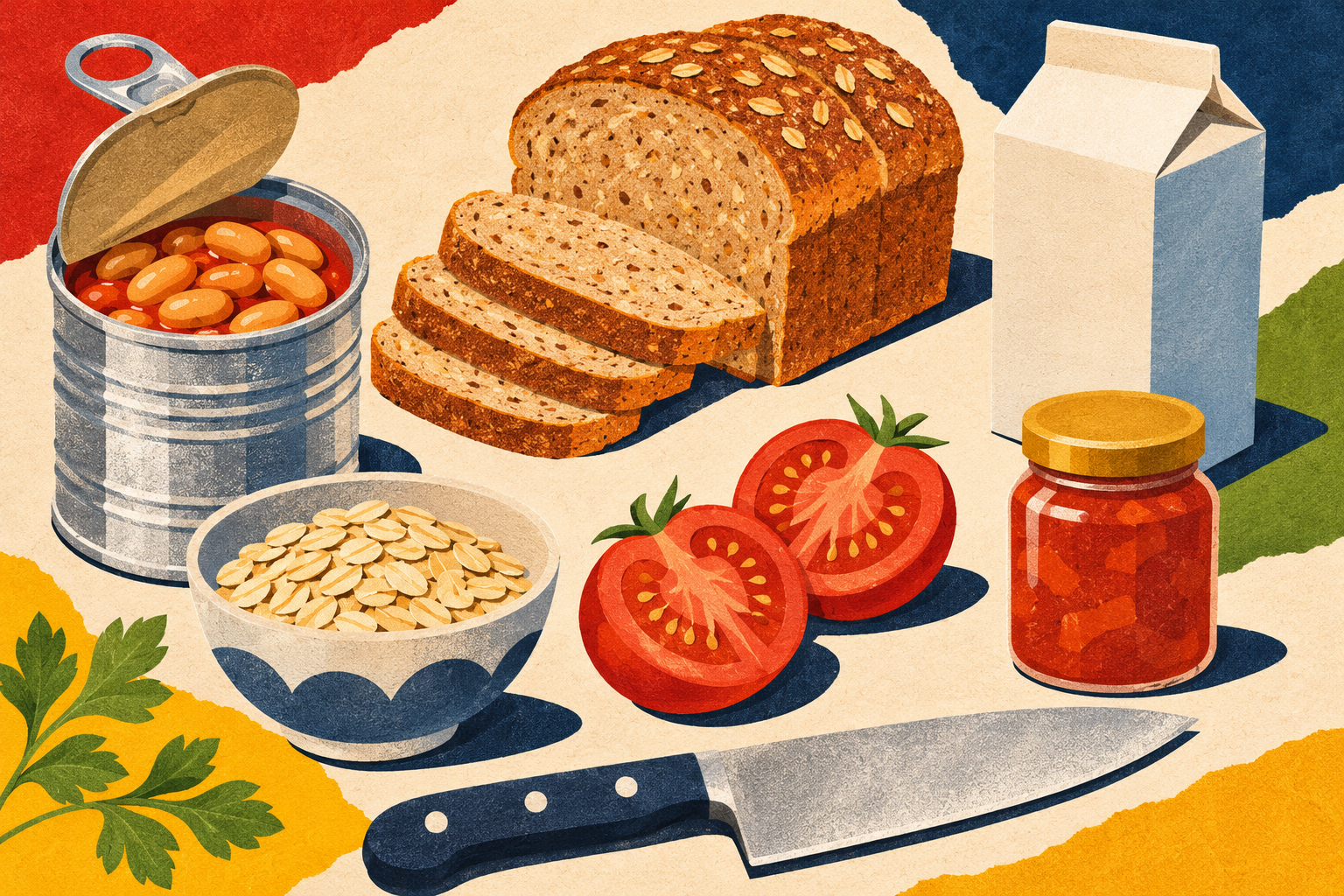
A tin of beans, a carton of pasteurized milk and a bag of sweets have something in common: somebody processed them. That shared history tells you remarkably little about which one belongs in tonight’s dinner.
Not all processed foods are bad for you because processing describes a vast range of changes, not a single nutritional outcome. It can make food safer, help it keep longer or make it easier to prepare. It can also produce foods that are easy to eat quickly and diets that encourage excess calorie intake.
The useful question is what happened to the food, what it provides and how you eat it. You do not need an entirely unprocessed kitchen. You need a better filter than the word on the package.
“Processed” and “ultra-processed” mean different things
In everyday language, processing includes changes such as heating, drying, freezing, grinding and canning. That is why a broad instruction to avoid processed food can sweep useful staples out of the cupboard along with the snacks someone actually meant.
Researchers often use a more specific system called NOVA, which divides foods into four groups:
Group 1: unprocessed or minimally processed foods. These can undergo changes such as freezing, pasteurization or grinding without added culinary ingredients. “Minimally processed” does not mean untouched.
Group 2: processed culinary ingredients. Oils, butter, sugar and salt are generally used to prepare or season other foods.
Group 3: processed foods. These typically combine foods from the first group with ingredients from the second, often to preserve them or change their taste. Examples include vegetables canned with salt and bread made from flour, water, yeast and salt.
Group 4: ultra-processed foods. These are industrial formulations often containing substances or additives used to create particular textures, flavors and other qualities, beyond the ingredients ordinarily used in a kitchen.
The everyday category “processed food” is therefore broader than NOVA’s third group. And NOVA’s third group is not its ultra-processed fourth group.
Even two loaves that look similar can fall into different categories because their formulations differ. A package alone cannot settle the question. Nor does recognizing every ingredient guarantee a balanced food: sugar and salt are perfectly familiar.
NOVA describes processing and formulation. A nutrition label describes another part of the picture. Neither tells you everything about a food’s physical structure, your portion or the meal around it.
Sometimes processing solves a real problem
Pasteurization is an unusually clear example. Heating milk kills harmful germs. The CDC recommends pasteurized milk and dairy products, noting that they provide the nutritional benefits without the risks associated with drinking raw milk. Good farm hygiene does not make raw milk reliably safe.
Preservation can also make food available when cooking from scratch or buying fresh food is difficult. A tin of beans waiting in the cupboard has practical value. So does food that fits someone’s budget, storage space or time.
Those benefits do not give every preserved product a nutritional halo. They explain why the process deserves a specific question: what problem did it solve, and what else changed?
The ultra-processed-food concern is not imaginary
The strongest reason to resist a blanket defense of processing comes from an experiment, not a frightening ingredient list.
In a 2019 NIH controlled-feeding trial, 20 adults lived at a research center and tried two diets in randomized order. They spent two weeks eating an ultra-processed menu and two weeks eating an unprocessed menu. They could eat as much or as little as they wanted.
On the ultra-processed diet, participants ate about 500 more calories a day on average. They gained weight during that period and lost weight during the other.
That is meaningful experimental evidence about the menus tested. It is also more specific than “processing makes food unhealthy.” The researchers tried to match several nutritional features, but the menus differed in important ways. Excluding beverages, the ultra-processed meals packed more calories into each gram. Eating rate differed too.
The trial changed an entire menu, not one processing step in an otherwise identical food. Its small sample and short duration cannot establish long-term disease effects or tell you what one particular bread does to your health. NIH funded the work; one coauthor reported food-industry relationships.
Observational reviews also link higher ultra-processed-food intake with poorer health outcomes. Their interpretation is harder: people’s diets travel with differences in income, smoking, activity and other habits. Statistical adjustment helps, but cannot guarantee that all those influences disappear. That limits causal claims without making the warning meaningless.
Food structure matters alongside nutrients
Two foods can have similar nutrient totals yet behave differently when you eat them. Texture can change eating speed, while energy density determines how many calories arrive in each gram. Those features deserve attention even when two products share a processing category.
Recent trials help separate these questions. In one 11-day texture experiment, participants ate less food by weight on the slower-eaten menu, but their calorie intake did not fall significantly. The foods they actually consumed were more energy-dense.
A separate two-week trial, comparing faster- and slower-eaten ultra-processed menus, did find lower calorie intake with the slower-eaten version. These studies share investigators, so they are not wholly independent research programs.
The distinction matters: fewer grams of food do not automatically mean fewer calories. And a comparison between two ultra-processed menus cannot establish that ultra-processed and minimally processed diets have identical effects.
This research adds detail to the picture. It does not establish a chewing trick, a guaranteed weight-loss strategy or a declaration that all ultra-processed products are harmless.
Three questions that help in the supermarket
A useful shopping decision can be simpler than the scientific debate. Ask three questions together, rather than turning one label into a verdict.
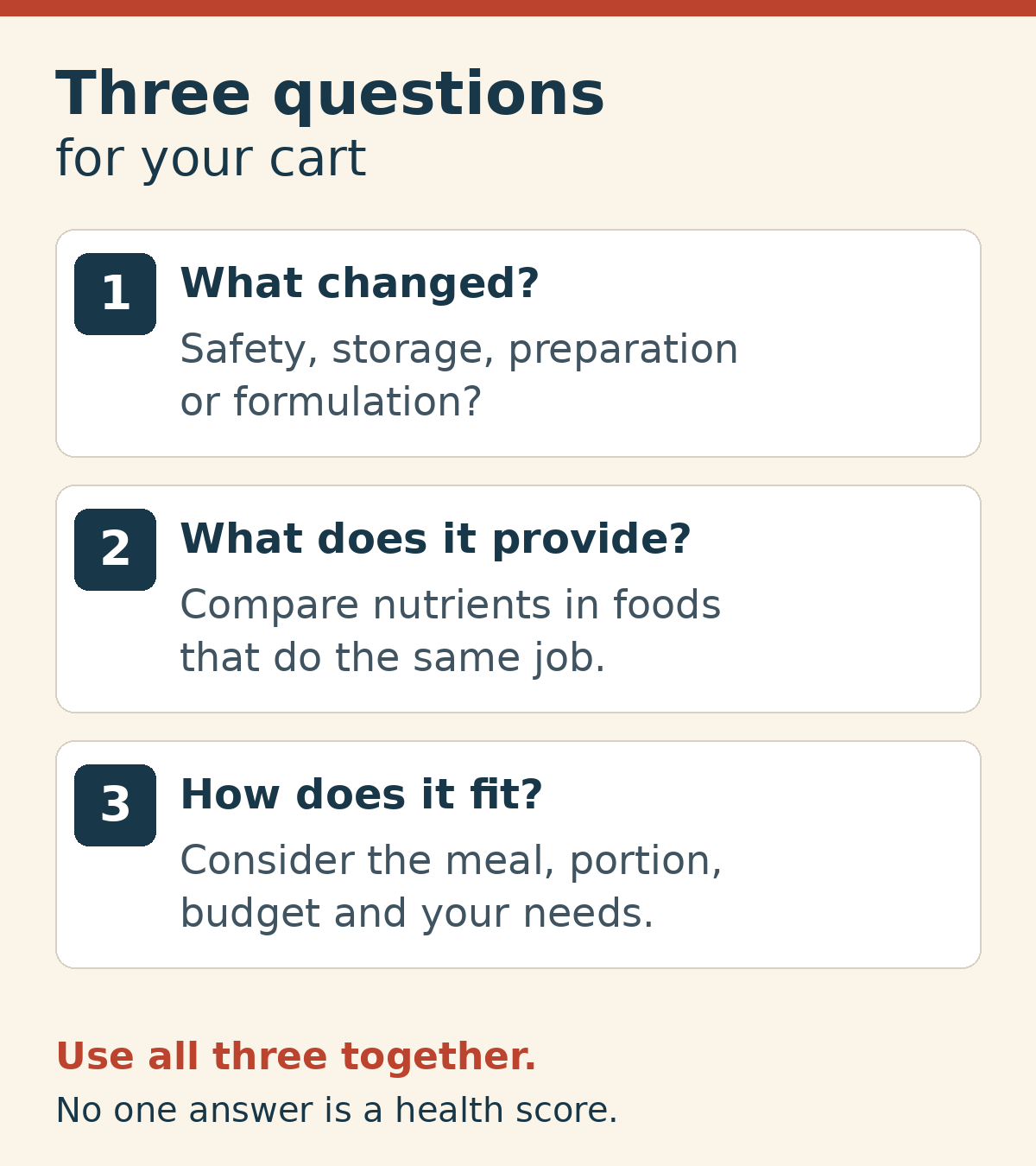
The guide separates the purpose of processing, the food’s nutritional contribution, and its role in the meal. None of the three produces an automatic good-or-bad classification.
1. What changed, and why?
Look beyond the container. Was the food heated for safety, preserved for storage or formulated into a ready-to-eat product? Several changes can apply to the same item.
The ingredient list can help explain the formulation. It is less useful as a spelling test. An unfamiliar name is not, by itself, evidence of danger; a short list is not proof that a food is suitable for every meal.
2. What does it provide?
Compare foods that do the same job. For bread or breakfast cereal, look at fibre alongside sugar and salt. For a prepared meal, consider its protein, vegetables, portion and sodium rather than awarding it a pass because one nutrient looks favorable.
The NHS explicitly notes that some ultra-processed foods can fit a healthy diet, including wholemeal bread, higher-fibre cereals and baked beans. Formulations differ, so check the actual product rather than assuming every member of a category is alike.
3. How does it fit the meal you can actually make?
Consider what the food replaces and what you eat alongside it. A convenient staple that helps you assemble a varied meal serves a different purpose from a snack that repeatedly displaces one.
Budget and access belong in that decision. So do allergies, prescribed diets and swallowing needs. Do not stop using a medically recommended nutritional product simply because it is processed.
It also helps to separate nutrition from shopping virtue. As our look at why ordinary groceries can start to feel like a moral choice explores, the atmosphere around food can influence how we judge it. A more reassuring package is not a substitute for examining what is inside.
Keep the useful staples, keep the bigger picture
The aim is a varied, workable diet, not a cupboard that passes a purity inspection. Processing can protect food and make meals possible. An ultra-processed dietary pattern can still deserve concern.
Both statements can be true because they answer different questions. Keep useful staples, compare similar products and pay attention to what dominates your meals. The word “processed” should start an investigation, not finish it.