
Why Whole Foods Makes Normal Groceries Feel Like a Moral Choice
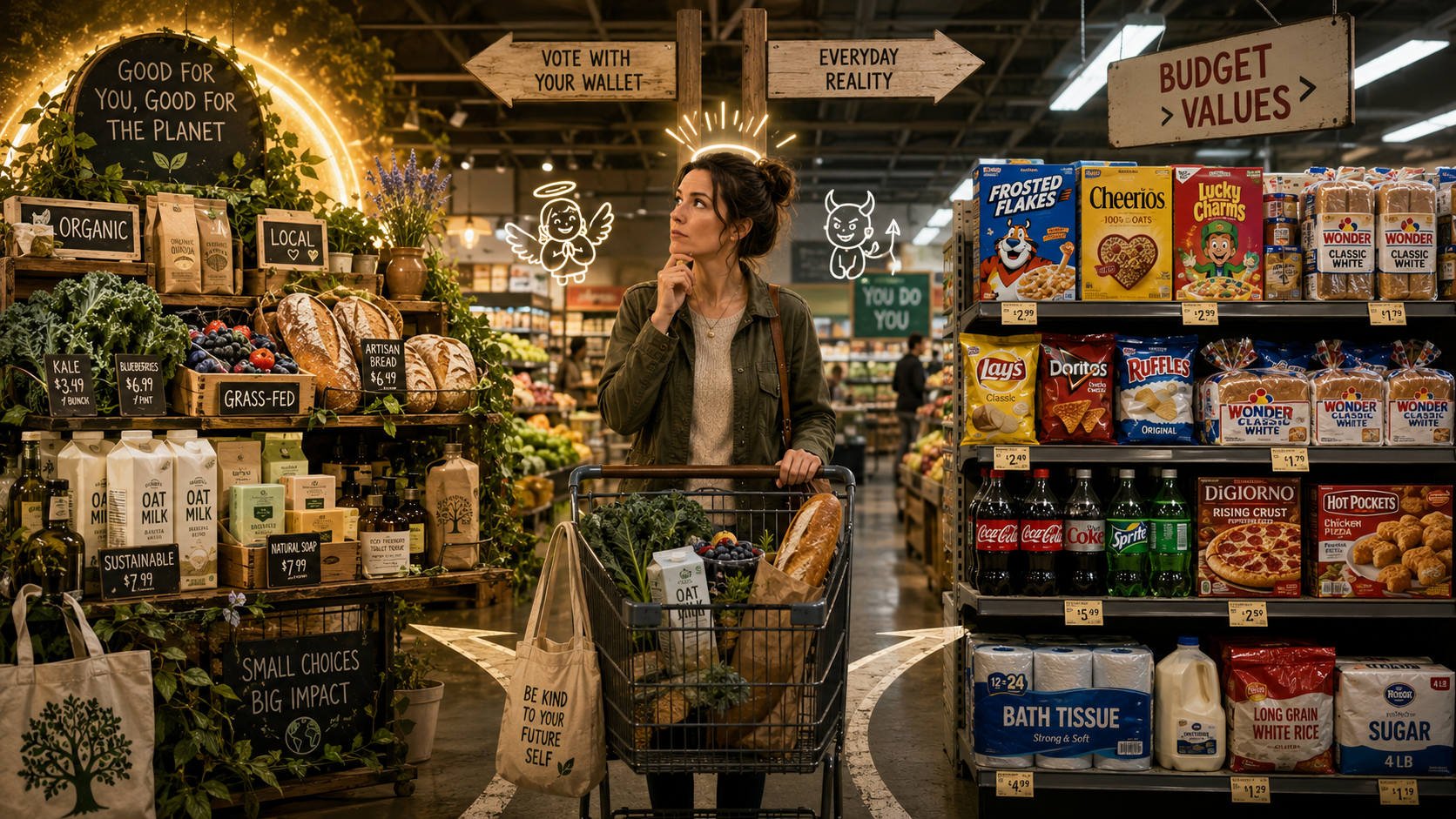
Whole Foods does something remarkable to the human brain. You walk in needing bananas, eggs, chicken, and maybe dish soap, and within six minutes you are standing in front of a wall of almond milk wondering whether your breakfast has labor ethics. A normal grocery store asks, “Do you want the cheap eggs or the expensive eggs?” Whole Foods asks, “What kind of person are you, spiritually, agriculturally, and in relation to pasture access?”
This is the great Whole Foods trick: it turns ordinary shopping into a tiny moral referendum. Every aisle whispers, “Choose better.” Better for your body. Better for animals. Better for farmers. Better for the planet. Better for your identity as someone who has definitely read the back of a cereal box and frowned thoughtfully.
Whole Foods’ own stated purpose is “to nourish people and the planet,” and its core values include selling “the highest quality natural and organic foods.” That is not just a business line. That is a grocery store putting on a linen robe and acting like kale has a mission statement.
Whole Foods Doesn’t Sell Groceries. It Sells Permission to Feel Better About Groceries.
Whole Foods began in Austin, Texas, in 1980 and now lists 533 U.S. stores, 12 stores in Canada, 9 in the U.K., and more than 105,000 team members. So yes, the small natural-foods-store origin story has grown into a very large natural-foods-store empire, because nothing says humble earth wisdom like a multinational grocery chain with parking garages and Amazon integration.
The store’s genius is not just stocking organic spinach. Lots of stores do that now. The genius is building an entire environment where every purchase feels like it says something about you. You are not buying peanut butter. You are supporting clean ingredients. You are not buying coffee. You are participating in ethical sourcing. You are not buying chicken. You are making a statement about animal welfare, antibiotics, traceability, and how much guilt you can fit into a shopping cart.
That is powerful branding. Also exhausting. Sometimes a person just wants crackers without feeling like they are testifying before the Senate Committee on Snack Integrity.
The Ingredient Standards Make the Cart Feel Purified
Whole Foods bans more than 300 ingredients from all food it sells, including hydrogenated fats, high-fructose corn syrup, aspartame, sucralose, saccharin, and various colors, preservatives, flavors, and sweeteners. The company frames this as “what we sell is as important as what we don’t.”
This is one reason the store feels moral. It removes some decisions before you ever arrive. You do not have to compare fourteen ingredient labels wondering which granola bar contains the least suspicious chemistry experiment. Whole Foods has already said, “We banned some things for you.” Convenient. Comforting. Slightly parental. Like if your grocery store packed your lunch and told you it was disappointed in conventional marshmallows.
But this also creates the emotional trap. Once a store curates ingredients this way, the shopper starts feeling like the store itself is cleaner, safer, wiser, maybe even nobler. The shelf becomes absolution. The label becomes confession. The cart becomes a personality.
And then you buy a $7 bag of tortilla chips because it says “ancient grain,” even though the ancient civilization in question probably did not intend to be dusted in nacho powder.
“Natural” Is Where the Halo Gets Foggy
Whole Foods leans heavily into “natural and organic,” but those words do not carry the same legal weight. Organic is a regulated certification system. “Natural” is much fuzzier. The FDA says it has not established a formal definition for “natural” through rulemaking, though it has a longstanding policy that the term generally means nothing artificial or synthetic has been added that would not normally be expected in the food.
That matters because “natural” sounds morally superior even when it is not saying very much. A volcano is natural. So is poison ivy. So is a raccoon eating pizza out of a dumpster. Nature has range.
The grocery aisle knows this. “Natural” gives a product a glow without always giving the shopper much clarity. It feels like a virtue badge. It feels like health. It feels like the product owns hiking boots. But the actual meaning can be narrower than the emotional meaning shoppers assign to it.
Whole Foods benefits from that halo, even while it also has stricter internal standards than many retailers. That is the strange part: the store can be legitimately more selective and still participate in the same old grocery-label theater where words like “simple,” “clean,” “real,” and “wholesome” float around like tiny moral balloons.
Organic Turns Lettuce Into a Philosophy
Organic is where the moral-choice machine gets more formal. Whole Foods says it is the first and only certified organic national grocery store, with rules for how organic products are sourced, stored, handled, and labeled, plus annual third-party inspections of every store and facility.
The USDA’s National Organic Program develops the rules for production, handling, labeling, and enforcement of USDA organic products, and organic labels must be reviewed and approved by a USDA-accredited certifying agent.
That gives organic food a real certification backbone. It is not just “vibes grown in dirt.” It is a regulated system. But in the store, it becomes more than regulation. It becomes identity.
Organic apples are not merely apples grown under specific standards. They become the apples of the person who tried. Conventional apples become the apples of the person who maybe had a budget, or maybe hates bees, or maybe just wanted fruit without applying for ethical clearance from the produce department.
This is the annoying part of moral groceries: good standards can become social signals. Organic can be a farming system, a consumer preference, a climate concern, a health belief, a status marker, and a reason someone in yoga pants looks disappointed at your carrots.
Meat Becomes a Moral Obstacle Course
Whole Foods makes buying meat feel especially loaded, because meat already comes with obvious ethical baggage. The store says all fresh beef, pork, chicken, turkey, goat, and lamb in its meat department must meet 100+ animal welfare standards. Whole Foods also says its meat is traceable to farm or ranch, with no antibiotics ever and no added growth hormones.
That is a big part of the appeal. The shopper can buy chicken while feeling less like they are participating in an industrial mystery box. The product comes with standards, claims, traceability, and the soothing possibility that dinner involved fewer horrors than usual.
But the moral arithmetic remains messy. Higher-welfare meat may cost more. Some shoppers cannot afford it. Some may choose to eat less meat. Some may decide the best grocery choice is beans, lentils, tofu, or eggs. Some may buy the regular chicken at another store because rent has a charming way of defeating abstract values.
Whole Foods does not eliminate the meat dilemma. It merchandises a more comfortable version of it. That is useful, but it is not sainthood in butcher paper.
Seafood Comes With a Conscience Filter
Seafood is another place where Whole Foods turns groceries into ethics homework. The company says all seafood in its Seafood department is either Responsibly Farmed or sustainable wild-caught, including frozen and breaded options, smoked seafood, appetizers, and seafood dips. It also says it does not sell cloned or genetically modified seafood and prohibits 300+ food ingredients, including certain preservatives used to treat seafood.
That means the seafood case is not just selling salmon. It is selling relief. You do not have to stand there googling whether this fish was caught by a villain boat in an overfished region while the person behind you waits to buy shrimp. The store says it has done the filtering.
This is exactly why Whole Foods feels like a moral economy. It outsources consumer anxiety. For a price, of course. Always for a price. Virtue rarely comes with a coupon unless you are also a Prime member, because modern life is a satire written by a payment processor.
Coffee, Flowers, and Bananas Now Have Backstories
Whole Foods also pushes moral meaning into categories that used to be simpler. Coffee is not just coffee. Flowers are not just flowers. Bananas are not just bananas. They may be part of programs, certifications, and sourcing narratives.
The company’s Sourced for Good program says it supports workers, communities, and environmental stewardship where products are sourced, relying on internationally recognized third parties to verify social practices, environmental practices, and/or working conditions.
Again, this can be genuinely useful. Supply chains are complicated. Most shoppers cannot personally audit a mango. Third-party verification can help translate invisible labor and environmental conditions into a shelf signal.
But it also means a shopper is now asked to care about everything. The coffee. The cocoa. The grapes. The flowers. The paper towels. The cleaning spray. The salmon. The chicken. The strawberries. The shampoo. The eggs. The poor shopper came in for soup and left emotionally responsible for Ecuador.
Amazon Made the Moral Grocery Store Even Weirder
In 2017, Amazon announced it would acquire Whole Foods Market in an all-cash deal valued at about $13.7 billion, including Whole Foods’ net debt. A later Amazon release said the companies wanted to make high-quality natural and organic food “affordable for everyone.”
This is where the Whole Foods morality machine gets deliciously awkward. The store built its identity around local producers, organic certification, ingredient standards, and “nourish people and the planet.” Then it became part of Amazon, one of the largest corporations in human history, a company so massive it makes ordinary capitalism look like a lemonade stand with tax questions.
So now the shopper experiences a strange split-screen. On one side: heirloom tomatoes, regional goat cheese, local kombucha, responsibly sourced fish, gentle lighting, and a handwritten-looking sign about soil. On the other: Prime discounts, app scanning, 5% back with an eligible Prime Visa, and the vast machinery of Amazon commerce humming underneath the kale. Whole Foods says Prime members can scan the app for an extra 10% off sale prices, while its Amazon benefits page promotes 5% back at Whole Foods and Amazon.com with Prime Visa and eligible Prime membership.
It is a moral grocery store plugged into a convenience empire. Very modern. Very efficient. Very “save the planet, but please scan this QR code first.”
Whole Foods Makes Price Feel Like Virtue, Which Is Dangerous
The nickname “Whole Paycheck” exists for a reason. Whole Foods has long been associated with premium prices, even though Amazon-era deals, 365 products, sales, and Prime discounts have tried to soften the blow. The store itself promotes its 365 by Whole Foods Market brand as meeting strict ingredient standards across food, supplements, body care, and cleaning products.
The danger is that expensive groceries can start to feel morally superior just because they are expensive. This is nonsense in a hemp tote.
A $9 jar of almond butter is not automatically more ethical than a $3 jar of peanut butter. Organic berries are not proof of character. A person shopping at a discount grocer is not morally inferior to a person buying regeneratively whispered crackers at Whole Foods.
Whole Foods makes normal groceries feel like a moral choice partly because it blurs value and values. Sometimes higher prices reflect better sourcing, stricter standards, smaller producers, or certification costs. Sometimes higher prices reflect branding, real estate, packaging, and the fact that people will pay more for crackers that look like they attended therapy.
The trick is knowing the difference, which is extremely annoying because now you need both a budget and a philosophy.
The Store Design Helps You Feel Like You’re Being Good
Whole Foods does not feel like a warehouse of food. It feels like a carefully staged argument for better living. Produce glows. Bulk bins imply restraint and environmental seriousness. The prepared-foods section says, “You are busy, but still better than drive-thru people.” The bakery says, “This cake is acceptable because the strawberries seem educated.”
The store makes virtue beautiful. That is not accidental. If moral choice looked like spreadsheets and compost rules, nobody would buy the $11 salad. Whole Foods aestheticizes responsibility. It makes ethical consumption look warm, abundant, colorful, and attainable.
The problem is that moral consumption becomes lifestyle décor. The tote bag, the glass bottle, the local honey, the pasture-raised eggs, the tiny probiotic beverage with a name like a Scandinavian furniture line. You are no longer just feeding yourself. You are curating evidence.
The Real Appeal: Whole Foods Reduces Decision Fatigue
Here is the useful, less cynical part. Whole Foods works because people are tired. Food shopping is overwhelming. Labels are confusing. Supply chains are invisible. Health claims are everywhere. The average grocery aisle now contains enough conflicting promises to make a person consider farming their own lentils in a closet.
Whole Foods offers a shortcut: trust us. We banned ingredients. We verify organic handling. We set meat standards. We source seafood responsibly. We have programs for worker welfare and local suppliers. You can still compare, but you do not have to start from zero.
That has real value. The store is not just selling morality. It is selling relief from research. It is selling a filtered grocery universe where fewer products require suspicion.
Is that worth the premium? Sometimes yes. Sometimes no. Sometimes you buy the Whole Foods chicken. Sometimes you buy rice and beans elsewhere and call it dinner because your bank account has also expressed values.
How to Shop at Whole Foods Without Turning Groceries Into a Personality Disorder
Use Whole Foods as a filter, not a church. The store’s standards can be helpful, but your cart is not your soul in wheeled form.
Pick your priorities before you shop. Maybe you care most about organic produce. Maybe animal welfare. Maybe local brands. Maybe seafood sustainability. Maybe avoiding certain additives. Maybe staying under budget because the electricity company rudely refuses to accept “I bought ethical strawberries” as payment.
Buy selectively. Whole Foods can be great for certain categories: produce, meat, seafood, specialty pantry items, bulk goods, cheese, bakery, and specific dietary needs. But you do not have to buy every household staple there. No one gets a medal for purchasing paper towels under morally superior lighting.
Use the 365 brand and sales. Compare unit prices. Prime discounts can help, but do not let a yellow sale tag hypnotize you into buying seaweed snacks you never wanted. “It was 10% off” is not a grocery strategy. It is how pantries become museums of abandoned optimism.
Do not shame yourself for conventional food. Organic is a regulated standard, not a measure of parental love, personal worth, or spiritual cleanliness. A child eating a conventional apple is still eating an apple. Civilization may proceed.
Spend where the difference matters to you. Save where it does not. This is called being an adult, which is mostly deciding which problems get money and which problems get store-brand oatmeal.
Whole Foods’ Greatest Trick Is Making Consumption Feel Like Action
The deeper issue is that Whole Foods turns buying into doing. Buy the better eggs, and you have supported animal welfare. Buy the certified coffee, and you have supported better sourcing. Buy organic, and you have supported a farming system. Buy local, and you have supported small producers. Buy the approved cleaner, and you have avoided some questionable ingredients.
That can be true. Consumer choices do shape markets. Whole Foods’ own standards have influenced suppliers and competitors. But buying is still only one kind of action, and usually the easiest kind for people with money. It is not the same as policy, labor rights, affordability, farming reform, environmental regulation, or food access.
This is where the moral grocery store gets a little too pleased with itself. It lets shoppers feel like the world improves one $6 yogurt at a time. Sometimes it does help. Sometimes it mostly helps the shopper feel less implicated in a food system too large and weird to understand before dinner.
Whole Foods Makes Groceries Feel Moral Because It Sells Certainty in an Uncertain Food System
Whole Foods makes normal groceries feel like a moral choice because it transforms food from a commodity into a statement. It puts standards, labels, sourcing stories, bans, certifications, animal welfare claims, organic systems, worker programs, local producers, and environmental language between you and the potato chips.
That can be useful. It can also be manipulative, class-coded, expensive, and mildly exhausting. Whole Foods is both a store with real standards and a theater of ethical consumption. It helps shoppers make better-informed choices, then quietly charges them for the comfort of feeling better-informed.
The best way to understand Whole Foods is this: it does not merely sell food. It sells a cleaner story about food.
Sometimes that story is backed by meaningful standards. Sometimes it is branding with a reusable tote. Usually it is both, because grocery shopping in America is apparently too simple unless it contains ethics, aesthetics, discount programs, supply-chain anxiety, and a $5 bottle of water that looks like it went to graduate school.
So yes, Whole Foods makes groceries feel like a moral choice. That is the brand. That is the appeal. That is also the trap.
Buy the good eggs if they matter to you. Buy the cheaper pasta somewhere else if it helps your budget. Read labels when you can. Ignore guilt when you must. And remember: your grocery cart may reflect your values, but it is not a confession booth with wheels.