
Which Industries Get Hit First by an Oil-and-Shipping Disruption
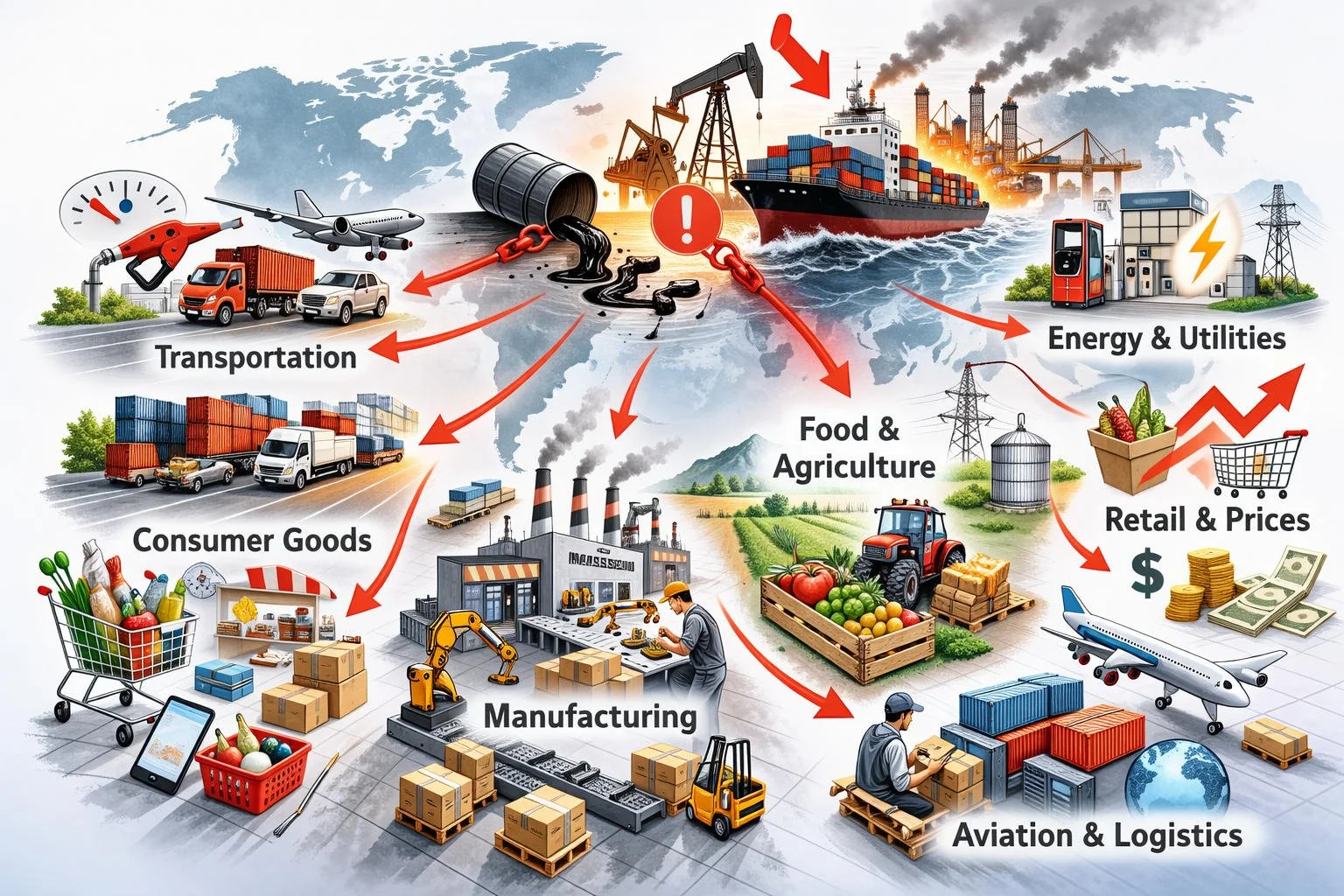
When oil spikes and shipping gets disrupted at the same time, it’s not just “higher gas prices.” It’s a two-part shock:
Energy shock (crude → gasoline/diesel/jet fuel → higher operating costs)
Logistics shock (shipping risk/insurance/reroutes → delays + higher freight rates)
That combination moves through the economy like a wave. Some industries feel it in hours, others in weeks, and a few only feel it after inventories run down.
Here’s who gets hit first—and why.
How the shock spreads (the simple chain reaction)
Oil-and-shipping disruptions usually show up in this order:
Shipping risk rises → insurers add war-risk costs or pull coverage → fewer ships move → freight rates surge
Fuel costs jump (diesel, jet fuel, bunker fuel) → transport becomes more expensive immediately
Surcharges appear (fuel surcharge, emergency risk surcharge, peak-season style pricing)
Inventories cushion the first days → then shelves and factories start to feel it as replenishment slows
Prices rise downstream (food, flights, deliveries, consumer goods)
The industries that get hit first (first 72 hours)
1) Airlines and air cargo
Airlines get hammered early because fuel is one of their biggest costs and reprices fast. Even if tickets don’t jump instantly, margins do.
Fuel is commonly ~25–30% of airline operating costs (and can be higher in some periods), so a fast jet-fuel move hurts immediately.
Early symptoms: higher airfares, fuel surcharges, weaker airline stocks, more aggressive capacity cuts on marginal routes.
2) Ocean freight, container shipping, and tankers
This is ground zero for the logistics side of the shock. When war-risk coverage is canceled or repriced, ships don’t just “pay more”—they can stop sailing or sit at anchor until risk becomes insurable. Reuters has described insurers canceling war-risk cover and large numbers of vessels stranded near Hormuz, alongside surging tanker rates.
Early symptoms: sudden freight spikes, rerouting (longer transit times), port congestion, delayed imports.
3) Trucking, parcel delivery, and last-mile logistics
Trucking runs on diesel, and diesel is the “hidden tax” inside nearly everything you buy. Delivery networks feel it fast because they can’t pause operations.
Early symptoms: diesel surcharges, higher shipping fees, “free shipping” thresholds rising, tougher delivery windows.
4) Refiners and fuel distributors
This sounds counterintuitive because higher crude doesn’t automatically mean refiners win. In sudden spikes, refineries can face:
cost pressure (crude up now)
margin uncertainty (gas/diesel prices catch up later)
local shortages if shipping/distribution snarls
Early symptoms: retail fuel price jumps, volatility in refinery margins, supply hiccups in certain regions.
The next wave (days 4–21)
5) Petrochemicals, plastics, packaging, and chemicals
Oil isn’t only a fuel—it’s also a feedstock. Petrochemical feedstocks are a meaningful slice of global oil demand, and petrochemical chains touch everything from packaging to detergents to clothing materials.
Early symptoms: packaging cost increases, resin shortages, higher prices for plastic-heavy goods, pressure on chemical producers and industrial customers.
6) Food and agriculture (especially fertilizer and refrigerated supply chains)
Food gets hit through multiple channels:
diesel for farm equipment and trucking
higher costs for fertilizer/chemicals (often tied to energy markets)
refrigerated logistics (energy intensive)
import disruptions for certain staples/ingredients
Early symptoms: rising transport costs for groceries, more price volatility in fresh produce and imported foods.
7) Retailers that run lean inventories
Industries that rely on frequent replenishment (fast fashion, electronics accessories, home goods, discount retail) feel shipping delays quickly. During the current conflict, Reuters has noted broader supply-chain disruption risks and rerouting that raises imported goods costs.
Early symptoms: “out of stock” notices, fewer promotions, quiet price hikes, longer online delivery estimates.
The slower but broader damage (3–12+ weeks)
8) Manufacturing (autos, electronics, appliances)
Factories can often run for a while on existing inventories, but once parts and subcomponents are delayed, production schedules get messy and expensive.
Early symptoms: longer lead times, production pauses, higher component prices, more expensive expedited freight.
9) Construction and heavy industry
Construction gets hit through:
diesel equipment and trucking
asphalt and petroleum-based materials
higher freight costs for bulky inputs
Early symptoms: project delays, higher bids, “materials escalator” clauses, squeezed contractors.
10) Travel, leisure, and any business dependent on discretionary spending
After the initial shock, consumers start cutting back—especially if gas, flights, and everyday goods are all up at once.
Early symptoms: weaker bookings, reduced travel demand, trading down in consumer behavior.
The “tell” that this is becoming a real economy problem
If you want a simple way to judge whether the disruption is turning into a broader slowdown, watch for these signs together:
War-risk insurance stays restricted (meaning disruption persists, not just headlines)
Freight rates stay elevated for weeks, not days
Fuel surcharges become “standard,” not temporary
Delivery times lengthen across multiple categories (not just one)
Airfares rise and stay high as jet fuel remains expensive
When those persist, the hit spreads from “transport companies” to “everyone who buys transported stuff”—which is basically the whole economy.
Bottom line
The first industries hit by an oil-and-shipping disruption are the ones that buy fuel and freight in real time: airlines, shipping, trucking, and fuel distribution. Within a couple of weeks, the shock spreads into petrochemicals, retail inventories, and food logistics. After that, it becomes a manufacturing and consumer-demand story.
If this kind of disruption lasts long enough, it doesn’t just raise prices—it changes behavior: businesses cut risk, consumers cut spending, and the economy starts moving in slow motion.