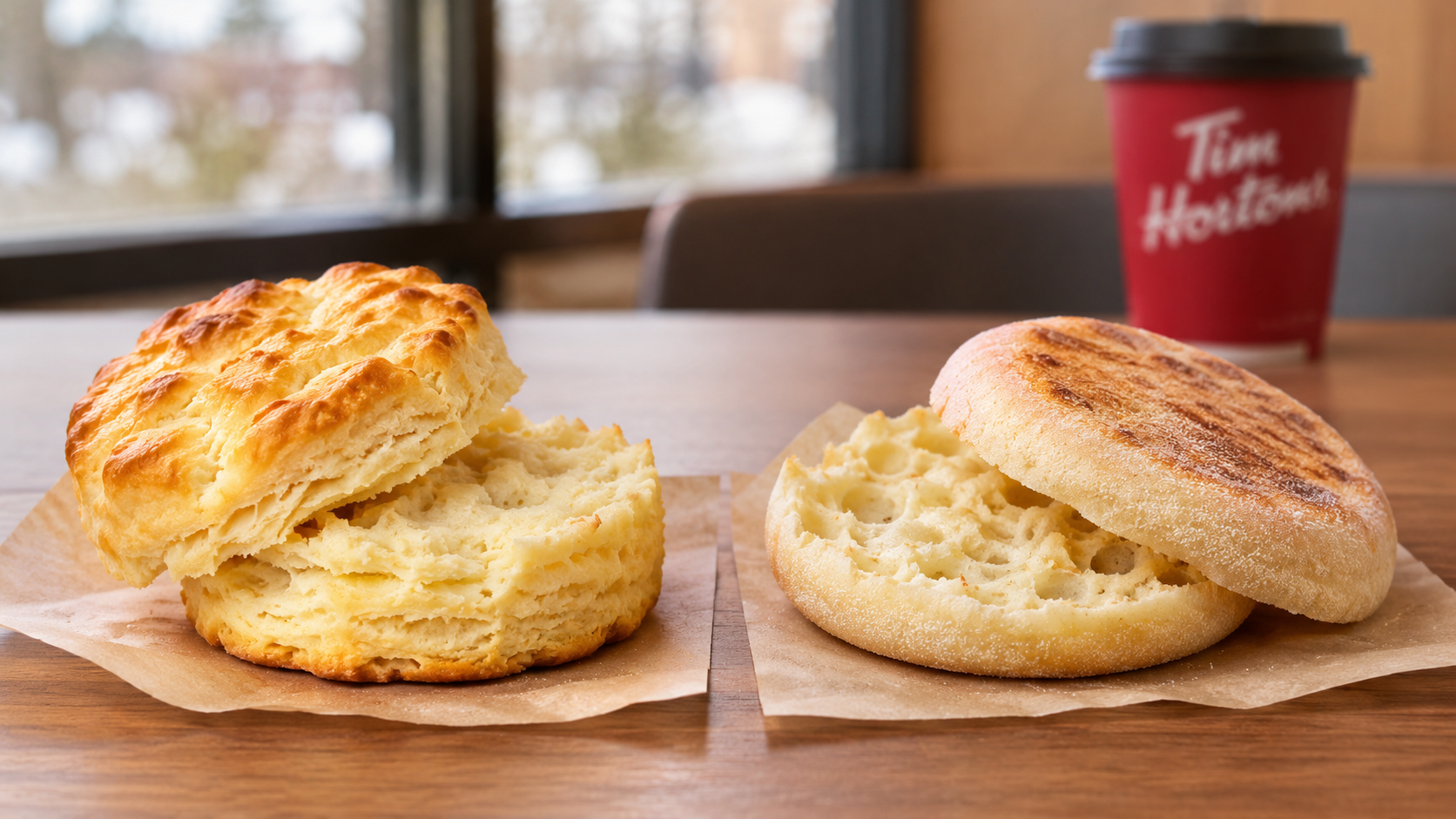
For the three matched breakfast sandwiches in Tim Hortons’ July 2026 Canadian nutrition guide, choosing the English-muffin version means 80 fewer calories and 220 mg less sodium than choosing the biscuit version with the same named filling.
Protein needs a closer look. Egg and cheese has the same listed protein on either carrier. The bacon and sausage biscuit builds each list one additional gram. The menu category alone does not answer all three nutrition questions.
These figures describe complete standard sandwiches from the Canadian guide. They are not standalone bread values, and July 2026 should not be mistaken for a guarantee about today’s customized order.
Egg and cheese keeps the same protein
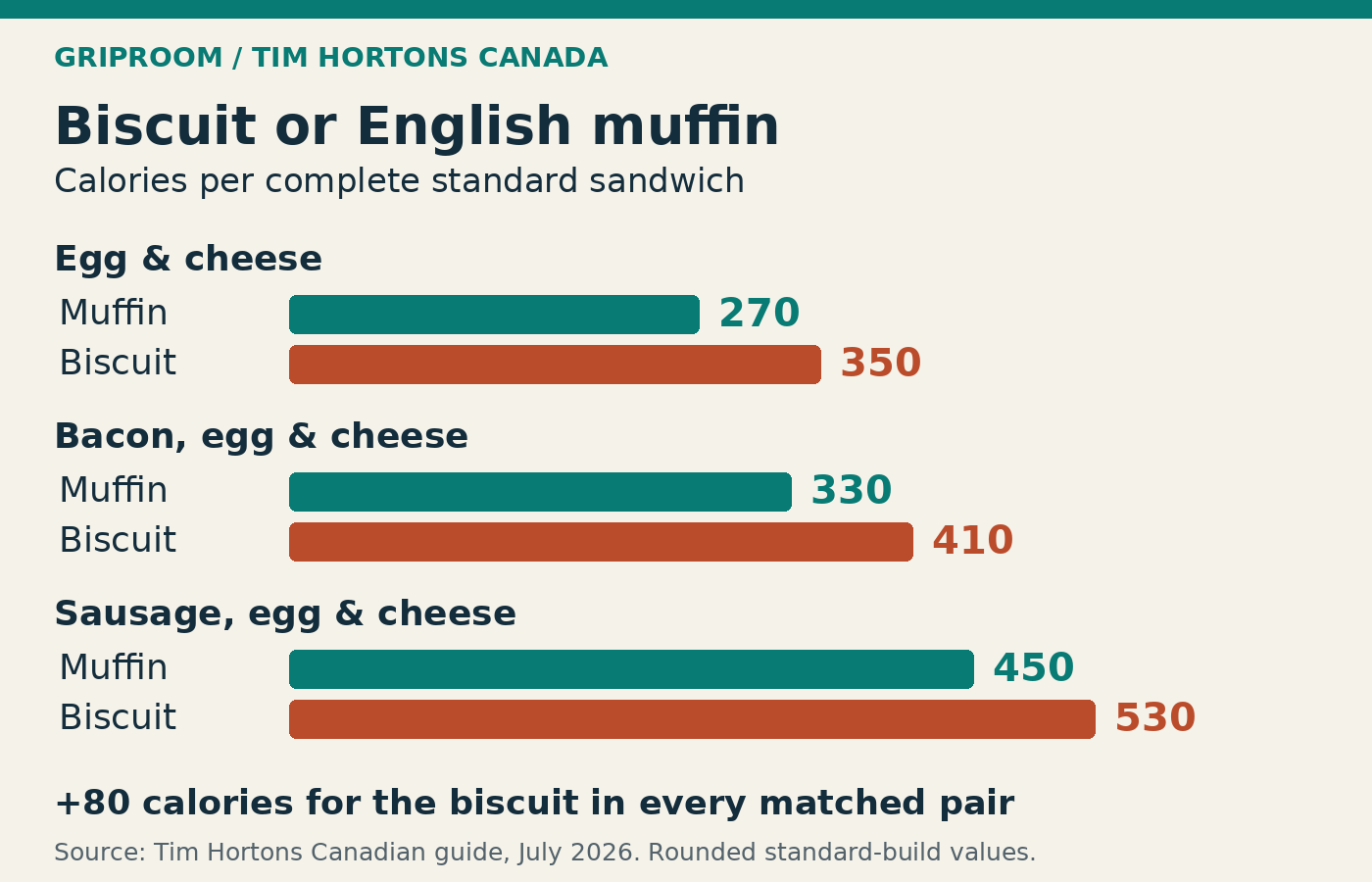
The Egg & Cheese English Muffin lists 270 calories, 14 g protein and 500 mg sodium. The Egg & Cheese Homestyle Biscuit lists 350 calories, 14 g protein and 720 mg sodium.
That is the clearest version of the tradeoff: the biscuit sandwich adds 80 calories and 220 mg sodium, with no increase in listed protein. If your choice is between those two standard egg-and-cheese sandwiches, the English muffin has the lower calorie and sodium totals while keeping the same protein number.
This comparison does not establish that the biscuit bread alone supplies exactly 80 additional calories. It compares the restaurant’s finished named builds. Treating the difference as an ingredient measurement would claim more than the published rows establish.
Bacon and sausage change the protein comparison
For bacon, egg and cheese, the English-muffin sandwich lists 330 calories, 17 g protein and 710 mg sodium. The biscuit version lists 410 calories, 18 g protein and 930 mg sodium.
For sausage, egg and cheese, the English-muffin sandwich lists 450 calories, 19 g protein and 680 mg sodium. The biscuit version lists 530 calories, 20 g protein and 900 mg sodium.
Both pairs retain the same 80-calorie and 220-mg sodium difference. Each biscuit build adds 1 g of listed protein. That small change is why the equal-protein claim belongs specifically to egg and cheese, rather than every filling.
The fillings also show why calories and sodium need separate comparisons. The sausage English muffin lists more calories than the bacon English muffin, yet slightly less sodium: 680 versus 710 mg. One nutrient is not a shortcut to all the others.
Compare the sandwich you actually order
Choose the filling first, then compare its two carriers. Comparing a sausage biscuit with an egg-and-cheese English muffin changes more than the bread, so it answers a different question.
Among the three matched pairs here, the English-muffin versions consistently have fewer listed calories and less sodium. Whether that matches your priorities is a separate decision from taste, price or how filling you personally find either sandwich. The nutrition rows do not measure those experiences.
For a cross-chain decision instead, our Tim Hortons versus McDonald’s Canadian breakfast comparison addresses a different choice: which breakfast to order across the two restaurants.
Custom orders need their own information
The guide’s published numbers are rounded standard-build values. Recipes, portions and assembly can vary; changing cheese, meat, sauces or other ingredients changes the order being compared. Do not present a standard row as a verified total for a customized sandwich.
Tim Hortons directs customers seeking nutrition information for a customized item to Guest Care, using General Inquiry and then Nutrition/Ingredients. That is the appropriate route for an exact custom-build question rather than subtracting guessed ingredient values.
For the dated standard choices, the answer is clear: the English muffin lowers calories and sodium in all three matched pairs. The egg-and-cheese comparison also keeps protein equal. That is a useful ordering distinction without turning one breakfast sandwich into an overall health verdict.
Sources