
High-Protein, Low-Calorie Foods You Can Prep and Bring to Work
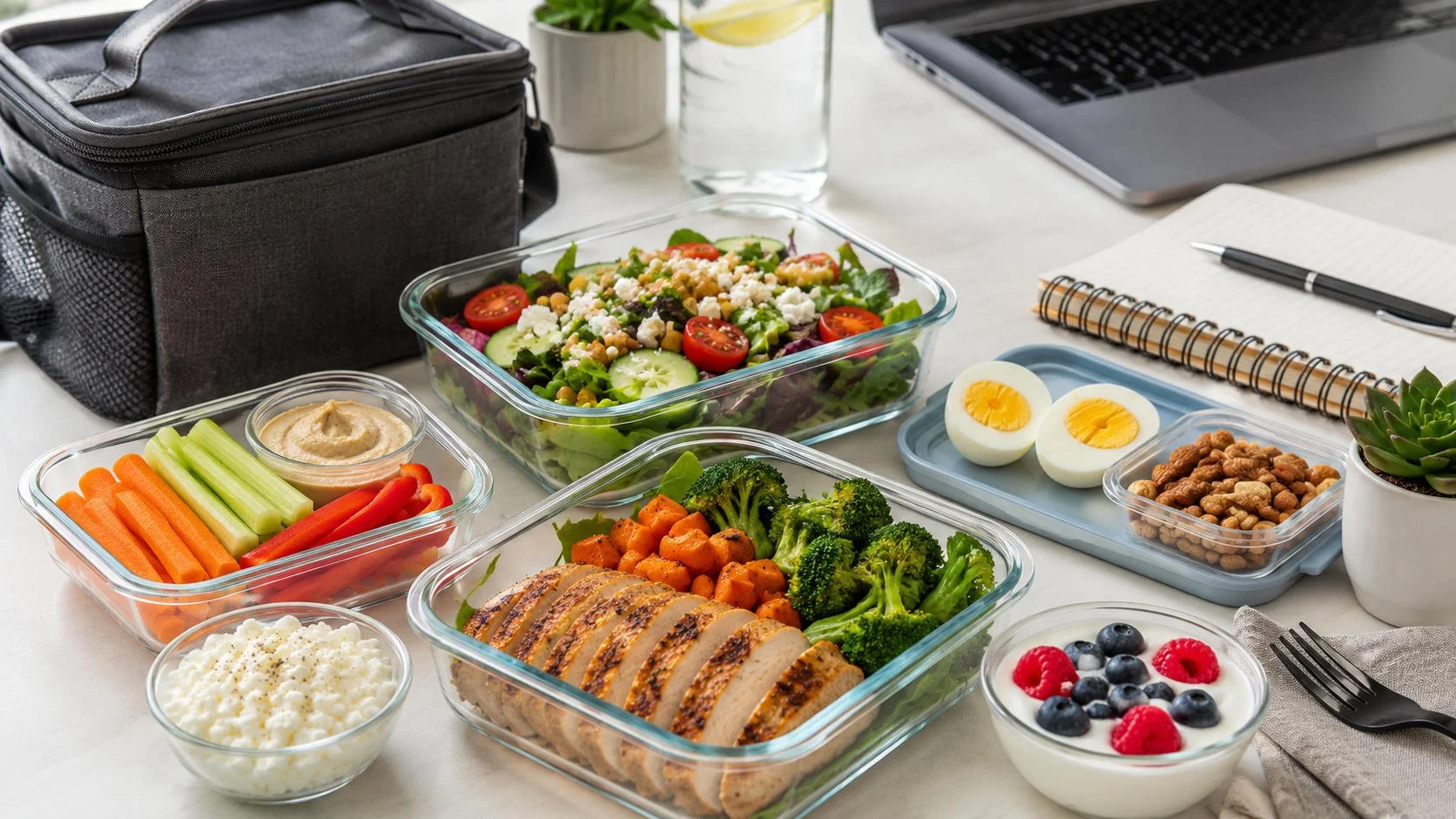
Work lunches are easy when you have a fridge, a microwave, and a clean kitchen.
Most people do not have all three.
Maybe your workplace has a fridge but no microwave. Maybe it has a microwave but no fridge. Maybe the fridge is always full. Maybe you work in a truck, warehouse, classroom, clinic, construction site, retail store, or office where your lunch sits in a bag for hours.
That changes what you should pack.
A high-protein, low-calorie work lunch is not just about macros. It is also about food safety, portability, smell, mess, prep time, and whether the meal still tastes good cold.
The goal of this guide is simple:
Help you bring more protein to work without relying on takeout, vending machines, or reheated leftovers you cannot safely store.
This is not medical advice or a personalized diet plan. Protein needs vary by body size, activity level, age, health status, and goals. As a general baseline, HealthLinkBC says healthy adults 19 and older need about 0.8 grams of protein per kilogram of body weight per day, though active people, older adults, and people with specific medical needs may require different targets.
Quick answer: the best options by workplace setup
If your work has a fridge and microwave
Best options:
Chicken breast meal-prep bowls
Turkey chili
Lean ground turkey taco bowls
Shrimp and rice bowls
Egg-white breakfast bowls
Chicken soup or chicken stew
Cottage cheese or Greek yogurt as a side
Protein oats with whey or Greek yogurt
This is the easiest setup. You can prep normal meals, store them cold, and reheat them safely.
If your work has a fridge but no microwave
Best options:
Greek yogurt bowls
Cottage cheese bowls
Turkey roll-up boxes
Chicken salad lettuce cups
Cold chicken chopped salads
Shrimp cocktail boxes
Tuna cucumber boats
Hard-boiled egg and turkey snack boxes
Tofu and edamame salad
This is the best “cold lunch” setup.
If your work has a microwave but no fridge
Best options:
Shelf-stable chicken pouch plus microwave rice cup
Tuna or salmon pouch plus microwave potato
Shelf-stable lentil pouch plus chicken pouch
Instant oats plus protein powder
Canned soup plus extra canned chicken
Shelf-stable chili cup, if the macros fit
This works if you keep everything unopened and shelf-stable until lunch.
If your work has no fridge and no microwave
Best options:
Tuna pouch plus crackers or a tortilla
Chicken pouch plus salsa packets
Salmon pouch plus rice cakes
Protein powder in a dry shaker bottle
Jerky or biltong plus fruit
Roasted edamame or soy nuts
Low-sugar protein bar
Shelf-stable protein shake
Unopened canned meat or fish
This is the strictest setup. You need shelf-stable foods, or you need to bring a properly packed insulated lunch bag.
The food safety rule that matters most
If a food is perishable, it needs temperature control.
The FDA says meat, poultry, eggs, seafood, and other perishables should be refrigerated or frozen within 2 hours of cooking or purchasing, or within 1 hour if the temperature is above 90°F. The FDA also says refrigerators should be kept at 40°F or below.
Health Canada gives the same basic warning in Celsius: food should not sit in the temperature danger zone between 4°C and 60°C, where bacteria can grow quickly. It specifically lists foods like tuna salad, chicken salad, egg salad, milk products, cold cuts, and lunch meats as perishable foods that need to be kept at the right temperature.
That means this is not safe:
Cooked chicken in a container, sitting unrefrigerated in your bag from 8 a.m. until 1 p.m.
Also not safe:
Greek yogurt, cottage cheese, deli turkey, egg salad, tuna salad, or hard-boiled eggs sitting at room temperature all morning.
The safer options are:
Use the work fridge.
Use an insulated lunch bag with cold sources.
Use a hot insulated container for hot food.
Pack shelf-stable foods that do not require refrigeration until opened.
USDA guidance recommends using at least two cold sources in an insulated lunch bag, such as gel packs, frozen water bottles, or frozen juice boxes, to keep perishable foods out of the danger zone.
For no-fridge workplaces, Québec’s food safety guidance says an ice pack can keep food cold for around 4 to 6 hours, and a preheated insulated container can keep hot food hot for about 5 to 6 hours.
What counts as high-protein and low-calorie?
For a work lunch, a useful target is usually:
Snack: 10–25g protein, roughly 100–300 calories
Light lunch: 20–35g protein, roughly 250–450 calories
Full meal: 30–50g protein, roughly 400–650 calories
“Low-calorie” depends on your body, your goals, and the rest of your day. But for work lunches, the best options usually have a lot of protein without relying heavily on oil, mayo, cheese, nuts, large bread portions, creamy dressings, or sugary drinks.
The best protein-for-calorie foods are usually:
Chicken breast
Turkey breast
Tuna
Salmon
Shrimp
Egg whites
Greek yogurt
Cottage cheese
Lean deli meat, when kept cold
Protein powder
Canned or pouched chicken
Jerky, if sodium is not a problem
Edamame or soy-based foods for plant-based options
USDA FoodData Central is a comprehensive source of food composition data, with different databases for foundation foods, survey foods, and branded foods; brand labels still vary, so packaged items should be checked individually.
The best protein foods for work lunches
Chicken breast
Cooked chicken breast is one of the best protein-per-calorie foods. MyFoodData’s USDA-based listing shows cooked chicken breast at about 157 calories per 100g, with most calories coming from protein.
Best uses:
Chicken salad bowl
Chicken lettuce wraps
Chicken taco bowl
Chicken and cauliflower rice
Chicken soup in a thermos
Chicken with salsa and vegetables
Work setup needed:
Fridge, cooler, or thermos if hot
Microwave only if you plan to reheat it
Do not pack cooked chicken loose in a room-temperature lunch bag all morning.
Canned or pouched tuna
Tuna is one of the best no-cook, shelf-stable proteins if you keep it unopened until lunch. A generic canned tuna listing shows about 116 calories and 25.5g protein per 100g.
Best uses:
Tuna pouch plus crackers
Tuna and mustard tortilla
Tuna cucumber boats, if kept cold
Tuna plus salsa and rice cakes
Tuna mixed into a salad, if refrigerated
Work setup needed:
No fridge needed if unopened and shelf-stable
Fridge or ice pack needed after opening or if mixed into a salad
Best no-fridge order idea:
Tuna pouch + mustard packet + rice cakes + whole fruit
Canned or pouched chicken
Canned chicken is useful because unopened cans and pouches can be shelf-stable. USDA Foods data for drained canned white-meat chicken lists 38 calories and 6g protein per 1-ounce serving.
Best uses:
Chicken pouch plus salsa
Chicken pouch plus crackers
Chicken pouch plus microwave rice
Chicken pouch plus instant soup
Chicken tortilla wrap, assembled at lunch
Work setup needed:
No fridge needed if unopened and shelf-stable
Fridge needed after opening
Best no-fridge order idea:
Chicken pouch + shelf-stable salsa packet + high-fiber tortilla
Shrimp
Shrimp is very protein-efficient, but it is perishable. A USDA-based shrimp listing shows about 106 calories and 20.3g protein per 100g.
Best uses:
Shrimp cocktail box
Shrimp salad
Shrimp cucumber bowl
Shrimp and edamame cold bowl
Shrimp rice bowl, if reheated safely
Work setup needed:
Fridge or insulated lunch bag with cold sources
Not a no-fridge food unless kept cold
Best no-microwave order idea:
Cold shrimp cocktail box with cucumber, cherry tomatoes, and Greek-yogurt dip
Greek yogurt
Plain nonfat Greek yogurt is one of the best cold protein foods. A typical 6-ounce container of plain nonfat Greek yogurt has about 100 calories and 17g protein, though brands vary.
Best uses:
Greek yogurt bowl with berries
Greek yogurt ranch dip
Greek yogurt chicken salad
Greek yogurt tuna salad
Greek yogurt plus protein powder
Greek yogurt parfait with high-fiber cereal
Work setup needed:
Fridge or insulated lunch bag with cold source
Not safe unrefrigerated all morning
Best no-microwave order idea:
Greek yogurt + berries + cinnamon + high-protein cereal or protein powder
Cottage cheese
Low-fat cottage cheese is another strong cold protein option. A USDA-based listing for 1% cottage cheese shows about 72 calories and 12.4g protein per 100g.
Best uses:
Cottage cheese and berries
Cottage cheese with cucumber and pepper
Cottage cheese ranch bowl
Cottage cheese with turkey slices
Cottage cheese with cherry tomatoes
Work setup needed:
Fridge or insulated lunch bag with cold source
Not a no-fridge food
Best no-microwave order idea:
Cottage cheese + turkey roll-ups + cucumbers
Eggs
Hard-boiled eggs are portable and filling, but they are not as protein-efficient as chicken, tuna, shrimp, Greek yogurt, or cottage cheese. A large hard-boiled egg has about 78 calories and 6.3g protein.
Best uses:
Egg and turkey snack box
Egg-white salad
Hard-boiled eggs with fruit
Egg and cottage cheese box
Egg breakfast bento
Work setup needed:
Fridge or insulated lunch bag with cold source
Not a no-fridge food for all morning
Best use:
Pair eggs with a leaner protein instead of relying only on eggs.
Turkey breast or deli turkey
Turkey can be useful, but it needs to stay cold. A USDA-based listing for turkey breast meat shows about 104 calories and 17.1g protein per 100g, though deli products vary and can be high in sodium.
Best uses:
Turkey roll-ups
Turkey lettuce wraps
Turkey and cottage cheese box
Turkey cucumber boats
Turkey sandwich on light bread
Work setup needed:
Fridge or insulated lunch bag with cold source
Not a no-fridge food unless it is shelf-stable and unopened
Best no-microwave order idea:
Turkey roll-ups + cottage cheese + vegetables
Edamame
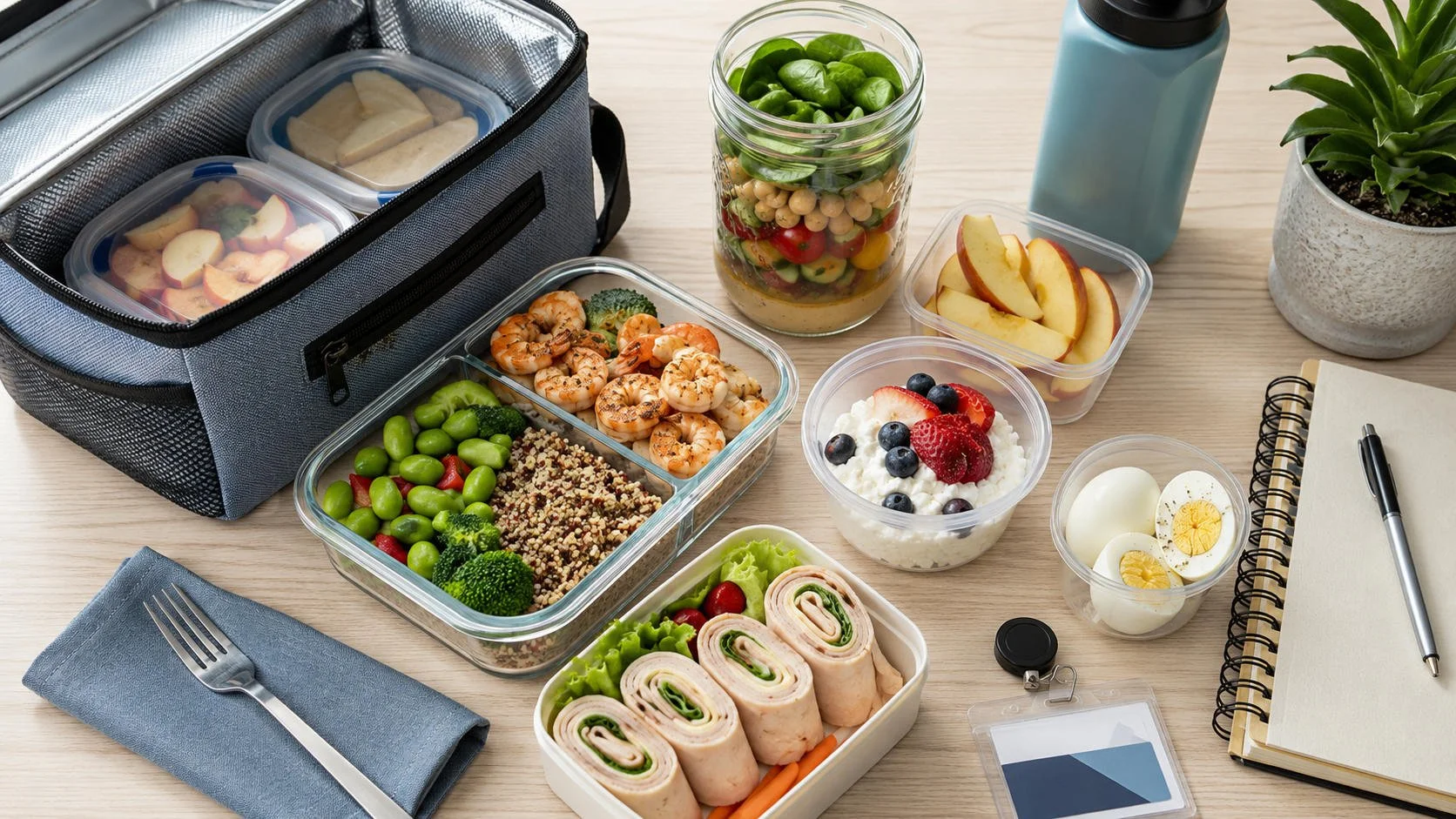
Edamame is one of the better plant-based protein options, but it is not as lean as chicken or tuna. A cup of cooked edamame is listed at about 224 calories and 18.5g protein.
Best uses:
Edamame tofu salad
Edamame and shrimp bowl
Edamame snack box
Roasted edamame snack
Edamame with cottage cheese or chicken
Work setup needed:
Cooked edamame needs cold storage
Roasted edamame can be shelf-stable if packaged that way
Best plant-based use:
Edamame + tofu + vegetables + light dressing, kept cold
Beef jerky or turkey jerky
Jerky is one of the easiest no-fridge proteins, but sodium can be very high. One branded beef jerky listing shows 80 calories, 10g protein, and about 620mg sodium per ounce.
Best uses:
Jerky plus fruit
Jerky plus roasted edamame
Jerky plus rice cakes
Jerky as emergency protein
Jerky with a protein shake
Work setup needed:
No fridge needed if shelf-stable and unopened or properly resealed
Best no-fridge use:
Jerky + apple + roasted edamame
Watch out for:
Sodium
Added sugar
Calories from large portions
Protein powder
Protein powder is one of the easiest no-fridge, no-microwave work options. A branded whey isolate listing shows 130 calories with calories mostly from protein for a 30g serving, though powders vary by brand.
Best uses:
Dry scoop in shaker bottle
Protein coffee, if available
Protein oats, if microwave available
Protein yogurt, if fridge available
Emergency backup protein
Work setup needed:
No fridge needed if dry
Add water when ready to drink
Best no-fridge order idea:
Dry protein powder in a shaker + water at work
Best no-fridge, no-microwave work lunches
These are for the strictest situation: no office fridge, no microwave, and no reliable cold storage.
The rule:
Use shelf-stable foods and open them at lunch.
Health Canada lists foods that do not need to stay cold, including whole and dried fruits, cereals, breads, crackers, pickles, and unopened cans of meat and fish.
1. Tuna pouch lunch kit
Pack:
Tuna pouch
Mustard packet or hot sauce
Rice cakes, crackers, or one tortilla
Pickles
Whole fruit
Approximate result:
200–350 calories
20–30g protein
Why it works:
Shelf-stable until opened
No microwave needed
High protein
Easy to assemble at lunch
Watch out for:
Smell
Sodium
Needing a fork or napkins
No leftovers after opening unless refrigerated
2. Chicken pouch salsa wrap
Pack:
Shelf-stable chicken pouch
Shelf-stable salsa packet
High-fiber tortilla
Hot sauce
Whole apple or orange
Approximate result:
250–400 calories
20–35g protein
Why it works:
More lunch-like than a protein bar
No fridge if unopened
No microwave needed
Easy to make in a break room or at your desk
Watch out for:
Salsa packets may vary
Tortilla calories vary
Chicken pouches can be salty
3. Protein shaker plus fruit
Pack:
Dry protein powder in shaker bottle
Water added at work
Apple, banana, or orange
Approximate result:
150–300 calories
20–30g protein
Why it works:
No fridge
No microwave
Very easy
Good emergency lunch backup
Watch out for:
A shake may not feel like a full meal
Some powders have more calories or sugar
Add a fiber source if you need fullness
4. Jerky and roasted edamame box
Pack:
Jerky or turkey jerky
Roasted edamame or soy nuts
Whole fruit
Pickles or shelf-stable vegetables, if available
Approximate result:
250–450 calories
25–40g protein, depending on portion size
Why it works:
Fully portable
No utensils required
High protein
Easy to keep in a desk drawer
Watch out for:
Sodium
Calories from large soy nut portions
Added sugar in jerky
5. Salmon pouch and crackers
Pack:
Salmon pouch
Crackers or rice cakes
Mustard packet
Whole fruit
Approximate result:
250–400 calories
20–30g protein
Why it works:
Shelf-stable until opened
No cooking
Higher protein than most snack lunches
Watch out for:
Smell
Sodium
Some salmon pouches are packed with oil
6. Protein bar plus backup protein
Pack:
Low-sugar protein bar
Jerky or protein powder
Whole fruit
Approximate result:
250–500 calories
25–45g protein
Why it works:
No prep
No fridge
No microwave
Best emergency option
Watch out for:
Some protein bars are basically candy bars with protein
Sugar alcohols may bother some people
Not as satisfying as real food for everyone
Best no-microwave work lunches with a fridge or ice pack
These are the best options when you can keep food cold but cannot heat it.
1. Greek yogurt protein bowl
Pack:
Plain nonfat Greek yogurt
Berries
Cinnamon
Optional protein powder
Optional high-fiber cereal
Approximate result:
150–350 calories
17–40g protein
Why it works:
Cold by design
Easy to prep
High protein
Good breakfast or lunch
Keep it safe:
Store in a fridge or insulated lunch bag with ice packs.
2. Cottage cheese snack box
Pack:
Low-fat cottage cheese
Turkey slices or chicken breast
Cucumber
Cherry tomatoes
Pepper
Optional fruit
Approximate result:
250–450 calories
30–45g protein
Why it works:
High protein
No microwave needed
More filling than yogurt for many people
Easy to assemble
Keep it safe:
Cottage cheese and turkey need cold storage.
3. Turkey roll-up box
Pack:
Turkey breast slices
Lettuce leaves
Mustard
Pickles
Cottage cheese or Greek yogurt dip
Fruit
Approximate result:
250–450 calories
25–45g protein
Why it works:
No bread required
Low calorie
Easy to eat cold
Good for high-protein snacking
Keep it safe:
Deli meat needs cold storage.
4. Cold chicken chopped salad
Pack:
Cooked chicken breast
Lettuce or cabbage
Cucumber
Tomato
Pickles
Salsa or light dressing
Optional beans or edamame
Approximate result:
300–550 calories
30–50g protein
Why it works:
High volume
High protein
No microwave needed
Easy to customize
Keep it safe:
Cooked chicken needs a fridge or cold lunch bag.
5. Shrimp cocktail lunch box
Pack:
Cooked shrimp
Cucumber
Cherry tomatoes
Cocktail sauce or Greek-yogurt dip
Fruit or rice cakes
Approximate result:
250–450 calories
25–45g protein
Why it works:
Very protein-efficient
Tastes good cold
No microwave needed
Keep it safe:
Shrimp needs cold storage.
6. Tuna Greek-yogurt lettuce cups
Pack:
Tuna mixed with Greek yogurt
Mustard
Celery
Pickles
Lettuce cups
Crackers or fruit
Approximate result:
250–450 calories
30–45g protein
Why it works:
Higher protein than mayo-based tuna salad
Lower calorie than many sandwiches
Good cold meal
Keep it safe:
Once tuna is opened and mixed with yogurt, it needs cold storage.
7. Edamame tofu salad
Pack:
Edamame
Extra-firm tofu
Cucumber
Shredded cabbage
Light soy, rice vinegar, or chili sauce
Optional chicken or shrimp if not vegetarian
Approximate result:
300–550 calories
20–40g protein
Why it works:
Good plant-based option
Cold by design
Filling because of fiber and volume
Keep it safe:
Tofu and cooked edamame need cold storage.
Best work lunches if you have a microwave but no fridge
This setup works best with unopened shelf-stable foods.
1. Chicken pouch rice bowl
Pack:
Shelf-stable chicken pouch
Microwave rice cup
Salsa
Hot sauce
Optional canned beans
Approximate result:
350–600 calories
25–45g protein
Why it works:
Shelf-stable until opened
Hot meal
Easy to build at work
Make it lower-calorie:
Use half the rice cup.
Add salsa instead of oil or creamy sauce.
2. Tuna or salmon microwave potato
Pack:
Tuna or salmon pouch
Microwave potato
Mustard or salsa
Optional Greek yogurt only if you have cold storage
Approximate result:
300–500 calories
25–35g protein
Why it works:
Simple
Filling
No fridge needed if everything is unopened and shelf-stable
Make it lower-calorie:
Skip butter, mayo, and cheese.
3. Lentil pouch plus chicken pouch
Pack:
Shelf-stable lentil pouch
Chicken pouch
Hot sauce or spices
Approximate result:
350–600 calories
30–45g protein
Why it works:
More fiber than a plain chicken meal
More protein than lentils alone
Shelf-stable until opened
Watch out for:
Sodium
Sauce calories
Portion size
4. Protein oats
Pack:
Plain instant oats
Protein powder
Cinnamon
Water
Optional berries only if kept cold
Approximate result:
250–450 calories
20–35g protein
Why it works:
Cheap
Shelf-stable
Easy breakfast
No fridge needed
How to do it:
Microwave oats with water.
Let cool slightly.
Stir in protein powder after heating so it does not clump as badly.
5. Soup plus extra protein
Pack:
Shelf-stable soup cup or canned soup
Chicken pouch
Optional microwave rice or beans
Approximate result:
250–600 calories
20–45g protein
Why it works:
Easy hot meal
Better protein if you add chicken
Good backup lunch
Watch out for:
Sodium
Low protein in many soups unless you add meat or legumes
Best no-microwave, no-fridge hot option: the thermos method
A thermos or insulated food jar can solve the no-microwave problem.
Best options:
Turkey chili
Chicken soup
Lean beef vegetable soup
Lentil chicken soup
Egg-white breakfast scramble, if packed hot and eaten safely
Chicken taco soup
Québec’s food safety guidance recommends preheating a wide-mouth insulated container with boiling water for 10 to 15 minutes, dumping the water, adding hot food, and closing it tightly; it says these containers can keep food hot for about 5 to 6 hours.
Best thermos formula:
Lean protein + broth or sauce + vegetables + beans or cauliflower rice
Examples:
Turkey chili with extra lean ground turkey
Chicken vegetable soup
Chicken taco soup with salsa
Lean beef cabbage soup
Lentil soup with extra chicken
Important:
Do not open the thermos repeatedly before lunch. Start the food very hot, seal it, and eat it by lunch.
Easy Sunday prep plan
Prep 1: Cook one lean protein
Pick one:
Chicken breast
Turkey breast
Lean ground turkey
Shrimp
Extra-firm tofu
Egg whites or boiled eggs
Portion it into containers.
Cooked poultry and fish generally belong in the fridge and should be used within a few days; Health Canada lists cooked poultry and fish at 3 to 4 days of refrigerator storage at 4°C or lower.
Prep 2: Build one cold meal
Examples:
Chicken chopped salad
Turkey roll-up box
Greek yogurt bowl
Cottage cheese bowl
Shrimp cocktail box
Use this for workplaces with a fridge or a properly packed insulated bag.
Prep 3: Build one shelf-stable backup kit
Keep this in your bag, desk, locker, or car if temperature allows.
Good backup kit:
Tuna pouch
Protein powder packet
Jerky
Rice cakes or crackers
Mustard or hot sauce packet
Whole fruit
This prevents vending-machine lunches.
Prep 4: Freeze your cold sources
Use two cold sources if packing perishable foods without a fridge. USDA recommends at least two cold sources in an insulated bag, such as frozen gel packs, frozen water bottles, or frozen juice boxes.
Best high-protein, low-calorie work meal formulas
Formula 1: The no-fridge emergency lunch
Pack:
Tuna pouch
Protein powder
Apple
Rice cakes
Best for:
No fridge
No microwave
Desk drawer backup
Travel days
Why it works:
Shelf-stable
High protein
Low prep
Better than skipping lunch or buying fast food
Formula 2: The cold office lunch
Pack:
Chicken breast
Lettuce or cabbage
Cucumber
Salsa
Greek yogurt dip
Best for:
Fridge available
No microwave
Higher-volume lunch
Why it works:
High protein
Low calorie
Tastes fine cold
Easy to customize
Formula 3: The no-microwave breakfast
Pack:
Greek yogurt
Protein powder
Berries
Cinnamon
Best for:
Breakfast at work
No microwave
Fridge or ice pack available
Why it works:
High protein
Low prep
No cooking
Easy to eat quickly
Formula 4: The no-fridge hot lunch
Pack:
Shelf-stable chicken pouch
Microwave rice cup
Salsa
Best for:
Microwave available
No fridge
Quick hot lunch
Why it works:
Shelf-stable until lunch
More satisfying than a shake
Easy to portion
Formula 5: The thermos lunch
Pack:
Turkey chili or chicken soup in a preheated insulated food jar
Best for:
No fridge
No microwave
People who want hot food
Why it works:
Hot meal without office equipment
High protein if built with lean meat
Good winter lunch
Foods that sound high-protein but may not be low-calorie
Nuts and nut butters
Nuts are nutritious, but they are calorie-dense. They are not the best low-calorie protein source.
Better:
Use nuts as a small side, not the main protein.
Use powdered peanut butter if you want peanut flavor with fewer calories.
Cheese
Cheese has protein, but it also brings a lot of calories from fat.
Better:
Use cottage cheese or Greek yogurt if you want dairy protein.
Use small amounts of hard cheese for flavor.
Hummus
Hummus is filling and useful, but it is not a high-protein food compared with chicken, tuna, Greek yogurt, or cottage cheese.
Better:
Pair hummus with turkey, chicken, tuna, or tofu if protein is the goal.
Roasted chickpeas
Roasted chickpeas are a good fiber snack, but they are not as protein-efficient as lean animal protein or protein powder. A 100g roasted chickpea listing shows 355 calories and 18.6g protein, so portion size matters.
Better:
Treat roasted chickpeas as a crunchy side, not your main protein.
Protein bars
Some protein bars are great. Others are high-calorie candy bars with protein added.
Better:
Look for roughly 15–25g protein.
Check calories, sugar, and fiber.
Use bars as backups, not your only meal-prep strategy.
Foods to avoid packing without a fridge or cold source
Avoid leaving these unrefrigerated all morning:
Cooked chicken
Cooked turkey
Cooked beef
Cooked fish
Shrimp
Deli meat
Greek yogurt
Cottage cheese
Milk
Egg salad
Chicken salad
Tuna salad after it is mixed
Hard-boiled eggs
Cut fruit
Cut vegetables that require refrigeration
Mayo-based salads
Leftover rice or pasta with protein
Meal-prepped bowls with cooked meat
Health Canada specifically warns that perishable foods such as tuna salads, chicken salads, egg salads, milk products, cold cuts, and lunch meats need to be kept at the right temperature.
Common mistakes
Mistake 1: Thinking “no fridge” means “any food is fine until lunch”
No. No fridge means you either need shelf-stable food or a cold-storage plan.
Mistake 2: Packing cooked chicken in a regular lunch bag
Cooked chicken is a perishable food. Use a fridge, insulated lunch bag with cold sources, or hot thermos.
Mistake 3: Making tuna salad at home and leaving it unrefrigerated
An unopened tuna pouch is shelf-stable. Tuna mixed with mayo, Greek yogurt, or chopped vegetables is not.
Mistake 4: Relying on nuts as your main protein
Nuts are healthy for many people, but they are not low-calorie protein compared with tuna, chicken, shrimp, yogurt, or protein powder.
Mistake 5: Forgetting sodium
Jerky, canned chicken, tuna pouches, deli turkey, protein bars, and canned soups can all be high in sodium. That does not mean you can never use them, but check labels if you eat these foods often.
Mistake 6: Overbuilding the meal
A high-protein lunch can become high-calorie fast if you add:
Mayo
Oil
Cheese
Nuts
Large tortillas
Chips
Granola
Creamy dressings
Sugary drinks
Best work-lunch ideas by goal
Lowest-calorie high-protein lunch
Choose:
Grilled chicken salad or Greek yogurt bowl
Needs:
Fridge or ice pack
Best if:
You want 25–40g protein under 400 calories.
Best no-fridge lunch
Choose:
Tuna pouch or chicken pouch lunch kit
Needs:
Shelf-stable unopened pouches
Best if:
You have no fridge and no microwave.
Best no-microwave lunch
Choose:
Cold chicken salad, turkey roll-up box, or cottage cheese bowl
Needs:
Fridge or ice pack
Best if:
You can keep food cold but cannot heat anything.
Best no-fridge, no-microwave backup
Choose:
Protein powder + jerky + fruit
Needs:
No equipment
Best if:
You need something that can live in a desk or bag.
Best hot lunch without a microwave
Choose:
Turkey chili or chicken soup in a preheated thermos
Needs:
Insulated food jar
Best if:
You want hot food but have no workplace microwave.
Best plant-based option
Choose:
Tofu edamame salad if you have cold storage, or roasted edamame plus protein powder if you do not
Needs:
Cold storage for tofu/cooked edamame
No cold storage for dry roasted edamame if packaged shelf-stable
Best if:
You want plant-based protein without relying only on beans.
FAQ
What is the best high-protein, low-calorie food to bring to work?
The best all-around options are chicken breast, tuna pouches, chicken pouches, shrimp, Greek yogurt, cottage cheese, turkey breast, egg whites, and protein powder. Chicken, tuna, shrimp, Greek yogurt, and cottage cheese are especially strong because they provide a lot of protein for relatively few calories.
What can I bring if my workplace has no fridge?
Bring shelf-stable foods that stay unopened until lunch, such as tuna pouches, salmon pouches, chicken pouches, protein powder, jerky, roasted edamame, protein bars, whole fruit, crackers, rice cakes, and unopened cans of meat or fish. Health Canada lists unopened cans of meat and fish among foods that do not need to stay cold.
Can I bring cooked chicken if there is no fridge?
Only if you keep it safely cold in an insulated lunch bag with cold sources, or safely hot in an insulated container. Do not let cooked chicken sit at room temperature all morning. FDA guidance says perishables should be refrigerated or frozen within 2 hours, or within 1 hour above 90°F.
What can I bring if there is no microwave?
Cold meals are the answer. Good options include Greek yogurt bowls, cottage cheese bowls, turkey roll-ups, chicken salad lettuce cups, shrimp cocktail boxes, tuna lettuce cups, and tofu edamame salad. They still need a fridge or ice pack.
What can I bring if there is no fridge and no microwave?
Use shelf-stable no-cook meals:
Tuna pouch plus crackers
Chicken pouch plus salsa and tortilla
Protein powder plus water
Jerky plus fruit
Salmon pouch plus rice cakes
Roasted edamame plus protein bar
Open the perishable protein at lunch and do not save leftovers unless you can refrigerate them.
Are protein bars a good work lunch?
They are useful backups, but not always the best meal. Choose bars with a good protein-to-calorie ratio, and check sugar, fiber, and calories. Many bars are better as emergency food than daily lunch.
Are nuts good for high-protein, low-calorie lunches?
Nuts are nutritious, but they are calorie-dense. They are better as a small side than as the main protein source.
Can I pack Greek yogurt without a fridge?
Not safely for several hours unless you use an insulated lunch bag with cold sources. Greek yogurt is perishable.
Can I use a thermos instead of a microwave?
Yes. A preheated insulated food jar can keep hot food hot for several hours. Québec guidance says wide-mouth insulated containers can keep food hot for about 5 to 6 hours when preheated with boiling water and packed properly.
What is the easiest high-protein work backup?
Keep this at work:
Protein powder
Tuna pouch
Jerky
Rice cakes or crackers
Mustard or hot sauce packets
That gives you a no-fridge, no-microwave emergency lunch.
Final takeaway
The best high-protein, low-calorie work lunch depends on your workplace setup.
If you have a fridge and microwave, meal prep is easy: chicken bowls, turkey chili, shrimp bowls, and lean protein meals work well.
If you have a fridge but no microwave, go cold: Greek yogurt bowls, cottage cheese bowls, turkey roll-ups, chicken salads, shrimp boxes, and tofu edamame salads.
If you have a microwave but no fridge, use unopened shelf-stable proteins: chicken pouches, tuna pouches, lentil pouches, rice cups, soups, and protein oats.
If you have no fridge and no microwave, keep it simple: tuna pouches, chicken pouches, salmon pouches, protein powder, jerky, roasted edamame, protein bars, crackers, rice cakes, and whole fruit.
The simplest rule:
Perishable foods need a fridge, an ice-pack system, or a hot thermos. Shelf-stable foods are the safest no-fridge option.
And the best practical strategy is:
Prep real meals when you can keep them cold. Keep shelf-stable protein backups for the days you cannot