
High-Protein Chicken Alfredo Recipe
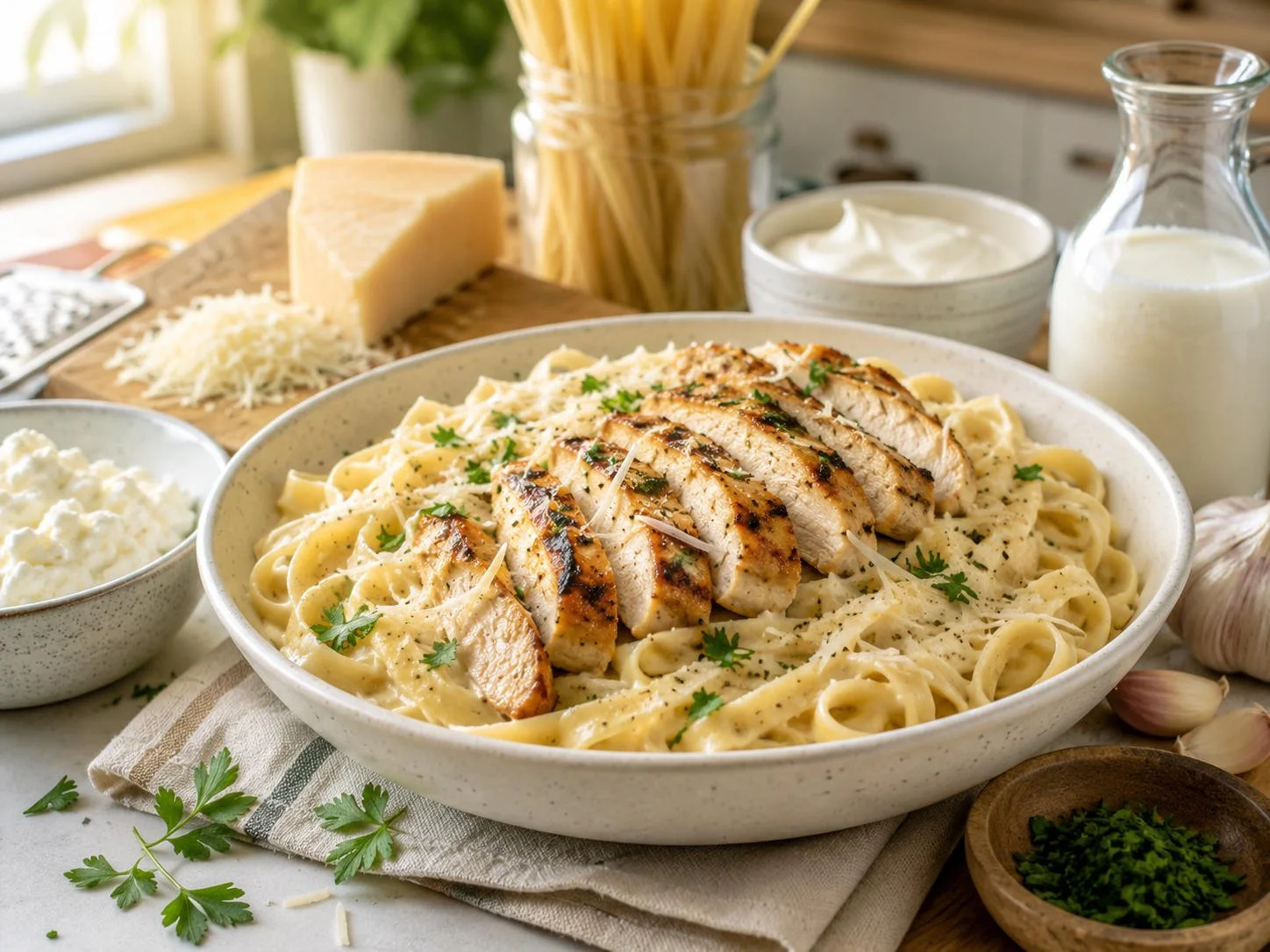
Chicken Alfredo is one of those meals that sounds innocent until you realize the sauce is basically cream, butter, cheese, pasta, and emotional vulnerability.
Delicious? Yes.
A light little weeknight dinner? Not usually.
Classic Alfredo is rich for a reason. It is creamy, salty, cheesy, buttery, and deeply committed to making you sit very still after eating it. That is part of the charm. But if you are trying to eat more protein, lose weight, build muscle, or just avoid feeling like you got tranquilized by a bowl of pasta, regular Alfredo can be a bit much.
This high-protein chicken Alfredo recipe keeps the best parts: tender chicken, creamy sauce, garlic, parmesan, black pepper, and pasta. But instead of relying on heavy cream, the sauce uses blended cottage cheese, Greek yogurt, milk, parmesan, and pasta water.
The result is still creamy.
Still cheesy.
Still comforting.
But it has a much better protein profile than a standard bowl of Alfredo and does not require you to take a recovery nap under a blanket afterward.
Why Make High-Protein Chicken Alfredo?
Chicken Alfredo is already halfway to being a great high-protein meal because chicken breast is doing a lot of work. Cooked lean chicken breast is mostly protein by calorie contribution, which makes it one of the easiest ways to build a high-protein dinner around a comfort-food recipe.
The problem is usually the sauce.
Traditional Alfredo sauce leans heavily on butter, cream, and cheese. That tastes amazing, but it can turn a normal pasta dinner into a calorie landslide. This version still uses parmesan because Alfredo without parmesan is just white sauce having an identity crisis, but it shifts a lot of the creaminess to cottage cheese and Greek yogurt.
That matters because cottage cheese and Greek yogurt bring protein along with creaminess. Nonfat Greek yogurt provides about 17.3 grams of protein in a 170-gram container, and cottage cheese is commonly around 11 grams of protein per 100 grams, depending on the brand and fat level.
For label context, the FDA lists the Daily Value for protein as 50 grams, and says 20% Daily Value or more of a nutrient per serving is considered “high.” A serving of this recipe can easily land around 45 to 65 grams of protein depending on the pasta and portion size.
That means this is not just “high protein” because someone sprinkled parmesan on dinner and hoped nobody would ask questions.
It actually earns the title.
Recipe Snapshot
Prep time: 10 minutes
Cook time: 25 minutes
Total time: About 35 minutes
Servings: 4
Best for: High-protein dinner, meal prep, post-workout pasta, healthier comfort food, creamy pasta cravings
Ingredients
For the chicken:
1 1/2 lb boneless skinless chicken breast
1 teaspoon garlic powder
1 teaspoon Italian seasoning
1/2 teaspoon salt
1/2 teaspoon black pepper
1 tablespoon olive oil or butter
For the Alfredo sauce:
1 cup low-fat cottage cheese
1/2 cup plain Greek yogurt
3/4 cup milk of choice
1/2 cup grated parmesan cheese
2 to 3 cloves garlic, minced
1 tablespoon butter or olive oil
1/2 teaspoon black pepper
Pinch of nutmeg, optional
Salt, to taste
1/2 to 1 cup reserved pasta water, as needed
For the pasta:
10 to 12 oz high-protein pasta, chickpea pasta, lentil pasta, or regular pasta
Optional: 2 cups broccoli, spinach, peas, or mushrooms
Best Pasta to Use
For maximum protein, use high-protein pasta, chickpea pasta, or lentil pasta.
Barilla Protein+ pasta lists 17 grams of protein per 3.5-ounce serving, while Banza chickpea rotini lists 20 grams of protein on its product page. These numbers vary by brand and pasta shape, but the main point is simple: the pasta itself can help raise the protein instead of just being a carb base.
That said, regular pasta still works.
If you love traditional fettuccine and want the best classic Alfredo texture, use regular pasta and let the chicken and sauce handle the protein. If you want the highest-protein version, use a protein pasta. If you want the best middle ground, use a wheat-and-legume blend because it usually tastes closer to regular pasta than some chickpea or lentil pastas.
The best pasta is the one you will actually enjoy eating.
A high-protein pasta you hate is not a meal plan. It is a punishment with sauce.
Why Cottage Cheese Works in Alfredo Sauce
Cottage cheese sounds suspicious in Alfredo.
I understand.
Nobody grew up dreaming of cottage cheese pasta sauce. Nobody’s Italian grandmother was standing over a pot saying, “The secret is low-fat curds.”
But when you blend cottage cheese with milk and Greek yogurt, it becomes creamy and smooth. It gives you the body you want from Alfredo sauce without needing a full carton of heavy cream.
The key word is blend.
Do not just throw cottage cheese curds into hot pasta and hope for the best. That is how you end up with a bowl that looks like it has been through something.
Blend it first. Then heat it gently. Then add parmesan.
That is the move.
How to Make High-Protein Chicken Alfredo
Bring a large pot of salted water to a boil.
Cook the pasta according to package directions. Before draining, reserve at least 1 cup of pasta water. This is important. Pasta water helps loosen the sauce and makes it cling to the noodles instead of sitting in the pan like a dairy puddle with trust issues.
While the pasta cooks, prepare the chicken.
Pat the chicken breast dry and season both sides with garlic powder, Italian seasoning, salt, and pepper.
Heat olive oil or butter in a large skillet over medium-high heat. Add the chicken and cook for about 5 to 7 minutes per side, depending on thickness, until fully cooked. The USDA says poultry should reach a safe minimum internal temperature of 165°F, or about 74°C.
Transfer the chicken to a cutting board and let it rest for a few minutes. Slice it into strips or bite-sized pieces.
Now make the sauce.
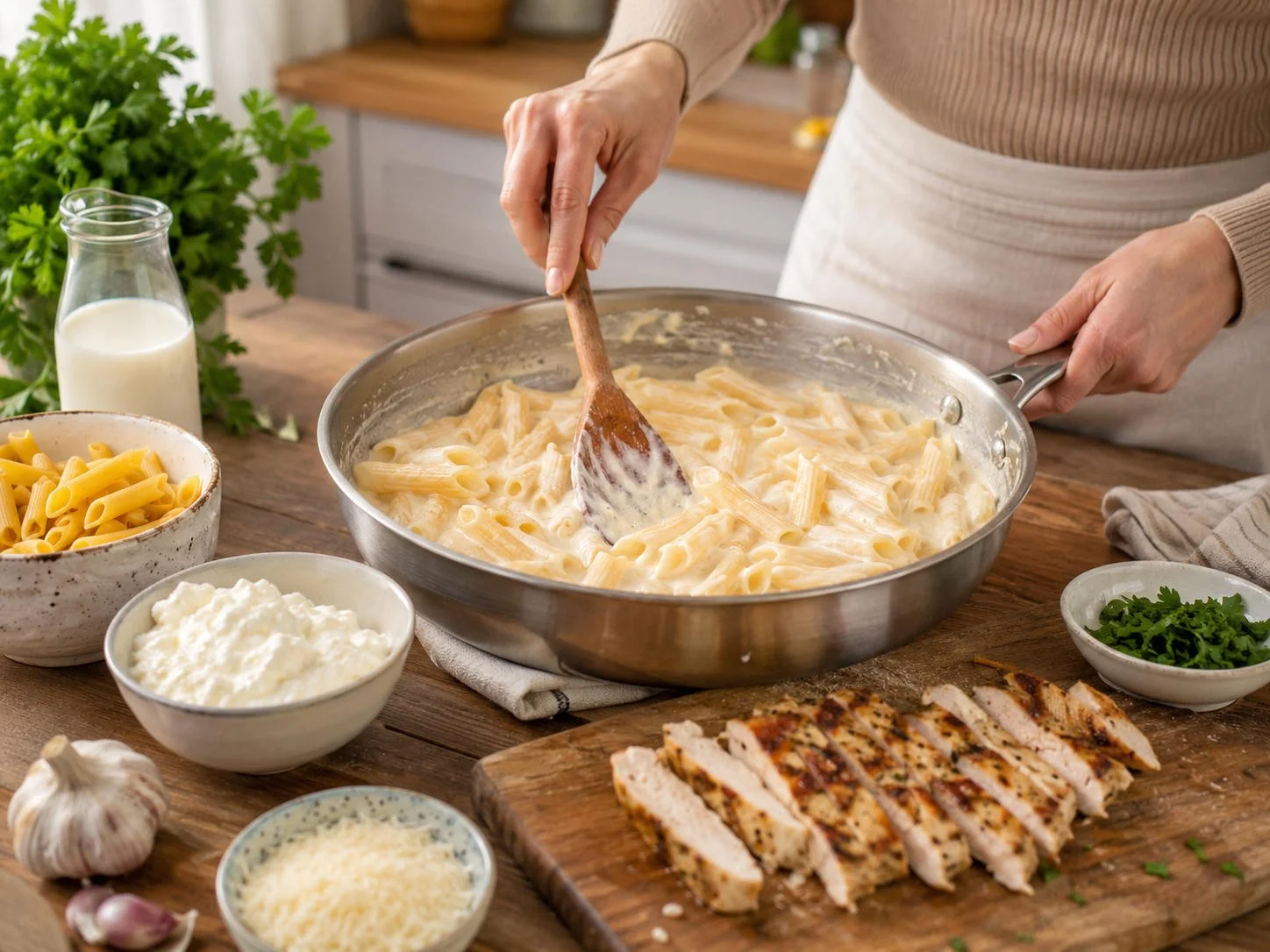
In a blender, combine cottage cheese, Greek yogurt, and milk. Blend until completely smooth.
In the same skillet you used for the chicken, reduce the heat to low or medium-low. Add butter or olive oil, then add the minced garlic. Cook for 30 to 60 seconds, just until fragrant.
Do not burn the garlic. Burnt garlic tastes like punishment.
Pour the blended cottage cheese mixture into the skillet and stir gently.
Keep the heat low. Do not boil the sauce. Greek yogurt can separate if blasted with high heat, and we are making Alfredo, not a science fair failure.
Add the parmesan gradually, stirring until melted and smooth.
Add black pepper and a tiny pinch of nutmeg if using.
Add the cooked pasta and toss everything together. Add reserved pasta water a little at a time until the sauce reaches your preferred texture.
Stir in the sliced chicken.
Taste and adjust salt, pepper, and parmesan.
Serve warm with extra black pepper and a little more parmesan if desired.
Then enjoy a bowl of creamy chicken Alfredo that has protein, flavor, and far less “I need to lie down immediately” energy.
The Secret to a Creamy High-Protein Alfredo Sauce
The secret is low heat and pasta water.
This sauce is not heavy cream. It is built from blended dairy, parmesan, and starch from the pasta water. That means you need to treat it gently.
Do not boil it.
Do not walk away from it.
Do not turn the burner to high because you are impatient and hungry.
Low heat keeps the sauce smooth. Pasta water helps it become silky. Parmesan gives it that real Alfredo flavor. Garlic and black pepper make it taste like dinner instead of “blended cottage cheese experiment number four.”
If the sauce gets too thick, add pasta water.
If the sauce tastes too tangy, add more parmesan or a small pat of butter.
If the sauce tastes flat, add salt and black pepper.
If the sauce tastes too healthy, add more parmesan and forgive yourself.
Estimated Nutrition
The exact nutrition depends on your pasta, chicken amount, dairy choices, parmesan, and portion size.
Using chicken breast, low-fat cottage cheese, Greek yogurt, parmesan, and high-protein pasta, one serving will usually land around:
500 to 700 calories
45 to 65 grams of protein
45 to 75 grams of carbs
10 to 22 grams of fat
Using regular pasta will usually lower the protein slightly.
Using more parmesan, butter, or full-fat dairy will raise the calories and fat.
Using chickpea pasta, lentil pasta, or a high-protein pasta can raise the protein and fiber, though texture and flavor will vary by brand. Barilla’s Protein+ line, for example, is made with wheat plus protein from lentils, chickpeas, and peas, while Banza’s chickpea pasta uses chickpeas as its base.
The best version is probably not the absolute lowest-calorie version. It is the version you actually want to eat again.
That matters more than pretending steamed zucchini noodles are fettuccine.
They are not.
They know what they did.
How to Make It Higher Protein
Use more chicken breast.
Use high-protein pasta.
Add more cottage cheese to the sauce.
Use Greek yogurt instead of regular yogurt.
Add grilled shrimp with the chicken if you want a seafood Alfredo version.
Top with a little extra parmesan.
You can also reduce the pasta portion slightly and add more chicken or vegetables. That keeps the bowl big and filling while shifting the macros more toward protein.
The easiest high-protein move is simple: do not be shy with the chicken.
Chicken Alfredo without enough chicken is just pasta in a protein costume.
How to Make It Lower Calorie
Use a smaller portion of pasta and add vegetables.
Use low-fat cottage cheese.
Use nonfat Greek yogurt.
Use skim milk or 1% milk.
Use cooking spray instead of extra oil.
Use parmesan for flavor, but measure it.
Add broccoli, spinach, mushrooms, zucchini, or peas for volume.
The sauce will still be creamy, but the meal becomes lighter and more filling. Broccoli is especially useful because it fits the Alfredo flavor profile and makes the dish feel bigger without requiring a second bowl of pasta.
A big bowl of high-protein chicken Alfredo with broccoli is still comfort food.
It is just comfort food that has been to therapy.
Best Vegetables to Add
Broccoli is the classic choice.
It catches sauce in all the little tree parts, which is exactly what nature intended.
Spinach works well because it wilts quickly and disappears into the sauce.
Mushrooms add a deeper savory flavor.
Peas make it sweeter and more old-school.
Zucchini works if you cook off the water first.
Cauliflower can work too, but do not overcook it unless you want the whole dish to taste like Alfredo visited a cafeteria.
If you are meal prepping, broccoli and mushrooms usually hold up better than spinach.
Common Mistakes to Avoid
The biggest mistake is boiling the sauce.
This sauce uses Greek yogurt and blended cottage cheese. High heat can make it separate or turn grainy. Keep it low and gentle.
The second mistake is skipping the blender.
Blending the cottage cheese is what makes the sauce smooth. If you skip that step, the texture may be weird.
The third mistake is draining all the pasta water.
Pasta water is your sauce insurance. Save at least 1 cup before draining.
The fourth mistake is overcooking the chicken.
Dry chicken can ruin even a good sauce. Cook it until it reaches the safe temperature, let it rest, then slice it. Resting helps keep the chicken juicier.
The fifth mistake is under-seasoning.
A lighter Alfredo sauce needs enough garlic, salt, pepper, and parmesan. If it tastes bland, it probably needs more salt or cheese. “Healthy” does not have to mean “tastes like someone forgot dinner was supposed to be enjoyable.”
Can You Meal Prep High-Protein Chicken Alfredo?
Yes, but there is a trick.
Creamy pasta thickens in the fridge. That is normal. The sauce gets absorbed by the pasta, and the whole thing can look a little stiff the next day.
To reheat, add a splash of milk or water before microwaving. Heat gently and stir halfway through.
Store leftovers in an airtight container in the fridge for 3 to 4 days. USDA FSIS says leftovers should be refrigerated within 2 hours of cooking or being removed from a heat source.
For best results, store a little extra sauce separately if you can. Then add it when reheating.
That is the advanced move.
The lazy move is adding a splash of milk and stirring like you believe in yourself.
Also acceptable.
Can You Freeze It?
You can freeze it, but I would not call it ideal.
Creamy sauces made with yogurt and cottage cheese can change texture after freezing and thawing. The pasta can also get softer.
If you want to freeze it, freeze the cooked chicken separately and make the sauce fresh later. That gives you a much better result.
If you do freeze the whole dish, thaw it in the fridge overnight, reheat gently, and add milk or pasta water to bring the sauce back.
It will still be edible.
It just may not be at peak Alfredo glory.
Easy Variations
High-Protein Broccoli Chicken Alfredo
Add 2 to 3 cups of steamed or roasted broccoli.
This is probably the best everyday version. It adds volume, fiber, and a nice balance to the creamy sauce.
Spicy Chicken Alfredo
Add red pepper flakes, Cajun seasoning, or a little hot sauce.
This version is excellent if you like Alfredo but want it to stop whispering and start yelling.
High-Protein Shrimp Alfredo
Use shrimp instead of chicken, or use both.
Shrimp cooks quickly and pairs well with garlic, parmesan, and black pepper. Just do not overcook it, because overcooked shrimp turns into seafood rubber bands.
Cottage Cheese Alfredo Pasta Bake
Make the recipe, transfer it to a baking dish, top with a little mozzarella and parmesan, then bake until bubbly.
This is less “quick dinner” and more “I have created a protein casserole and I am not sorry.”
Low-Carb Chicken Alfredo Bowl
Skip the pasta and use spaghetti squash, zucchini noodles, cauliflower rice, or extra broccoli.
This will not taste exactly like pasta. Obviously. But the sauce and chicken still make it satisfying.
High-Protein Cajun Chicken Alfredo
Season the chicken with Cajun seasoning and add a pinch to the sauce.
This is probably the most exciting variation. It gives the whole dish more personality and makes the lighter sauce taste richer.
Is High-Protein Chicken Alfredo Healthy?
It can be.
Compared with a traditional heavy cream Alfredo, this version usually has more protein and less fat while still giving you a creamy pasta experience. It uses chicken breast, cottage cheese, Greek yogurt, milk, parmesan, and optional high-protein pasta instead of relying almost entirely on cream and butter.
That does not mean you should eat unlimited bowls of it and expect abs to appear like a software update.
It is still pasta. It still has cheese. Portion size still matters.
But this is a much smarter version of a meal people already love.
That is important because healthy eating is a lot easier when you stop trying to replace comfort food with sadness.
Sometimes you do not need a salad.
Sometimes you need Alfredo with better macros.
Is This Good After a Workout?
Yes.
This recipe gives you a strong mix of protein and carbs. The chicken and dairy-based sauce bring the protein, while the pasta gives you carbs, which can be helpful after training.
If you lift weights, run, play sports, or do a hard workout, this is a much more satisfying post-workout meal than forcing down plain chicken and rice while questioning your life choices.
Use high-protein pasta if you want more protein.
Use regular pasta if you want the best classic texture.
Use broccoli if you want more volume.
Use extra parmesan if today was emotionally difficult.
Final Thoughts
This high-protein chicken Alfredo recipe is creamy, cheesy, garlicky, and actually useful.
It gives you the comfort-food energy of classic Alfredo while using chicken breast, blended cottage cheese, Greek yogurt, parmesan, and high-protein pasta to push the protein much higher.
It is not the lowest-calorie meal on earth.
It is not pretending to be.
It is a better version of a meal people already crave. That is the whole point.
Because the best high-protein recipes are not the ones that make you feel like you are suffering for your goals.
They are the ones that make you think, “Wait, I can eat this and still stay on track?”
Yes.
Yes, you can.