High-Protein Pizza Bowl Recipe
Pizza is perfect.
That is the problem.
It has cheese.
It has sauce.
It has crispy edges.
It has toppings.
It has that magical ability to make one slice turn into four slices while everyone in the room pretends not to notice.
But if you are trying to eat more protein, lose weight, build muscle, or simply avoid turning dinner into a full cheese-and-bread incident, pizza can be tricky.
That is where the high-protein pizza bowl comes in.
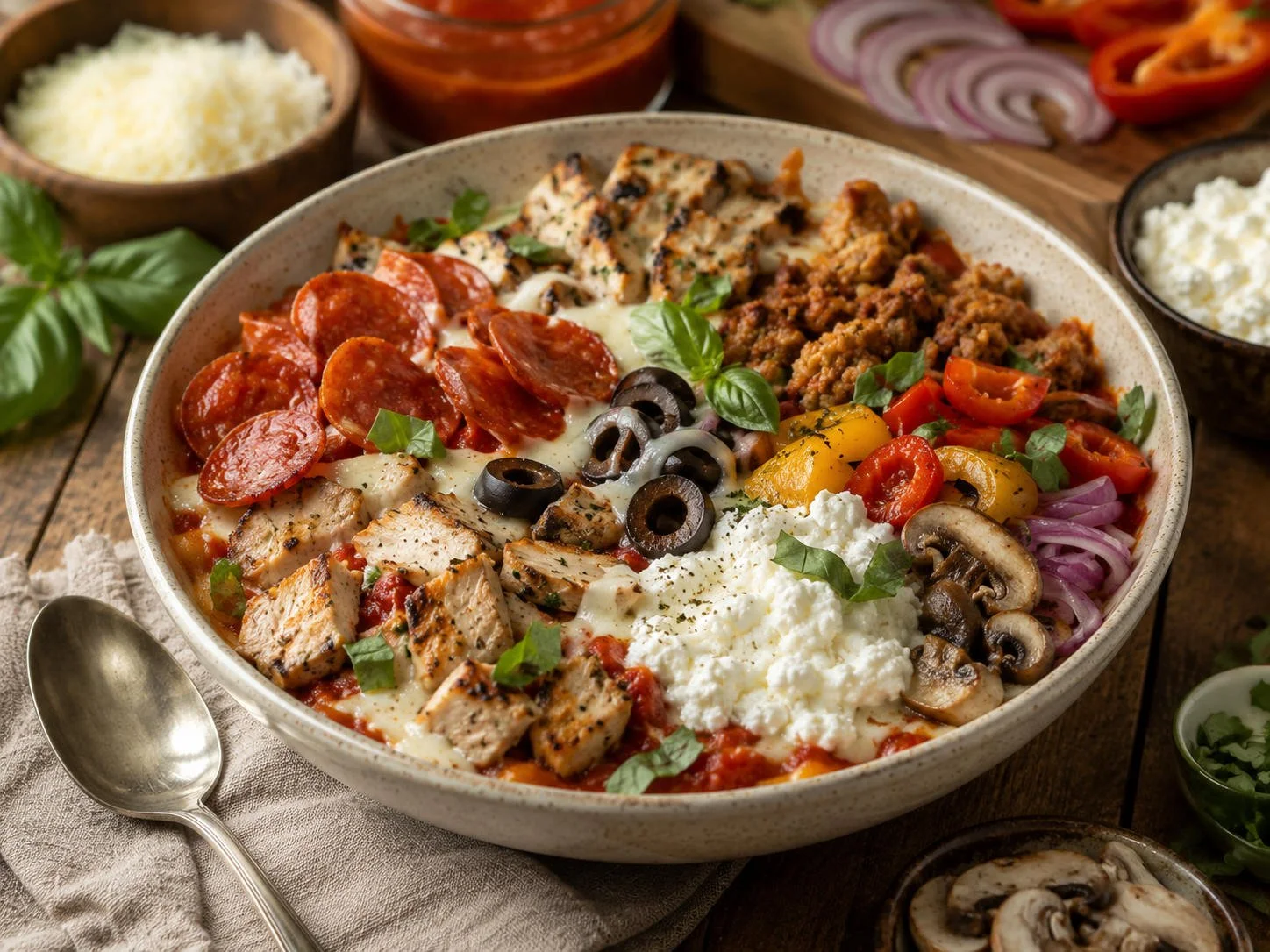
This recipe gives you the best parts of pizza: seasoned meat, rich tomato sauce, melted mozzarella, pepperoni, vegetables, oregano, garlic, red pepper flakes, and that hot bubbly cheese situation. But instead of using a crust, you build everything in a bowl or baking dish with lean protein and vegetables.
Is it exactly the same as pizza?
No.
Is it close enough to scratch the pizza craving while giving you way more protein and fewer calories than ordering a large pizza and “just having a few slices”?
Absolutely.
This is the kind of dinner you make when you want pizza energy without the pizza aftermath.
Why Make a High-Protein Pizza Bowl?
A pizza bowl works because most of what people crave about pizza is not actually the crust.
It is the sauce, cheese, toppings, salt, garlic, herbs, heat, and melted-food comfort.
The crust is delicious, obviously. We are not here to slander bread. Bread has done nothing wrong.
But the crust is also where a lot of the calories and carbs come from, and it does not usually bring much protein compared with meat, cottage cheese, Greek yogurt, eggs, chicken, turkey, or mozzarella.
For protein context, the FDA lists the Daily Value for protein as 50 grams per day, and considers 20% Daily Value or more per serving to be “high.” A pizza bowl with 35 to 50 grams of protein per serving can easily qualify as a high-protein meal.
Lean meats are doing the heavy lifting here. Turkey can be a strong protein option; one Canadian Turkey nutrition reference lists extra-lean turkey at 28 grams of protein per 100 grams. Part-skim mozzarella also contributes meaningful protein, with some nutrition databases listing low-moisture part-skim mozzarella around 24 to 25 grams of protein per 100 grams.
The secret move is cottage cheese.
Cottage cheese makes the bowl creamy, boosts the protein, and gives the whole thing a pizza-meets-lasagna feeling. Cottage cheese is commonly listed around 11 grams of protein per 100 grams, or about 25 grams per cup, depending on the brand and fat level.
In normal language: this is not just melted cheese in a bowl pretending to be healthy.
It is a legit high-protein dinner.
Recipe Snapshot
Prep time: 10 minutes
Cook time: 20 minutes
Total time: About 30 minutes
Servings: 4
Best for: High-protein dinner, low-carb pizza craving, meal prep, post-workout meal, easy weeknight dinner
Ingredients
For the pizza bowl:
1 lb lean ground turkey or ground chicken
1 cup low-fat cottage cheese
1 cup pizza sauce or marinara sauce
1 1/2 cups cauliflower rice, chopped zucchini, mushrooms, or bell peppers
1 cup shredded part-skim mozzarella
1/4 cup grated parmesan, optional
1/2 cup turkey pepperoni or regular pepperoni, optional
1 teaspoon Italian seasoning
1 teaspoon garlic powder
1/2 teaspoon onion powder
1/2 teaspoon dried oregano
Pinch of red pepper flakes
Salt and black pepper, to taste
Cooking spray or 1 teaspoon olive oil
Optional toppings:
Sliced black olives
Banana peppers
Jalapeños
Spinach
Mushrooms
Red onion
Fresh basil
Hot honey
Crushed red pepper
Extra parmesan
Best Protein to Use
Lean ground turkey is probably the best default choice.
It has a mild flavor, it absorbs pizza seasoning well, and it gives the bowl a strong protein base without making it too greasy. Ground chicken also works very well, especially if you want a lighter flavor.
Extra-lean ground beef works if you want more of a classic meat-lover’s pizza vibe. It will usually be richer and more satisfying, but the calories and fat may be higher depending on the percentage.
Chicken breast works too. Cooked chicken breast is commonly treated as a lean, high-protein option, and USDA FoodData Central is one of the standard databases used for nutrition data on foods like poultry, meats, cheese, and vegetables.
You can also use turkey sausage or chicken sausage if you want more pizza-shop flavor. Just watch the sodium and fat if that matters to you.
The easiest high-protein version is:
Lean ground turkey, cottage cheese, part-skim mozzarella, pizza sauce, and vegetables.
That combo gives you protein, sauce, cheese, and volume without requiring the emotional chaos of making homemade dough.
Why Cottage Cheese Belongs in a Pizza Bowl
Cottage cheese sounds weird in a pizza bowl until you try it.
Then it makes sense.
It melts into the sauce, adds creaminess, and gives the whole bowl a ricotta-style texture. If you have ever had lasagna, baked ziti, or stuffed shells, you already understand the vibe.
The trick is blending it.
You do not have to blend cottage cheese, but if you want a smoother pizza bowl, blend it with the pizza sauce before adding it to the meat and vegetables. It becomes creamy, high-protein tomato sauce.
Nobody has to know.
This is how you sneak protein into dinner like a responsible criminal.
Best Vegetables for Pizza Bowls
The best vegetables are the ones that do not release too much water or become sad.
Good options include:
Mushrooms
Bell peppers
Zucchini
Spinach
Cauliflower rice
Red onion
Banana peppers
Jalapeños
Cauliflower rice is popular because it gives you volume without adding many calories. Raw cauliflower is mostly water and contains about 5.3 grams of carbs and 2.1 grams of protein per 100 grams, according to nutrition data drawn from USDA-style databases.
But cauliflower rice has one problem: water.
If you add it straight to the bowl without cooking off moisture, it can make the pizza bowl watery. Same with zucchini and mushrooms.
Cook the vegetables first. Let the extra liquid evaporate. This is the difference between a thick, cheesy pizza bowl and pizza soup.
Pizza soup is not the assignment.
How to Make a High-Protein Pizza Bowl
Preheat your oven to 205°C / 400°F if you plan to bake the bowls.
You can also make this entirely on the stovetop and finish it under the broiler, in the microwave, or in an air fryer-safe dish.
Heat a large skillet over medium-high heat.
Add cooking spray or a small amount of olive oil.
Add the ground turkey or ground chicken. Cook until browned and fully cooked, breaking it apart with a spatula as it cooks.
Season with Italian seasoning, garlic powder, onion powder, oregano, red pepper flakes, salt, and pepper.
Add the cauliflower rice, zucchini, mushrooms, bell peppers, or whatever vegetables you are using.
Cook for 5 to 8 minutes, until the vegetables soften and most of the moisture evaporates.
This step matters. Do not rush it unless you want watery pizza bowl sadness.
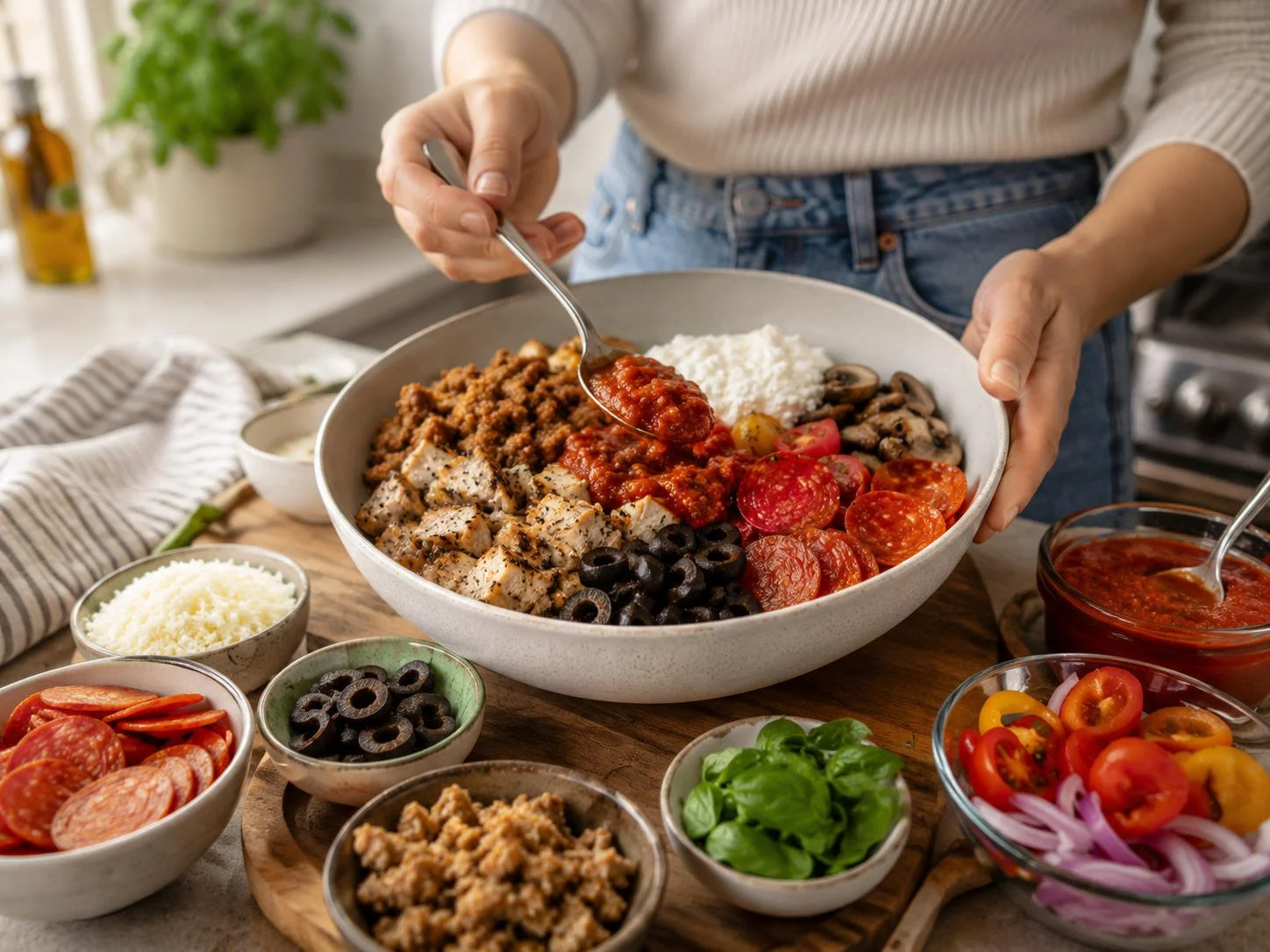
In a blender or small food processor, blend the cottage cheese with the pizza sauce until smooth. You can skip blending if you do not mind a more textured bowl.
Pour the sauce mixture into the skillet and stir everything together.
Transfer the mixture into a baking dish or divide it into oven-safe bowls.
Top with shredded mozzarella, parmesan, and pepperoni.
Bake for 8 to 12 minutes, until the cheese is melted and bubbly.
For a more pizza-like top, broil for 1 to 3 minutes at the end.
Watch it closely. Broilers go from “beautiful golden cheese” to “we have summoned the smoke alarm” very quickly.
Let it cool for a few minutes, then top with basil, red pepper flakes, banana peppers, or hot honey if using.
Eat with a fork, not with regret.
Estimated Nutrition
Nutrition will vary depending on your meat, cheese, sauce, vegetables, and toppings.
For one serving, using lean ground turkey, low-fat cottage cheese, part-skim mozzarella, pizza sauce, and vegetables, you are looking at roughly:
350 to 500 calories
35 to 50 grams of protein
10 to 25 grams of carbs
12 to 25 grams of fat
Using turkey pepperoni, extra cheese, olives, or full-fat meat will push the calories higher.
Using extra-lean turkey, low-fat cottage cheese, reduced-fat mozzarella, and lots of vegetables will keep it lighter.
The most macro-friendly version is not necessarily the best version, though.
A little real cheese and a few pepperoni slices can make the whole thing feel like pizza instead of “ground turkey with tomato feelings.”
Balance matters.
How to Make It Higher Protein
Use extra-lean ground turkey or chicken.
Add more cottage cheese to the sauce.
Use part-skim mozzarella instead of a very low-protein cheese blend.
Add chopped cooked chicken breast.
Top with turkey pepperoni instead of regular pepperoni if you want more protein for fewer calories.
You can also add egg whites to the meat mixture before baking, but that starts moving the recipe toward pizza casserole territory. It works, but the texture changes.
The cleanest high-protein upgrade is more lean meat plus blended cottage cheese.
That gives you more protein without making the recipe weird.
How to Make It Lower Calorie
Use extra-lean ground turkey or ground chicken.
Use low-fat cottage cheese.
Use part-skim mozzarella and measure it instead of adding cheese by instinct.
Skip or reduce pepperoni.
Use vegetables for volume.
Choose a lower-calorie pizza sauce.
The cheese is usually where things get sneaky. It is very easy to turn a reasonable bowl into a cheese crater. Delicious, yes. But if you are tracking calories, shredded cheese is one of those foods where your hand may not be a reliable witness.
Measure it once or twice until you know what a serving looks like.
Then go back to living freely.
How to Make It Taste More Like Real Pizza
Use a good pizza sauce.
Do not use watery tomato sauce and expect magic. Pizza sauce should be thick, seasoned, and slightly sweet. If your sauce tastes flat, add garlic powder, oregano, red pepper flakes, and a tiny pinch of sweetener.
Use mozzarella and parmesan together.
Mozzarella gives you the melt. Parmesan gives you the salty pizza-shop punch.
Use pepperoni sparingly but strategically.
You do not need a mountain of pepperoni. A few slices on top give the whole bowl that classic pizza smell and flavor.
Broil the cheese.
The browned bubbly top is important. It tricks your brain into recognizing the bowl as pizza-adjacent instead of just meat sauce in a dish.
Add fresh basil or oregano at the end.
Fresh herbs make the bowl taste more like something from a restaurant and less like “I assembled protein in a container.”
Easy Variations
Pepperoni Pizza Bowl
Use lean ground turkey, pizza sauce, cottage cheese, mozzarella, parmesan, and pepperoni.
This is the classic version. It tastes the most like pizza and is the best place to start.
Supreme Pizza Bowl
Add bell peppers, mushrooms, red onion, olives, and banana peppers.
This version has more volume, more texture, and more “real pizza topping” energy.
Meat Lover’s Pizza Bowl
Use lean ground beef or turkey, turkey pepperoni, and cooked chicken sausage.
This is higher in protein but can also get higher in calories fast, depending on your meat and cheese choices.
It is powerful. Respect it.
Buffalo Chicken Pizza Bowl
Use cooked shredded chicken instead of ground meat.
Use a mix of pizza sauce and buffalo sauce.
Top with mozzarella and a small drizzle of ranch or Greek-yogurt ranch.
This version is chaotic in the best way.
BBQ Chicken Pizza Bowl
Use cooked chicken, sugar-free or regular BBQ sauce, red onion, mozzarella, and a little cheddar.
This is not traditional pizza, but neither is eating pizza out of a bowl, so let’s not suddenly become purists.
Vegetarian High-Protein Pizza Bowl
Use cottage cheese, mozzarella, vegetables, and either tofu crumbles, lentils, chickpeas, or plant-based ground “meat.”
For the highest-protein vegetarian version, use tofu crumbles or a high-protein meat alternative. Beans and lentils are great, but they bring more carbs too.
Still useful. Just different.
Low-Carb Pizza Bowl
Use ground turkey or chicken, cottage cheese, mozzarella, pepperoni, and low-carb vegetables like mushrooms, spinach, zucchini, and cauliflower rice.
Skip rice, pasta, and bread on the side.
This version is good when you want pizza flavor without a carb-heavy meal.
Meal Prep Instructions
This pizza bowl is excellent for meal prep.
Cook the meat and vegetables, mix in the sauce and cottage cheese, then divide into containers.
You can either add the cheese before storing or add it right before reheating.
If you add cheese before storing, it becomes more casserole-like. If you add it right before heating, it melts fresher.
Store in airtight containers in the fridge for up to 3 or 4 days.
USDA food safety guidance says leftovers should be refrigerated within 2 hours of cooking or being removed from a heat source. FoodSafety.gov also notes that perishable foods enter the “Danger Zone” between 4°C and 60°C, where bacteria can multiply quickly, so the two-hour rule matters.
To reheat, microwave until hot, or bake at 175°C / 350°F until warmed through and bubbly.
If reheating from the fridge, adding the cheese fresh on top before heating gives the best texture.
Can You Freeze Pizza Bowls?
Yes.
Pizza bowls freeze pretty well, especially if you do not add the fresh toppings until later.
Let the cooked mixture cool, portion it into freezer-safe containers, and freeze for up to 2 months for best quality.
For best results, freeze the meat, sauce, cottage cheese, and vegetable mixture without the final mozzarella topping. Then thaw, add cheese, and bake or microwave.
You can freeze it with cheese too. It will still work. It just might not have that fresh melted top.
Still edible.
Still pizza-ish.
Still better than panic-ordering delivery because dinner feels impossible.
Common Mistakes to Avoid
The biggest mistake is not cooking off the vegetable water.
Mushrooms, zucchini, spinach, and cauliflower rice all release moisture. If you do not cook that moisture off, the pizza bowl can turn watery.
The second mistake is using bland sauce.
A pizza bowl depends heavily on sauce because there is no crust. Use a sauce you actually like.
The third mistake is using too much cottage cheese without blending it.
Textured cottage cheese is fine if you like it, but some people find the curds weird in a pizza bowl. Blend it with the sauce for a smoother, creamier result.
The fourth mistake is overloading the cheese.
This is emotionally understandable. But if the goal is high protein and calorie-conscious, cheese needs to be measured with at least some adult supervision.
The fifth mistake is expecting crustless pizza to be pizza.
It is a pizza bowl. It is its own thing. It gives you the flavor profile, not the foldable slice experience.
Do not compare it to a wood-fired pizza made by someone named Marco who has strong opinions about flour hydration.
Compare it to a Tuesday night craving where you want pizza but also want to hit your protein target.
In that fight, the pizza bowl wins.
What to Serve With a High-Protein Pizza Bowl
If you want to keep it light, serve it with a simple salad.
If you want more carbs, serve it with garlic toast, pita chips, rice, roasted potatoes, or a small portion of pasta.
If you want to make it feel more like takeout, serve it with pickled banana peppers, hot sauce, and a sparkling water or diet soda.
If you want the most balanced meal, add a big side of vegetables or a salad. The pizza bowl is already high in protein, so you do not need a huge side dish unless you are very hungry.
And if you are very hungry, eat more.
That is allowed.
Is a Pizza Bowl Good for Weight Loss?
It can be.
A pizza bowl can give you a lot of pizza flavor for fewer calories than a traditional pizza meal, especially if you use lean meat, low-fat cottage cheese, part-skim mozzarella, and lots of vegetables.
It also helps with portion control because you are building a bowl instead of dealing with a whole pizza box.
A pizza box is dangerous because it just sits there, quietly suggesting more slices.
A bowl has boundaries.
Boundaries are important.
That said, calories still count. If you use full-fat sausage, regular pepperoni, tons of cheese, olives, oil, and hot honey, it can become a very calorie-dense bowl.
Delicious? Yes.
Weight-loss-friendly? Depends how wild you get.
Is This Good After a Workout?
Yes.
This is a strong post-workout dinner because it gives you a large amount of protein plus enough sodium, carbs, and calories to feel satisfying. If you want more carbs after training, add cooked rice, pasta, potatoes, or a piece of garlic bread on the side.
If you want a lower-carb post-workout meal, keep the base to vegetables and lean meat.
Either way, it is much more exciting than plain chicken breast and broccoli staring at you from a container like a punishment from the future.
Pizza time!
This high-protein pizza bowl recipe is one of the easiest ways to handle a pizza craving without turning dinner into a full delivery event.
It is cheesy, saucy, filling, customizable, and packed with protein. The lean meat gives it structure. The cottage cheese makes the sauce creamy. The mozzarella gives you the melted pizza top. The vegetables add volume. The pepperoni, oregano, garlic, and red pepper flakes make it feel like pizza instead of just “healthy meat bowl number seven.”
It is not a replacement for every pizza.
Sometimes you should just eat the real pizza.
But when you want pizza flavor, high protein, easier meal prep, and a dinner that does not leave you feeling like you got body-slammed by a large pepperoni, this recipe does the job.
Make it once and you will understand.
Pizza in a bowl sounds like a compromise.
Then the cheese starts bubbling.
Suddenly, compromise looks pretty good.