
Can Iran Actually Close the Strait of Hormuz? Capabilities and Constraints
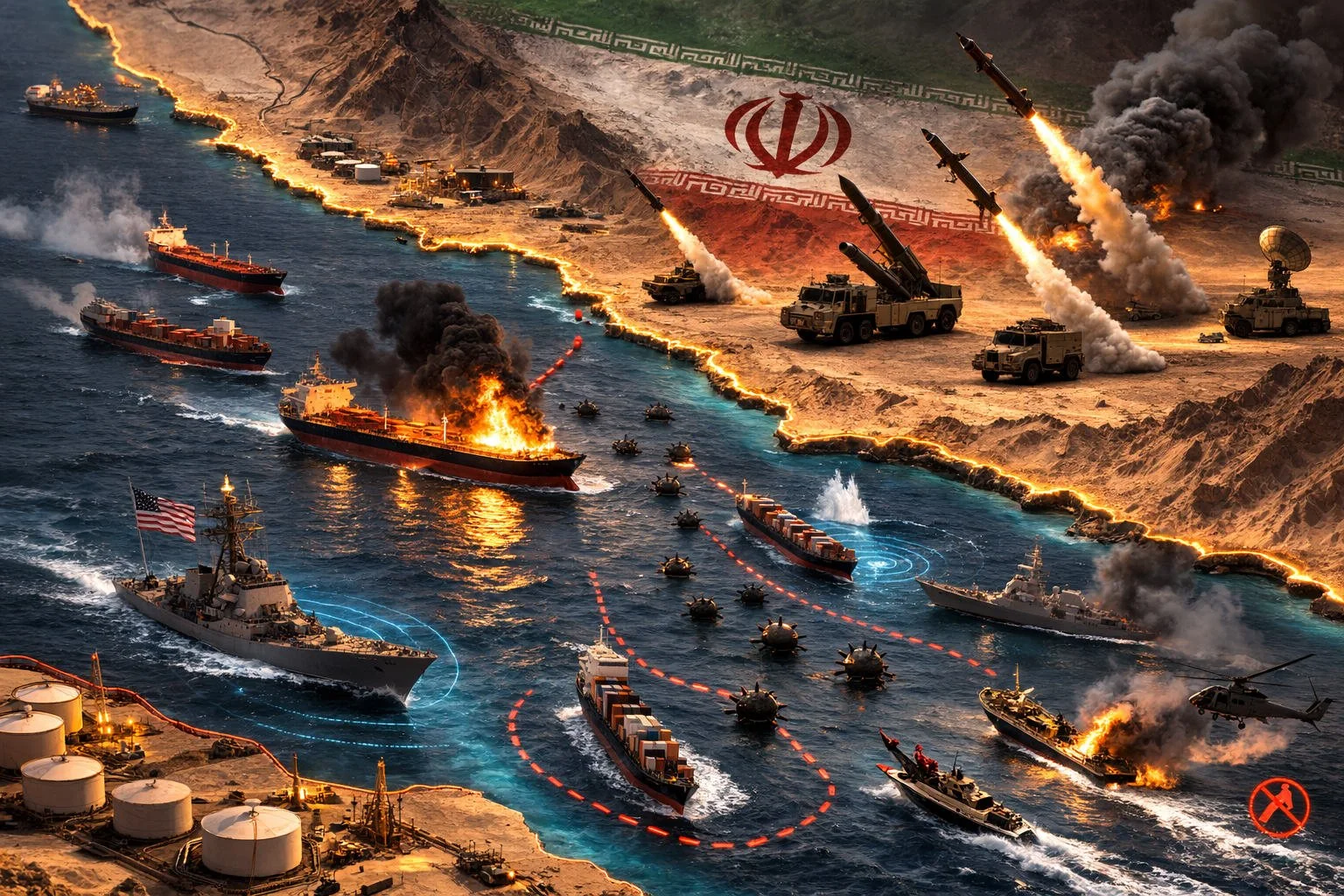
Right now, “Strait of Hormuz closed” is the kind of phrase that makes oil traders, shipping executives, and governments reach for the panic button. And it’s not just hype: when a waterway that moves around 20 million barrels per day gets even partially disrupted, markets react fast.
But the key question is more precise than the headline:
Can Iran permanently close the Strait of Hormuz?
Probably not—at least not in a clean, sustained, “nobody passes” way.
Can Iran effectively shut it down for a period of time by making it too dangerous and too expensive to use?
Yes—and in some ways, that’s already happening.
What “closing the Strait” actually means
When people say “close,” they often imagine a physical blockade. In the real world, “closure” usually comes in two forms:
1) Legal or declared closure (the “official” version)
This is the idea of Iran announcing a ban on transit and enforcing it as policy.
In practice, that’s not how international shipping law works in a strait used for international navigation. The UK Maritime Trade Operations (UKMTO) has emphasized that VHF radio warnings and informal restrictions do not equal a legally recognized suspension of transit passage (and that no official closure has been communicated via recognized maritime safety channels).
So Iran can claim closure, but that doesn’t automatically make it lawful—or universally accepted.
2) De facto closure (the version that actually moves oil prices)
This is the one that matters to markets:
If shipowners, insurers, and crews believe transiting is too risky, traffic collapses—even without a physical blockade.
Reuters has described exactly this dynamic in the current crisis: damaged tankers, casualties, and around 150 vessels stranded, followed by major insurers canceling war-risk coverage (which can make normal shipping financially impossible).
That’s the brutal reality: you don’t have to “seal the strait” to stop ships from moving. You just have to make the cost of trying feel insane.
Why the Strait is unusually vulnerable
Geography does Iran a huge favor here.
The Strait of Hormuz is narrow and predictable. Shipping transits along designated channels that are only about 2 miles (3 km) wide in each direction, with a buffer zone between them.
That tight corridor means disruption scales quickly:
a few incidents can jam traffic,
war-risk insurance can evaporate overnight,
and the whole system can seize up with surprisingly little “physical closure.”
Iran’s capabilities: how Iran can disrupt Hormuz
Iran’s strongest advantage is asymmetric pressure—tools that don’t require matching the U.S. Navy ship-for-ship. Analysts regularly focus on a mix like this:
Naval mines
Mines are the classic “low-cost, high-panic” weapon in a narrow chokepoint. The mere possibility of mines forces slowdowns, sweeps, and convoy behavior—exactly the kind of friction that can crush commercial confidence.
Anti-ship missiles and drones
Iran has invested heavily in coastal defense systems, drones, and missile capabilities that can threaten commercial vessels and naval escorts—especially when combined with confusion, decoys, and saturation tactics.
Fast attack craft and harassment
Swarming and harassment doesn’t need to “win” a naval battle. It just needs to create enough uncertainty that insurers and shipowners back away.
Seizures and selective targeting
Iran doesn’t have to attack “everyone.” It can target specific ships tied (or alleged to be tied) to certain countries or companies—creating fear that spreads across the whole corridor.
Constraints: why a long-term closure is hard
Iran can cause a shock. Sustaining a total blockade is another matter. Here are the biggest constraints.
1) The U.S. and partners can fight the problem—especially with convoys and patrols
A determined coalition can reduce risk through escorts, layered air/missile defense, surveillance, and (if escalated) strikes against launch sites and maritime assets. The Financial Times has discussed how western navies can attempt to keep the strait open through convoying and active defense.
This doesn’t mean “easy” or “safe.” It means Iran doesn’t control the chessboard alone.
2) Mines are scary—but clearing and securing lanes is a known mission
Mine countermeasures are slow and dangerous, and estimates vary, but history suggests reopening could take weeks if a serious mining campaign occurs.
That supports the core point: Iran can create a time-limited crisis—but “permanent closure” is much harder to sustain against a major naval effort.
3) Iran risks massive self-harm (and political blowback) if it truly strangles global energy flows
A full, sustained shutdown would hammer the global economy—and that invites huge diplomatic and military pressure. It can also harm Iran’s own interests and revenue flows. Multiple analyses note that Iran has historically threatened closure but often avoided the most extreme version—partly because of the economic consequences.
4) “Closure” invites escalation that Iran may not be able to control
The more Iran pushes toward a true blockade, the more likely it is to trigger:
broader strikes on Iranian military infrastructure,
more aggressive interdiction,
and a cycle where each side escalates to restore deterrence.
That’s a high-stakes game even if Iran can cause immediate disruption.
5) Even now, there’s a gap between “claims” and “official closure”
In the current crisis, there have been reports of VHF warnings that “no ship is allowed” through. Reuters reported such transmissions, and UKMTO has addressed unverified closure claims—while also noting that recognized channels have not formally communicated a lawful closure.
So the most realistic near-term risk is effective closure via fear and insurance, not a neat, universally enforced legal blockade.
The most realistic answer
Can Iran close the Strait of Hormuz?
For a short period or in an “effective” sense: yes—by raising risk, driving away insurers, and forcing ships to pause or reroute.
For the long term, totally and cleanly: unlikely—because international naval power, economic self-harm, and escalation dynamics make it difficult to sustain.
The scarier truth is that the world doesn’t need a perfect closure to feel real pain. A chokepoint like Hormuz doesn’t have to be “sealed” to shock oil prices—it just has to become unreliable.