Why The French Laundry Makes Fine Dining Feel Like a Different Economy
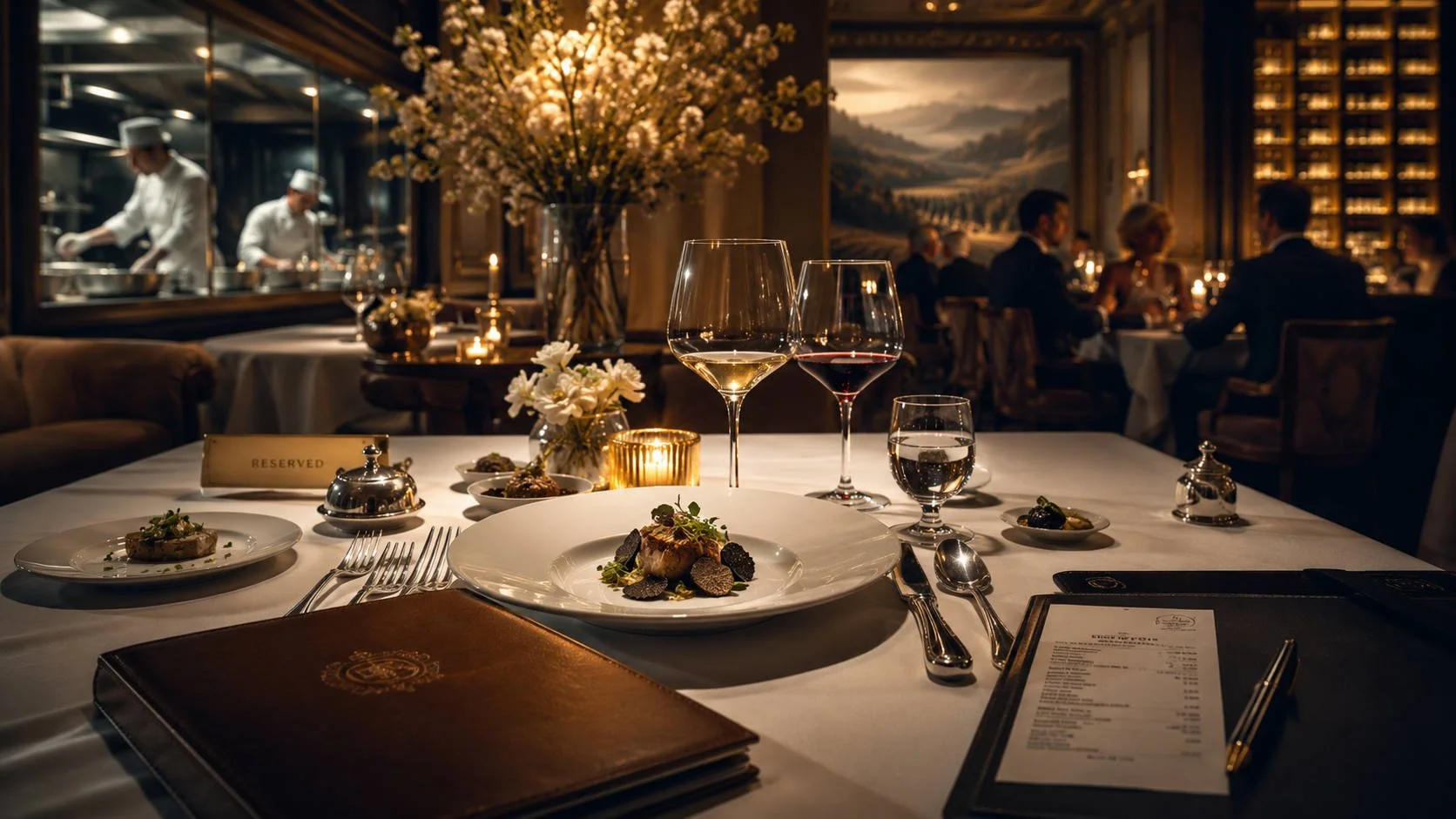
The French Laundry does not feel like “going out to dinner.” Going out to dinner is a burger, a server named Kyle, and a menu sticky enough to qualify as a geological formation. The French Laundry feels like crossing a velvet rope into a parallel financial system where dinner has opening credits, butter has a biography, and the wine list could probably apply for diplomatic recognition.
This is not just because it is expensive, although yes, obviously, thank you, detective wallet. As of its current Tock listing, The French Laundry’s dining room reservation is priced at $425 per person plus add-ons, while courtyard dining is listed at $525 per person, and private/table experiences can hit $600 per person before special-event pricing wanders in wearing a monocle. The same listing shows special dinners at $776 and $1,200 per person, which is the kind of number that makes a normal entrée look like it came from a soup kitchen for accountants.
But the real reason The French Laundry makes fine dining feel like a different economy is deeper than the bill. It is the whole machinery: scarcity, ritual, architecture, labor, wine, ingredients, reputation, and the strange human urge to turn dinner into a pilgrimage because apparently eating while seated was not dramatic enough.
The French Laundry Price Is Not the Meal. It Is the Cover Charge to Another Planet.
A $425 tasting menu is not just a menu price. It is a border crossing. It tells you immediately that you are not buying food in the normal sense, the way you buy tacos, groceries, or a rotisserie chicken that has seen more honest work than most LinkedIn profiles.
The French Laundry sells a controlled experience. The restaurant offers two tasting menus daily: the Chef’s Tasting Menu and the Tasting of Vegetables. That is it. You are not flipping through six pages of appetizers while pretending you might order the beet salad. You are submitting to the evening. The menu changes daily, which means the restaurant is not just feeding you; it is staging one night of edible theater and charging accordingly.
This is where fine dining starts to feel like a separate economy: the customer gives up normal choice and receives curation instead. In regular restaurants, you order what you want. At The French Laundry, you buy the privilege of trusting the system. It is less “What are you having?” and more “The chef has prepared a sequence. Please sit down and behave.”
Fine Dining Scarcity: Reservations as Luxury Currency
The reservation itself is part of the economy. Tock lists The French Laundry as a prepaid reservation experience, booking through a specific date window and releasing new reservations at a specific time. This is not “call and see if they have a table.” This is “prepare for the reservation Hunger Games, but with better glassware.”
Scarcity changes everything. A seat becomes an asset. A dinner becomes a trophy. The meal starts before the meal because getting the reservation is part of the story. Normal restaurants have availability. The French Laundry has access.
That is why the price does not operate like ordinary restaurant pricing. Nobody is asking whether the calories justify the cost, because that would be like asking whether a Broadway ticket provides enough fabric per dollar. You are paying for reputation, difficulty, choreography, and the ability to later say, “When we ate at The French Laundry,” which is less a sentence than a tiny social grenade.
The Building Itself Has a Resume, Because Of Course It Does
The restaurant’s physical setting is part of the economic spell. The French Laundry is housed in a 1,600-square-foot river-rock-and-timber structure built as a saloon in 1900. It later served as a residence and operated as a French steam laundry in the 1920s before Don and Sally Schmitt turned it into a restaurant in 1978; Thomas Keller purchased it in 1994.
That history matters because fine dining loves a building with lore. A normal restaurant says, “We have parking.” A temple of gastronomy says, “This stone cottage survived Prohibition, reinvention, and enough wealthy anniversaries to alter the local tax base.”
The setting lets the restaurant sell time as much as food. You are dining in a myth. The cottage whispers, “This is heritage.” The modern kitchen whispers, “This is capital investment.” The bill whispers, “Do not open your banking app right now.”
Michelin Stars Turn Dinner Into Financial Weather
The French Laundry has had Michelin’s highest three-star rating since 2007, according to the restaurant’s own history, and Keller is noted there as the only American-born chef with two three-starred Michelin restaurants.
Michelin stars do not merely decorate a restaurant. They alter its gravity. A three-star restaurant does not compete with your neighborhood bistro. It competes with memory, tourism, bucket lists, and other luxury experiences people justify with phrases like “once in a lifetime,” which is how wallets get ambushed in formalwear.
Once a restaurant becomes a destination, its economy shifts. Guests are no longer just local diners. They are travelers. They book hotels. They buy wine. They make weekends out of it. The restaurant becomes part of a regional luxury circuit, especially in Napa Valley, where grapes already figured out how to become real estate.
The Tasting Menu Economy: Tiny Portions, Giant Infrastructure
The French Laundry’s menu looks delicate, but the machine behind it is enormous. A recent chef’s tasting menu included dishes like “Oysters and Pearls,” Hokkaido sea scallop, Pacific yellowtail, smoked Amish poularde, lamb, cheeses, desserts, and mignardises. The vegetable menu is equally elaborate, with items like spring pea medley, asparagus salad, ramp paratha, broccoli tartlette, porcini gratin, goat cheese, sorbets, and composed desserts.
This is why fine dining feels economically alien: the plate is small, but the process is not. Every course is supported by purchasing, prep, testing, service, plating, dishwashing, sourcing, storage, reservation management, wine service, and the sort of kitchen choreography that makes a normal home dinner look like raccoons raided a pantry.
A bite can look tiny and still contain the labor density of a small municipal project. That does not make it “worth it” for everyone. It does explain why comparing it to a plate of pasta is financial comedy with marinara.
The Supplement Economy: Dinner With Optional Wallet Trapdoors
Then come the add-ons, because apparently $425 needed DLC.
A recent French Laundry menu listed a $60 supplement for Royal Ossetra caviar with langoustine, a $160 supplement for truffle “Mac and Cheese,” and a $135 supplement for Japanese Miyazaki Wagyu.
This is where the meal becomes a choose-your-own-expense adventure. The base menu is already luxury. The supplements are luxury looking at luxury and saying, “Cute starter home.”
Fine dining supplements work because the guest is already financially softened. You are not sitting there after a $17 burger deciding whether to add bacon for $3. You are four courses deep into a once-in-a-decade meal, and suddenly the question is whether you want truffles because “we’re already here.” This phrase has destroyed more budgets than printer ink and destination weddings.
The Wine List Is a Separate Economy Wearing a Dinner Jacket
The French Laundry’s wine program is where the different-economy feeling stops knocking and kicks down the door.
The restaurant describes its wine program as having breadth and depth across major grape-growing regions, including famous producers, hard-to-get cult wines, and lesser-known bottles. Its posted wine PDF runs to more than 100 pages, with by-the-glass selections ranging from a $10 Moscato d’Asti to Champagne and Madeira pours far above that; the list also includes half-bottles and major Napa and European producers at prices that can comfortably outrun a car payment.
And if you bring your own bottle? The corkage fee is $200 per 750 ml bottle, with a limit of one bottle for every two guests at the table. That is not a corkage fee. That is a polite toll booth for people who arrived with their own Burgundy and the confidence of a minor duke.
Wine is where fine dining most clearly becomes a parallel market. A glass is not just a drink. It is vintage, producer, terroir, scarcity, storage, sommelier labor, and the emotional manipulation of being asked, “Would you like something special with that course?” by someone who knows exactly what “special” costs.
The Garden Economy: Your Salad Had a Better Upbringing Than You
The French Laundry also has a culinary garden, because of course the vegetables could not simply arrive from a truck like common peasants. The French Laundry Culinary Garden is described as a 3.5-acre farm with more than 150 varieties of fruits, vegetables, microgreens, flowers, a chicken coop, bees, and more. Garden tours are even listed at $100 per person, because at this level the side quest also has a price tag.
This is part of what fine dining sells: provenance. The radish is not just a radish. It is a seasonal expression of the garden, the chef’s relationship with the soil, and probably a tiny unpaid intern named Jasper misting it at dawn.
To be fair, ingredient quality matters. The restaurant’s own Farmers & Foragers page frames cooking as “ingredients + execution” and emphasizes supplier relationships, including dairies, olive oil producers, coffee roasters, and the Vermont butter used by Keller’s restaurants.
But that is exactly why this feels like a different economy. In ordinary food shopping, ingredients are commodities. In fine dining, ingredients become biographies. Butter is no longer butter. Butter has ancestry, mentorship, and possibly a LinkedIn endorsement.
The Architecture Economy: Even the Kitchen Got a Glow-Up
The French Laundry’s modernized kitchen is another reason the restaurant feels like a financial ecosystem, not just a dining room. Architectural Digest reported that Keller’s renovation, which began in 2014 and finished in 2017, modernized and expanded the kitchen, with the finished kitchen about 25% bigger than before; the annex includes support functions, offices, a test kitchen, butchery, produce breakdown space, and a wine cellar holding up to 15,000 bottles.
That is the hidden capital behind the tiny fork. Most diners see the table. They do not see the building systems, wine storage, butchery, test kitchen, dish flow, prep space, staff training, custom design, and maintenance of a restaurant that must perform at an absurdly high level every night.
Fine dining is expensive partly because it is overbuilt on purpose. The luxury is not only in the caviar. It is in the absence of friction. The napkin appears. The wine arrives. The course lands. The plate disappears. You are not supposed to notice the machinery, which is very rude because the machinery is half the bill.
The Grocery-Store Comparison Is Almost Too Mean
To understand why The French Laundry feels like a different economy, compare it to normal food economics.
The USDA’s February 2026 Thrifty Food Plan lists the monthly food-at-home cost for a male age 20–50 at $312.80 and for a female age 20–50 at $249.30. It lists a reference family of four at $1,003.40 per month.
Now place that next to a $425 per-person reservation. One dinner seat costs more than the USDA’s estimated monthly thrifty grocery cost for many individual adults. Two dining room seats at base price are $850 before add-ons, wine, travel, or the dangerous sentence “Should we get the wagyu?” Two courtyard seats at $525 each are $1,050, which crosses the USDA’s monthly Thrifty Food Plan estimate for a family of four.
This is the clearest answer to the title. The French Laundry feels like a different economy because it is operating in a world where one meal can equal another household’s monthly food framework. Not because everyone there is evil. Not because luxury cannot exist. But because the gap is so huge that it stops feeling like “restaurant pricing” and starts feeling like you accidentally opened a menu from a civilization that uses truffles as currency.
The Strange Thing: It Can Still Be Rational
Here is the annoying part: spending that much can still make sense for some people.
Not as dinner. As an experience. As travel. As celebration. As culinary education. As a gift. As a once-in-years indulgence. As art you eat instead of hang on a wall. People spend comparable amounts on concerts, hotels, sports tickets, handbags, golf weekends, spa days, and phones they drop into toilets six months later.
The mistake is judging The French Laundry as if it is trying to be a normal restaurant. It is not. It is trying to be a culinary landmark. Whether that sounds magical or insufferable depends largely on your income, appetite, and tolerance for quotation marks around menu items.
How to Think About The French Laundry Without Financially Face-Planting
The practical advice is boring, which means it is useful.
Decide your all-in budget before booking. Not the menu price. The real price: reservation, taxes, add-ons, wine, nonalcoholic drinks, travel, hotel, transportation, and whatever emergency bakery visit happens the next morning because Napa has monetized carbohydrates beautifully.
Skip supplements unless they genuinely matter to you. A $160 truffle macaroni course may be spectacular, but so is having $160 later.
Study the wine list before you go, or at least decide your wine ceiling. A sommelier can work within a budget, but only if you actually say one instead of smiling nervously while the bottle price ascends like a helicopter.
Consider lunch elsewhere, not because you need to “prepare your palate,” but because eating heavily before a nine-course tasting menu is like wearing two winter coats into a sauna.
Most importantly, stop pretending value is universal. One person’s transcendent meal is another person’s rent panic plated with microgreens.
The French Laundry Is Not Expensive Food. It Is Expensive Meaning.
The French Laundry makes fine dining feel like a different economy because the food is only the visible part of the transaction. The rest is access, prestige, choreography, history, scarcity, architecture, wine, labor, agriculture, design, and the very expensive pleasure of not having to make a single decision beyond saying yes or no to more luxury.
A normal restaurant sells dinner. The French Laundry sells the feeling that dinner has been removed from ordinary life and placed under glass. Every detail says: this is not casual consumption; this is an event. The cottage has history. The reservation has scarcity. The menu has ritual. The wine list has its own gravitational field. The garden has better career prospects than most college graduates.
Is that absurd? Yes. Is it impressive? Also yes. That is fine dining’s entire trick: making absurdity feel exquisite.
The French Laundry feels like a different economy because it is one. It is not the economy of hunger. It is the economy of memory, status, ceremony, and controlled excess.
And in that economy, the check is not the end of the meal. It is the souvenir.