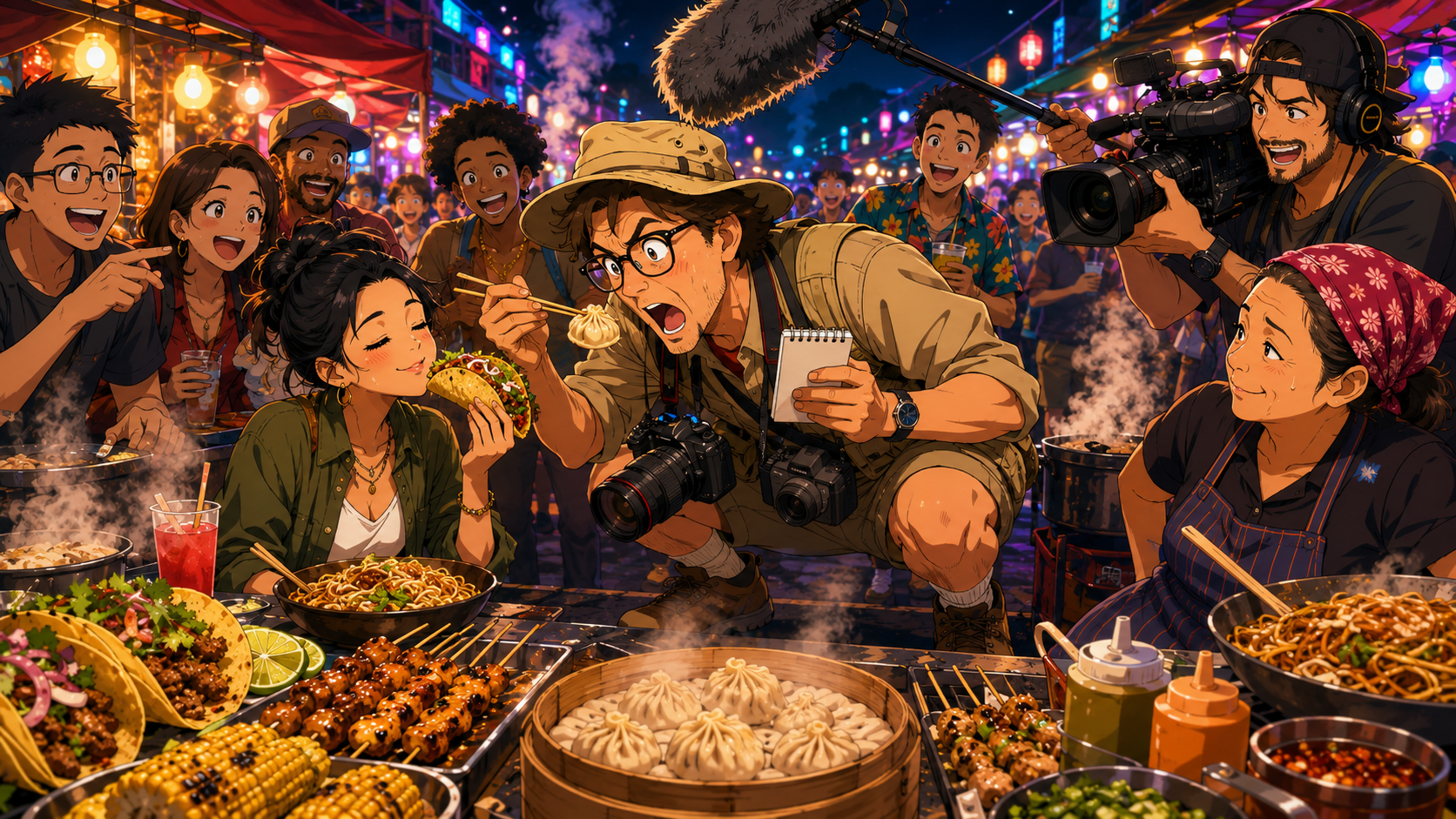
Street food is not automatically dangerous, and it is not automatically holy.
It is food. Outside.
That is all.
A taco from a cart is not a sacred cultural baptism. A skewer is not a moral exam. A dumpling stall is not there so you can discover your “most authentic self” while wearing linen pants and narrating your hunger like a man trapped in a travel documentary nobody funded.
Street food can be excellent. Street food can be cheap, fast, brilliant, local, practical, and better than half the restaurants currently charging $19 for “market greens” that look like they were gathered from a traffic median by a nervous intern.
But street food can also send you into a hotel bathroom with the urgency of a man being chased by wolves.
The difference is judgment.
Street food is not a personality test
There are two unbearable street food tourists.
The first refuses to eat anything unless it came from a restaurant with glass doors, laminated menus, and the sterile sadness of an airport lounge. This person travels across the world to eat club sandwiches and then says the trip was “eye-opening.”
The second tourist is worse.
This person believes caution is cowardice. They will eat anything from anywhere as long as it looks “real.” They point at a bubbling pot of unknown provenance, make intense eye contact with the vendor, and say, “I want what the locals eat,” as if locals are a single organism with one lunch.
This is not bravery. This is gastrointestinal cosplay.
You are not proving cultural openness by eating the most suspicious item available. You are proving you have confused risk with depth, which is how people end up learning the word “electrolytes” in a pharmacy.
Eat street food. Enjoy it. Celebrate it. But do not turn the experience into a little TED Talk about authenticity while your intestines prepare a formal complaint.
The busy stall is your friend
A busy stall is not always perfect, but it is usually a better sign than an empty stall where six lonely skewers sit under a heat lamp like suspects in a police lineup.
Turnover matters.
Food that is cooked, sold, and replaced quickly has less time to sit around becoming a microbial group project. A line can mean the food is popular, fresh, and trusted by people who actually live there and would prefer not to spend the afternoon folded over a toilet.
Look for movement.
Food hitting the grill. Noodles going into boiling water. Batter going into hot oil. Meat being cooked in front of you. Fresh batches replacing old ones. People ordering quickly because they already know what is good.
This is useful information.
Not mystical information. Not “follow your heart” information. Practical information. The crowd is not automatically correct, but it is more persuasive than one sun-blasted tray of room-temperature chicken guarded by a vendor who looks surprised to see another human.
Hot food is the adult choice
Heat is your friend.
Food cooked thoroughly and served hot is usually a better bet than food that was cooked at some undetermined point in the previous geological period and is now reclining on a tray.
Watch the food being cooked. Watch it come off the grill, out of the fryer, out of the steamer, out of the boiling pot. That is the moment. That is the little window of sanity.
Do not get poetic about food that is merely warm.
Warm is suspicious. Warm is the temperature of bad decisions. Warm is where confidence goes to breed regret. If a piece of meat, rice, noodle, dumpling, or sauce-heavy object has been sitting around long enough to lose its heat and develop a personality, let it continue its journey without you.
You are not less adventurous because you chose the hot, freshly cooked thing.
You are more intelligent.
Very different brand.
Raw toppings are where the documentary turns into a bathroom episode
Raw vegetables are lovely in theory. Crisp herbs, fresh salsa, sliced onions, shredded lettuce, cucumber, sprouts, all that charming little greenery that makes street food look bright and alive.
And sometimes they are fine.
But when you are traveling somewhere with uncertain water quality or inconsistent sanitation, raw toppings become a small leafy trust fall. They may have been washed in water you would not drink. They may have been cut hours ago. They may have been sitting open near traffic, heat, dust, hands, insects, and the general public, which remains one of nature’s least reassuring ingredients.
This does not mean you must live in terror of cilantro.
It means you should think.
Cooked toppings are safer than raw toppings. Fruit you peel yourself is safer than fruit someone else cut into damp little cubes hours earlier. Fresh salsa can be wonderful, but it can also be a tiny bowl of consequences if it has been sitting out in the heat like tomato-based evidence.
The rule is simple: if you would not trust the water, be careful with the raw stuff washed in the water.
Ice is not decorative. It is water in a costume.
Ice looks innocent because it sparkles.
So do knives in a magic show.
In places where tap water may not be safe, ice deserves suspicion. Ice is just frozen water with better branding. If the water is questionable, the ice is not magically purified because it got cold and joined your drink.
The same goes for fountain drinks, fresh juices mixed with water, smoothies, and beverages made with ice from an unknown source. You do not need to become paranoid. You need to stop acting like a straw makes everything hygienic.
Factory-sealed bottled or canned drinks are usually the safer move. Carbonated drinks are often a decent sign because the sealed bubbles suggest the bottle has not been tampered with, though even then, use your eyes like a person who has survived email scams.
If you want the fresh juice, fine. But know what you are choosing. Fresh-squeezed juice from questionable water conditions is not “wellness.” It is roulette with pulp.
Condiments are tiny communal swamps unless proven otherwise
The food may be hot and perfect.
Then you drown it in a room-temperature sauce from a crusty squeeze bottle that has been sitting in the sun since breakfast.
Congratulations. You personally added the plot twist.
Sauces, chutneys, salsas, pickles, chopped garnishes, creamy dressings, and communal condiments can be excellent. They can also be the least supervised part of the entire operation. Everyone worries about the grilled meat, then gets defeated by a ladle of mystery sauce that has been living open-air on a folding table.
Use judgment.
Fresh sauce from a clean container? Reasonable.
A covered condiment that looks actively maintained? Fine.
A communal tub with a spoon that has clearly experienced several empires? Perhaps not.
You came for street food, not a microbiology internship.
Use your hands less than your enthusiasm suggests
Street food involves hands. Yours. The vendor’s. The person taking money. The person eating while walking. The child touching every surface with the confidence of a raccoon in a public fountain.
You cannot control the whole environment. You can control yourself.
Wash your hands when you can. Use hand sanitizer when you cannot. Try not to handle cash, touch your phone, grab a railing, pet a dog, and then pick up food with your bare hands like your immune system has tenure.
Use napkins. Use utensils. Use the wrapper. Hold the food like a person with some awareness that the world is coated in fingerprints.
This is not fear. This is basic hygiene wearing travel shoes.
Frequently asked questions about eating street food safely
Is street food safe when traveling?
It can be. The better choices are usually busy stalls where food is cooked thoroughly, served hot, and handled cleanly. The worse choices are lukewarm food, raw items, undercooked meat or seafood, questionable water, and anything sitting uncovered like it has been abandoned by public health.
What street food should I avoid?
Be cautious with raw salads, cut fruit you did not peel yourself, fresh salsas, undercooked seafood, lukewarm meat, unsealed drinks, unknown ice, and sauces that look like they have been outdoors long enough to vote.
Is it better to eat where locals eat?
Often, yes, but do not say it like you are filming a sincere voiceover near a noodle cart. A busy local stall can be a good sign because turnover is high and the food is trusted. Still use judgment. Locals may have different tolerance, habits, and information than you do.
How do I avoid food poisoning from street food?
Choose food cooked fresh and served hot. Avoid lukewarm trays. Be careful with raw produce and ice where water quality is uncertain. Wash or sanitize your hands. Watch how food is handled. And stop treating the sketchiest stall on the block like it is a courage exam.
Should I skip street food entirely?
No, unless you are pregnant, immunocompromised, severely risk-averse, or traveling somewhere with serious food and water safety concerns where your doctor told you to be careful. Street food can be one of the best parts of travel. Just do not eat like a man auditioning for a cautionary pamphlet.
Eat the street food. Retire the monologue.
Street food does not need your fear.
It also does not need your little documentary performance.
You do not need to stand there solemnly explaining how this one skewer reveals the soul of a city. You do not need to eat the most reckless thing available because you confuse poor judgment with cultural respect. You do not need to treat every vendor like a mystical gatekeeper of authenticity while you hold a bottled water and ask if the sauce is “traditional.”
Just eat intelligently.
Pick the busy stall. Watch the food cook. Choose hot over lukewarm. Be cautious with raw toppings, unsafe water, ice, and communal sauces. Sanitize your hands. Listen to locals without turning them into travel props. Know your own risk level.
Then enjoy yourself.
A good street food meal is not supposed to end with a dramatic narration about humanity, flame, hunger, and the ancient language of spice.
It is supposed to end with you saying, “That was excellent,” throwing away the napkin, and continuing your day without having to identify the nearest pharmacy by smell.
That is the goal.
Flavor, not footage.
Dinner, not a documentary.