
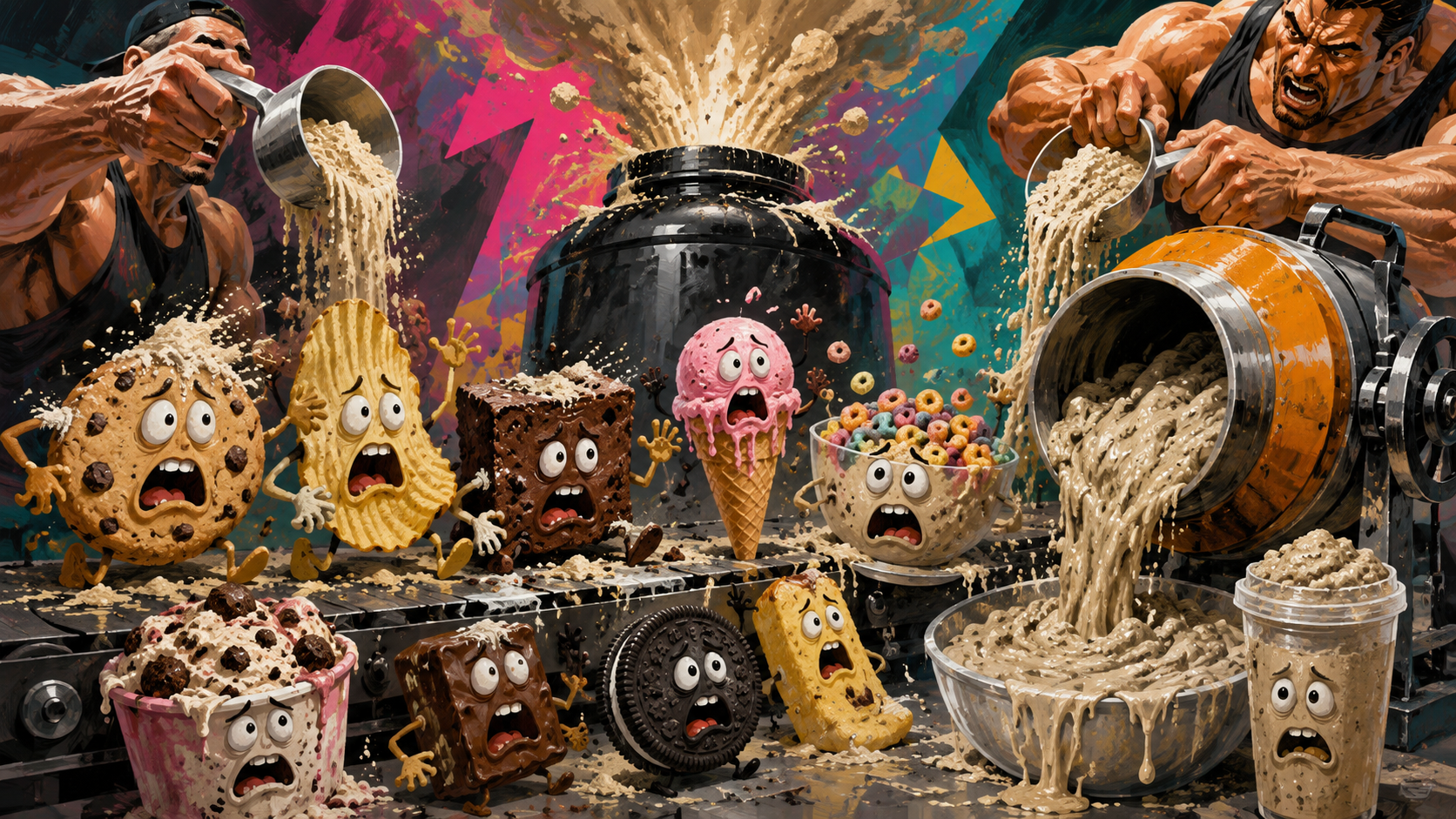
Protein is useful. Protein helps make snacks more filling. Protein matters for muscles, meals, appetite, aging, training, and the basic maintenance of your human meat vehicle. Fine. Wonderful. Congratulations to protein on being important.
But somewhere between “Greek yogurt is a good snack” and “what if I mixed protein powder into pudding until it looked like drywall compound,” the culture lost its mind.
Now every normal snack has been dragged into the gym basement and interrogated under fluorescent lighting. Cookies need protein. Chips need protein. Brownies need protein. Cereal needs protein. Ice cream needs protein. Coffee needs protein. Water probably has some influencer trying to make it high-protein by shaking collagen into it until it resembles pond runoff from an expensive spa.
Enough.
High-protein snacks are good. High-protein cosplay is the problem
A snack does not become better just because someone forced 18 grams of protein into it at gunpoint.
There is a difference between adding protein intelligently and turning food into a fitness punishment with chocolate chips.
Greek yogurt with berries? Good.
Apple with peanut butter? Normal.
Cheese and crackers? Civilization.
Protein powder stirred into oatmeal because breakfast needs more staying power? Reasonable.
Protein powder mixed into pancake batter, microwaved into a rubber disk, smeared with zero-sugar syrup, and called “cake”? No. That is not cake. That is a gym mat.
The problem is not protein. The problem is the collapsing definition of snack.
A snack should solve a small hunger problem. It should not require a shaker bottle, a blender, three powders, one artificial syrup, and the emotional stamina to chew a brownie that fights back.
Your snack does not need to be anabolic
There is a particular person who cannot eat a normal food anymore.
They cannot have a cookie. It has to be a protein cookie.
They cannot have chips. They need protein chips.
They cannot have pudding. It must be Greek-yogurt protein pudding with powdered peanut butter and a texture usually found in municipal repair work.
They cannot have cereal. They need cereal that tastes like sweetened packing peanuts and costs nine dollars because the box says “gains” in a font designed for men who film themselves deadlifting.
This is not nutrition. This is anxiety with macros.
A normal snack can just be a snack. If you want a cookie, eat a cookie. Do not eat a protein cookie the size of a hockey puck and pretend you are being disciplined. You are eating a worse cookie and lying to yourself with grams.
Sometimes the healthy choice is eating the real thing, enjoying it, and moving on before you create a bowl of beige paste that makes everyone in the room lose respect for your family tree.
Protein grams are not the whole story
The Nutrition Facts label can tell you grams of protein. Use that information. Do not worship it.
A snack with 15 grams of protein and no fiber may still leave you prowling the kitchen thirty minutes later like health inspector with a grudge. A snack with protein plus fiber, fat, or actual food volume is usually more satisfying because it gives your body something to work with besides powdered ambition.
Also check the rest of the label. Some high-protein snacks arrive with a parade of sweeteners, saturated fat, sodium, or calories that make the “healthy” halo wobble off and roll under the fridge.
That does not mean they are evil. This is not a church trial.
It means the protein number is one number. It is not a passport. It does not automatically absolve a snack from being candy in a compression sleeve.
If your “high-protein” bar has the energy of a candy bar, costs four dollars, and leaves a chemical vanilla aftertaste that follows you into your next relationship, perhaps the snack is doing too much.
The best high-protein snacks still look like food
Here is a controversial nutritional position: food should sometimes resemble food.
Try Greek yogurt with berries instead of a tub of artificially sweetened pudding paste that smells like a protein shaker abandoned in July.
Try cottage cheese with fruit, crackers, or tomatoes instead of pretending whipped cottage cheese is cheesecake because TikTok bullied you into optimism.
Try hard-boiled eggs, cheese, hummus with vegetables, roasted chickpeas, edamame, tuna on crackers, turkey roll-ups, peanut butter on toast, or last night’s chicken eaten cold over the sink like a tired but functioning adult.
None of this is glamorous. That is the point.
Good snacks are not always content. They do not need a voiceover. They do not need a dramatic spoon shot. They do not need to be “viral.” They need to keep you from becoming irritable at 3:17 p.m.
Stop making dessert worse and calling it discipline
The protein dessert movement has some crimes to answer for.
Protein brownies. Protein cookie dough. Protein cheesecake. Protein ice cream. Protein mug cakes with the density of a collapsed star.
Some are fine. A few are even good. Most taste like someone described dessert to a personal trainer during a thunderstorm.
The issue is not wanting a higher-protein dessert. The issue is pretending a chalky bowl of sweetened sludge is the same emotional event as ice cream.
It is not.
If you want dessert, eat dessert. If you want a filling snack, eat a filling snack. You are allowed to have foods that exist for pleasure. Not every snack needs to justify its existence in grams of protein.
What makes a good high-protein snack?
A good high-protein snack should do three things.
It should give you enough protein to matter.
It should include something else useful, like fiber, fat, or volume.
It should be something you will actually eat without feeling like you are being punished by a wellness app.
That is the test.
Greek yogurt with fruit passes.
Eggs and toast pass.
Cheese, crackers, and apple slices pass.
Hummus and vegetables pass.
Edamame passes.
A protein bar can pass if it tastes decent and does not require you to drink a gallon of water afterward just to restore mouth function.
A bowl of protein powder, sugar-free pudding mix, cottage cheese, and crushed cereal may pass mathematically, but spiritually it belongs in a bucket behind a gym.
Frequently asked questions about high-protein snacks
Are high-protein snacks actually good for you?
They can be. Protein can help make snacks more filling, especially when paired with fiber, fat, or whole foods. The problem is not high-protein snacks. The problem is buying expensive protein-branded nonsense and pretending the word “protein” cancels out everything else on the label.
How much protein should a snack have?
There is no sacred snack number carved into a whey tablet. For many people, even just a few grams of protein can be useful, depending on the person, and the goal. A snack does not need to be a steak in disguise. It just needs to help.
What are easy high-protein snacks that are not disgusting?
Greek yogurt, cottage cheese, eggs, cheese, hummus, edamame, tuna, roasted chickpeas, nuts with fruit, peanut butter on toast, turkey roll-ups, or leftovers. Revolutionary stuff. Food, mostly. A concept the protein-industrial snack aisle continues to treat as suspicious.
Are protein bars bad?
No. Some are useful. Some are candy bars with better marketing. Read the label, check the calories, protein, fiber, added sugars, and saturated fat, then ask the most important question: does this taste like food, or like a chocolate-scented kneepad?
The snack does not need a bench press
Eat protein. Eat snacks. Sometimes eat a real dessert. Have enough self-respect to know the difference.
Your snack should help you get through the afternoon, not look like it was mixed in a bathtub by someone preparing for a bodybuilding show in a windowless motel.
Food can be filling without being miserable.
And if your “healthy snack” requires three powders, two sweeteners, a blender, a motivational caption, and a lie about how it “tastes just like cheesecake,” throw it away and eat some yogurt like a person who still has a functioning relationship with reality.