Why MyFitnessPal Made Food Feel Like Accounting
First things first: MyFitnessPal did not invent calorie counting. Humanity was already perfectly capable of ruining lunch with math before an app got involved. But MyFitnessPal did something special. It took the vague little cloud of “I should probably eat better” and transformed it into a full-blown personal finance department for your mouth.
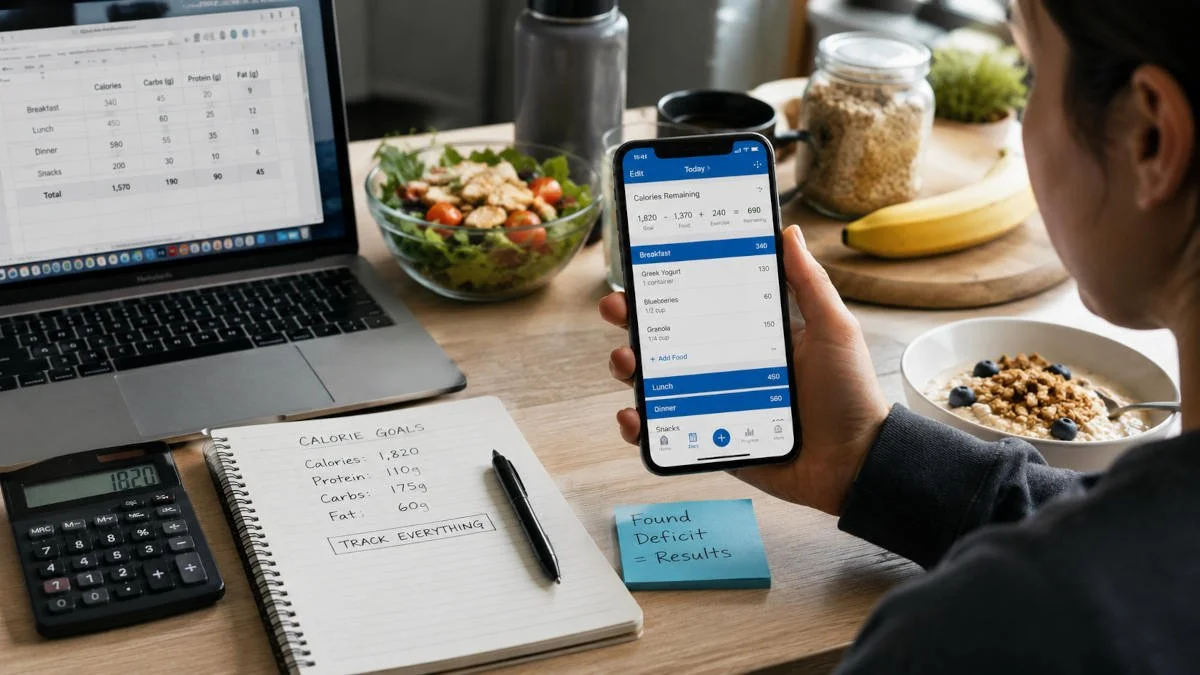
Suddenly, breakfast had a ledger. Lunch had consequences. Dinner needed documentation. A handful of almonds became a transaction. A cookie became an audit risk. Your burrito was no longer a burrito; it was a suspiciously cylindrical expense report.
That is why MyFitnessPal made food feel like accounting: it turned eating into a budget, gave every bite a number, and made your body seem like a small business with disappointing quarterly projections.
MyFitnessPal Turned Calories Into a Daily Budget
The app’s own help page basically admits the whole thing. MyFitnessPal defines net calories as calories consumed from food minus calories burned through exercise, then tells users to think of net calories like “a daily budget” that you spend by eating and earn more of by exercising. There it is. The smoking food scale. The broccoli subpoena. Nutrition has officially become QuickBooks with yogurt.
This is useful in one way: it makes invisible patterns visible. A person can learn that their “light snack” has the caloric density of a small construction vehicle. Fine. Great. Knowledge is power, and apparently peanut butter is a financial instrument.
But it also changes the emotional category of food. A meal stops being a meal and becomes a debit. Exercise becomes a credit. Hunger becomes a line item. Joy becomes “remaining calories,” which is possibly the least joyful phrase ever attached to dinner.
Food Logging Made Every Meal Need a Receipt
MyFitnessPal’s core promise is simple: log calories, macros, exercise, water, weight, and more in one place. The app currently promotes tools like barcode scanning, voice logging, meal scanning, macro tracking, goal customization, meal planning, and a food database with 20.5 million-plus foods listed on its Google Play page.
This is convenient. It is also deranged in the specific way modern convenience often is. The app says, “Don’t worry, we made this easier,” and then suddenly you are scanning hummus like it is contraband at customs.
The old food diary was a notebook. MyFitnessPal made it a surveillance kiosk with macros. You do not just eat eggs. You log eggs. You do not just have coffee. You enter coffee, milk, sweetener, and the private shame of discovering your “splash” is actually half a dairy farm.
Macro Tracking Made Food Feel Like a Spreadsheet With Chewing
Calories were bad enough. Then came macros: protein, carbs, fat. A normal sandwich used to be bread, turkey, cheese, maybe mustard if you were feeling alive. In MyFitnessPal land, that sandwich becomes a three-department meeting between carbohydrates, fats, and protein, each one demanding representation like tiny edible lobbyists.
The app’s free version lets users log food and exercise, view macronutrients, customize calorie and macro goals by percentage, create foods, meals, and recipes, and share diary data. Its 2026 Today tab update also puts calories consumed, calories remaining, and macro breakdowns prominently at the top of the app.
That is not neutral design. That is the app gently placing a calculator on your plate and whispering, “Enjoy your pasta, defendant.”
MyFitnessPal Became Popular Because Food Is Confusing
To be fair, MyFitnessPal did not become huge because people woke up begging to turn dinner into tax season. It became huge because food is genuinely confusing.
Labels are annoying. Portions are slippery little liars. Restaurant meals arrive with the nutritional transparency of a casino. “Healthy” can mean anything from “contains spinach” to “marketed by a man wearing linen.” People wanted a way to understand what they were eating, and MyFitnessPal offered a giant searchable food database and a simple daily structure.
Francisco Partners describes MyFitnessPal as a leading mobile nutrition and fitness tracking app founded in 2005, with what it calls the world’s largest user-generated food database and features including nutrition tracking, meal plans, recipes, and workouts.
So no, the app is not useless. For some people, tracking can reveal patterns, support goals, and reduce the fog around food. It can answer questions like “Am I eating enough protein?” or “Why am I hungry every afternoon?” or “How did this smoothie become a 900-calorie beverage wearing a wellness hat?”
Useful tip: use tracking as a flashlight, not a prison warden. Track for a short period to learn patterns, then decide whether the habit is helping or just turning your kitchen into a courtroom.
The Problem Is That The Numbers Feel More Exact Than They Are
Accounting works because numbers are supposed to balance. Food tracking only pretends to be that clean. In real life, portion sizes are guessed, entries are user-generated, restaurant nutrition can vary, and your tablespoon of peanut butter is probably a structural engineering project.
A study of MyFitnessPal in a naturalistic setting found that participants omitted an average of 18% of food items, especially energy-dense and nutrient-poor foods. The app records also significantly underestimated energy and macronutrient intake compared with researcher-administered recalls. Although 80% of participants rated the app easy to use, only 20% said they would keep using it, citing portion-size estimates, food matching, and time-consuming logging as problems.
So the app can look precise while being full of guesses. It is like balancing your checkbook using vibes and three receipts from a drawer.
Useful tip: do not worship the decimal point. A food log is an estimate. Use verified entries when possible, measure common foods briefly if accuracy matters, and avoid treating every mismatch like a federal crime against oatmeal.
Streaks Made Eating Feel Like Productivity Software
MyFitnessPal has also leaned into consistency features. Its 2026 Today tab includes a food logging streak meant to track consecutive days where users log at least one food item.
This is where food tracking becomes very Silicon Valley in the worst possible way. You are not simply eating. You are maintaining engagement. You are not simply remembering lunch. You are protecting a streak, because apparently even your sandwich needs gamification.
Streaks can help some people build habits. They can also make missing a day feel like moral failure, which is insane, because forgetting to log soup is not a character defect. It is just being alive without behaving like a barcode scanner in pants.
Calorie Counting Can Help Some People—and Mess With Others
Here is the part where the article stops dunking on Greek yogurt databases long enough to be serious. Food tracking can be helpful for some users, especially when it is tied to a clear, reasonable health goal and used with flexibility. A 2026 scoping review found calorie-counting apps may support people managing obesity and weight-related chronic diseases, but it also noted barriers like manual entry, technical issues, limited food databases, and declining adherence over time.
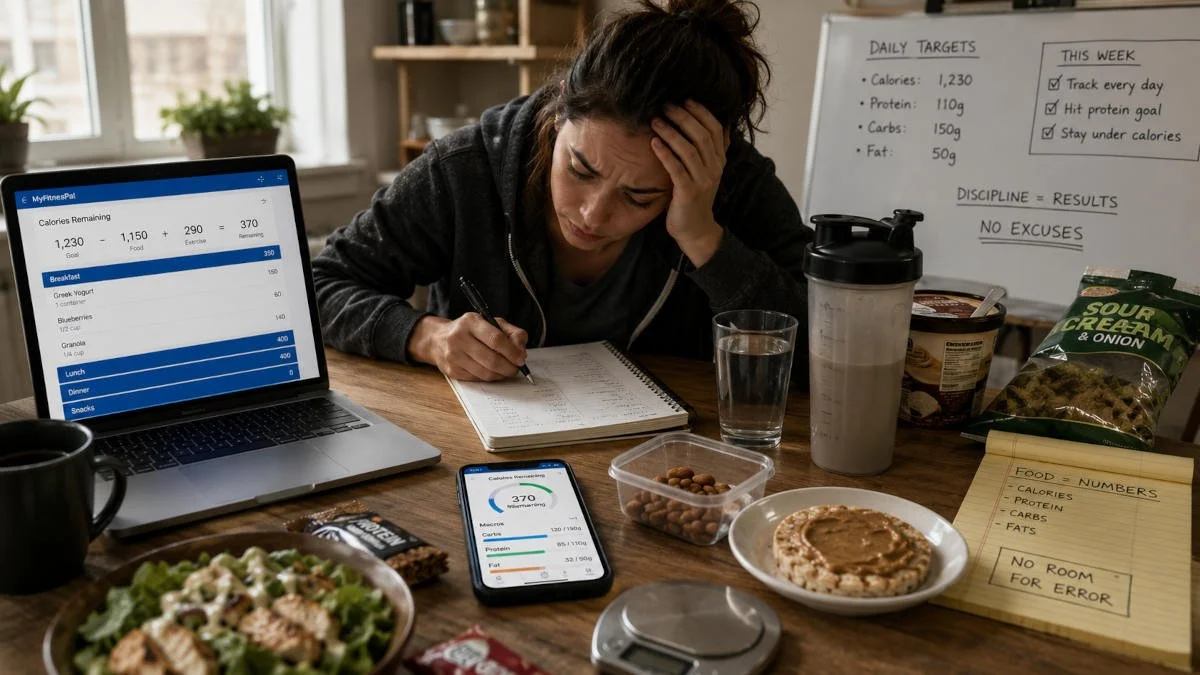
But calorie tracking can also become psychologically sticky. A 2021 study found that calorie-tracking app users reported higher disordered eating than non-users, and people using apps for weight-control or shape reasons were more likely to report food preoccupation, all-or-nothing thinking, food anxiety, and related symptoms than people using apps for health or disease-prevention reasons.
In a study of people with eating disorders, about three-quarters reported using MyFitnessPal, and 73% of those users perceived the app as contributing to their eating disorder symptoms. Duke Psychiatry’s summary also notes that tracking apps are not automatically harmful for everyone, but they can be detrimental for people with eating disorders or certain vulnerabilities.
Useful tip: if logging makes you anxious, obsessive, ashamed, or afraid of normal foods, that is not “discipline.” That is your brain turning lunch into a hostage negotiation. Stop tracking and talk to a qualified health professional, especially if you have a history of disordered eating.
Why MyFitnessPal Made Food Feel So Unfun
The app made food feel like accounting because it copied the emotional structure of money.
You get a budget. You spend. You save. You go over. You compensate. You check the balance. You feel either responsible or guilty. The app did not merely track food; it gave eating the moral atmosphere of a credit score.
That is powerful because it offers control. It is dangerous because it can confuse control with health.
A cookie is not a bounced check. A skipped workout is not bankruptcy. A day over your target is not an IRS audit with ranch dressing. Yet the interface can make it feel that way, because numbers have authority. They sit there looking official, like tiny judges in a spreadsheet robe.
How to Use MyFitnessPal Without Becoming a Human Calculator
The sane version of MyFitnessPal is boring, which is how most sane things work. Use it to learn, not to punish. Track trends, not tiny acts of edible misconduct. Pay attention to protein, fiber, and meal patterns, not just whether the calorie number gave you a gold star and a pat on your exhausted little head.
Do not log forever out of fear. Do not “earn” food with exercise like your body is a vending machine that requires burpees. Do not let the app override hunger, fullness, medical advice, or basic human pleasure.
And for the love of all that is holy and lightly salted, do not bring a food scale to a birthday party unless your goal is to make everyone wish the cake had chosen a better crowd.
MyFitnessPal Didn’t Ruin Food. It Industrialized the Anxiety
MyFitnessPal made food feel like accounting because it gave people an incredibly efficient way to turn meals into numbers. That can be useful. It can teach. It can reveal habits. It can support real goals.
But it can also make eating feel like filing paperwork inside your own body.
The app’s great trick was taking the messy, social, emotional, delicious business of food and converting it into a dashboard. Calories in. Calories out. Macros remaining. Streak intact. Budget balanced. Another successful day at Mouth Incorporated.
And that is the problem. Food is data, sure. But it is not only data. It is culture, comfort, energy, pleasure, memory, and occasionally a gas station hot dog eaten under circumstances no app should be legally allowed to judge.
MyFitnessPal made food feel like accounting because accounting is clean and food is not. Food is human. Food is messy. Food has butter on it. And sometimes the healthiest thing you can do is eat the damn sandwich without opening a spreadsheet first.