Why the Super Bowl Turns Chicken Wings Into a National Ritual
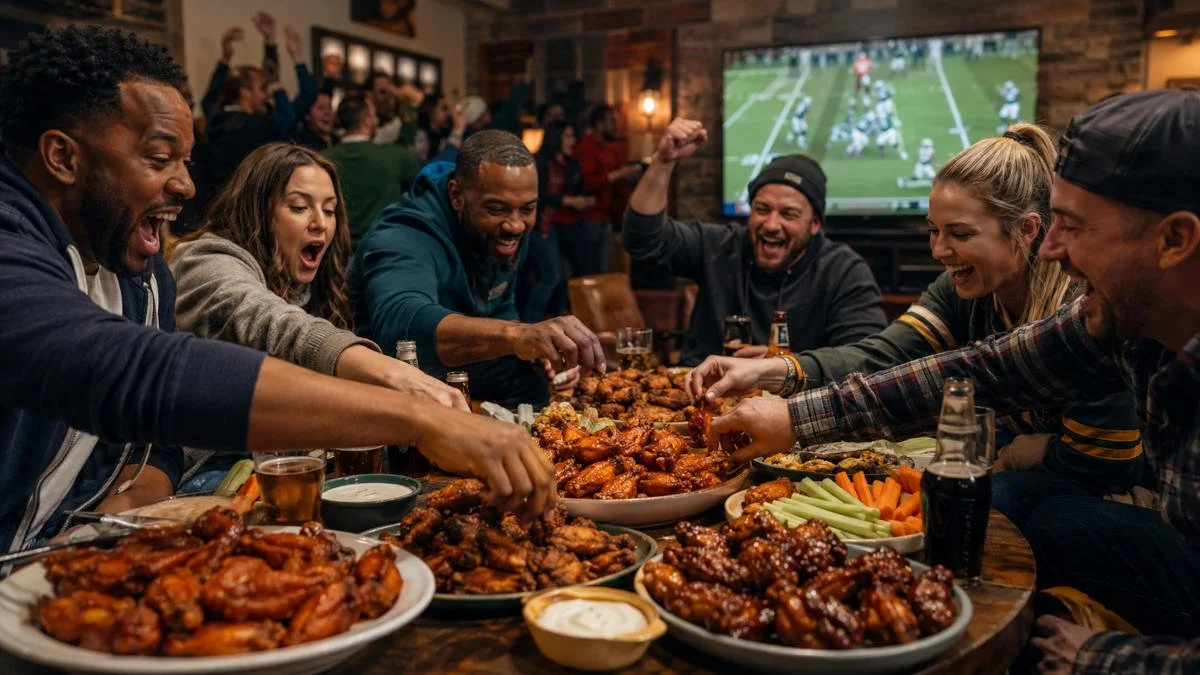
First things first: the Super Bowl is not just a football game. It is America’s annual permission slip to scream at a television, pretend commercials are culture, and eat chicken wings with the grim determination of a raccoon trapped in a sports bar dumpster.
The chicken wing is not merely a snack on Super Bowl Sunday. It is a sacrament. A sauced little national handshake. A bone-in treaty between people who disagree about everything except that football should be watched near a tray of poultry parts and a dip dense enough to patch drywall.
And somehow, this all makes sense.
Super Bowl Chicken Wings Are Not a Snack. They Are Infrastructure.
The National Chicken Council projected that Americans would eat 1.48 billion chicken wings for Super Bowl LX, about 10 million more than the previous year. It also noted that hauling that many wings would require more than 3,400 fully loaded semi-trucks, which is less “party food” and more “edible military deployment.”
The scale of the Super Bowl explains the scale of the wing pile. Nielsen said Super Bowl LIX averaged 127.7 million viewers in 2025, making it the largest Super Bowl audience and single-network telecast in U.S. TV history at the time. NRF’s 2026 survey found that a record 213.1 million U.S. adults planned to tune in, with 121.1 million planning to throw or attend a party and 18.2 million planning to watch at a bar or restaurant.
That is not dinner. That is a synchronized national chewing event.
Super Bowl Sunday Is America’s Unofficial Food Holiday
The USDA has called Super Bowl Sunday the second-largest food consumption day on the calendar after Thanksgiving, noting that it creates major demand for meat and poultry finger foods.
Thanksgiving has pilgrims, family guilt, and a bird large enough to require architectural planning. The Super Bowl has wings, dips, pizza, chili, and a living room full of people asking what “catch” means even though the NFL itself seems only moderately committed to knowing.
That is why wings work so well. They do not require a place setting. They do not ask you to sit politely. They do not arrive with a carving knife and the emotional burden of your uncle’s political opinions. You pick one up, destroy it, wipe your hands badly, and repeat until halftime or medical intervention.
Why Chicken Wings Won the Football Party
Chicken wings became football food because they solved several problems at once. According to the National Chicken Council, wings became an inexpensive byproduct when U.S. consumers started favoring boneless, skinless breast meat in the 1980s; restaurants and bars could sell them cheaply, sauce them aggressively, and pair them beautifully with beer. The rise of sports bars with multiple TVs also helped make wings a shareable group food for football watching.
There it is: the holy triangle of American leisure. Cheap protein, televised violence, and beer.
Wings are also perfectly sized for denial. Nobody eats 22 wings. You eat “a few.” Then a few more. Then suddenly there is a poultry graveyard in front of you and you’re arguing about pass interference with the confidence of a man whose entire chin is buffalo sauce.
Buffalo Wings Gave the Ritual a Birthplace
The canonical Buffalo wing origin story points to Anchor Bar in Buffalo, New York, where Teressa Bellissimo reportedly deep-fried wings and coated them in sauce in 1964 after her son’s friends arrived hungry late one night. Anchor Bar says the wings became a regular menu item afterward, and the National Chicken Council also credits the Buffalo-style hot-sauce wing with taking off from that 1964 origin story.
This is a deeply American creation myth. Someone showed up hungry. Someone fried the least glamorous part of the chicken. Someone added sauce. Civilization advanced by 11 percent.
The Buffalo wing’s genius is that it turned a previously humble cut into a loud, craveable, communal object. It is not elegant. It is not refined. It is not being plated with microgreens by a chef named Luca who owns tweezers. It is hot sauce, fat, salt, crunch, dip, and celery standing nearby like a tiny green apology.
Wings Are the Perfect Super Bowl Food Because They Are Socially Messy
The Super Bowl is a group ritual, and wings are group food. They force everyone into the same sticky condition. Nobody looks dignified eating wings. Not the CEO. Not the neighbor with the immaculate lawn. Not the guy who explains defensive schemes by pointing at your television with a celery stick.
That matters. Wings lower the room’s standards in a useful way. Once everyone has sauce on their fingers, society relaxes. The party becomes less of a gathering and more of a controlled demolition of napkins.
This is also why wings beat many “nicer” foods. You can serve charcuterie at a Super Bowl party, but let’s be honest: that is just lunchable gentrification. Wings understand the assignment. They say, “You are here to watch enormous men collide while a billionaire’s ad for mayonnaise tries to make you feel something.”
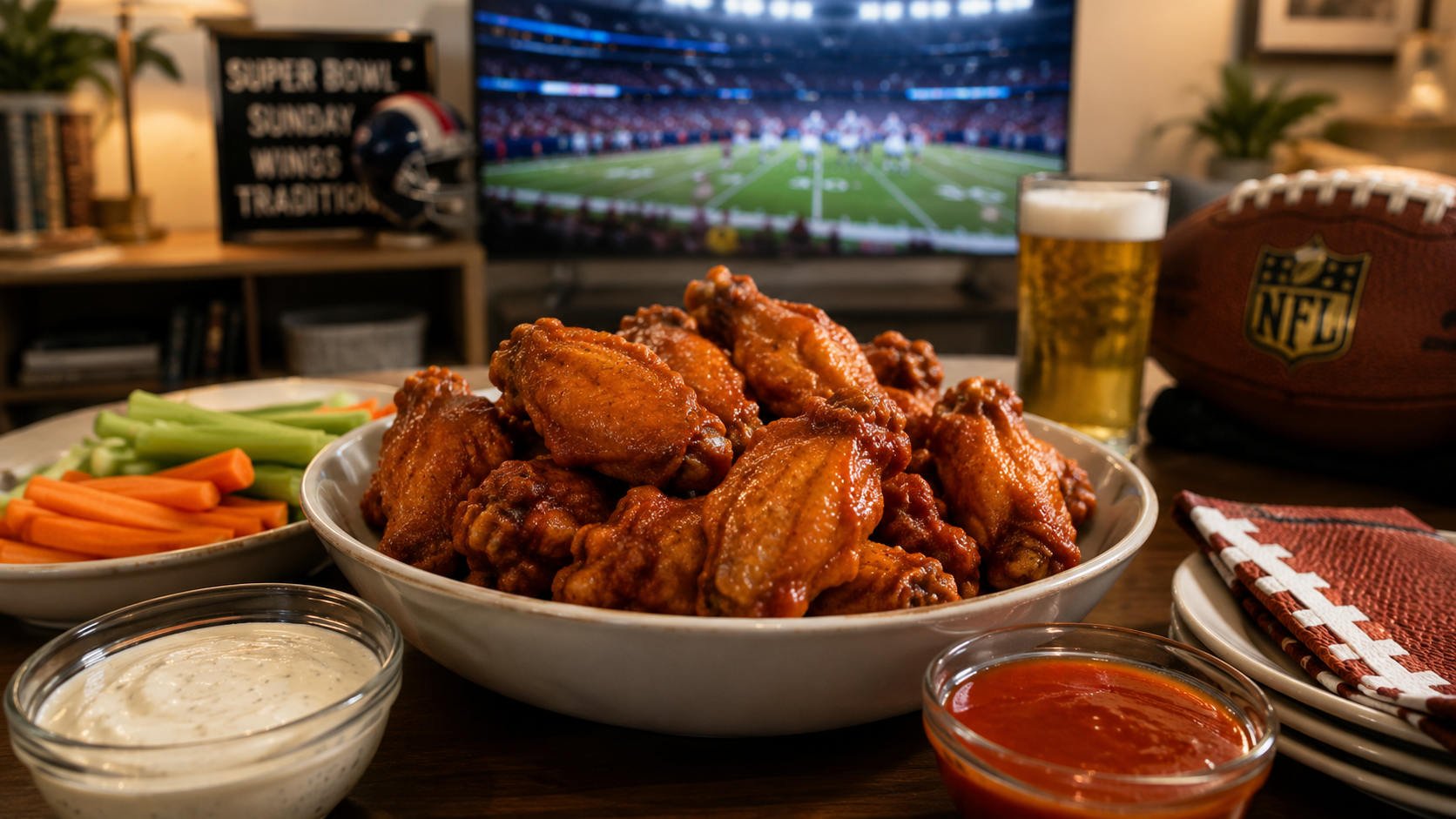
Boneless Wings Are Chicken Nuggets in a Witness Protection Program
Now we must address the boneless wing, because apparently America cannot enjoy anything without filing a loophole.
The USDA describes boneless wings as commonly being made from chunks of breast meat cooked in a similar fashion to wings.
So no, boneless wings are not wings. They are chicken nuggets with better marketing and a tiny fake mustache. That does not mean they are bad. It means they are lying. They are the LinkedIn profile of chicken.
Bone-in wings, meanwhile, come with labor. You must navigate cartilage, tendon, sauce, bone, and personal shame. This makes them feel earned, which is important because Americans enjoy food more when it comes with a minor obstacle course.
The Sauce Turns Wings Into a Personality Test
The wing itself is only the platform. The sauce is where people reveal their damage.
Buffalo people want tradition and pain. BBQ people want sweetness and plausible deniability. Lemon pepper people want everyone to know they have taste. Garlic parmesan people want to attend the Super Bowl party but emotionally remain at an Olive Garden. Mango habanero people enjoy danger but only if it comes with fruit.
Then comes the ranch versus blue cheese war, a conflict with no winners, only louder uncles.
The sauce variety is part of the ritual. Wings let one food become many foods, like a buffet for people who do not want to admit they are eating the same thing for four hours.
The Chicken Wing Industry Prepares Like It’s Going to War
Super Bowl wing demand is not some cute little bump. In its 2026 report, the National Chicken Council said chicken wing units surged 19.8% year over year during the playoff window, while dollar sales rose 11.4% versus the prior period. It also said restaurants, bars, and supermarkets had been stocking up in advance of the big game.
This is why ordering wings at 5:45 p.m. on Super Bowl Sunday is an act of touching faith. That poor restaurant is not “running a little behind.” It is fighting the Battle of Saucy Gettysburg behind the counter.
Useful tip: order early, reheat smartly, and stop acting shocked that the wing place is busy during the one annual holiday dedicated to wing annihilation.
How to Serve Super Bowl Wings Without Creating a Crime Scene
A few practical rules, because even chaos deserves management.
Order or cook more than you think you need, but not so much that your fridge becomes a poultry mausoleum. Keep sauces on the side if you plan to reheat; sauced wings go soggy faster than a motivational quote in a group chat. Use the oven or air fryer to revive crispness instead of microwaving them into rubbery regret.
Also, do not leave wings sitting out for the entire game like they are decorative throw pillows. USDA says Super Bowl foods such as chicken wings, pizza, sliders, and chili should not sit at room temperature for more than two hours; hot foods should stay at 140°F or above, cold foods at 40°F or below, and reheated meat or poultry should hit 165°F. USDA also says chicken wings should be checked with a food thermometer, and if one wing is under 165°F, the whole batch should keep cooking.
Translation: bacteria do not care that it is third-and-long.
Serve wings in batches. Put out real napkins. Add wet wipes unless you want every remote control in the house to become buffalo-scented evidence. Provide a bone bowl, because making guests build a tiny skeleton mountain on their plates is how civilizations collapse.
The Super Bowl Wing Ritual Is Really About Shared Excess
The reason wings became a national Super Bowl ritual is not just flavor. It is behavior.
Wings match the event. Football is stop-and-start. Wings are stop-and-start. The game has quarters. The tray has rounds. The party has cheers, groans, commercials, halftime debates, and one person who cares far too much about squares. Wings fit into all of it without demanding attention for too long.
They are loud food for a loud day. They are casual enough for the couch, abundant enough for a crowd, and messy enough to make the whole thing feel like an occasion.
That is the real magic. The Super Bowl turns chicken wings into a national ritual because wings are not just eaten. They are gathered around. They are debated. They are ranked. They are dipped. They are stolen from the last tray by someone pretending to “just grab one more.”
The game crowns a champion. The commercials crown whatever brand spent $8 million to make a horse sad. But the wings win every year.
Because long after the confetti falls, America remembers the important things: the score, the halftime show, and whether some monster put the empty ranch cup back on the table like society has no laws.