Why Instacart Changes What People Buy at the Grocery Store
The old grocery store was a fluorescent maze designed to make you enter for milk and leave with cereal, candles, discount shrimp, and a seasonal cookie shaped like a ghost with self-esteem issues.
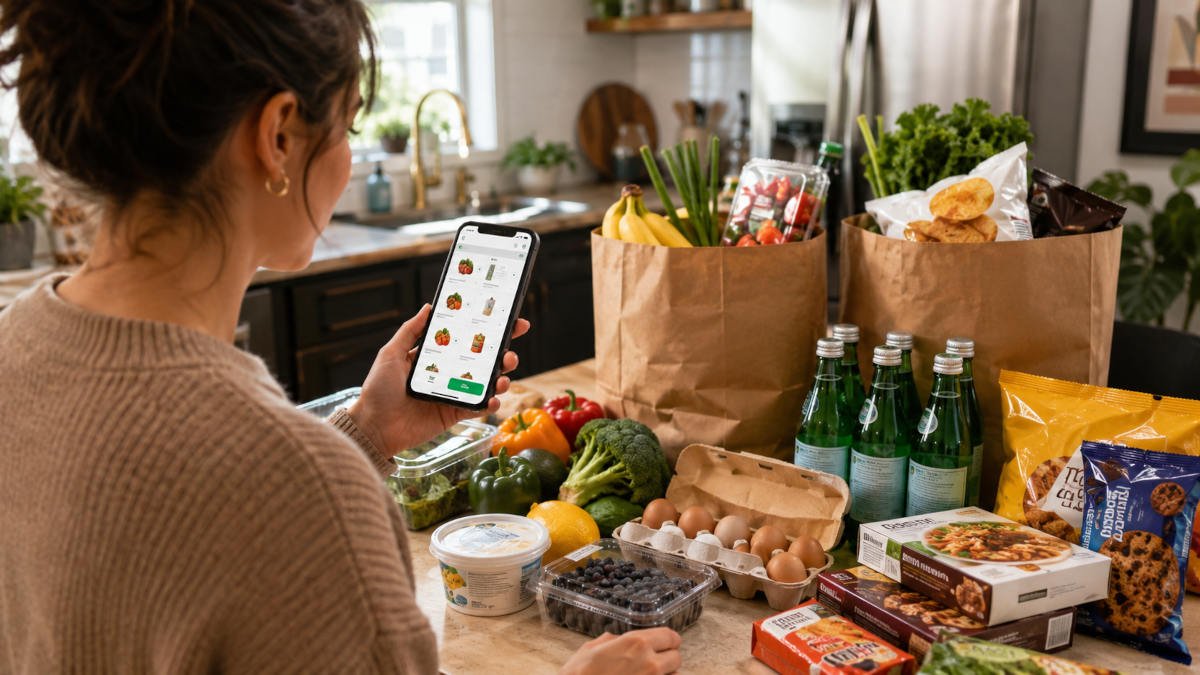
Instacart changed the maze. It took grocery shopping out of the aisle and shoved it into a search bar, where your cart is less “wandering human with cravings” and more “tired raccoon clicking Buy Again while standing in the kitchen realizing dinner is still somehow its responsibility.”
This matters because Instacart does not merely deliver groceries. It changes the entire decision environment. The aisle becomes a grid. The endcap becomes an ad slot. The friendly little “remember this?” button becomes your new personality. The cart stops being a cart and becomes a behavioral archive with bananas in it.
And yes, bananas are apparently very important here. Instacart’s 2025 Economic Impact Report says its three most-purchased items are bananas, milk, and eggs, which is a grocery list so basic it could be printed on the flag of Suburbia. Instacart also says it has powered more than 1.5 billion orders and serves more than 25 million families and individuals across the U.S. and Canada.
Instacart Changes Grocery Shopping by Turning Aisles Into Search Results
In a physical grocery store, you browse. You drift. You pass the bakery and suddenly believe you are the kind of person who needs eight croissants “for the week,” despite having the impulse control of a raccoon in a French airport.
On Instacart, you search. “Milk.” “Bananas.” “Chicken.” “Something for dinner that does not require becoming a better person.” That shift matters. Search makes shopping more direct, more repeatable, and more dependent on whatever the app shows first.
Instacart is not some tiny side quest anymore. The company says it partners with more than 1,800 retail banners, supports delivery and pickup from nearly 100,000 stores across North America, works with about 600,000 shoppers, and offers advertising services that connect CPG brands with consumers at the point of purchase.
That is not just grocery delivery. That is a giant digital grocery switchboard deciding which peanut butter gets eye contact.
“Buy It Again” Turns Your Grocery Cart Into a Copy Machine
The most powerful button in online grocery is not “checkout.” It is “buy it again,” also known as “please reconstruct last Tuesday because I am emotionally unavailable.”
A Cornell University study of nearly 2 million shopping trips found that Instacart baskets are more repetitive than in-store carts. Online basket variety was about 10% lower than brick-and-mortar baskets within the same household, Instacart trips were 27% more similar to each other than offline trips by category, and overlapping items across successive Instacart trips were more than double those of in-store carts. Researchers pointed to “Buy it again” as one likely reason, because apparently convenience is just a rut with better branding.
This is how Instacart changes what people buy: it makes the past frictionless. Last week’s yogurt becomes this week’s yogurt. The same crackers march back into your cart like they were court-ordered. Your grocery life stops being discovery and becomes a subscription to your own habits.
That can be useful. You do not need to rediscover eggs every week like an exhausted explorer. But it also means the app can quietly turn your cart into a beige little museum of previous decisions.
Online Grocery Shopping Kills Some Impulse Buys
The good news: Instacart can protect you from the grocery store’s stupid little ambushes.
In-store grocery shopping is built around temptation. Checkout candy. Endcaps. Bakery smells. Chips placed at eye level like they paid rent. The frozen dessert aisle calling your name like a haunted dairy chapel.
Online grocery shopping removes a lot of that physical nonsense. A 2021 study comparing online and in-store grocery purchases found that shoppers spent less online on candy, cold or frozen desserts, and grain-based desserts, even though they spent 44% more per transaction and bought more items overall.
Cornell’s Instacart research found a similar tradeoff: Instacart baskets had up to 7% fewer impulse purchases such as candy, baked goods, and chips.
So yes, Instacart may save you from buying a checkout Reese’s because you made eye contact with it while waiting behind a man arguing about coupons. Progress.
But Instacart Invents Digital Impulse Buying, Because Of Course It Does
Do not get smug. The app did not eliminate impulse buying. It just gave it a hoodie and a product carousel.
Instacart’s own ad documentation says sponsored products can appear in search results, Buy It Again pages, Buy It Again carousels, browse pages, and candidate carousels. Translation: the digital grocery shelf is not neutral. It is a tiny auction house wearing pictures of cereal.
That changes what people buy because the app can interrupt intention at exactly the right moment. You search for pasta, and suddenly a sponsored sauce is waving from the algorithmic bushes. You look at your usual yogurt, and a promoted yogurt cousin shows up like, “Hey, abandon your family brand.”
The store used to tempt you with smell, color, and placement. Instacart tempts you with ranking, memory, and sponsored convenience. Same goblin, different cave.
Fees and Minimums Make People Build Weirder Carts
Instacart also changes buying behavior through fees, minimums, and the delicate art of making you add one more item so the order “feels worth it.”
Instacart says delivery fees start at $3.99 for same-day orders over $35, pickup may include a pickup fee, service fees vary, Instacart+ offers $0 delivery fees on eligible orders while service fees still apply, and retailers may set prices on Instacart that differ from in-store prices.
That pricing structure changes carts. A person who needs milk may add bananas, eggs, paper towels, seltzer, and a suspicious emergency brownie mix because the human brain hates paying delivery for one item. The fee becomes a shopping coach, and not a good one. More like a coach who says, “You’re already here, why not add hummus?”
This is how the “minimum order” becomes the modern endcap. It does not shout “buy cookies.” It whispers, “You are $7.43 away from feeling financially rational.”
Substitutions Turn Grocery Shopping Into a Group Project
In a store, if your preferred cereal is gone, you stand there and choose another one like a tragic little adult.
On Instacart, the choice may involve you, the app, the shopper, your past preferences, an automated alert, and a replacement suggestion generated by a machine that does not know your child will treat the wrong granola bar like a constitutional crisis.
Instacart lets customers choose “Best Match,” a specific replacement, or a refund when items are unavailable; the company says shoppers may use replacements approved on past orders, and replacement instructions carry over to future orders. Instacart’s developer documentation also says replacement recommendations are generated using the same machine-learning algorithms that power Instacart Marketplace.
That is not a small detail. Substitutions can introduce new brands, reinforce past substitutions, or punish vague shoppers who thought “any oat milk is fine” and then learned there are apparently 900 oat milks and half of them taste like damp cardboard doing improv.
Useful tip: set replacement rules before checkout. “Best Match” is fine for paper towels. It is less fine for baby formula, pet food, coffee, or the one snack your household has emotionally imprinted on like ducklings with debit cards.
Fresh Produce Gets Weird When Someone Else Picks It
Produce is where Instacart gets psychologically complicated.
People want convenience, but they also want to personally inspect avocados like tiny green real estate investments. FMI’s 2026 grocery shopper research found that 48% of shoppers said they would miss being able to select products if they could not shop in person, and 69% said examining produce up close is something they want from an in-store grocery experience.
Cornell’s Instacart study found Instacart baskets had 13% fewer fresh vegetables. That does not mean online shoppers hate vegetables. It means freshness, trust, ripeness, and selection are harder when your avocado fate is in the hands of a stranger with 14 minutes and fluorescent lighting.
Instacart has tried to address this with item preferences. Its help page gives examples like choosing bananas or avocados by ripeness, because apparently civilization has advanced to the point where we can outsource “slightly green but not a rock” to an app.
Useful tip: be specific with produce. “Ripe today,” “green bananas,” “firm tomatoes,” and “refund if bruised” are better than hoping your shopper can read your fruit aura.
Instacart Makes Shopping More Planned, But Less Curious
A physical grocery trip has accidental discovery built into it. You walk past a new sauce. You see a sample. You remember lentils exist. You panic-buy seasonal popcorn because the bag has a sweater on it.
Instacart makes that discovery harder. Cornell researchers warned that online grocery convenience can create an “echo filter bubble” of repeatedly buying the same items, potentially reducing price sensitivity and product discovery while strengthening existing brands.
That is the quiet power of Instacart. It does not just save time. It narrows the field. You buy what you already buy, from the brands already lodged in your household’s grocery machinery.
For consumers, that can mean fewer dumb purchases. For new brands, it means breaking into the cart becomes harder than getting a toddler to accept a different cracker shape.
Instacart Turns Groceries Into Retail Media
The grocery store used to sell shelf space. Instacart sells digital shelf space. Same capitalism, sleeker pants.
Instacart says thousands of CPG brands use Instacart Ads to connect with consumers online at the point of purchase. Its ads help page describes sponsored products as a way to highlight products on “premium digital shelf space” in high-visibility areas.
This changes grocery buying because discovery is no longer just about what sits at eye level in aisle six. It is about what appears in the search grid, what gets recommended after checkout, what shows up in Buy Again, and what gets couponed into your cart like a tiny sponsored gremlin.
The grocery store shelf used to be physical real estate. Now it is attention real estate. Somehow, cereal has become programmatic advertising. Wonderful. We taught the granola to bid.
Instacart Changes the Meaning of Convenience
Online grocery is no longer a pandemic-era oddity or a luxury for people who cannot bear fluorescent lighting. Brick Meets Click and Mercatus reported that U.S. online grocery sales reached $10 billion in July 2025, up 26% year over year, and that 81 million U.S. households, about 61%, bought groceries online that month.
Instacart’s app listing emphasizes delivery in as fast as 30 minutes, real-time shopper chat, coupons, deals, contactless delivery, pickup, and access to more than 85,000 supermarkets and stores across North America.
That convenience changes categories. People may buy more urgent items, more forgotten ingredients, more heavy things they do not want to haul, and more “I cannot face humanity today” staples. Grocery shopping becomes less of a weekly expedition and more of a drip-feed supply chain for modern domestic failure.
Need onions? Tap. Out of paper towels? Tap. Forgot dinner? Tap. Need ice cream because your inbox committed emotional arson? Tap tap tap.
How to Use Instacart Without Letting the App Adopt You
Instacart is useful. It can save time, help people with mobility or transportation barriers, and make groceries less of a weekly wrestling match with parking lots and carts that steer like injured livestock.
But using it well requires a little resistance.
Review your Buy Again list instead of blindly rebuilding last week’s cart. Your past self was tired and possibly wrong.
Sort by unit price when possible, because digital convenience is where money goes to wear a fake mustache.
Set replacement preferences for anything brand-sensitive, allergy-sensitive, pet-specific, baby-specific, or household-drama-sensitive.
Do not add random cart filler just to feel better about a fee. A $6 snack you did not need is not “saving money.” It is a tiny edible hostage payment.
Check whether your retailer’s Instacart prices match in-store prices. Some do, some do not, and discovering this after checkout is how people develop receipt-based trust issues.
Build in one discovery item per order if you miss browsing. One new vegetable, one new sauce, one new snack. Do not let the app turn your pantry into a beige replay of your own exhaustion.
Why Instacart Really Changes What People Buy
Instacart changes grocery shopping because it changes friction.
It removes the friction of driving, parking, wandering, waiting, and hauling. Lovely. Applause for the carrot app.
But it also removes some forms of discovery, adds new forms of advertising, makes old habits easier to repeat, turns substitutions into semi-automated decisions, and lets fees nudge people into larger or stranger carts.
The grocery store used to manipulate you with smells, displays, and checkout candy. Instacart manipulates you with convenience, memory, search rankings, sponsored products, and the quiet tyranny of “Buy Again.”
That does not make Instacart evil. It makes it grocery shopping with the mask off. The app shows what grocery retail has always been: a battle between what you planned, what you saw, what was easy, what was promoted, what was missing, and what your exhausted little brain could tolerate before dinner.
Instacart did not make people buy differently by accident. It rebuilt the grocery store as software. And software, unlike aisle seven, remembers exactly which crackers broke you last week.