What Hot Ones Reveals About Pain, Celebrity, and Spicy Food Psychology
A celebrity interview used to be a soft little mattress where famous people landed gently, smiled through veneers, promoted a movie, and said their co-star was “like family,” because apparently every film set is a summer camp with better cheekbones.
Then Hot Ones came along and said: what if the mattress were on fire?
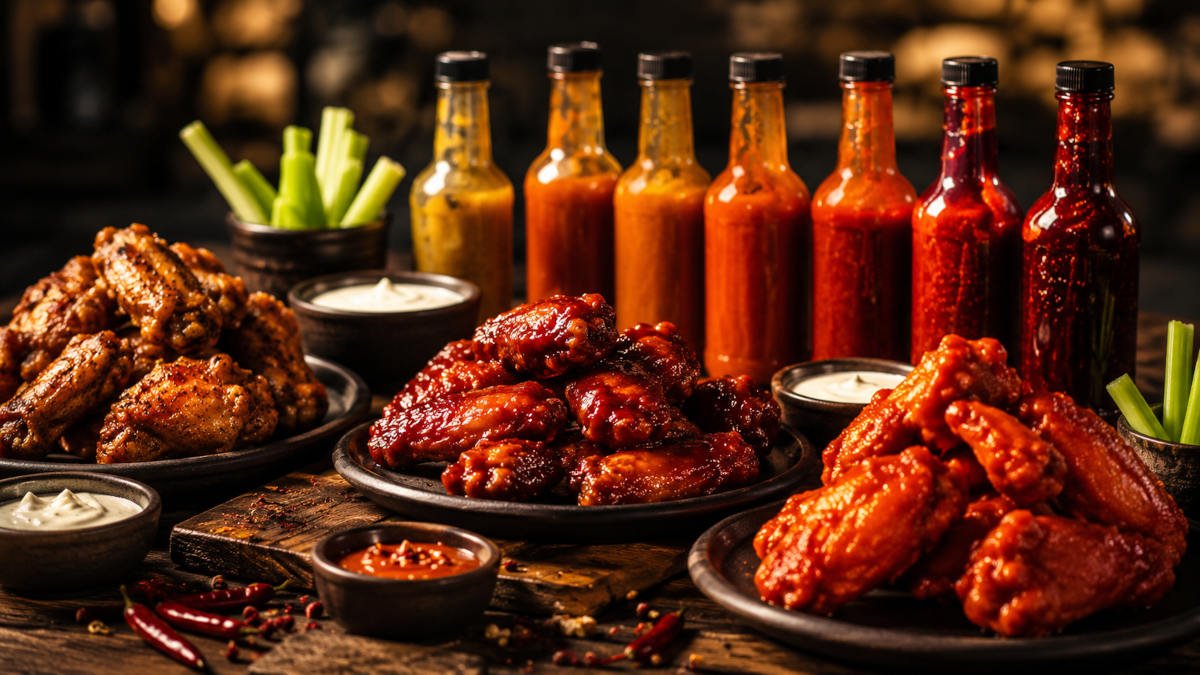
The premise is beautifully stupid and therefore genius. Sean Evans interviews celebrities while they eat progressively hotter wings, moving from manageable sauce to the kind of bottle that looks like it was designed by Satan’s Etsy shop. HEATONIST describes Hot Ones as an Emmy-nominated YouTube series with more than 31 billion minutes viewed, built around Evans asking deeply researched questions while guests eat increasingly spicy wings. It started in 2015, and the format has somehow made hot sauce a more effective interview tool than half the entertainment press.
Hot Ones Turns Pain Into a Lie Detector With Napkins
The magic of Hot Ones is not that celebrities eat spicy food. That alone would be content for toddlers and frat basements.
The magic is that pain interrupts performance. A celebrity can rehearse talking points. They can arrive with anecdotes polished to a lifeless shine. They can say “I’m just so grateful” in 14 different outfits across a press tour. But once Da Bomb enters the bloodstream, the publicist’s talking points start sliding off the table like greased ham.
That is why Hot Ones works. It does not destroy the celebrity mask. It makes the mask sweat.
Reuters described the show as one of the internet’s most popular talk shows, featuring celebrity guests eating increasingly spicy wings while Evans interviews them, with episodes often reaching tens of millions of views. BuzzFeed sold First We Feast, the studio behind Hot Ones, for $82.5 million in 2024, after which the company became independent under founder Chris Schonberger and Evans as chief creative officer.
That is a lot of money for a show whose core innovation is “what if an A-lister briefly became a damp civilian?”
Spicy Food Is Pain Pretending to Be Flavor
Here is the annoying science part, because apparently we cannot simply enjoy watching celebrities suffer without invoking receptors.
Spicy food does not work like sweetness or saltiness. Capsaicin, the compound that gives chili peppers their heat, activates TRPV1 receptors involved in sensing noxious heat and pain. In other words, your mouth is not “tasting hot.” Your mouth is receiving a false fire alarm from a tiny chemical goblin.
This is why Hot Ones reactions are so physical. The sweating, blinking, nose-running, eye-watering, tiny spiritual negotiations with milk—those are not “acting.” That is the body treating a chicken wing like a threat event.
Which is hilarious, because the threat event is served on a white plate by a calm man in a button-down asking about your third album.
Benign Masochism Explains the Whole Dumb Ritual
Psychologist Paul Rozin’s concept of “benign masochism” is basically the secret operating system of Hot Ones. Rozin and colleagues describe it as enjoying experiences the body falsely interprets as threatening once the brain realizes there is no real danger. Chili pepper burn is one of their examples: a negative bodily sensation gets converted into pleasure, mastery, and “I survived the sauce, please respect me now.”
That is Hot Ones exactly. The guest is not actually in danger, unless we count dignity, eyeliner, and digestive scheduling. The pain is contained. The wings are numbered. There is milk nearby. The host is suffering too. The whole thing is a padded torture chamber with brand-safe lighting.
This is the same reason people ride roller coasters, watch horror movies, take cold plunges, or say things like “I actually love running hills,” which is usually just depression wearing compression shorts.
The Celebrity Becomes Human Because Nobody Looks Cool Fighting Hot Sauce
Celebrity culture is built on control. Controlled lighting. Controlled angles. Controlled stories. Controlled vulnerability, which is the most suspicious kind of vulnerability, right behind “authentic brand partnership.”
Hot Ones removes control in a very specific way. The guest is still glamorous. The guest is still promoting a project. But now the guest is also crying into a wing and asking whether their ears are supposed to feel haunted.
That is powerful because embarrassment is relatable. Not scandalous embarrassment. Not career-ending embarrassment. Just ordinary bodily betrayal. The kind every person understands from eating something too hot and immediately realizing they have become a plumbing system with opinions.
Vanity Fair has described Hot Ones as a show that breaks down guests’ inhibitions, helped by Evans’s deep research and the discomfort of the wings. That is the entire celebrity value proposition: fame walks in, mucus walks out, and somehow everyone loves the person more.
Sean Evans Is the Calm Nurse in the Pepper Hospital
The show would not work if Evans acted like a prank-show goblin. He does not cackle. He does not perform cruelty. He remains composed, informed, and weirdly soothing, like a flight attendant on a plane made of habaneros.
That matters. The guest is being challenged, not ambushed. Evans goes up the mountain with them. He eats the wings too, which turns the interview from “watch this famous person suffer” into “watch two people share a controlled disaster.”
The result is strangely intimate. A celebrity who has given 5,000 interviews suddenly sees a host who has done homework and is also willing to chemically sandblast his own face. That creates trust. Or at least the spicy-food version of trust, which is two people silently agreeing that neither one will mention the nose sweat unless it becomes unavoidable.
Shared Pain Creates Instant Bonding, Because Humans Are Weird Little Campfires
There is research for this too, naturally, because psychologists saw suffering and said, “Can we put this in a lab?”
A 2014 study titled “Pain as Social Glue” found that shared painful experiences increased perceived bonding among strangers and increased cooperation in an economic game. One of the experiments even used hot chili peppers to induce pain.
This helps explain why Hot Ones can feel less like an interview and more like a tiny initiation ritual. Evans and the guest are not just talking. They are enduring. The wings become stations of suffering. By the end, the celebrity has not merely answered questions. They have completed a dumb little pilgrimage across Mt. Scoville, sponsored by napkins.
That is also why fans like watching it. The audience gets secondhand participation without the digestive consequences. A perfect American arrangement.
Spicy Food Psychology Is About Risk Without Real Consequences
People who enjoy spicy food are not necessarily tougher, cooler, or better. Let us all relax. Nobody gets into heaven early because they put ghost pepper sauce on eggs.
But research does suggest spicy-food liking has links to personality. A Penn State summary of Byrnes and Hayes’s 2013 study reports that people who enjoy spicy foods show higher sensation seeking and sensitivity to reward, and that personality differences may help drive spicy-food liking and intake.
That tracks with Hot Ones. The celebrity is not just eating wings. They are publicly accepting a risk. A small risk, sure, but visible. Can they keep composure? Can they finish? Will they tap out? Will they become a cautionary tale with mascara?
The audience gets a character test disguised as lunch.
The Scoville Ladder Turns the Interview Into a Video Game
A normal interview has no stakes. Hot Ones has levels.
Wing one: charming.
Wing three: still charming, slightly suspicious.
Wing five: bargaining.
Wing eight: face leaving the body.
Wing ten: publicist praying in the corner.
The final sauce, The Last Dab: Xperience, is marketed by HEATONIST as the hottest sauce on Hot Ones, made with Pepper X, a pepper listed at an average of 2,693,000 Scoville units and recognized by Guinness World Records as the world’s hottest chili.
This escalation gives the show structure. It is not just “celebrity answers questions.” It is “celebrity attempts to remain a functioning brand asset while their nervous system files a complaint.”
Why Da Bomb Feels Like the Villain Even When It Is Not Always the Hottest
Every Hot Ones fan knows the real villain energy often arrives before the finale. Da Bomb is notorious because heat is not just about Scoville numbers. It is also about flavor, bitterness, extract burn, texture, expectation, and the emotional trauma of realizing something named “Beyond Insanity” was not being playful.
This is another spicy-food psychology lesson: pain is contextual. If a sauce tastes good, people tolerate the burn better. If it tastes like a battery was raised in a haunted basement, the burn becomes personal.
That is why “hot” alone is not the same as enjoyable. Good spicy food has flavor, timing, and balance. Bad spicy food is just a chemical HR violation.
Milk Is the Show’s Emotional Support Beverage
There is a reason guests reach for milk instead of water, besides the fact that water against capsaicin is basically bringing a tiny flute to a house fire.
A Penn State food science report notes that milk can ease capsaicin burn, and newer research suggests protein content matters, not just fat. Full-fat milk was not more effective than fat-free milk in controlled studies, while higher-protein milks performed better.
This is useful for viewers attempting their own little household version of Hot Ones, which is always how you discover your friends fall into two camps: “fun dinner party” and “guy who brought extract sauce like a liability waiver with teeth.”
Useful tip: keep dairy or another protein-containing cooling option nearby, do not rely on water, and maybe avoid turning your kitchen into a pepper-based emergency drill.
Hot Ones Exposes Celebrity PR by Giving It Indigestion
The best thing Hot Ones reveals about celebrity is that perfection is boring. We say we want polish, but we actually want cracks. Not destruction. Not cruelty. Just enough chaos to prove a famous person still has a body.
The format lets celebrities promote projects while seeming less like walking press releases. It is still marketing, obviously. Let us not be adorable. The guest is there because something is coming out, and the show is there because attention can be monetized. But Hot Ones makes the transaction feel honest because the celebrity pays a small physical toll.
The toll is not money. It is sweat, tears, hiccups, and the temporary loss of media training.
The Show Also Turned Pain Into a Consumer Product
The funniest part is that Hot Ones did not just popularize spicy interviews. It turned the spicy suffering into merchandise. Fans can buy sauces, lineups, wing packs, and branded heat at home. HEATONIST says fans can shop the full Hot Ones sauce lineup, and it describes itself as the show’s official hot sauce partner.
That is capitalism at its most elegant and stupid: watch a celebrity suffer, laugh, then pay $22 to suffer privately in your apartment.
The show made pain aspirational. Not serious pain. Not medical pain. Recreational pain. Pain with packaging. Pain with a label. Pain you can put in a gift basket for your brother-in-law because you do not know his hobbies and resent him slightly.
How to Eat Spicy Food Without Becoming a Performance Idiot
The sane lesson from Hot Ones is not “eat the hottest thing possible.” That is how adults become YouTube warnings with eyebrows.
The useful lesson is controlled challenge. Try heat gradually. Eat real food with it, not just sauce on a spoon like a divorced wizard. Avoid ultra-hot extract sauces unless you know what you are doing. Stop when your body is clearly sending Morse code from the bathroom future.
Also, do not confuse tolerance with taste. If a sauce has no flavor besides “emergency,” it is not cuisine. It is pepper hazing.
What Hot Ones Really Reveals
Hot Ones reveals that pain is one of the fastest routes to authenticity, or at least the performance of authenticity. It reveals that celebrities become more likable when the machinery breaks down a little. It reveals that spicy food is not just flavor but chemistry, psychology, status, risk, ritual, and crowd-friendly suffering.
It also reveals that humans are ridiculous. We enjoy pain when it is safe. We bond through discomfort. We trust famous people more when they cry from sauce. We watch a calm man ask Oscar winners deeply researched questions while both of them eat increasingly aggressive chicken, and we call it culture.
And honestly? Fine.
There are worse media ecosystems than one built around preparation, vulnerability, shared suffering, and hot sauce. At least Hot Ones makes the celebrity earn the promo plug. Not with scandal. Not with humiliation. With a wing, a dab, a bead of sweat, and the ancient human question: can you keep talking while your mouth believes it has entered Hell’s break room?