What Shohei Ohtani Reveals About Baseball Food and Superstar Routine
Some athletes have routines. Shohei Ohtani appears to have built a private monastery where the monks worship sleep, rice, swing mechanics, hydration, and the sacred doctrine of “please stop asking me how one human does two jobs better than most teams do one.”
Ohtani is not just a baseball player. He is a logistics problem with a helmet. He hits, pitches, rehabs, recovers, travels, studies, sleeps, and somehow still looks less stressed than a man trying to order one hot dog at Dodger Stadium. His existence makes baseball food look different. Not just as fan food, not just as stadium food, but as the fuel system behind a sport that used to pretend sunflower seeds and vibes were sports science.
Shohei Ohtani Turns Baseball Food Into Performance Infrastructure
Baseball has always had food mythology: hot dogs, peanuts, beer, nachos in a plastic helmet large enough to shelter a family of four. Lovely. Patriotic. Nutritionally, a haunted carnival.
But Ohtani belongs to modern baseball, where the player’s meal is not “whatever is closest to the clubhouse couch.” MLB has been documenting the sport’s shift away from fried foods and soda in clubhouses, with teams treating nutrition as another small competitive edge instead of a decorative salad nobody touches.
That is the Ohtani lens: food is not romance. It is preparation. It is recovery. It is maintenance for a body asked to throw baseballs like a railgun and then hit them into another zip code.
The Two-Way Workload Makes Meals Boringly Important
A normal baseball player has a routine. Ohtani has a spreadsheet with cleats.
The Dodgers have been managing his two-way workload carefully in 2026, with MLB.com noting that this is his first full season as a two-way player since 2023 and that the team has sometimes kept him out of the hitting lineup on pitching days to reduce the load. Dave Roberts described the sustainability question as “not an exact science,” which is manager-speak for “we are flying a unicorn through a wind tunnel.”
This is why baseball food matters. A pitcher’s day and a hitter’s day are not the same day. A hitter needs repeatable energy and timing. A pitcher needs fuel without feeling like his stomach is hosting a bowling tournament. Ohtani has to solve both, because apparently being historically annoying to opposing teams was not enough.
Reuters gave a neat little recent example of the absurdity: on May 21, 2026, Ohtani homered on the game’s first pitch and then threw five scoreless innings against the Padres. That is not a box score. That is a human body filing for workers’ compensation.
The Rice-Bowl Legend Explains the Ohtani Food Myth
Ohtani’s food lore includes the famous high-school rice story: reports say he ate up to 10 bowls of rice a day while trying to add strength to a tall, skinny frame.
This is the kind of fact the internet loves because it sounds simple. Eat rice, become demigod. Terrific. That should work great for everyone, especially the guy reading this on his couch with a delivery app open and the hamstring mobility of a folding chair.
The real lesson is not “eat 10 bowls of rice.” The lesson is that elite athletes eat for a job. Calories are not moral points. Carbs are not tiny criminals. Food is matched to output. A teenage Ohtani trying to build mass and survive serious training needed fuel. A desk worker copying that plan would mostly become a confused rice silo with Slack notifications.
Useful tip: copy the principle, not the portion. More training requires more food. Less movement requires less. Revolutionary stuff, I know. Please alert the wellness influencers.
Ohtani’s Sleep Routine Is Basically Part of His Diet
Ohtani’s most famous “food” habit may not be food at all. It is sleep, because the man treats rest like a performance-enhancing religion.
Sports Illustrated reported that Ohtani told Kyodo News, “Sleep is my top priority,” and that he has aimed for 10 hours at night plus a two-hour pregame nap. The same piece noted that he uses specialized sleep equipment and that Roberts said Ohtani wastes no time in his preparation.
This matters because food without recovery is just expensive chewing. You can eat the perfect pregame meal, hydrate like a cactus with a therapist, and still perform terribly if your sleep schedule looks like it was assembled by raccoons.
Ohtani reveals the unglamorous truth of superstar routine: greatness is not just highlight clips. It is eating, sleeping, repeating, and refusing to turn your body into a trash compactor with abs.
What Baseball Players Should Actually Eat Before Games
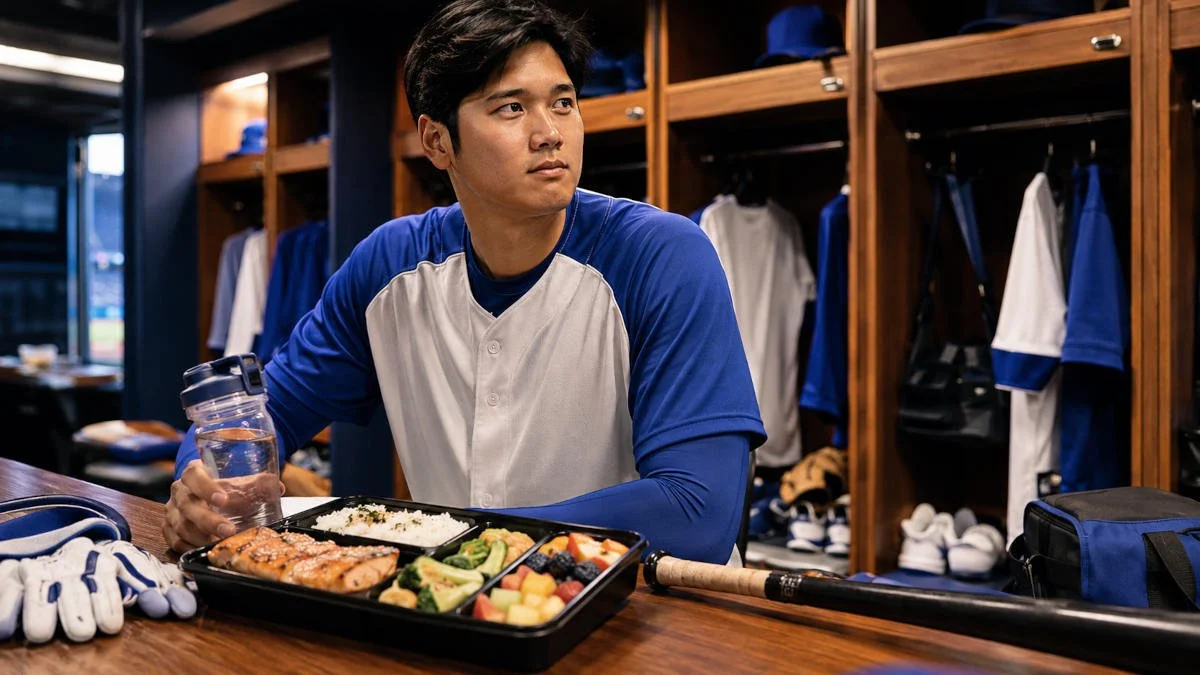
MLB’s own nutrition guidance is refreshingly unsexy, which is how you know it might be useful. It recommends a pregame meal three to four hours before activity, with half the plate made up of healthy carbs, a quarter lean protein, and a quarter fruits and vegetables. It also warns against experimenting with new foods before games and says to avoid fried, cheesy, high-fat sides that can weigh athletes down.
Translation: before baseball, do not eat like a county fair is daring you to live.
For regular humans, the Ohtani-adjacent version is simple: rice or pasta, lean protein, fruit, vegetables, water, and enough time to digest. Not a chili dog 11 minutes before first pitch. Not garlic fries inhaled in the parking lot. Not “I had coffee and panic,” the official breakfast of adult men everywhere.
Ohtani Changed Stadium Food Too, Because Of Course He Did
Ohtani does not just affect what players eat. He affects what fans want to eat while watching him.
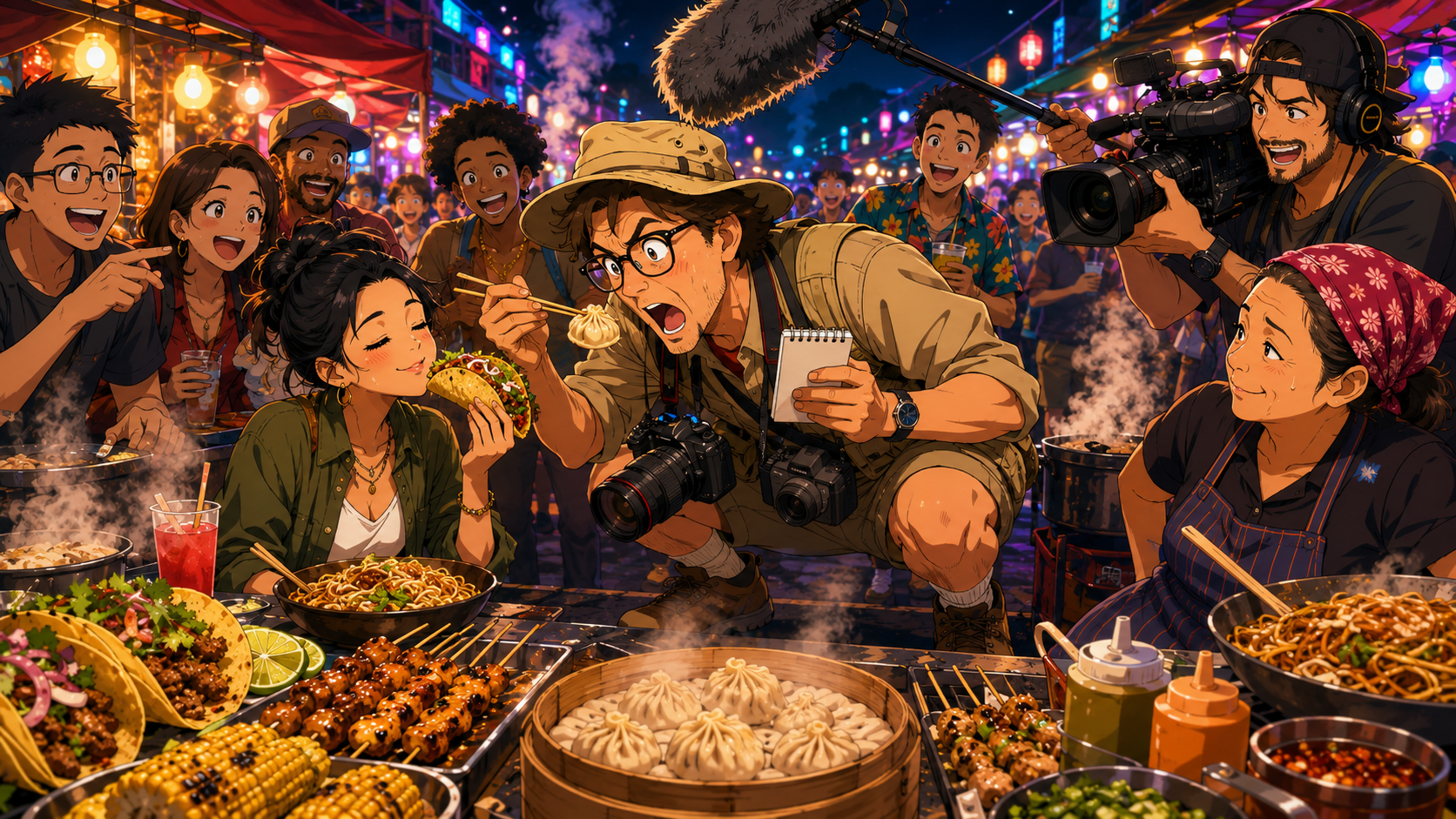
Reuters reported that Japanese fans flocking to Los Angeles after Ohtani joined the Dodgers helped drive more Japanese-themed merchandise and cuisine at Dodger Stadium. LAist also reported that takoyaki, the Japanese octopus snack, arrived at Dodger Stadium through a deal with Tsukiji Gindaco, explicitly connecting the move to Ohtani’s off-field influence.
The official Dodgers concessions directory now lists assorted takoyaki and Suntory draft beer at Tsukiji Gindaco inside the ballpark, sitting there alongside burgers, tacos, garlic fries, nachos, and the usual stadium foods that look like they were designed by a raccoon with a minor in civil engineering.
That is the Ohtani effect in edible form: Japanese baseball culture folding into Los Angeles baseball culture, one octopus ball at a time.
Team Meals Are Part of Superstar Routine
Ohtani also reveals that food is not only fuel. It is team culture.
During the Dodgers’ 2025 trip to Japan, MLB.com reported that Ohtani helped organize a sushi dinner for teammates. Michael Conforto called it a team-bonding experience, and Dave Roberts said every player he talked to described it as the best experience they had ever had.
This is the part people miss when they reduce athlete food to macros. A meal can be chemistry. It can be hospitality. It can be a superstar quietly saying, “Welcome to my world,” without making everyone sit through a PowerPoint called Japan: A Brief Introduction, Please Clap.
Food builds routine, but it also builds belonging. Even in a sport where everyone is technically competing against failure, arbitration, aging, and the Cincinnati Reds on a Tuesday.
The In-N-Out Detail Keeps Ohtani Human
Naturally, fans also love the relatable food trivia. Ohtani has been linked repeatedly with In-N-Out as a favorite American fast-food stop, because even baseball’s most advanced life-form apparently understands the emotional architecture of a good burger.
This is important, not because burgers unlock MVP seasons—please do not start a podcast about this—but because it punctures the myth that elite routine means joyless purity. Great athletes do not necessarily live on steamed chicken and purified sadness. They manage the whole system.
The difference is that Ohtani eating a burger is probably a controlled indulgence. You eating three burgers because your fantasy team blew a save is more of a personal weather event.
What Ohtani Reveals About Baseball Food
Ohtani shows that baseball food now has two menus.
One menu is for fans: Dodger Dogs, takoyaki, beer, nachos, garlic fries, souvenir cups, and the ancient human belief that food tastes better when eaten outdoors while yelling at an umpire.
The other menu is for players: carbohydrates, lean protein, hydration, recovery meals, sleep, timing, digestion, and whatever boring science keeps a 162-game season from turning the body into used luggage.
Ohtani lives at the extreme edge of that second menu. His routine is not cute. It is not casual. It is not “rise and grind,” the slogan of people who sleep four hours and make terrible decisions on LinkedIn. It is disciplined, repetitive, and built around the idea that performance is not one thing. It is everything.
How Normal People Can Use the Ohtani Lesson Without Becoming Insufferable
Do not try to eat like Shohei Ohtani unless you also plan to pitch, hit, run, lift, recover, and be internationally famous before dinner.
Steal the useful parts instead. Eat enough for your activity. Put carbs near training or games. Include protein for recovery. Drink water before your body has to send a formal complaint. Avoid new, heavy, greasy foods right before performance. Sleep like it matters, because it does, despite what every productivity goblin on the internet keeps screeching.
And stop treating food as either magic or sin. Sometimes rice is fuel. Sometimes sushi is team bonding. Sometimes a burger is just a burger. Not every meal needs to be optimized until it loses the will to live.
Ohtani Makes Baseball Food Look Serious Again
Shohei Ohtani reveals that modern baseball food is no longer just hot dogs in the stands and sunflower seeds in the dugout. It is fuel, culture, recovery, identity, tourism, team-building, and routine.
He also reveals the deeply annoying truth that greatness is mostly boring habits performed with insane consistency. Eat. Train. Sleep. Repeat. Adjust. Recover. Do it again. Then hit a leadoff homer and throw five scoreless innings because apparently the rest of us needed to feel underachieving today.
Ohtani’s food world is not one meal. It is a system. The rice bowls, the sleep, the clubhouse nutrition, the sushi dinner, the takoyaki at Dodger Stadium, the occasional burger—all of it points to the same thing.
Baseball food used to mean what fans ate while watching the game. Ohtani reminds us it also means what makes the game possible.