
Why Everyone Should Work in a Restaurant At Some Point in Their Life
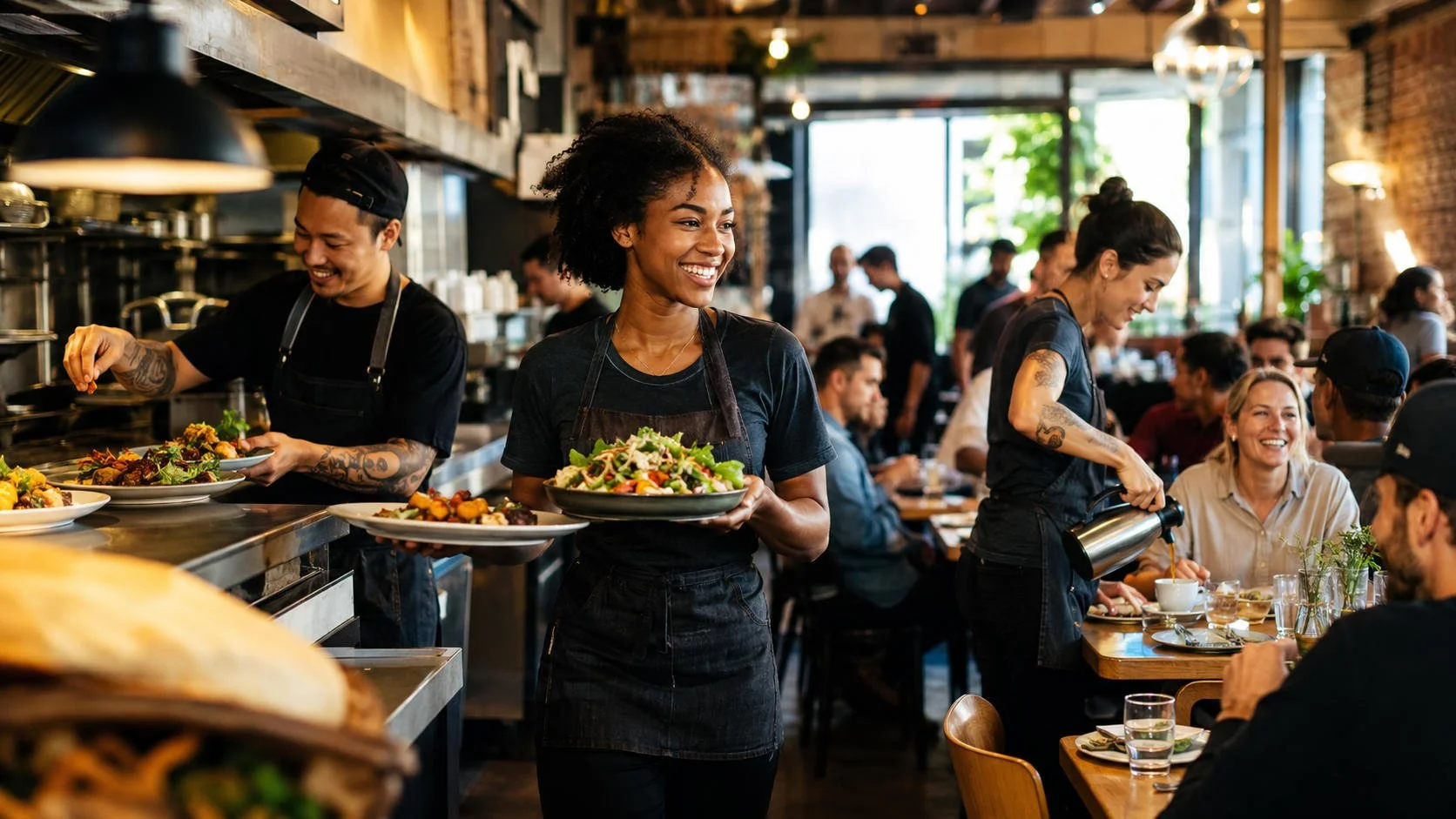
Everyone should work in a restaurant at some point in their life. Not forever. This is not a curse from an angry soup witch. Just long enough to understand what it feels like to carry six plates, remember three substitutions, dodge a child lying on the floor like a tiny lawsuit, and still smile at someone who says, “Actually, I wanted the dressing on the side.”
Restaurant work is one of the fastest ways to become less useless as a person. It teaches patience, speed, humility, teamwork, emotional control, and the ancient spiritual practice of not screaming when someone asks whether the gluten-free pasta is “really gluten-free” while holding a breadstick.
Restaurant Work Teaches You How Hard “Easy” Jobs Actually Are
People love calling restaurant jobs “easy” because they have never had to refill Diet Coke for a table that treats carbonation like a human right. Serving food looks simple from the dining room because the chaos is hidden behind swinging doors, forced smiles, and a kitchen printer screaming orders like it has seen war.
Work one dinner rush and you learn immediately: this is not easy. This is choreography performed on wet tile while hungry strangers evaluate your soul.
You learn how many things can go wrong at once. A ticket gets lost. A steak comes out wrong. Table 12 wants more napkins. Table 4 is ready to order but somehow still has “just one quick question” that involves reconstructing the entire menu. Someone spills ranch. Someone always spills ranch. Ranch is less a condiment and more a recurring workplace hazard.
After one restaurant shift, you stop saying “unskilled labor,” because you realize the skill is making disaster look like service.
It Makes You a Better Customer Immediately
The fastest way to improve the dining public would be mandatory restaurant work, followed by a written apology to every server they have ever disappointed.
Once you have worked in a restaurant, you stop doing the little crimes. You stop stacking plates into a greasy Jenga tower with silverware stabbing out like a medieval trap. You stop snapping your fingers. You stop asking for seven separate checks after everyone has ordered three cocktails and shared appetizers like financially reckless raccoons.
You learn to say everything you need at once instead of making the server take six separate pilgrimages to the kitchen because you remembered ketchup, then lemons, then extra ranch, then a side plate, then “actually can we get more bread?”
You become the kind of customer who knows what they want, says please, tips properly, and does not act like the server personally raised the price of salmon.
A miracle. A citizen. A person allowed indoors.
Restaurants Teach Teamwork Better Than Any Office Retreat
Corporate team-building exercises are mostly adults in branded polos pretending a trust fall will fix management. Restaurant teamwork is real because if one person fails, everyone suffers immediately and loudly.
The host seats too many tables at once, and the server drowns. The server forgets to ring in an order, and the kitchen gets ambushed. The kitchen falls behind, and the dining room becomes a theater of sighing. The dishwasher goes down, and suddenly the entire restaurant is one dirty fork away from becoming a historical collapse.
You learn that no job is beneath you because every job matters. Run food. Clear plates. Fill ice. Sweep. Restock. Help the new person. Grab extra napkins. Do the small thing before it becomes the big thing wearing flames.
Restaurant work teaches teamwork because there is no time to make a slideshow about teamwork. There is only a dinner rush, a printer, and the shared understanding that everyone is going to survive this together or perish under a mountain of side salads.
It Builds Emotional Control, Unfortunately
Restaurant work teaches emotional control in the most annoying way possible: by forcing you to be polite to people who are wrong with confidence.
A customer will complain that their medium-rare burger is “too pink.” Another will insist they ordered no onions when everyone at the table heard them order extra onions, because reality is apparently a group project they have opted out of. Someone will ask if the soup is hot. Not spicy. Temperature hot. At a restaurant. Where soup lives.
And you will smile.
Not because you are weak. Because you are now a professional. You learn to pause before reacting. You learn to solve the problem without adopting the customer’s panic. You learn the difference between urgency and drama, which is a distinction half the adult population still has not mastered.
This skill follows you everywhere. Jobs. Relationships. Family holidays. Airports. Once you have handled a furious brunch table waiting on pancakes, a passive-aggressive email from accounting loses some of its power.
It Teaches You What Time Actually Feels Like
Office time is fake. Restaurant time is real.
In an office, 15 minutes can disappear into a meeting about scheduling another meeting, because apparently civilization wanted to become a maze. In a restaurant, 15 minutes is enough time for three tables to sit, two entrées to die in the window, one toddler to weaponize crayons, and a bartender to ask why nobody ran the drinks.
You learn speed. You learn prioritization. You learn that “I’ll do it in a second” is how small problems become large problems with melted cheese on them.
Restaurant work gives you a built-in triage system. What needs doing now? What can wait? What can be handled while walking somewhere else? Why are you going to the back empty-handed like some kind of decorative pedestrian?
This is one of the most useful life skills there is: moving with purpose. Not frantic. Not chaotic. Purposeful. Like a person who knows the ice machine is not going to refill itself through positive thinking.
It Makes You Respect Food More
When you work in a restaurant, you see how much labor goes into one plate of food before it lands in front of someone who says, “Can I get this remade? I thought I liked mushrooms.”
You see prep cooks chopping, portioning, labeling, cleaning, lifting, organizing, and doing the kind of repetitive work that makes dinner possible. You see line cooks standing in heat, calling orders, juggling timing, fixing mistakes, and somehow producing ten entrées at once while everyone else is asking where the fries are.
You see waste, too. Plates scraped into bins. Untouched food tossed because someone ordered with the confidence of a king and the appetite of a decorative bird. After that, you stop treating food like a casual background prop.
Restaurant work teaches that food is not just food. It is labor, timing, supply, skill, cost, and cleanup. Also sauce. So much sauce. An amount of sauce that suggests humanity may have lost its way.
You Learn Money Lessons Fast
Restaurant work teaches you the relationship between effort and money in a way no budgeting app ever will.
You learn that a good night can change your mood and a bad night can make you question your entire economic identity. You learn that generosity matters. You learn that tipping is not an abstract debate people have online while being weirdly proud of stiffing someone over iced tea.
You learn how much small choices cost: comped meals, wasted food, broken glasses, forgotten orders, slow service, poor planning. You see the business side of hospitality, where every plate has a price and every mistake has a ripple effect.
And if you make tips, you learn the special math of leaving a shift with cash and thinking you are rich, then remembering rent exists like a villain with excellent timing.
It Gives You Humility, Whether You Wanted It or Not
Restaurant work is a humility machine. It strips away delusion quickly.
You may think you are smart. Great. Can you remember who asked for no tomato, extra aioli, dressing on the side, one burger medium, one burger medium-well, two waters no ice, a Diet Coke, and “whatever IPA is least hoppy,” while also pretending not to hear the chef say your name like a threat?
You may think you are patient. Excellent. Can you stay calm when someone waves you over while you are holding hot plates and says, “We’re ready,” only to spend four minutes asking everyone what they want as if the menu was just discovered under their chairs?
You may think you are above certain work. Wonderful. Here is a mop. The bathroom has chosen violence.
Restaurant work reminds you that dignity is not about avoiding hard or messy jobs. Dignity is doing the job well, treating people decently, and not acting like basic kindness is a premium add-on.
It Teaches Communication Without Corporate Nonsense
Restaurant communication has no room for decorative language. Nobody says, “Let’s circle back on the mashed potatoes.” Nobody opens a collaborative document titled Q3 Napkin Alignment Strategy.
You say what needs saying.
“Heard.”
“Behind.”
“Corner.”
“Hot.”
“Table 6 needs refire.”
“86 salmon.”
“Run this now.”
Beautiful. Efficient. Basically poetry, if poetry wore non-slip shoes and smelled faintly of fryer oil.
Restaurant work teaches clear communication because unclear communication causes immediate pain. Someone gets burned. Food gets cold. A table waits. A guest gets the wrong dish. The kitchen gets buried. There is no hiding behind jargon when the calamari is dying in the window.
Everyone Should Experience Serving the Public
Working with the public is one of the great character-building experiences, which is a polite way of saying it introduces you to every flavor of human behavior, including several that should have been discontinued.
Most people are fine. Some are lovely. Some are strange in harmless ways. And some enter restaurants as if the host stand is a border checkpoint into their personal kingdom.
Restaurant work teaches you how to read people. Who needs attention? Who wants to be left alone? Who is celebrating? Who is about to complain? Who thinks “I know the owner” is a personality? Who has had two martinis and is preparing to become a local legend?
That skill is useful forever. You learn faces, moods, timing, tone, and the delicate art of making someone feel taken care of without letting them consume your entire soul like a bread basket with hair.
It Makes You Less Entitled
This may be the biggest reason everyone should work in a restaurant.
Restaurant work destroys entitlement. Not all at once. Slowly. Shift by shift. Spill by spill. Complaint by complaint. Side of ranch by side of ranch.
You realize the world does not revolve around your preferences. You realize people are doing their best under pressure. You realize the person serving you may be exhausted, underpaid, covering for someone who called out, or dealing with a kitchen delay they did not cause.
You stop confusing service with servitude.
That is the lesson many people desperately need. Being a customer does not make you royalty. It makes you a person buying food. Congratulations on this historic achievement. Please sit down and use your napkin.
Tips for Surviving Your First Restaurant Job
Wear good shoes. Not cute shoes. Not “these are fine” shoes. Shoes that understand tile, grease, and regret.
Write everything down until your memory proves it deserves freedom. Your brain is not special. It will betray you the moment someone says “no onions.”
Be nice to the kitchen. Be nice to the dishwasher. Be nice to the host. Be nice to everyone, actually, but especially the people who can save you when your section catches fire metaphorically or possibly literally.
Do not take every rude customer personally. Some people bring their entire broken personality to dinner and expect you to refill it with iced tea.
Ask questions early. Apologize quickly. Move fast. Clean as you go. Never walk anywhere empty-handed. And learn the menu before someone asks you what is in the soup and you panic like soup is a classified substance.
Restaurant Work Stays With You
Even years later, restaurant work rewires your brain.
You notice when a server is overwhelmed. You stack plates neatly, not like a collapsing ceramic crime scene. You tip better. You say “behind” in crowded kitchens that are not even restaurant kitchens. You judge people by how they treat waitstaff, which is correct and should be legally admissible.
You also gain a permanent respect for the people who keep restaurants running. Servers, cooks, dishwashers, hosts, bartenders, bussers, managers, prep teams — all the people turning hunger into an experience while the public asks whether the chicken can be made “less chickeny.”
The Real Reason Everyone Should Work in a Restaurant
Everyone should work in a restaurant at some point because it makes you better at being human.
It teaches you how to work hard, move fast, stay calm, communicate clearly, help your team, respect labor, handle pressure, and treat service workers like actual people instead of background characters in your little dinner movie.
It gives you patience. It gives you humility. It gives you stories. It gives you the ability to spot a nightmare customer from across the room by the way they pick up the menu.
Most of all, it teaches that comfort, hospitality, and a good meal do not appear by magic. They are built by tired people doing skilled work under pressure while smiling at strangers who believe extra lemons are an emergency.
So yes, everyone should work in a restaurant once.
Just long enough to learn respect.
And maybe long enough to understand that when the server says the kitchen is backed up, the correct response is not a sigh, a glare, or a speech about how you “have somewhere to be.”
The correct response is: “No problem. Thanks for letting us know.”
Look at that. Personal growth with fries.