Why Celsius Became the Energy Drink of Fitness Culture
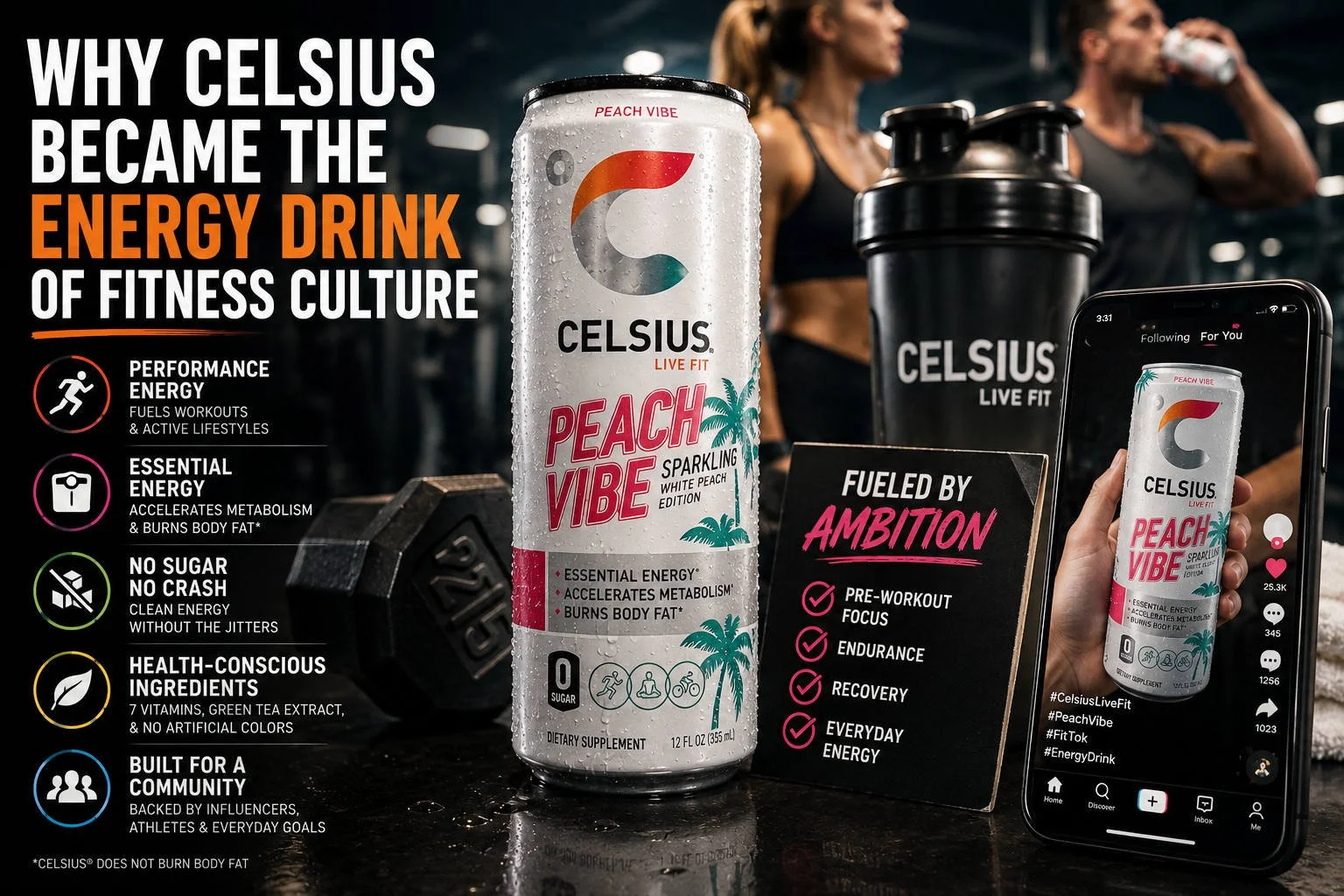
Celsius did not become the energy drink of fitness culture because the liquid inside is brewed by disciplined mountain monks who deadlift at sunrise and whisper affirmations to green tea extract. It became the energy drink of fitness culture because it solved a branding problem with terrifying precision: people wanted stimulant juice, but they wanted it to look like a healthy choice instead of a gas-station dare.
Before Celsius, the energy drink aisle mostly looked like a motocross helmet got into a custody battle with a tattoo shop. Monster, Rockstar, Red Bull, spikes, claws, neon lightning, names that sounded like your stepbrother’s Xbox handle. The category screamed, “I have not slept, but I have punched drywall.” Then Celsius walked in wearing a clean can, fruit flavors, zero sugar, vitamins, green tea, guarana, and the phrase Live Fit, and suddenly caffeine had been allowed into Pilates.
That was the magic trick. Celsius did not sell “energy” like the old guard. It sold permission. Permission to drink an energy drink while pretending you are not the kind of person who drinks energy drinks. Permission to crack open 200 mg of caffeine before leg day and call it wellness. Permission to be jittery, but aesthetically.
Celsius Built Its Identity Inside Fitness Culture
Celsius describes itself in official filings as a functional energy drink company selling products to a broad range of consumers, including fitness enthusiasts. Its flagship CELSIUS line is marketed as a premium lifestyle and energy drink designed to power active lifestyles, and the company says its products are sold through grocery stores, convenience stores, fitness centers, vitamin specialty stores, mass retailers, and e-commerce platforms. In other words, it did not just stumble into gym culture like a lost raccoon with a carbonation problem; it deliberately built the brand there.
The company’s own website goes even harder, calling CELSIUS “your ultimate fitness partner” and saying the drink combines its formula with physical activity. Its science page says six published university studies have been conducted on Celsius and claims the drink has thermogenic properties. That is brand language, not a prescription from Mount Olympus, but it matters because the framing turns a can of caffeine into a workout accessory.
This is how Celsius attached itself to fitness culture’s favorite fantasy: optimization. Not eating. Fueling. Not drinking. Activating. Not being tired because you slept four hours and scroll like a haunted raccoon. No, no. You are “powering your active lifestyle.” Much sexier. Much easier to put on a can.
It Made Energy Drinks Look Less Like a Bad Decision
The old energy drink aesthetic was useful if your target audience was “men who own at least one unnecessarily loud vehicle.” Celsius widened the tent. It looked lighter, cleaner, less aggressive. It had flavors like Kiwi Guava and Mango Passionfruit instead of names that sounded like rejected military operations.
Food Dive reported that Celsius traced its roots to fitness trainers and health clubs, then evolved into a broader lifestyle brand behind its “Live Fit” tagline. It also noted that unlike older energy drink brands that skewed heavily male, Celsius developed a near-even gender split, which opened up a much bigger market.
That is not a small thing. Celsius made the energy drink feel socially acceptable in places where a black-and-green claw can might look like it wandered in from a skate park divorce. Spin class? Celsius. College library? Celsius. Gym bag? Celsius. Office desk next to a sad salad? Celsius. It became energy you could hold without looking like you were about to tailgate a monster truck rally in a parking lot named “Freedom Zone.”
The Caffeine Dose Was Gym-Friendly and Convenient
A standard CELSIUS or CELSIUS Vibe can contains 200 mg of caffeine, while CELSIUS Essentials contains 270 mg. Celsius On-The-Go powders contain 200 mg per packet, and Celsius Hydration powders contain no caffeine.
That 200 mg number is important because it sits in the psychological sweet spot between “coffee replacement” and “legal pre-workout grenade.” The International Society of Sports Nutrition’s caffeine position stand says caffeine has consistently been shown to improve exercise performance at doses of 3–6 mg per kilogram of body mass, with very high doses such as 9 mg/kg associated with more side effects and generally not necessary.
For many adults, one 200 mg can is roughly in the neighborhood of a moderate performance-oriented caffeine dose. Not perfectly, because bodies are not vending machines with hair, but close enough for gym culture to understand the use case immediately: drink can, feel awake, lift things, post story, pretend this was a personality.
Celsius became the neat little can version of pre-workout for people who did not want to scoop neon powder from a tub called WAR BEAST NITRO RAGE 9000 while wondering if their shaker bottle had achieved sentience.
Zero Sugar Gave It the Wellness Halo
Fitness culture loves zero sugar because it sounds disciplined. Never mind that “zero sugar” does not automatically mean “health potion,” but in the modern beverage aisle, it works like a passport stamp from the Republic of Better Choices.
Celsius’ website says its products have no artificial preservatives or flavors, no aspartame, no high fructose corn syrup, and are very low in sodium. The company’s 2025 second-quarter results also tied category demand to sugar-free functional beverages, reporting that the Celsius Holdings portfolio held a 17.3% dollar share of the U.S. ready-to-drink energy category for the 13 weeks ended June 29, 2025, with the CELSIUS brand itself at 11%.
That is the health halo doing its little runway walk. Celsius did not need to be a medical miracle. It just needed to look meaningfully less like soda’s feral cousin. Zero sugar, vitamins, green tea extract, guarana, sleek can, gym language. Boom. Suddenly the energy drink is “functional,” not “I bought this at 11:48 p.m. beside a rotating hot dog.”
Fitness culture adores that distinction. It lets people consume stimulation while narrating it as discipline.
The Brand Understood That Fitness Is Now a Lifestyle Costume
Modern fitness culture is not just exercise. It is clothing, supplements, headphones, water bottles, recovery tools, protein snacks, sleep trackers, gym selfies, meal prep containers, motivational captions, and an alarming number of people saying “grind” while sitting in a leased SUV.
Celsius fit beautifully into that ecosystem because it was portable identity. A can in the cup holder. A can on the treadmill. A can beside the dumbbells. A can in the car before Pilates. It said, “I am the sort of person who is doing something.” What thing? Doesn’t matter. The can is there. The vibe has paperwork.
The company leaned into this explicitly with its LIVE. FIT. GO. campaign in 2025, saying energy drinks had evolved beyond a niche category for athletes and gym-goers into a broader product for people chasing fitness, health, wellness, active lifestyles, professional goals, emotional determination, and everyday achievement. Translation: this can is no longer just for workouts; it is for being alive in a capitalism pressure cooker while trying not to nap in your car.
That is how Celsius escaped the gym without abandoning the gym. It kept the fitness credibility, then expanded “fit” until it included work, errands, ambition, stress, commuting, studying, parenting, and whatever emotional CrossFit people now call “balance.”
Celsius Won the Influencer and Ambassador Game
Celsius did not simply buy shelf space and hope the cans would develop charisma. It pushed itself through people. Brand ambassadors, college reps, athletes, influencers, trainers, campus events, sampling, social content—the sacred machinery of modern consumer desire, where a drink becomes a lifestyle because enough attractive people are seen holding it.
Celsius’ official ambassador page says ambassadors embody a lifestyle dedicated to “Living Fit,” including weekend warriors, certified personal trainers, athletes, and people pursuing a positive, balanced, fit life. It also says social media skills, content creation, community engagement, and active involvement are important to the brand.
Its Celsius University program is even more direct. The company says CELSIUS U launched in 2022, gives college students paid student marketing ambassador roles, and lets them build the brand on campus.
This is how a can becomes normal. Not through one ad. Through repetition in the places where young people already manufacture identity: campus, gym, TikTok, Instagram, group chats, influencer posts, and the deeply spiritual act of handing someone a free beverage before they decide they have always liked it.
College Sports Made Celsius Feel Legit
Celsius also went straight for sports culture. Marketing Dive reported that Celsius expanded its NIL roster in 2024 with six college football players, the “Essential Six,” including Travis Hunter, Dillon Gabriel, Donovan Edwards, Jalen Milroe, Emeka Egbuka, and DJ Uiagalelei. The campaign included TV, social media, retail, campus, and consumer activations, tying the brand further into college sports and Gen Z marketing.
This was not accidental. College sports are perfect for Celsius because they sit at the intersection of performance, youth culture, caffeine dependency, campus life, and merch. A college athlete holding Celsius says, “performance.” A college student holding Celsius says, “I have three assignments, one emotional crisis, and a group project with enemies.” Both audiences understand the product.
Fitness culture does not just want science. It wants association. Athletes. Trainers. High achievers. People with abs and alarm clocks. Celsius attached itself to those people until the drink became part of the uniform.
PepsiCo Distribution Turned Fitness Culture Into Mass Culture
A brand can be cool and still die quietly if nobody can find it. Celsius avoided that fate by becoming extremely findable.
In 2022, Celsius and PepsiCo announced a long-term U.S. distribution agreement covering retail and foodservice channels, with PepsiCo also becoming the preferred global distribution partner for Celsius. Then in 2025, Celsius and PepsiCo strengthened the partnership: Alani Nu moved into the PepsiCo distribution system in the U.S. and Canada, Celsius acquired the Rockstar Energy brand in the U.S. and Canada, and PepsiCo’s ownership in Celsius Holdings increased to about 11% on an as-converted basis.
That is how you go from “gym people know this” to “this thing is in every cooler like carbonated kudzu.” Fitness culture creates the credibility. Distribution creates the habit. Once Celsius was everywhere, it no longer needed to be discovered. It simply waited in the fridge, looking clean and ready to judge your sleep schedule.
The Timing Was Obscenely Good
Celsius rose when several cultural forces were already lined up like caffeinated bowling pins.
People wanted less sugar. People wanted functional beverages. People wanted something that felt healthier than soda and less boring than water. Young adults were exhausted, overstimulated, and increasingly willing to replace meals, coffee, and sometimes common sense with beverages that promised energy. Fitness culture moved from gym corners into everyday clothing, social media, dating profiles, and office identity. The energy drink aisle was ready for a product that looked less like rebellion and more like “wellness-adjacent productivity.”
Food Dive summarized the timing well, saying Celsius matured as consumer interest in better-for-you and functional offerings accelerated, and that the drink fit those categories because it lacked sugar and calories while carrying ingredients tied to workout and energy claims.
Bon Appétit also noted that Celsius resonated with Gen Z partly because its branding diverged from older, male-centric energy drink marketing, because the flavors were more enjoyable, and because young consumers were simply tired. Stunning medical insight there: the youth are exhausted, and the refrigerator has become a pharmacy with bubbles.
The Flavors Made Discipline Taste Like Candy Without Saying Candy
Celsius’ flavor strategy mattered because fitness culture is built on a grand contradiction: people want discipline, but they also want treats. They want clean eating and birthday cake protein bars. They want macros and cookies. They want “no sugar” beverages that taste like someone melted a tropical vacation and a candy aisle into a can.
Celsius delivered flavors that felt fun without feeling juvenile. Vibe names, fruit-forward profiles, sparkling options, powders, Essentials, hydration products. It gave people variety without forcing them to admit they were drinking an energy drink because it tasted good.
This is an underrated part of the takeover. A product can have all the fitness language in the world, but if it tastes like battery acid having a nervous breakdown, people will not build a daily ritual around it. Celsius made the ritual easy. Crack can. Sip. Feel awake. Repeat until your circadian rhythm hires a lawyer.
Celsius Became the “Clean Pre-Workout” for People Who Hate Pre-Workout
Traditional pre-workout culture is its own deranged little kingdom. Scoops. Shakers. Beta-alanine tingles. Tub labels that look designed by a divorced panther. Ingredient panels long enough to qualify as literature.
Celsius simplified the whole thing. One can. Cold. Carbonated. Available. No shaker. No powder dust on the counter. No “blue raspberry demolition” flavor requiring a waiver.
That simplicity made it perfect for casual fitness consumers. The person going to Barry’s, Pilates, lifting, running, cycling, or just walking into the gym to briefly touch equipment and leave did not necessarily want supplement culture. They wanted energy culture. Celsius gave them enough of the performance vibe without making them feel like they had joined a bunker forum about nitric oxide.
It was not just an energy drink. It was pre-workout for people who shop at Target.
The Catch: Fitness Branding Does Not Cancel Caffeine
Now we must ruin the party with biology, because biology is the bouncer of fun.
The FDA says that for most adults, 400 mg of caffeine per day is an amount not generally associated with negative effects, but it also stresses that sensitivity varies based on body weight, medications, health conditions, pregnancy, breastfeeding, and individual metabolism.
That means one regular Celsius at 200 mg is half that commonly cited adult daily amount. Two is the full amount. One Celsius Essentials at 270 mg is more than half. Add coffee, pre-workout, tea, soda, chocolate, or another energy drink, and suddenly your “Live Fit” day has become a hostage negotiation between your nervous system and a beverage fridge.
NCCIH warns that large amounts of caffeine may cause heart rhythm disturbances, increased heart rate and blood pressure, and that caffeine may be associated with anxiety, sleep problems, digestive issues, and dehydration. It also notes that guarana, a common energy drink ingredient, contains caffeine and can increase total caffeine content.
So no, Celsius is not evil. But it is also not “water with ambition.” It is a high-caffeine energy drink wearing wellness athleisure. Respect the can.
The Teen and Student Problem
Celsius says its brand targets adults, and Bon Appétit reported Celsius’ CMO saying the company is careful to target people 18 and over. But fitness culture, college culture, and social media do not live inside neat age gates guarded by responsible beverage librarians.
The CDC says 30% to 50% of adolescents are reported to consume energy drinks and notes that the American Academy of Pediatrics says caffeine and other stimulants in energy drinks have no place in children’s and adolescents’ diets. The CDC also warns energy drinks can cause harms including dehydration, heart complications, anxiety, and insomnia.
That is the awkward part of becoming the fitness drink of youth culture. You become aspirational to people younger than your intended customer. The can looks clean, sporty, and socially approved. It does not look like something that requires a small caffeine risk assessment before algebra class.
How to Drink Celsius Without Becoming a Carbonated Anxiety Goblin
Use Celsius like a caffeine tool, not a personality attachment.
Do not stack it casually with coffee, pre-workout, or another energy drink unless you know your total caffeine intake. “I only had one Celsius” stops being meaningful if it followed a triple espresso and a scoop of gym powder named after a war crime.
Avoid drinking it late in the day unless you enjoy lying awake at 1:40 a.m. replaying every bad text you have ever sent. Caffeine and sleep are not enemies in a dramatic film. Caffeine is the enemy, and sleep is trying to get a restraining order.
Do not use it as a meal replacement. A can with vitamins is not lunch. It is a beverage with a LinkedIn profile. Eat actual food like a mammal with bones.
Pay attention to anxiety, heart racing, shakiness, stomach upset, headaches, and sleep disruption. Your body is not being “weak.” It is filing a complaint.
And for younger consumers, especially teens: skip the energy drinks. Fitness culture survived before 200 mg cans existed. I know this is hard to believe, but people once exercised using only water, food, and whatever motivational nonsense was printed on a gym wall.
Final Verdict: Celsius Became Fitness Culture’s Favorite Energy Drink Because It Made Stimulation Look Responsible
Celsius became the energy drink of fitness culture because it made caffeine feel clean, useful, and socially wearable. It attached itself to gyms, trainers, college campuses, ambassadors, athletes, functional beverage language, zero-sugar preferences, fruit flavors, and the grand modern hunger to optimize every waking second until rest feels like a character flaw.
It was the right product at the right cultural moment: a can for people who wanted energy without the old energy drink masculinity circus; a pre-workout without the supplement dungeon aesthetic; a coffee replacement with a gym bag; a treat that could pretend to be discipline.
That is the genius. Celsius did not just sell a drink. It sold a lifestyle bridge between wellness and exhaustion.
And that is also the warning. Fitness branding can make caffeine look virtuous, but the nervous system does not care how sleek the can is. Two hundred milligrams is still 200 milligrams. Guarana is not fairy dust. Zero sugar does not mean zero consequences. “Live Fit” is a slogan, not a medical exemption.
Celsius won because it understood the modern fitness consumer perfectly: tired, ambitious, image-aware, sugar-suspicious, flavor-hungry, socially influenced, and desperate for a little can that says, “You are not barely functioning. You are optimizing.”
A magnificent trick, really.
The treadmill has a cup holder now, and capitalism filled it.