Why Alison Roman Recipes Became the Internet’s Dinner-Party Shortcut
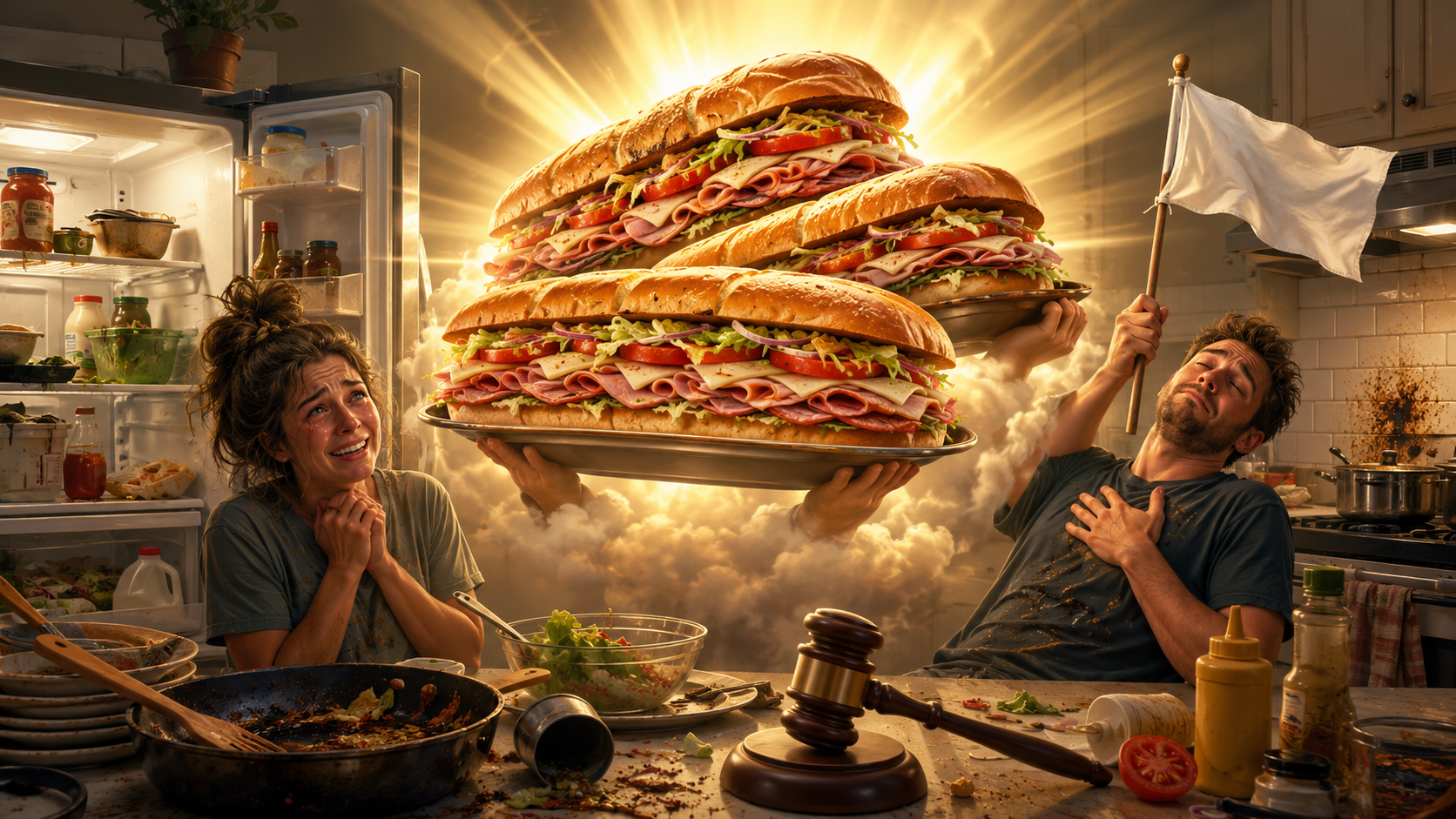
First things first: an Alison Roman recipe is not merely a recipe. It is a social permission slip printed in olive oil. It is a way for adults with mismatched plates, one wobbly chair, and a block of Parmesan fossilizing in the fridge to say, “I am hosting,” without having to become Martha Stewart’s anxious nephew.
For years, dinner parties were marketed like tiny weddings held in apartments. There were floral arrangements. There were folded napkins. There were “tablescapes,” a word that should be illegal unless you are describing a battlefield made of forks. People acted like inviting friends over required three days of prep, heirloom china, and a personality entirely rebuilt around serving duck.
Then Alison Roman came along with Nothing Fancy, a title that basically told perfectionism to go sit in the sink with the soaking pan. Her whole proposition was brutally appealing: make bold food, serve it casually, stop pretending everyone needs a restaurant experience in a one-bedroom apartment where the smoke detector doubles as a sous-chef. Penguin Random House describes Nothing Fancy as a book about “unfussy food for having people over,” built around low-stress gatherings, vegetables, grains, snacks, meats, cocktails, and the “permission to be imperfect.” Thank God. A cookbook finally saying what everyone needed to hear: your friends are coming over for dinner, not to inspect grout.
Alison Roman Recipes Solved the Modern Hosting Panic
The genius of Alison Roman’s recipes is not that they are effortless. Please. Nothing involving caramelized shallots, chopped herbs, anchovies, and a pot you will “just soak overnight” is effortless. The genius is that they feel effortless. That distinction matters because the modern home cook does not want to be told cooking is easy. That is insulting. Cooking is not easy when your counter space is the size of a paperback book and your oven has two settings: “raw” and “Pompeii.”
What people want is food that looks impressive without requiring the psychological stamina of opening a restaurant. Roman’s recipes hit that exact nerve. Dining In, published in 2017, was marketed around “decidedly unfussy food” and recipes that made even “oven-phobic” and “restaurant-crazed” people want to stay home and cook. The book’s promise was simple: casual does not have to mean boring, and more ingredients do not automatically mean better food, a concept that will shock anyone who thinks a recipe should begin by asking you to toast fourteen spices and locate an emotionally available fishmonger.
That is why her recipes became shortcuts. Not shortcuts in the sad “cream of mushroom soup plus despair” sense. Shortcuts in the dinner-party sense: one big platter, one loud flavor, one crunchy thing, one acidic thing, and everyone assumes you have a rich inner life.
The Viral Alison Roman Formula: Big Flavor, Small Performance
Alison Roman recipes became internet-famous because they understand that most people want restaurant-adjacent food without restaurant logistics. They want to serve something salty, glossy, herb-covered, lemony, crunchy, creamy, smoky, or briny — preferably all at once, because apparently subtlety died somewhere between Instagram Stories and the rise of flaky salt.
Vox identified Roman’s early viral hits, especially #TheCookies and #TheStew, as examples of how Instagram turned home cooking into a social activity. The article argued that those recipes worked because they were simple, accessible, relatively inexpensive, and restaurant-quality enough for young home cooks who were cooking more at home but still wanted food that looked like it belonged somewhere besides a Tupperware with a missing lid.
That is the Roman engine. Her recipes are rarely beige. They do not whisper. They kick the door open holding anchovies and herbs. Even when the ingredient list is short, the flavors are loud enough to make guests think you did something technically advanced, when in reality you cooked shallots until they surrendered.
The Cookies Were the First Warning Shot
Before the stew, before the pasta, before every pantry became a shrine to tomato paste, there were The Cookies: Salted Butter and Chocolate Chunk Shortbread. These cookies were not just cookies. They were a lifestyle referendum. Were you a regular chocolate chip cookie person, or were you a person who rolled dough logs in Demerara sugar while pretending this was normal weekday behavior?
The recipe works because it is familiar but tweaked just enough to feel clever. It uses salted butter, chopped chocolate, light brown sugar, and a log-slice format, then rolls the dough in Demerara sugar for crisp edges. Roman’s own recipe description says the dough is more brown sugar shortbread with chocolate chunks than standard chocolate chip cookie, which is exactly the kind of sentence that makes the internet start preheating ovens like a cult with better snacks.
The shortcut was not just the cookie. It was the identity. If you served those cookies, you were not merely “a person who baked.” You were someone with taste. Someone who had flaky salt. Someone whose dessert looked rustic on purpose, not because the dough cracked and you decided to call it “textural.”
The Stew Made Pantry Food Feel Like a Personality
Then came The Stew, officially Spiced Chickpea Stew With Coconut and Turmeric. It is chickpeas, coconut milk, greens, garlic, onion, ginger, turmeric, stock, mint, and enough golden color to make every Instagram feed briefly look like it had health insurance. Roman’s recipe crisps chickpeas in olive oil and spices, then simmers them with coconut milk and stock, adds greens, and finishes with mint, yogurt, and flatbread if you are feeling like a person who has “flatbread” around. It serves four to six and takes about 55 minutes, which is ideal dinner-party math: long enough to seem real, short enough that nobody has to take a personal day.
The Stew became a shortcut because it looked abundant without requiring expensive ingredients. Cans! Greens! Coconut milk! A pot! Suddenly everyone could serve a golden, dramatic, vaguely global-looking bowl of comfort and behave as if this had been their plan all along. It was warm, vegetarian-ish depending on stock and toppings, photogenic, and forgiving. Basically, it was dinner-party drywall: it covered a lot of sins.
And unlike delicate dinner-party food that collapses if someone is twenty minutes late, stew waits. Stew is patient. Stew says, “Your friend who is always ‘parking’ but has not left the house yet can still eat.” That alone makes it superior to half of Western civilization.
Shallot Pasta Became the Apocalypse Pasta, Obviously
The internet’s relationship with Alison Roman reached peak pantry fever with Caramelized Shallot Pasta, also known as The Pasta, because apparently Roman recipes are awarded definite articles after enough people photograph them under bad apartment lighting. The recipe uses olive oil, six large shallots, garlic, red pepper flakes, anchovies, tomato paste, pasta, parsley, and flaky salt. It takes about 40 minutes and makes enough shallot mixture for a second batch or for spooning over eggs, chicken thighs, or roasted vegetables. That last part is the real trick: it is not just dinner; it is leftovers wearing a little black dress.
The pasta became the ideal internet dinner-party shortcut because it hit every pandemic-era and post-pandemic-era desire at once: pantry ingredients, big flavor, low glamour, high payoff, and a faintly deranged amount of shallots. It was inexpensive enough to make on a weeknight and dramatic enough to serve to guests, which is the culinary equivalent of finding pants that work for both Zoom and leaving the house.
The sauce also has Roman’s signature move: one ingredient does more than one job. Tomato paste brings tang and depth. Anchovies bring salt and umami without necessarily tasting like fish. Shallots bring sweetness, body, and the illusion that you are a sophisticated person instead of someone who ate cereal over the sink yesterday.
Nothing Fancy Was a Branding Miracle Disguised as a Cookbook
The phrase Nothing Fancy is doing heroic labor. It tells guests not to expect linen napkins. It tells hosts not to panic-buy tiny forks. It tells everyone that casual food can still be excellent, which should be obvious, but apparently humanity needed a 320-page hardcover to stop acting like dinner required choreography.
The book’s subtitle, Unfussy Food for Having People Over, is the entire philosophy in one sentence. Not entertaining. Not hosting. Not “curating an evening.” Having people over. Beautiful. Finally, a phrase that sounds like friendship instead of a corporate retreat for plates. Penguin Random House’s description says the book covers everything from weeknight meals with neighbors to weekend dinner parties with fifteen friends, and includes DIY martini bars, tomato platters, coconut-braised chicken and chickpeas, and lemony turmeric tea cake.
That is why Roman became the internet’s dinner-party shortcut: she reframed the party as a vibe rather than a test. The food had to be delicious, yes, but the host did not have to be spiritually laminated.
Her Recipes Are Built for the Camera Without Being Instagram Slop
A lot of internet food looks good and tastes like a decorative candle. Roman’s recipes became durable because they were photogenic and functional. This is not a minor distinction. The internet is full of gorgeous recipes that require edible flowers, a marble island, and a divorce from reality. Roman’s food tends to photograph well because it is high-contrast and texture-heavy: browned edges, glossy sauces, herbs, citrus, chile flakes, flaky salt, charred vegetables, toasted nuts, creamy dips, dark greens, golden stews.
It is food with visual punctuation. Nothing just sits there looking pale and apologetic. Even a bowl of beans gets treated like it has a publicist.
The New Yorker described Roman’s flavor preferences as high-acid, crunchy, creamy, herby, briny, and chile-flaky, which is basically a dinner-party manifesto disguised as a condiment shelf. The same profile noted that home cooks made and posted her recipes, and that Roman reposted their efforts, helping create a loop where cooking the recipe became part meal, part badge, part “look, I too have joined the shallot clergy.”
The Shortcut Is Confidence, Not Speed
This is the part people miss. Alison Roman recipes are not always the fastest. Some involve chilling dough. Some involve slow roasting. Some involve browning, crisping, draining, chopping, finishing, and a garnish that will somehow end up on the floor. The shortcut is not always time. The shortcut is decision fatigue.
Dinner parties are hard because people panic over the wrong things. What should I serve? What if someone is vegetarian? What if the chicken is dry? What if the salad is boring? What if my apartment smells weird? What if everyone realizes I own only six forks and one of them is a camping fork?
Roman’s recipes answer the menu question with a certain bossy confidence. Make a big thing. Make a crunchy thing. Make a bright salad. Put something salty on the table. Chill drinks. Buy good bread. Do not apologize. If something looks messy, call it abundant. If something cracks, call it rustic. If the pan is ugly, bring it to the table anyway and act like you invented candor.
Pantry Cooking Made Her Recipes Feel Recession-Proof, Rent-Hike-Proof, and Emotionally Useful
Roman’s later work pushes even harder into pantry cooking. Something from Nothing, published in 2025, is described as a collection of more than 100 pantry-forward recipes using shelf-stable bottles, bags, jars, and cans, with a pitch aimed at both busy weeknights and last-minute dinner parties. The book’s examples include soups, stews, vegetables, pastas, beans, grains, meats, and fish built from ingredients like anchovies, olives, beans, tomato, or pantry condiments — basically the foods sitting in your cabinet wondering why you keep buying more mustard.
This matters because the modern dinner party has changed. People are tired. Groceries are expensive. Restaurants are expensive. Everyone’s calendar looks like it was attacked by colored rectangles. A recipe that says, “You can make something impressive from chickpeas, pasta, lentils, tomato paste, garlic, and a jar of something salty” feels less like lifestyle content and more like emergency infrastructure.
The great trick of pantry cooking is that it makes scarcity look intentional. A can of beans becomes dinner. A tin of anchovies becomes depth. A jar of olives becomes personality. A lemon becomes a spotlight. The pantry is not sad if you know how to weaponize it.
Alison Roman’s Voice Is Half the Shortcut
The recipes work, but the voice sells them. Roman writes like someone who has strong opinions because she has eaten enough bland food to radicalize her. She is conversational, bossy, funny, and allergic to fake-polished domestic performance. This matters because recipe writing is often either sterile lab instruction or lifestyle fantasy about Sunday markets and sun-dappled countertops. Roman’s voice sits somewhere between “competent friend” and “mildly irritated prophet of anchovies.”
That voice gives nervous cooks permission. It says the host can be informal, opinionated, imperfect, and still serve something excellent. Time described her kitchen presence as feeling like a seat at a “foodie friend’s boozy dinner party,” and noted that her wit and candor turned cooking videos from merely informative into entertainment.
That is extremely important. People do not only follow recipes because they want food. They follow recipes because they want to borrow confidence from someone who appears to have it. Roman’s brand says: yes, you can make this; yes, you can skip the precious nonsense; yes, anchovies again; no, I am not your mom.
Home Movies and the Newsletter Kept the Dinner Party Going
Roman’s move into newsletter and video made her recipes even more useful as shortcuts because people could see the attitude in action. She launched Home Movies on YouTube in January 2021, describing it as a mix of newsletter recipes, cookbook recipes, Q&As, and “silly” but informative videos filmed in her kitchen.
That format matters. Cookbooks show the finished fantasy. Videos show the chaos between steps: the fridge rummaging, the messy counter, the pan that is too small, the food that still works anyway. For home cooks, that is not fluff. That is reassurance. Nothing makes a recipe feel more possible than watching someone else survive it without a prep cook, a test kitchen, or the dead-eyed calm of a Food Network elf.
Her publisher bio now ties the whole ecosystem together: cookbooks, Home Movies, A Newsletter, Solicited Advice, and First Bloom, the grocery store she opened in the Western Catskills in 2023. This is not just recipe development. It is a full hospitality universe, minus the part where you have to iron napkins like a medieval servant.
How to Use the Alison Roman Dinner-Party Shortcut Without Becoming Annoying
The practical move is not to serve five Alison Roman recipes at once and announce each by its internet nickname like you are introducing members of a cult. Nobody wants to attend The Dinner Party Featuring The Stew, The Pasta, The Cookies, The Dip, and The Host Who Won’t Stop Saying “jammy.”
Use the formula instead.
Pick one big anchor dish: stew, chicken, pasta, lamb, beans, fish, or something that can sit for a while without turning into a crime scene. Add one bright thing: citrusy salad, herbs, vinegar, pickled onions, or anything that wakes the plate up. Add one crunchy-salty thing: toasted nuts, breadcrumbs, chips, crackers, fried capers, or roasted chickpeas. Add one easy dessert: cookies, fruit with cream, cake, or something made ahead so you are not melting chocolate while your guests pretend not to hear you swearing.
Then stop. Put food on the table. Let people serve themselves. A dinner party is not a hostage situation with courses.
The Best Alison Roman-Style Dinner Party Menu
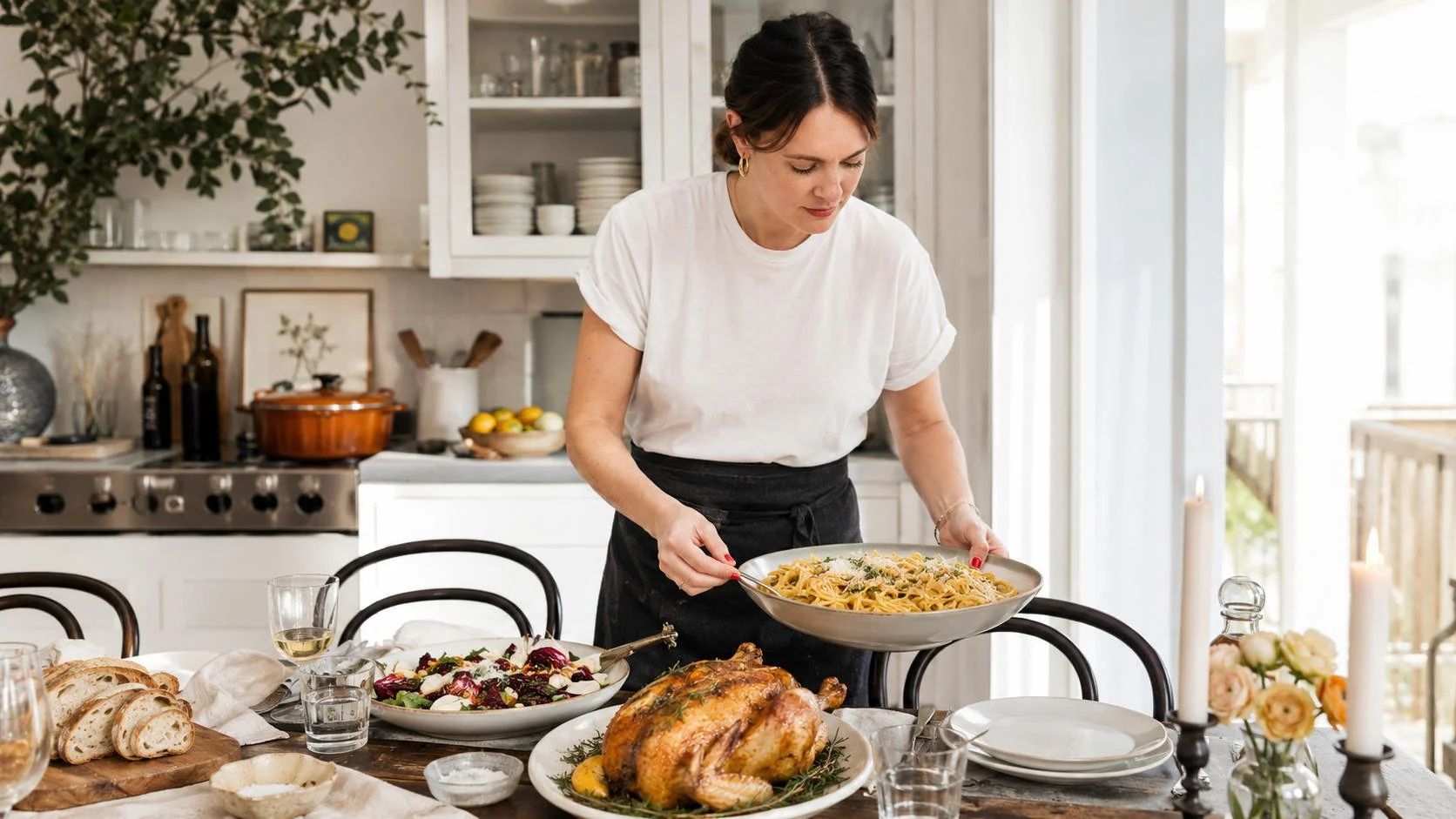
A very Roman-ish shortcut menu would look like this: a big pot of chickpea stew or a tray of roasted chicken, a sharp salad with herbs and lemon, bread or flatbread, olives or chips for snacking, and shortbread cookies for dessert. That is it. That is dinner. Nobody needs twelve sides unless you are feeding a football team or emotionally compensating for something.
The important thing is contrast. Soft stew needs crunchy garnish. Rich chicken needs acidic salad. Pasta needs herbs. Cookies need salt. Drinks need to be cold. The host needs to stop explaining every substitution like a defendant on the stand.
If something can be made ahead, make it ahead. The Salted Butter and Chocolate Chunk Shortbread dough can be chilled in advance, and the baked cookies keep for several days, according to Roman’s recipe note. That is exactly the kind of dessert you want for a dinner party because baking after wine is how people discover new forms of failure.
Why the Internet Chose Her
The internet chose Alison Roman recipes because they solved a very specific modern problem: people wanted to host beautifully without acting like hosting was a moral exam. Her food had enough polish to feel aspirational, enough pantry pragmatism to feel possible, and enough imperfection baked into the brand to let people relax.
She made dinner parties look like something you could do with a sheet pan, a Dutch oven, a bowl of herbs, and a slightly confrontational relationship with salt. She turned pantry staples into social currency. She made one-pot food feel chic. She made cookies go by a government name. She made shallots famous, which frankly should have been impossible and yet here we are.
The real shortcut was never just The Stew or The Pasta or The Cookies. The shortcut was the permission to stop performing flawless adulthood and just feed people something bold, salty, bright, and good.
That is why Alison Roman recipes became the internet’s dinner-party shortcut. They let people host without becoming unbearable, cook without pretending to be chefs, and serve chickpeas like they had a trust fund.