
The Chipotle Bowl That Gives You the Most Food Without Turning Into a Calorie Bomb
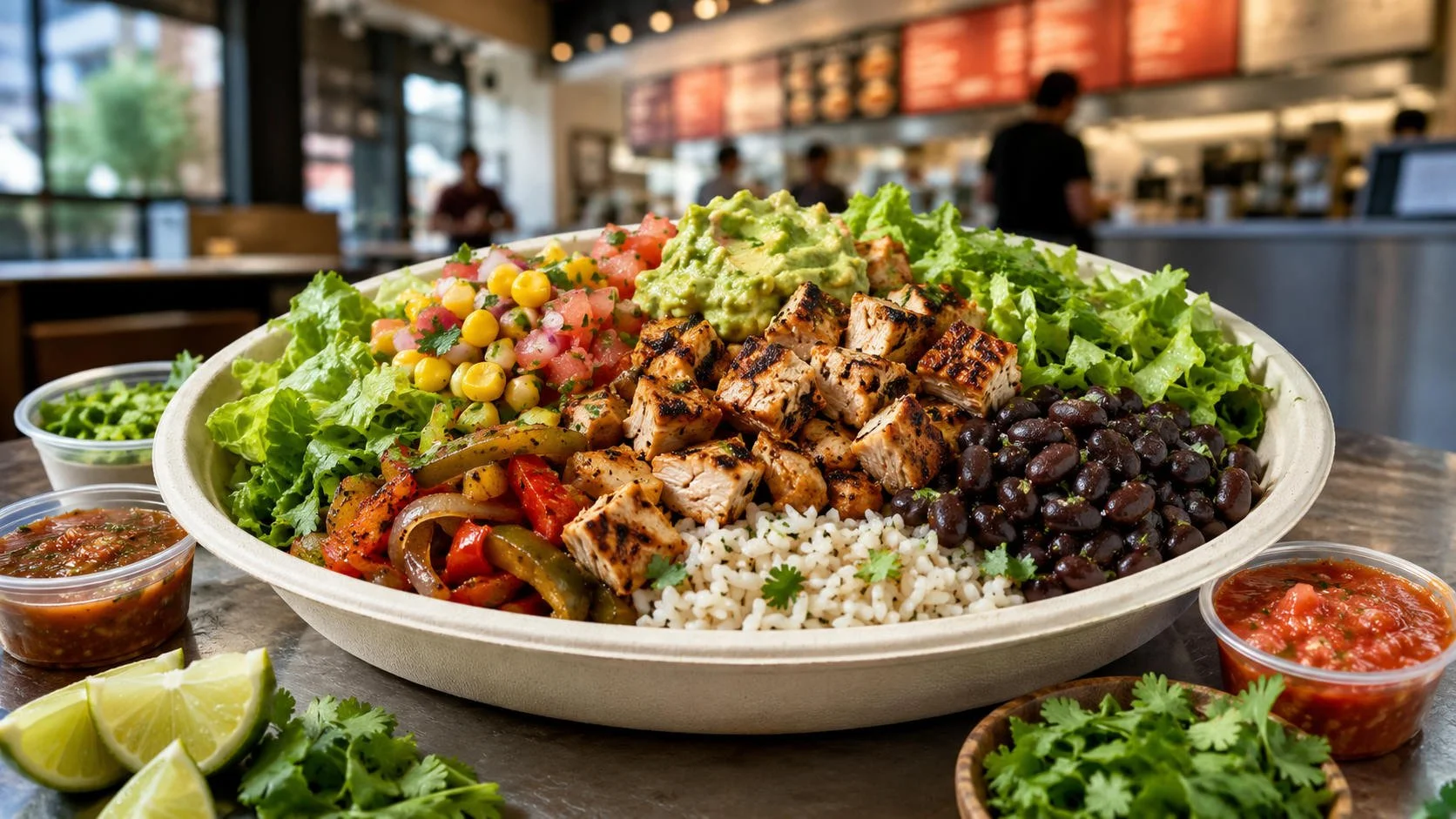
There is a dangerous moment in every Chipotle line when a normal human being becomes a tiny dictator with a plastic fork. You start with noble intentions. You are going to get “something healthy.” You are going to make “good choices.” You are basically a wellness influencer now, except with better lighting and less emotional dependence on chia seeds.
Then the employee asks what you want, and suddenly your brain, which moments ago understood moderation, begins screaming like a raccoon inside a vending machine.
White rice. No, brown rice. Actually both. Black beans. Pinto beans too, because apparently this is a bean symposium. Chicken. Maybe double chicken. Fajita veggies, because health. Corn salsa, because color. Tomato salsa, because more color. Sour cream, because we have abandoned restraint. Cheese, because dairy confetti. Guac, because it is “healthy fat,” the most abused phrase in fast-casual America. Queso, because you have decided to eat like a raccoon found a credit card.
By the time the lid barely closes, you are no longer holding lunch. You are holding a warm, foil-topped cinder block with cilantro.
So let’s solve the actual problem: What Chipotle bowl gives you the most food without becoming a calorie bomb?
The answer is not a sad little salad that makes you hate yourself by 2:17 p.m. It is not “just lettuce and chicken,” which is less a meal and more a punishment handed down by a court for people who said “clean eating” too many times. The answer is a strategically built bowl with protein, fiber, vegetables, salsa, and just enough carbs to make it feel like food instead of a hostage note from your meal plan.
The Best Chipotle Bowl for Maximum Food Without Maximum Regret
Order this:
Chicken bowl with light brown rice, black beans, fajita veggies, roasted chili-corn salsa, fresh tomato salsa, and romaine lettuce.
That is the sweet spot. That is the bowl. That is the rare fast-casual order that says, “I would like to be full,” without also saying, “Please bury me in sour cream and list queso as my cause of death.”
This build is extremely close to Chipotle’s own High Protein-High Fiber Bowl, which the company lists as Adobo Chicken, light brown rice, black beans, fajita veggies, roasted chili-corn salsa, fresh tomato salsa, and romaine lettuce. Chipotle says that bowl has 540 calories, 46 grams of protein, and 14 grams of fiber. That is a lot of actual nutritional usefulness for something assembled under fluorescent lighting by a person moving beans with the urgency of an airport baggage handler.
This bowl works because it does not rely on the cheap trick of making you feel full with melted dairy sludge and tortilla debris. It gives you volume from vegetables and lettuce, protein from chicken, fiber from beans, and enough rice to stop the whole affair from tasting like a compost internship.
Why This Chipotle Bowl Works So Well
The reason this bowl wins is painfully simple: it focuses on protein and fiber, the two nutrients most likely to make a meal feel like it accomplished something besides briefly distracting you from emails.
Chipotle’s listed High Protein-High Fiber Bowl has 46 grams of protein and 14 grams of fiber. For context, the FDA lists the Daily Value for dietary fiber at 28 grams, meaning this bowl gets you halfway there in one meal, which is more than can be said for the average sad desk lunch consisting of crackers, spite, and three grapes from a plastic clamshell.
The FDA also describes dietary fiber as a nutrient Americans generally do not get enough of, and notes that higher dietary fiber intake can help with bowel movement frequency, blood glucose, cholesterol, and calorie intake. That is the FDA’s elegant government way of saying fiber helps your body act less like a haunted plumbing system.
Protein does the other half of the job. It gives the bowl staying power, which matters because the whole point is not merely to survive lunch. The point is to avoid becoming hungry again 46 minutes later and wandering into the office kitchen looking for “just one snack,” which somehow becomes six pretzels, a fun-size candy bar, and a moral crisis.
The Winning Chipotle Bowl Formula
The best bowl is not magic. It is a formula. Chipotle is basically a cafeteria line where you can either build a solid meal or recreate the collapse of Rome in guacamole form.
Here is the formula:
Lean protein + beans + light rice + fajita veggies + salsa + lettuce.
That is it. That is the skeleton. It is not glamorous, but neither is digestion, and yet here we are.
Chicken: The Protein Anchor
Chicken is the obvious choice because it brings a lot of protein without dragging in a ridiculous amount of calories. Chipotle’s high-protein menu even uses Adobo Chicken as the foundation for several protein-focused items, including the High Protein Cup and the High Protein-High Fiber Bowl. The company lists the chicken cup at 180 calories and 32 grams of protein, which is exactly the sort of number that makes grilled chicken look smug at parties.
Could you use steak? Sure. Could you use barbacoa? Also sure. Could you use carnitas? Yes, and you may also wear sunglasses indoors and call your car “the whip.” But for the specific goal of getting a filling bowl without drifting into calorie-bomb territory, chicken is the cleanest, least melodramatic choice.
Black Beans: The Fiber Engine
Black beans are doing a lot of work here. They add fiber, texture, carbs, and a small but meaningful amount of protein. They are the responsible friend in the group chat, the one reminding everyone that maybe ordering queso, chips, and a burrito the size of a rolled yoga mat is not “balance.”
Beans make the bowl feel like a meal instead of a pile of ingredients that accidentally fell into a container. They also help with satiety because fiber slows things down. A bowl with chicken and beans has a much better chance of keeping you full than a bowl built entirely on rice, cheese, and the audacity to call sour cream a topping instead of a lifestyle choice.
Light Brown Rice: The Adult Portion of Carbs
Rice is not the villain. This is important because diet culture has trained people to look at rice like it stole their identity. Rice is fine. Rice is useful. Rice makes a bowl feel like food. The issue is that full portions of rice, especially when stacked with beans, corn salsa, cheese, guac, and chips, can turn a reasonable meal into a carbohydrate storage facility.
That is why light brown rice is the move. It gives you the texture and satisfaction of rice without letting it seize control of the bowl like a tiny grain-based coup.
Brown rice also fits the “more food, not a calorie bomb” mission better than a giant scoop of white rice plus chips on the side, which is not lunch so much as a tribute album to starch.
Fajita Veggies: The Volume Hack That Isn’t Dumb
Fajita veggies are one of the best Chipotle add-ons because they add flavor and bulk without detonating the calorie count. They make the bowl feel bigger, prettier, and more like a composed meal rather than a beige scoop pile built by someone trying to win a dare.
Ask for extra fajita veggies when you can. This is one of the few times “extra” is not a trapdoor into regret. Extra queso is a trap. Extra cheese is a trap. Extra chips are a crunchy trap with salt. Extra fajita veggies are basically the universe saying, “Fine, here’s something nice, don’t ruin it.”
Salsa: Flavor Without the Dairy Avalanche
The two salsas in this build — roasted chili-corn salsa and fresh tomato salsa — are doing flavor work so you do not need to drown the bowl in sour cream or queso. Corn salsa adds sweetness and texture. Tomato salsa adds brightness. Together they keep the bowl from becoming the culinary equivalent of wet cardboard in a compostable bowl.
This is the part where someone says, “But salsa has sodium.” Yes. It does. Welcome to restaurant food, where salt is the fifth manager. Sodium is worth watching, especially if you are eating out often or have medical reasons to limit it. The FDA lists the Daily Value for sodium at 2,300 milligrams and recommends using % Daily Value to compare foods, with 20% or more considered high.
So no, this bowl is not a mystical spa cleanse. It is Chipotle. But it is a much better choice than building a bowl that looks like it was designed by a committee of unsupervised linebackers.
Romaine Lettuce: The Free Bulk Nobody Respects
Romaine lettuce is not exciting. Nobody has ever whispered, “You have to try the lettuce,” unless they were trapped in a very boring cult. But lettuce matters in this bowl because it adds volume, crunch, and the sensation that you are eating a large meal without adding much caloric weight.
Extra lettuce is the easiest win at Chipotle. It makes the bowl look fuller and feel bigger. It is not going to change your life, but it will make your lunch slightly less dependent on rice and dairy, which is apparently what adulthood is now.
The Calorie Bomb Ingredients: Delicious Little Landmines
Now we must discuss the ingredients that turn a reasonable bowl into a festival of poor arithmetic. These ingredients are not evil. They are not cursed. They are just calorie-dense, and when you stack them all together like a tiny edible apartment complex, the total gets ugly fast.
The Tortilla: A Blanket for Your Regret
A burrito tortilla is the fastest way to add a big calorie load before the meal even begins. This is why the bowl beats the burrito for most people trying to maximize food without maximizing calories. A burrito is delicious, obviously, because it is a warm carbohydrate sleeping bag full of salt and meat. But it hides portions. It compresses chaos. It lets you pretend you are eating one item when in reality you are holding an entire committee meeting of ingredients.
The bowl exposes the truth. The burrito wraps it in a flour curtain and hopes you do not ask questions.
Chips: The Side Dish That Commits Fraud
Chips at Chipotle are a side item in the same way a raccoon is a pet if you refuse to respect consequences. They seem innocent because they are light and crunchy, but they are extremely good at turning a normal lunch into an event requiring paperwork.
The problem with chips is not just the calories. It is the behavior they encourage. You do not eat three chips and stop. Nobody does this except maybe astronauts and people being observed in a lab. You eat chips until the bag is empty or until the structural integrity of your mouth gives out from salt. Then you look down and realize you have eaten an entire side order while still possessing the original bowl, like a fool with a starch portfolio.
Queso: Melted Cheese With Legal Representation
Queso is delicious, and that is exactly why it is dangerous. It adds richness, but it does not add enough volume or satiety to justify becoming the central character in a bowl built for balance. Queso is the friend who says, “Let’s keep it low-key,” then orders bottle service.
Use queso when you actually want queso. Do not add it automatically because the spoon is there and you have the impulse control of a Roomba near stairs.
Sour Cream: The White Flag of Nutrition
Sour cream is where many bowls go to become slippery little disasters. It adds creamy tang, yes, but it also turns the bowl into a dairy swamp if applied with the usual Chipotle scoop enthusiasm.
The problem is not a little sour cream. The problem is the standard fast-casual interpretation of “a little,” which often means “a ladle of white confusion spread across the top like drywall compound.”
Cheese: Dairy Confetti With Consequences
Cheese is great. Cheese is also sneaky. It feels like a topping, so people mentally file it under “basically nothing,” alongside lettuce, salsa, and the napkin they accidentally ate. But cheese adds up, especially when paired with sour cream, queso, guac, and chips.
Pick one rich topping if you want one. Do not invite the entire dairy department and then act shocked when your “healthy bowl” has the energy density of a couch cushion.
Guacamole: Healthy Fat, Not Invisible Fat
Guacamole has achieved an impressive level of public relations success. People call it “healthy fat,” then use that phrase as a permission slip to eat half an avocado quarry. Yes, avocado contains unsaturated fat. Yes, guac can absolutely fit in a smart meal. No, that does not mean it has no calories. Healthy calories are still calories. A golden retriever wearing a lab coat is still not your doctor.
For this specific bowl, guac is optional but not necessary. Add it when you skip another calorie-dense item, like rice, cheese, sour cream, or chips. Do not pile guac on top of everything and then ask why your bowl is suddenly built like a Thanksgiving side table.
The Best Ordering Strategy: Get More Food Without Being a Menace
The key to maximizing food at Chipotle is to chase volume from low-calorie, high-fiber ingredients, not from the creamy and crunchy stuff that turns your bowl into a minor infrastructure project.
Ask for:
Extra romaine lettuce.
Extra fajita veggies.
Extra fresh tomato salsa.
Light rice.
One serving of beans.
One serving of chicken.
This is how you make the bowl feel large without making it nutritionally absurd. You are not gaming the system like a criminal mastermind. You are simply using the customization system for good, which is rare, because most people use it to create something that looks like it should be served out of a trough at halftime.
Chipotle also has an official nutrition calculator, which is useful because the difference between “healthy bowl” and “whoops, I built a 1,000-calorie bean mattress” is often just three toppings. The calculator lets customers build meals and view nutrition information, which is a helpful feature for anyone whose instincts in the line become less “balanced eating” and more “what if nachos were vertical?”
The Lower-Calorie Version
For a lighter version, order:
Chicken, black beans, fajita veggies, fresh tomato salsa, roasted chili-corn salsa, romaine lettuce, no rice.
This turns the bowl into more of a salad-bowl hybrid, but not in a tragic way. You still get protein and fiber. You still get flavor. You just lose some of the carb comfort. This version is good when you are not super hungry, or when you know dinner is going to involve pizza, pasta, or another food that makes wellness apps start vibrating in fear.
The Bigger But Still Reasonable Version
For a more filling version, order:
Chicken, full brown rice, black beans, fajita veggies, fresh tomato salsa, roasted chili-corn salsa, romaine lettuce.
This is basically the same bowl with more rice. It is still far more reasonable than adding chips, queso, cheese, sour cream, and guac like you are trying to construct a dairy-based bunker. This version makes sense after a workout, on a day when you need a bigger lunch, or when breakfast was just coffee and delusion.
The “I Need Guac or I’ll Become Difficult” Version
Fine. Add guac.
But make a trade. Skip the rice or skip the corn salsa. Or skip cheese and sour cream, which were not in the recommended bowl anyway, because this article has standards, somehow.
The guac version should look like this:
Chicken, black beans, fajita veggies, fresh tomato salsa, romaine lettuce, guac, light brown rice optional.
That gives you the creamy richness without turning the bowl into a calorie piñata. This is how adults use guac: intentionally, not as an emotional support paste.
The Vegetarian Version That Doesn’t Suck
For a vegetarian version, order:
Sofritas or extra beans, light brown rice, black beans, fajita veggies, roasted chili-corn salsa, fresh tomato salsa, and romaine lettuce.
This will generally be less protein-efficient than chicken, because chicken is annoyingly good at being chicken. But it can still be filling, especially with beans and veggies doing the heavy lifting. The mistake vegetarians often make at Chipotle is building a bowl that is just rice, cheese, sour cream, and guac, which is not a vegetarian meal so much as a dairy pillow with cilantro.
Beans matter. Vegetables matter. Salsa matters. Texture matters. Do not build a bowl that eats like a melted couch.
What Not to Do Unless You Are Training for a Nap
Do not order a bowl with full rice, double meat, queso, cheese, sour cream, guac, vinaigrette, and chips, then call it “pretty healthy because it has lettuce.” That is not how lettuce works. Lettuce is not a priest. It cannot absolve queso.
Chipotle’s own high-protein menu shows how quickly calories can climb when more items get stacked together. For example, Chipotle lists Josh Hart’s High Protein Burrito at 1,340 calories, despite also containing 95 grams of protein and 14 grams of fiber. That is not automatically “bad,” especially for an athlete or someone with high calorie needs, but for the average person looking for a filling lunch without a calorie bomb, that burrito is less “smart order” and more “edible kettlebell.”
This is the central lesson: protein alone does not make a meal light. Fiber alone does not make a meal light. A burrito can have impressive macros and still be a calorie meteor screaming toward your afternoon productivity.
The Best Chipotle Bowl for the Most Food
The best Chipotle bowl for maximum food without maximum calories is:
Chicken + light brown rice + black beans + fajita veggies + roasted chili-corn salsa + fresh tomato salsa + romaine lettuce.
It is filling because it has protein and fiber. It feels big because it has vegetables, salsa, beans, and lettuce. It stays reasonable because it avoids the usual calorie landmines: tortilla, chips, queso, sour cream, cheese, and automatic guac. It gives you the experience of eating an actual satisfying bowl without requiring you to lie to yourself in the parking lot afterward.
This is the Chipotle order for people who want food, not a dare. It is for people who understand that “healthy” does not have to mean joyless, but also that “customizable” is not a legal command to add every ingredient visible behind the glass.
The spoon is powerful. The line is moving. The employee is waiting. Somewhere, queso is whispering your name like a melted demon.
Stay strong. Get the chicken, light brown rice, black beans, fajita veggies, salsa, and lettuce. Walk away with a bowl, not a construction permit.