What Pillsbury Teaches About Making Dessert Look Like You Tried
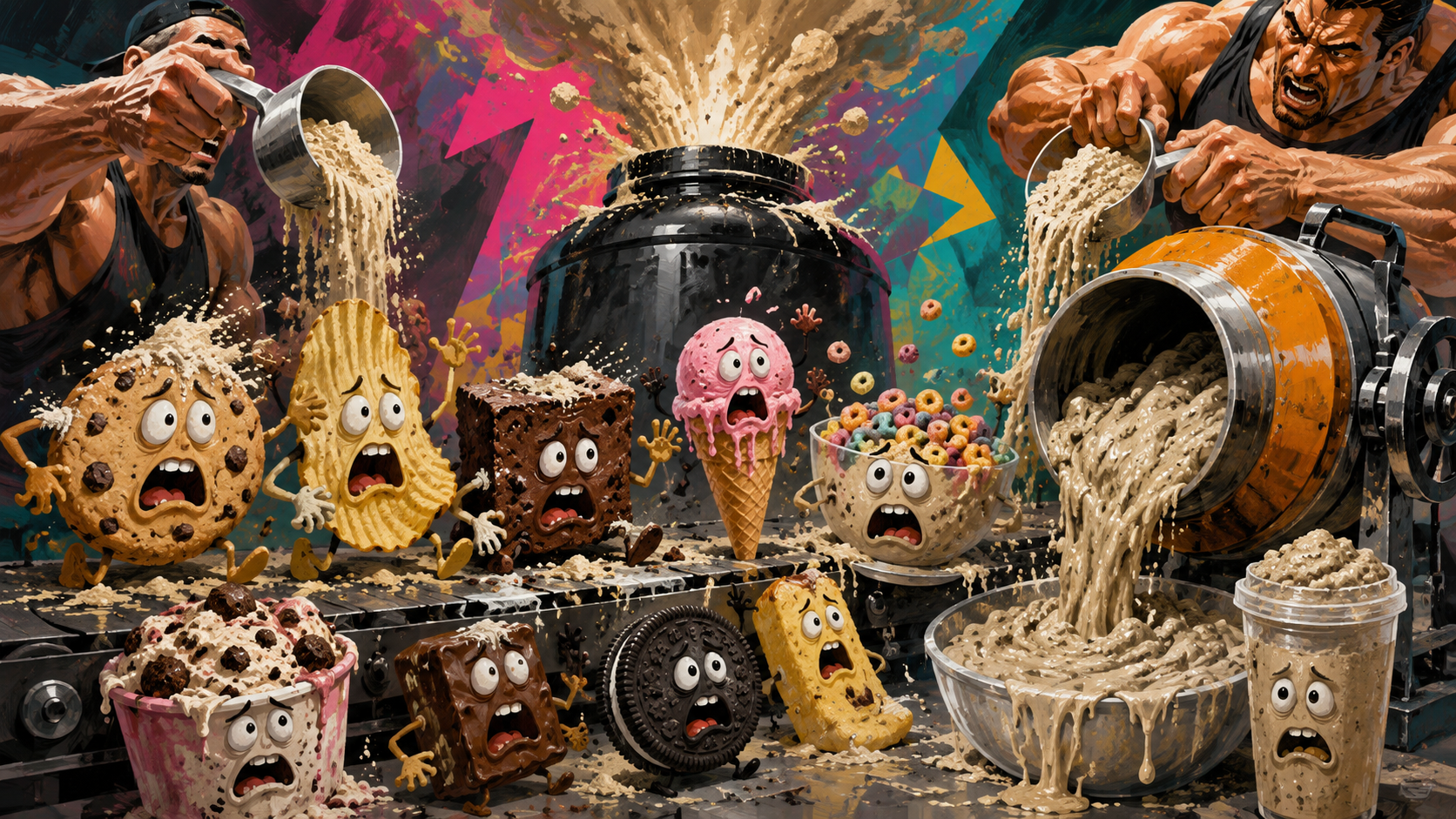
There is a very specific kind of domestic theater involved in dessert. You do not necessarily want to bake from scratch, because you are a person with a life, a phone battery at 12%, and maybe one clean mixing bowl if the dishwasher fairy has been merciful. But you also do not want to show up with a plastic clamshell of grocery-store cookies still wearing the price sticker like a tiny confession. You need dessert that says, “I made an effort,” while privately meaning, “I opened something with a spoon.”
This is where Pillsbury comes in: America’s soft, doughy accomplice in pretending we are more capable than we are.
Pillsbury has been in the food business since 1869, and its modern identity is basically a shrine to convenient baking: canned dough technology, the Pillsbury Bake-Off, crescent rolls, cookie dough, pie crust, cinnamon rolls, and the famous Doughboy who has somehow remained cheerful despite spending six decades encouraging people to poke his stomach. Pillsbury says its canned dough technology dates to 1931, its Bake-Off began in 1949, and the Pillsbury Doughboy arrived in 1965 alongside classic crescent rolls, which is a lot of history for a brand best known for making tubes that explode softly on kitchen counters.
And that is the lesson. Pillsbury does not teach you how to become a pastry chef. It teaches something more useful: how to make dessert look like you tried without transforming your kitchen into a flour crime scene.
Pillsbury Dessert Shortcuts Work Because the Hard Part Is Already Done
The first rule of fake-effort dessert is simple: outsource the annoying part.
Scratch baking has many noble qualities, mostly enjoyed by people who own bench scrapers and say things like “lamination” in casual conversation. But for normal citizens, dessert usually goes wrong before the oven even preheats. You forgot to soften butter. You are out of vanilla. The brown sugar has become a landscaping brick. The recipe says “chill for two hours,” which is baking’s way of announcing it hates your schedule.
Pillsbury’s genius is removing the steps where people typically fail. Its refrigerated cookie dough page says there is “no measuring or mixing required,” which is corporate language for “we noticed you were about to destroy the kitchen and cry into a whisk.” Its ready-to-bake cookie dough is even more blunt: put dough rounds on a cookie sheet and bake. That is not a recipe. That is a commandment for the spiritually tired.
This is how dessert becomes possible on a weeknight, before a potluck, during a holiday panic, or after someone announces at 6:13 p.m. that they “forgot” they need to bring something tomorrow. Pillsbury is not selling dough. It is selling the illusion that you had a plan.
Ready-to-Bake Cookie Dough: The Gateway Dessert Scam
Ready-to-bake cookie dough is one of the most important inventions in the field of “good enough, but warm.” A room-temperature cookie from a package says, “I stopped at the store.” A warm cookie from an oven says, “I am nurturing.” Same basic sugar delivery system, but one has steam and therefore social credibility.
This is not complicated. Heat is the cheapest cosmetic procedure dessert has. A warm cookie smells like effort. It fills the room with butter, sugar, and a level of competence you may not personally possess. Nobody walks into a kitchen, smells fresh cookies, and says, “Excuse me, did you cream the butter manually?” If they do, they should be escorted outside and handed a raw carrot.
Pillsbury’s chocolate chip refrigerated cookie dough is marketed as ready in minutes, with no mixing and no mess, and the product page also notes it can be used for cookies, dessert bars, cookie platters, gift baskets, and care packages. This is the key: cookie dough is not just cookie dough. It is a dessert building block. You can bake it flat. You can press it into a pan. You can sandwich ice cream between two cookies and suddenly become the sort of person who “made dessert,” a phrase doing a heroic amount of legal work.
The trick is to modify one thing. Add flaky salt before baking. Press in extra chocolate chips so the cookies look rugged and artisanal instead of factory-portioned. Drizzle melted chocolate over them after they cool. Put them on a plate that is not made of paper. Dessert presentation is 40% temperature, 40% plate choice, and 20% whether anyone sees the trash.
Crescent Rolls: Edible Origami for People Avoiding Real Pastry
Crescent rolls are the most suspiciously versatile dough in the refrigerated aisle. They are not quite bread, not quite pastry, and not quite croissants, despite having the general crescent shape of a French bakery item if that bakery had given up and moved to a cul-de-sac.
But they are useful. Horribly useful. Pillsbury’s own crescent dessert page leans into this, describing crescent rolls as not just dinner sides but also bases for easy desserts like churros, cheesecake bars, strawberry cheesecake crescent rolls, and concha-inspired shortcut treats.
This is where Pillsbury teaches one of the great fake-effort principles: change the form, and people assume labor happened.
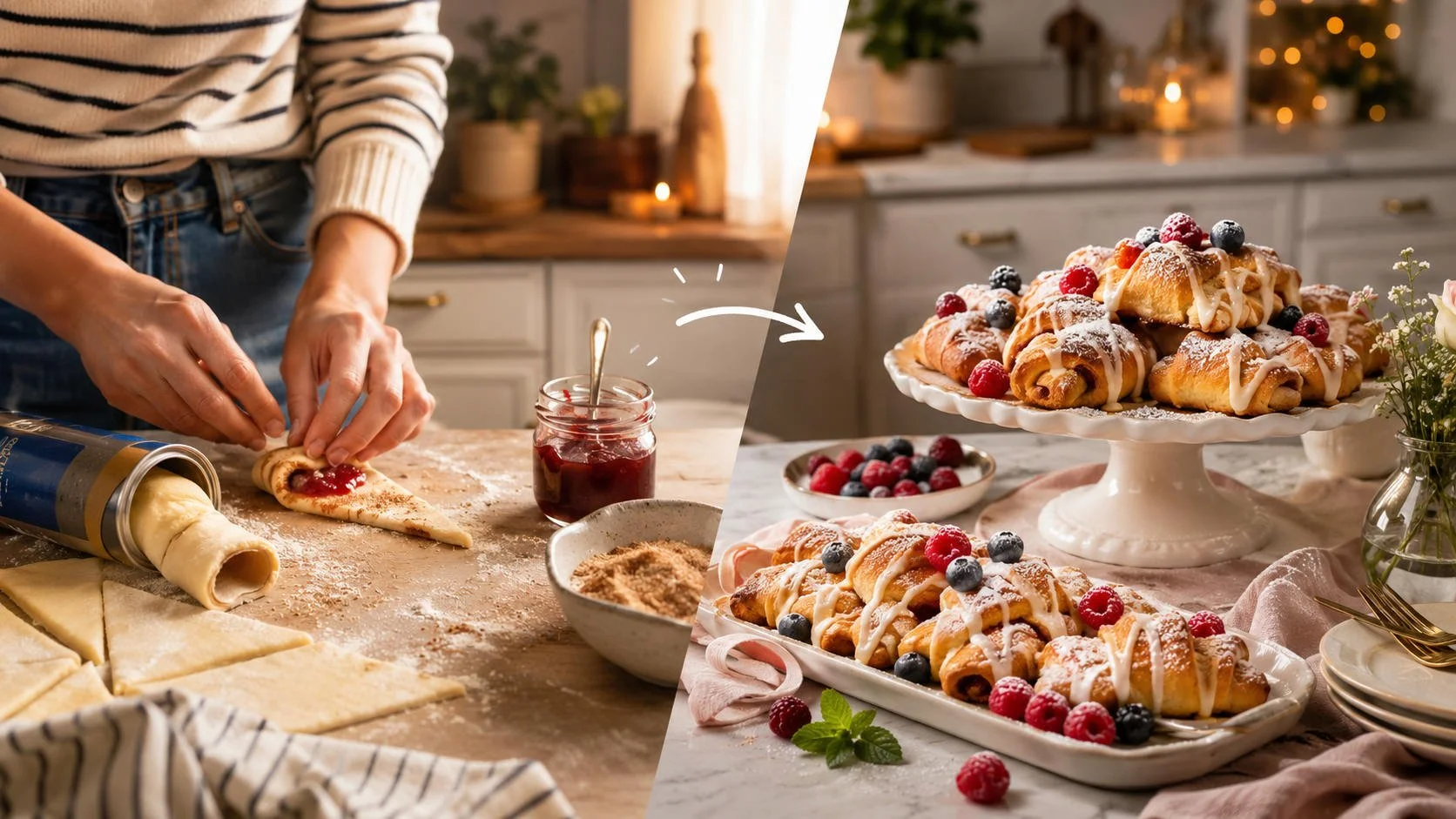
Take crescent dough, add cream cheese and jam, fold it into little pockets, brush the top with butter, sprinkle with sugar, and bake. Congratulations, you have made “pastries,” which is just dough wearing a better outfit. Slice crescent dough into strips, twist it with cinnamon sugar, and suddenly you have “dessert twists.” Roll fruit inside it and you have “hand pies,” a term that sounds rustic enough to distract from the fact that the dough came from a tube with a cartoon marshmallow man on it.
Do not underestimate folding. Folding is visual proof of effort. A rectangle says “processed.” A braid says “I own measuring spoons emotionally.” A twist says “perhaps I studied abroad.” A spiral says “someone should compliment me before I become unpleasant.”
Refrigerated Pie Crust: Outsourcing Flakiness Like a Sensible Coward
Pie crust is one of those kitchen tasks people romanticize because they have forgotten what it is like to actually do it. Homemade pie crust requires cold butter, cold hands, cold water, chilled dough, rolling, flouring, transferring, repairing cracks, and quietly asking the universe why the dough has the texture of a damp historical document.
Pillsbury refrigerated pie crust solves this by saying: unroll it, fill it, bake it, move on with your finite human life. The product page describes it as ready in minutes with no mixing and no mess, and notes that each package contains two ready-made crusts for one-crust or two-crust pies.
That is not just convenience. That is emotional rescue.
The way to make store-bought pie crust look like you tried is not to apologize for it. Never apologize for a shortcut. Apologies make people suspicious. Instead, crimp the edge. Brush it with egg wash or milk. Sprinkle coarse sugar on top if it is a sweet pie. Cut vents in the top crust that look intentional instead of like the pie was attacked by a tiny raccoon.
And for the love of pastry fraud, do something to the filling. Add lemon zest to canned fruit filling. Add cinnamon, nutmeg, or cardamom. Toss berries with a little sugar and cornstarch. Mix pumpkin filling with extra vanilla or orange zest. Store-bought crust plus upgraded filling reads as homemade. Store-bought crust plus canned filling dumped in like evidence reads as “there was a coupon.”
The Pillsbury Bake-Off Proved Shortcuts Are Not Cheating
The funny thing about convenience baking is that people act like it is a modern moral collapse, as if every ancestor spent twelve serene hours making strudel by candlelight while bluebirds folded napkins. Nonsense. American home baking has always been tangled up with shortcuts, contests, packaged ingredients, and the desire to feed people without needing a fainting couch afterward.
The Pillsbury Bake-Off began in 1949 as the Grand National Recipe and Baking Contest, created for Pillsbury’s 80th birthday and built around home cooks sharing recipes and stories. The first contest had thousands of entries, six categories, and 100 finalists invited to compete at the Waldorf-Astoria in New York City.
By the 1960s, convenience was not some shameful little secret hidden behind the casserole dish. It was the point. General Mills notes that the 1966 “Busy Lady Bake-Off” judged finalists partly on how easily recipes could be streamlined for daily life, and that in 1968 the contest added categories for convenience mixes and refrigerated dough products. In 1969, Magic Marshmallow Crescent Puffs became the first Bake-Off champion to use Pillsbury refrigerated dough.
So when someone sniffs at Pillsbury dough as “not real baking,” please understand that this person is not defending culinary purity. They are defending a fantasy in which effort only counts if it is inconvenient enough to make everyone nearby miserable.
Real home baking has always included strategy. Pillsbury just put the strategy in a can.
Making Dessert Look Homemade Is Mostly About Finishing Touches
Pillsbury teaches that dessert effort is not evenly distributed. Nobody cares how the dough began if the final result looks deliberate. The human brain is very easy to scam with toasted edges and powdered sugar. This is why bakeries put pastries in glass cases under flattering lighting, and why your sad muffin at home looks like it has been interrogated.
The finishing touches matter.
Brush dough with butter so it browns like it has vacation money. Sprinkle cinnamon sugar before baking so the kitchen smells like a holiday movie with better lighting. Add a glaze after baking because thin white icing can make almost anything look designed. Use chopped nuts, crushed cookies, toasted coconut, or chocolate shavings. Put berries on the plate. Add a dusting of powdered sugar, the theatrical smoke machine of lazy desserts.
But do not go insane. A shortcut dessert must not look like it is wearing every accessory in the drawer. One drizzle is charming. Three drizzles and crushed candy and sprinkles and gold dust looks like a cupcake got trapped in a craft store collapse.
The goal is not to hide Pillsbury under rubble. The goal is to make it look like Pillsbury had a personal stylist.
The Doughboy Understands the Performance of Homemade
The Pillsbury Doughboy is not merely a mascot. He is the tiny giggling ambassador of plausible domestic competence. Pillsbury says the character was conceived in 1965 by Rudy Perz, a Leo Burnett copywriter, as a little figure who would pop out of a refrigerated dough can. The Doughboy’s actual name is Poppin’ Fresh, because apparently “Doughbert” was unavailable.
The Doughboy matters because he sells the emotional part of convenience baking. He does not say, “You are using a shortcut because life has defeated you.” He says, “Hoo hoo, look at these memories.” This is marketing, yes, but it is also psychologically accurate. Most people are not trying to win a baking championship. They are trying to show affection with dessert while not scraping dried batter off the ceiling fan.
Making dessert look like you tried is not always deception. Sometimes it is hospitality with boundaries. You can care about people and still refuse to zest six lemons on a Tuesday. You can serve warm cinnamon rolls from a can and still be a decent host. You can make cookie bars from refrigerated dough and still love your family, despite what a woman named Linda in the comments section may believe.
Linda can make her own tart shell.
Modern Pillsbury Knows Nostalgia Does Half the Work
One of Pillsbury’s sharper tricks is turning familiar desserts into faster versions of themselves. In 2026, for example, Southern Living reported that Pillsbury introduced Apple Pie Ready-to-Bake Cookie Dough, positioning apple pie flavor in a pre-portioned cookie format that goes from package to oven without rolling crust or prepping filling.
This is almost offensively clever. Apple pie is work. Apple pie cookies are vibes. You get cinnamon, apple, nostalgia, and the suggestion of Americana without peeling enough apples to question the national mythology.
That is a useful lesson for anyone making dessert look like they tried: borrow the flavor of a harder dessert.
Make cheesecake bars instead of cheesecake. Make cinnamon roll bread pudding instead of laminated pastry. Make cookie cups instead of tartlets. Make brownie sundaes instead of a layered chocolate mousse cake that requires gelatin and personal growth. The shortcut version does not need to duplicate the original. It needs to gesture toward it convincingly enough that people stop asking questions.
Dessert is not a courtroom. “Inspired by” is allowed.
The One Safety Note, Because Apparently Raw Dough Has Lawyers
A brief interruption from the Department of Not Ruining the Party: do not assume all raw dough is safe to eat. The FDA warns that most flour is raw and has not been treated to kill germs, and that eating raw dough or batter can make people sick.
Pillsbury does have refrigerated cookie and brownie dough products labeled safe to eat raw; the company says those use heat-treated flour and pasteurized eggs, and it tells consumers to look for the “safe to eat raw” seal.
So yes, sneak cookie dough only when the package actually says it is built for that. Otherwise, bake it like civilization intended. Nobody wants their contribution to the potluck to be “intestinal consequences.”
The Pillsbury Playbook for Better Lazy Desserts
The practical formula is embarrassingly simple, which is why it works.
Start with one Pillsbury base: cookie dough, crescent rolls, cinnamon rolls, biscuits, or pie crust. Then add one flavor upgrade, one texture upgrade, and one visual upgrade.
For flavor, use citrus zest, vanilla, almond extract, cinnamon, espresso powder, jam, caramel, peanut butter, or a pinch of flaky salt. For texture, add nuts, crushed pretzels, chocolate chunks, toasted coconut, granola, or streusel. For visual polish, use glaze, powdered sugar, melted chocolate, fresh fruit, whipped cream, or a better plate than the chipped one you keep pretending has “character.”
This is not gourmet sorcery. It is dessert with a hat on.
Cookie dough becomes cookie bars with a layer of jam. Crescent rolls become cheesecake pastries with cream cheese and berries. Pie crust becomes galettes, which are just pies that gave up on geometry and got rewarded with a French name. Cinnamon rolls become monkey bread if you cut them up, toss them in butter and sugar, and bake them in a pan that makes people think planning occurred.
That is the Pillsbury method: use prepared dough as raw material, not the entire personality of the dessert.
Making Dessert Look Like You Tried Is a Legitimate Skill
There is a snobbery around shortcuts that deserves to be dropped into a stand mixer on high. The idea that dessert only counts if every component is homemade is the sort of thinking that turns hospitality into unpaid performance art. Pillsbury’s entire empire argues otherwise. It says the host who makes something warm, sweet, and shareable has done enough.
The real skill is not always making dough. Sometimes the skill is knowing where to spend your effort. Do not spend it measuring flour if a tube can handle that. Spend it on browning, filling, layering, glazing, plating, and serving the dessert while it is still warm. Spend it on making the kitchen smell good. Spend it on sitting down with people instead of hovering near the oven like a martyr in an apron.
Pillsbury teaches that “homemade” is not a single fixed category. It is a spectrum that runs from “milled my own flour like a prairie lunatic” to “placed dough on tray and applied heat.” Most of us live somewhere in the middle, occasionally visiting both extremes during holidays or emotional instability.
The Final Lesson From Pillsbury Dessert Shortcuts
Pillsbury teaches that dessert does not need to be difficult to feel generous. It needs to be warm, intentional, and slightly improved from its original packaged state. That is all. That is the whole scam, and it is a beautiful scam.
Bake the cookies. Twist the crescents. Crimp the pie crust. Drizzle the glaze. Dust the powdered sugar like you are covering tracks at a dessert-related crime scene. Put it on a nice plate. Say nothing unless complimented. Then accept the praise with the serene expression of someone who absolutely did not peel a foil lid off anything twenty minutes ago.
Because making dessert look like you tried is not about fraud. It is about morale. It is about knowing that people want sweetness, warmth, and the faint illusion of effort more than they want your suffering.
And if anyone demands to know whether the dough was homemade, look them directly in the eye and say, “It was baked at home.”
That is not a lie. That is branding.