
What Costco Rotisserie Chicken Teaches About Winning Dinner
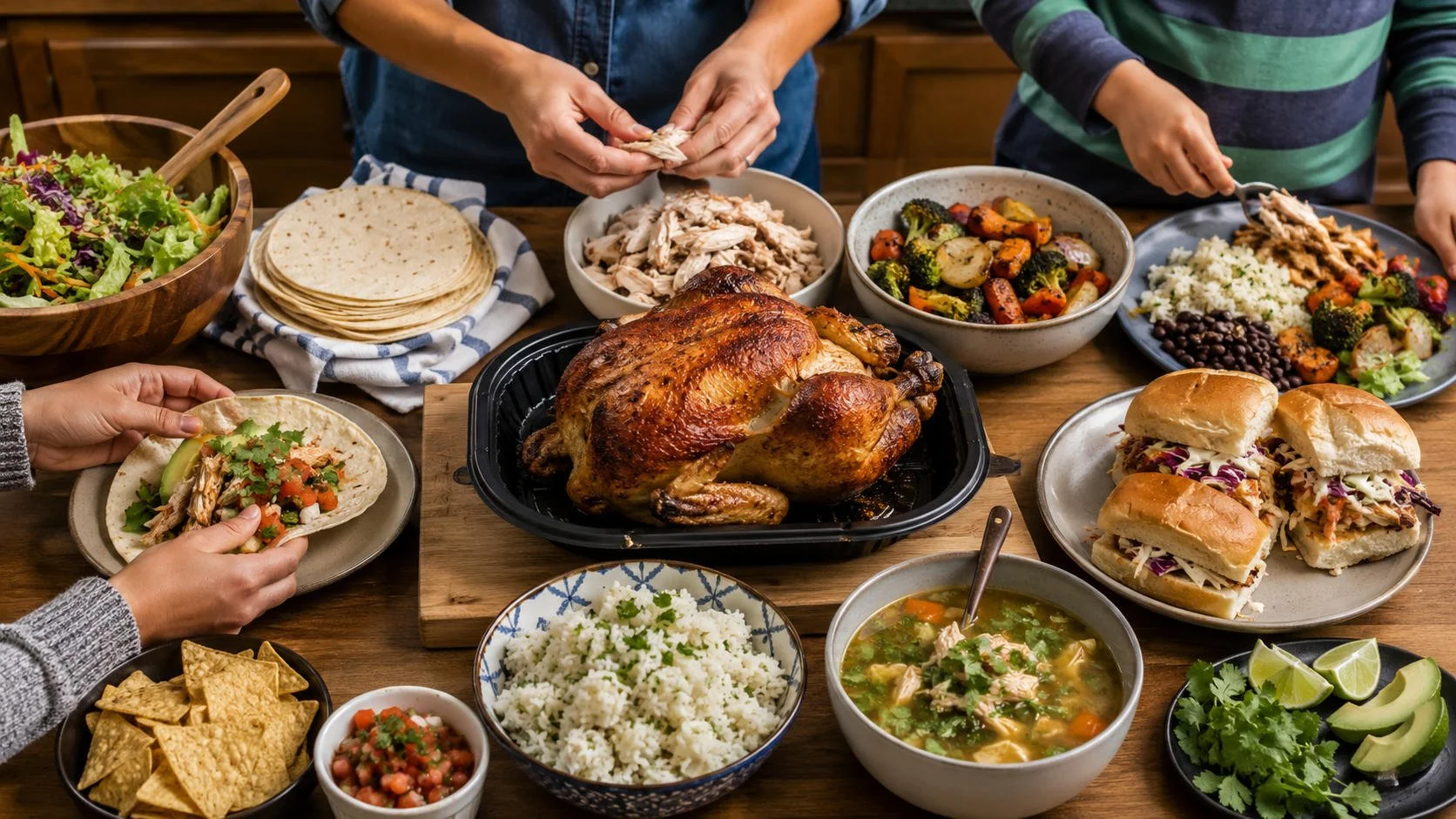
There are two kinds of dinner people. There are people who say things like, “I just threw together a quick cassoulet,” and there are the rest of us, standing in a Costco parking lot at 5:47 p.m. clutching a hot rotisserie chicken like it is a newborn heir to a poultry kingdom. The first group owns ramekins. The second group has survived Tuesday.
The Costco rotisserie chicken is not just dinner. It is an edible emergency plan. It is a $4.99 declaration that, no, you do not have to chop an onion, marinate anything, or listen to a food influencer explain how “weeknight cooking can be meditative” from a kitchen larger than your apartment. Costco’s Kirkland Signature rotisserie chicken has famously held that $4.99 price since 2009, and Costco said rotisserie chicken sales topped 157 million worldwide in 2025, because apparently half the planet is also standing over the sink eating chicken skin like a raccoon with a mortgage.
And that is why the bird matters. Costco rotisserie chicken teaches us that winning dinner is not about perfection. It is about leverage. It is about taking one already-cooked thing and turning it into five respectable meals before your family realizes the “menu” is just one chicken wearing different hats.
Costco Rotisserie Chicken and the Genius of Ready-to-Eat Protein
The hardest part of dinner is not the rice. Rice just sits there being rice, the introvert of carbohydrates. The hard part is protein. Protein has opinions. It must be thawed, trimmed, seasoned, cooked safely, rested, sliced, and then judged by people who have spent the day eating fluorescent snack foods from a vending machine.
Costco rotisserie chicken solves the central dinner problem by walking in fully cooked, hot, salty, and smug. It is the guy in the group project who actually did the slides. You can complain about the formatting, sure, but without him everyone was going to fail.
The lesson is simple: if you control the protein, you control dinner. Once the chicken is handled, the rest of the meal can be almost embarrassingly easy. Add bagged salad. Add tortillas. Add rice. Add pasta. Add frozen vegetables. Add whatever sad little container of leftovers is aging in your fridge like a government secret. Suddenly you are not “scrounging.” You are “assembling.” Same behavior, better branding.
This is the core of weeknight dinner strategy: do not start from zero unless you enjoy turning hunger into a full-time unpaid internship.
Cheap Dinner Ideas Start With One Reliable Anchor
People love to talk about meal planning like it is a sacred ritual performed with color-coded markers and emotional stability. In reality, most meal planning is just asking, “What can I do with this chicken before it becomes evidence?”
That is not failure. That is strategy.
A Costco rotisserie chicken gives dinner an anchor. It is the main character. Everything else is set dressing. This matters because most people do not lose dinner at the stove; they lose it at the decision stage. They stand in the kitchen, open the fridge, stare at mustard, close the fridge, open it again, and hope new groceries have spawned like mushrooms in a damp basement.
The bird stops the spiral. You already have chicken. That means you can make:
Chicken tacos with tortillas, salsa, and shredded cabbage.
Chicken fried rice with leftover rice, frozen peas, eggs, and soy sauce.
Chicken pasta with butter, garlic, black pepper, and Parmesan.
Chicken soup with boxed broth, noodles, carrots, and the bones if you are feeling frontier-adjacent.
Chicken salad with mayo, celery, lemon, and enough black pepper to make it seem intentional.
None of this is revolutionary. That is the point. Weeknight dinner does not need to be revolutionary. Revolutions are stressful, historically messy, and usually involve poor catering.
Winning Dinner Means Buying Yourself Time
The real product Costco is selling is not chicken. It is time with bones in it.
Yes, the bird is cheap. Yes, it is convenient. Yes, it sits under those heat lamps looking like it knows your secrets. But what it really gives you is the ability to walk into your house and not immediately begin a culinary hostage negotiation with your own family.
Dinner is often treated as a morality test. Did you cook from scratch? Did you use whole foods? Did you season in layers? Did you lovingly massage kale like a person with no unread emails? Enough. The question is not whether dinner deserves a James Beard nomination. The question is whether people ate food, enjoyed it, and did not later ask why there are no clean bowls.
Costco’s chicken wins because it removes the biggest labor block. It lets dinner happen in ten minutes without turning your kitchen into a sinkhole of pans. That matters. A lot. Especially for families, exhausted workers, students, caregivers, and anyone whose evening energy level is somewhere between “damp sock” and “Victorian ghost.”
The Costco Rotisserie Chicken Price Is a Dinner Psychology Trick
Costco’s $4.99 chicken is famous because the price feels almost rude. You look at it and think, “Surely there is a catch.” And of course there is. The catch is that you must enter Costco, a building designed to make you believe you need a kayak, a 72-pack of batteries, and enough pesto to embalm a horse.
The chicken is widely described as a loss leader: a product priced to pull shoppers into the store, where they may also buy other items with better margins. Reuters called the $4.99 chicken a long-viewed loss leader, and Food & Wine noted that Costco’s price-control strategy includes major supply-chain investments, including its own Nebraska poultry processing complex.
This teaches a useful dinner lesson: the cheapest item is not always cheap by accident. Sometimes it is cheap because an entire retail empire wants to lure you past seasonal throw pillows and a pallet of protein powder called something like “Alpha Thunder Paste.”
For the home cook, the takeaway is not “buy everything at Costco because capitalism has feathered wings.” The takeaway is: identify the few high-value shortcuts that make everything else easier. One rotisserie chicken can become the base for multiple meals. One smart shortcut beats twelve aspirational groceries that will die in the crisper drawer like tiny green martyrs.
Easy Dinner Ideas: Stop Cooking Every Component Like a Hero
Home cooks often make the same tragic mistake: they try to cook every part of dinner from scratch on a weeknight, as if the mayor is coming over to inspect their quinoa.
This is madness. Also, the mayor is not coming. The mayor is probably eating cereal.
Winning dinner means mixing homemade, store-bought, and “technically food” in whatever ratio gets the job done. Costco rotisserie chicken is excellent because it gives you permission to stop cosplaying as a pioneer widow and start acting like a person with access to modern conveniences.
Make the chicken the part you do not cook. Then put your effort somewhere that pays off. Warm tortillas properly. Toast bread. Make a quick sauce. Chop fresh herbs. Squeeze a lime. Brown the chicken in a skillet if you want crisp edges. These little upgrades do more for dinner than spending an hour roasting a chicken from raw while everyone in your home circles the kitchen like underfed zoo animals.
The bird is not the whole meal. It is the engine. Your job is not to worship it. Your job is to drive it somewhere better than “standing at the counter eating it with fingers.”
Leftover Rotisserie Chicken Ideas That Don’t Taste Like Surrender
Leftovers are where dinner victory either continues or collapses into a damp pile of refrigerator regret. The trick is to change the texture, temperature, or flavor profile so the second meal does not feel like a reheated apology.
First night: eat the chicken hot with a salad, bread, roasted vegetables, or rice. Fine. Classic. Functional. Everyone survives.
Second meal: shred the remaining meat and crisp it in a pan with a little oil. Add taco seasoning, chili powder, cumin, or smoked paprika. Now it is taco filling. See? It put on a small hat and became new.
Third meal: simmer the bones with onion, carrot, celery, garlic, or whatever aromatics you have. Even a lazy broth is better than boxed broth alone. Add noodles or rice, toss in the last scraps of meat, and suddenly you have soup, the official meal of “I am tired but still technically nurturing.”
Fourth move, if you are really extracting value like a Victorian landlord: chicken salad. Mayo, mustard, lemon, chopped pickles, celery, herbs, hot sauce, whatever. Put it on toast. Put it in lettuce cups. Put it in a tortilla. Put it directly into your mouth while standing by the fridge like nature intended.
The rotisserie chicken teaches that leftovers should not be reheated into obedience. They should be redeployed. Dinner is not a museum exhibit. It can change costumes.
Costco Meal Prep Without Becoming a Spreadsheet Goblin
Meal prep has been ruined by people who own identical glass containers and speak in macros like haunted accountants. But Costco rotisserie chicken offers a less miserable model: prep components, not entire identical meals.
Instead of making five matching containers of chicken, rice, and broccoli that will taste like office sadness by Wednesday, separate the chicken into parts. Keep some sliced. Shred some. Save the bones. Portion some for freezing. Now you have options.
Here is the useful version:
Pull the meat off the bones while the chicken is still warm. Cold chicken clings to the carcass with the determination of a toddler in a toy aisle.
Store white and dark meat separately if your household contains texture complainers, also known as family.
Save the carcass for broth unless your freezer is already a graveyard of “future soup” bags, in which case be honest and throw it out like an adult.
Do not over-salt the next meal automatically. Rotisserie chicken can already carry plenty of sodium, and Consumer Reports’ figure, reported by Food Safety News, put Costco’s chicken at 460 mg of sodium per 3-ounce serving.
That last point matters because winning dinner is not just “make cheap food taste good.” It is also “do not accidentally build a salt lick with side dishes.”
The Bird Is Convenient, Not Magical
Costco rotisserie chicken is good. It is useful. It is beloved. It is also not a sacred object, despite the way people discuss it online like it descended from the heavens wrapped in plastic and warehouse lighting.
There are legitimate caveats. The chicken has faced scrutiny over sodium, additives, sourcing, and production. In early 2026, Reuters reported a proposed class-action lawsuit alleging salmonella risk tied to Costco’s Nebraska poultry plant, while Food & Wine covered separate litigation over “preservative-free” marketing claims involving sodium phosphate and carrageenan. These are allegations and legal disputes, not a reason to throw your dinner into the nearest ravine, but they are part of the real story.
So no, the lesson is not “Costco chicken is perfect.” Perfect food does not exist, unless you count French fries, and even those betray you when cold.
The lesson is that convenience food can be used intelligently. You can enjoy the value while staying aware of the tradeoffs. Pair it with vegetables. Watch the sodium elsewhere in the meal. Do not eat an entire bird while whispering, “protein,” like that makes it medicine.
Costco Rotisserie Chicken Teaches Portion Control, Unfortunately
The chicken is cheap enough that it encourages dangerous optimism. You buy one and think it will feed a family of four for three meals. Then someone eats a leg in the car. Someone else “just has a little” while unpacking groceries. Then the person cooking dinner removes the skin for “quality control,” because apparently quality lives exclusively in crispy brown strips.
By the time dinner starts, half the bird has vanished in what police would describe as “suspicious circumstances.”
The fix is boring and effective: strip the meat before serving. Put tonight’s portion on a plate. Put the rest away. Otherwise, the rotisserie chicken becomes a poultry piñata and everyone just keeps whacking it until there is nothing left but bones and shame.
This is another dinner lesson: abundance needs management. Cheap food still disappears if you let people graze it into extinction.
The Best Cheap Family Dinner Is Built, Not Cooked
The Costco rotisserie chicken proves that “cooking dinner” is sometimes the wrong framework. Some dinners are cooked. Other dinners are built.
A taco night is built. A rice bowl is built. A sandwich night is built. A big salad with chicken, croutons, avocado, and dressing is built. Soup made from broth, shredded chicken, and noodles is half-built, half-cooked, like a meal with commitment issues.
Built dinners are beautiful because they let people customize without forcing you to become a short-order cook in your own home. Put out chicken, tortillas, salsa, cheese, lettuce, beans, and rice. Congratulations, you have dinner. Anyone who complains can be promoted to executive chef of their own plate.
This is especially useful for families with kids, picky eaters, or adults who claim they “don’t like leftovers” while eating the same sad lunch salad four days a week. Built meals make leftovers feel like choices instead of evidence that nobody planned well.
What Winning Dinner Really Means
Winning dinner is not making the most impressive meal. It is making the meal that fits the night.
Some nights, winning dinner is roast chicken with potatoes and a green salad. Some nights, it is chicken quesadillas and baby carrots. Some nights, it is soup from the carcass because you are fiscally responsible and emotionally dramatic. Some nights, it is tearing meat off the bone over the sink while telling yourself you are “just getting dinner started.”
The Costco rotisserie chicken understands this. It does not ask you to be inspired. It does not require a preheated oven, a spice grinder, or a small emotional breakthrough. It just sits there, hot and ready, like a tiny golden bailout package.
That is why people love it. Not because it is the finest chicken ever prepared. Not because it has solved dinner in some permanent, transcendent way. But because it reliably moves you from “What the hell are we eating?” to “Dinner is handled,” which is one of the great domestic miracles.
The Final Dinner Lesson From Costco Rotisserie Chicken
Costco rotisserie chicken teaches that dinner success comes from leverage, not heroism. Buy one thing that does the hard work. Build around it. Change it up. Use the bones if you have the energy. Throw them out if you do not. Add acid, crunch, heat, and freshness so every meal does not taste like reheated beige.
It teaches that cheap food can feel generous. It teaches that convenience is not a moral defect. It teaches that a good shortcut is not cheating; it is civilization finally doing something useful besides inventing new streaming services.
Most importantly, it teaches that the best dinner is the one people actually eat, without you turning into a flour-dusted martyr muttering about how nobody appreciates homemade stock.
So yes, buy the chicken. Carry it proudly through the warehouse like the budget-conscious caveperson you are. Ignore the siren song of the 10-pound cheesecake unless that is also part of your dinner strategy, in which case, frankly, respect. Take the bird home. Make tacos, soup, salads, sandwiches, rice bowls, pasta, and whatever else keeps the household alive.
That is winning dinner: not fancy, not flawless, not photographed under natural light next to a linen napkin. Just hot food, low drama, and enough leftovers to make tomorrow slightly less annoying.