The Anthony Bourdain Rule for Eating Cheap Without Eating Boring
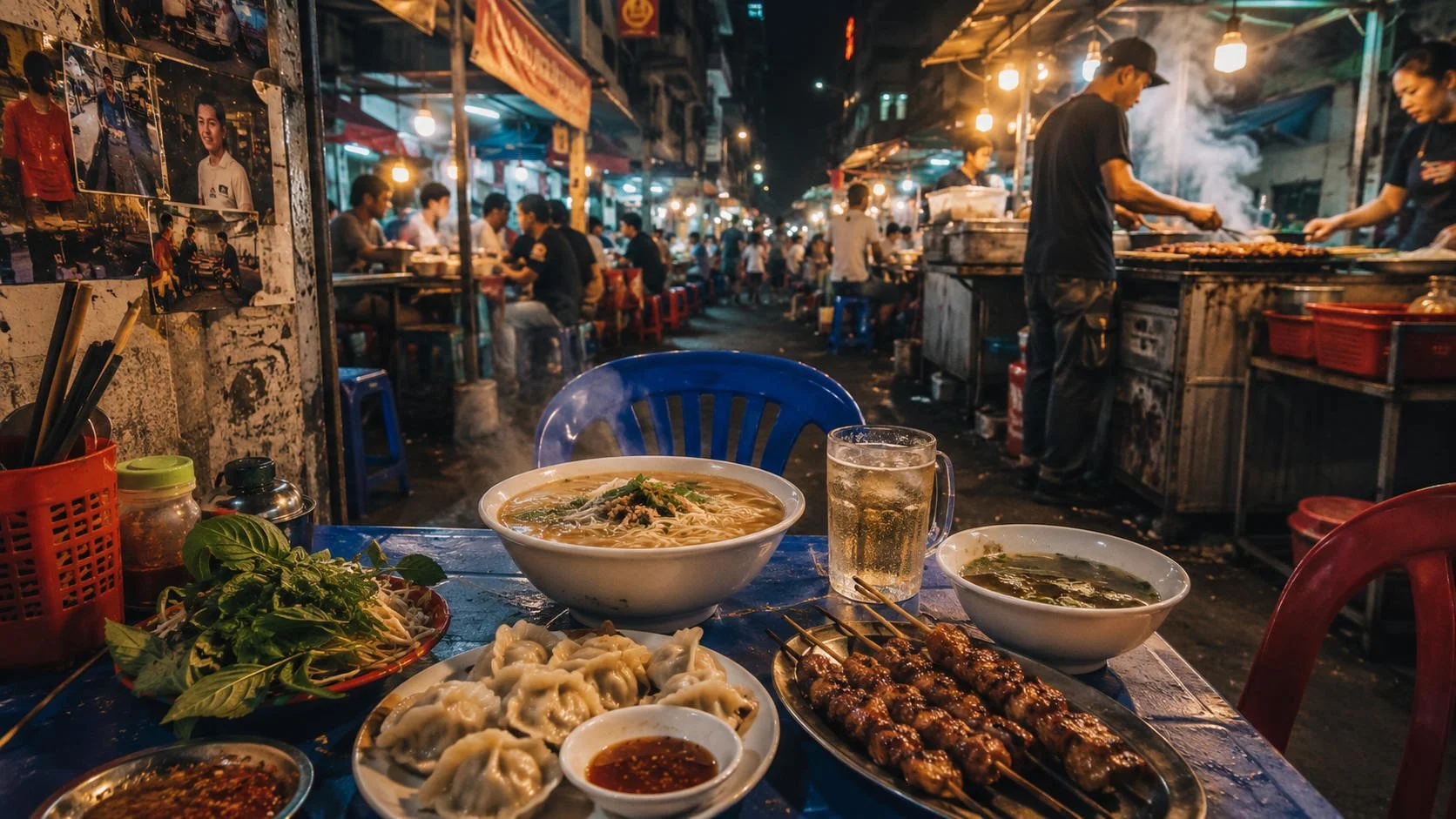
Eating cheap has been unfairly slandered by people who think “budget meal” means boiled sadness in a chipped bowl. These are the same people who will spend $28 on a “deconstructed taco experience,” which is just a taco that went through a divorce and got custody of the plate. They confuse cost with flavor, ambiance with quality, and tiny portions with sophistication. Very tragic. Please send them a candle that smells like overdraft fees.
Anthony Bourdain knew better. His entire career was a rolling argument against the idea that great food requires white tablecloths, architectural plating, or a waiter describing foam with the solemnity of a priest delivering bad news. Bourdain became famous after his New Yorker essay led to Kitchen Confidential, then built a second life through travel shows like A Cook’s Tour, No Reservations, and Parts Unknown, where the real action was often not in luxury dining rooms but in markets, hawker centers, noodle shops, barbecue pits, and family kitchens.
So here is the Anthony Bourdain rule for eating cheap without eating boring: eat where the food has a reason to exist.
Not where the branding has a reason to exist. Not where the menu was written by a marketing intern who thinks “handcrafted” means someone touched the box. Eat where a dish is connected to work, place, habit, memory, hunger, migration, family, repetition, heat, fat, smoke, spice, and somebody who has made the same thing so many times they could probably cook it during a minor earthquake.
That is the rule. Cheap food gets boring when it is generic. Cheap food gets glorious when it belongs to someone.
Cheap Food Is Not the Problem. Cowardly Food Is the Problem.
The crime is not eating cheaply. The crime is eating like you are trying to avoid joy for tax reasons.
A cheap meal can be noodles with chili oil, a taco from a truck, rice and beans with enough lime to wake the dead, a fried egg over leftovers, or a sandwich from a place where the person slicing the meat appears to have seen history and disapproved of most of it. A boring cheap meal is the same meal stripped of context, seasoning, texture, and dignity until it becomes fuel for people who call lunch “intake.”
Bourdain’s work kept circling one stubborn truth: food does not need to be expensive to be serious. Food & Wine notes that people often remembered his love of intense dishes like pho, hot pot, sushi, and “every part of every pig,” but his collaborator Laurie Woolever also pointed out his delight in simple things.
That matters. The Bourdain lesson is not “go eat something weird so you can tell your coworkers you are interesting.” Please do not become that person. Nobody wants to hear your heroic tale of eating a fermented whatever while they are trying to microwave soup.
The lesson is simpler and more useful: look for food made with conviction. Cheap food made with conviction beats expensive food made for people who photograph dinner more than they chew it.
Street Food Is the Original Cheap Food MBA
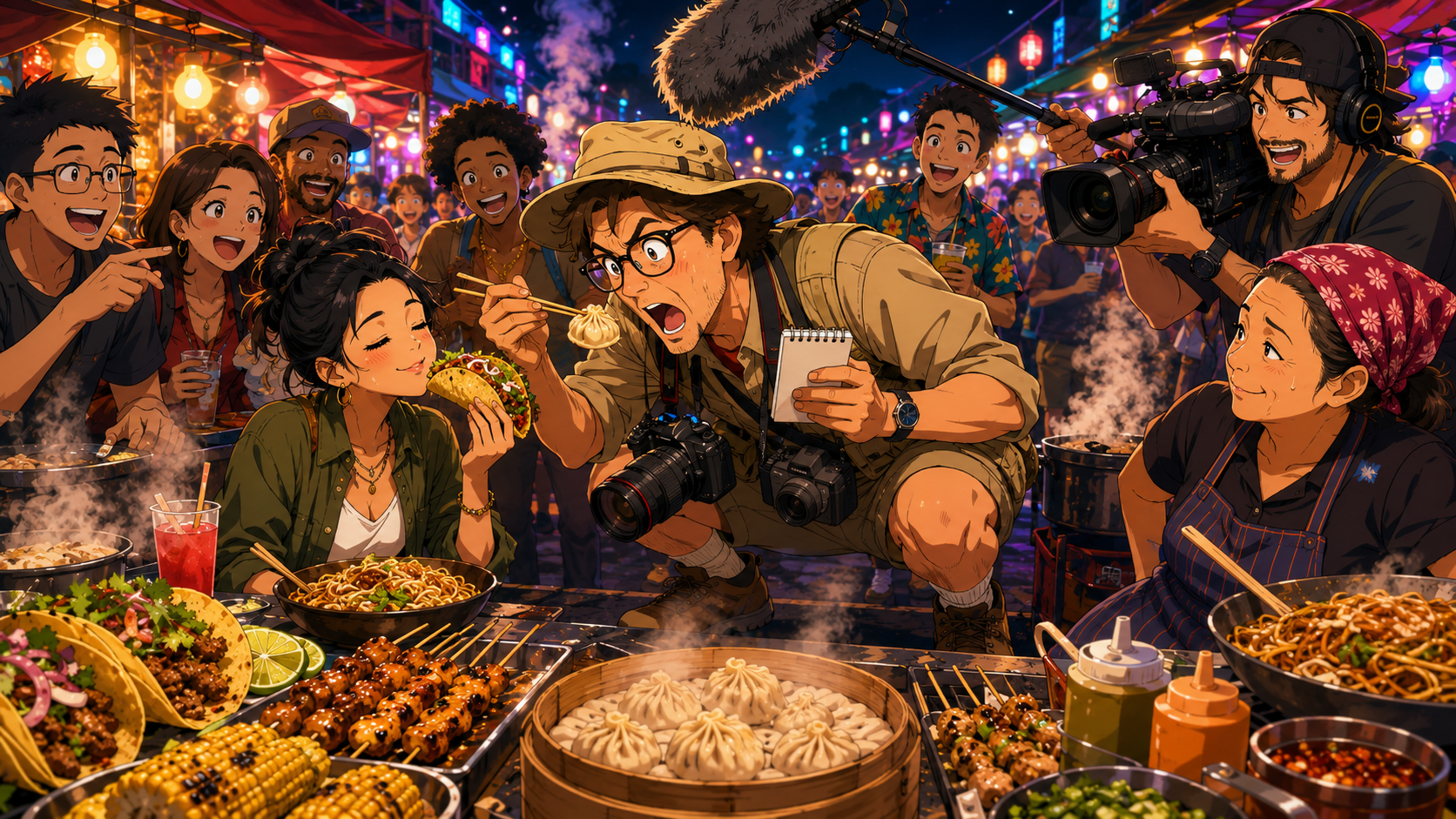
Street food is what happens when food has to survive in the real economy. No mood lighting. No host stand. No paragraph-long menu description. Just a person, a setup, a line, a price, and the immediate democratic brutality of whether people come back tomorrow.
Bourdain understood this deeply. At the World Street Food Congress in Singapore, Bon Appétit reported that he headlined the event and argued that the more street food is embraced across income levels, the better the world becomes. He also put the economics plainly: the future of street food depends on who spends money where.
That is not just romantic travel-show wisdom. That is practical dinner advice with better lighting.
Street food has to be good because it does not have many places to hide. A taco stand cannot bury mediocrity under a $19 cocktail called The Reckoning. A noodle stall cannot distract you with a velvet banquette and a bathroom full of eucalyptus. The food has to make its case immediately, usually on a paper plate, often while you are standing next to a trash can that has seen things.
Cheap, non-boring food usually follows the street-food model: high turnover, focused menu, repeat customers, visible cooking, bold seasoning, and zero interest in pretending a smear of sauce is a personality.
The Bourdain Rule: Follow Repetition, Not Hype
If a place makes one thing all day, pay attention. That is not a limitation. That is a threat to mediocrity.
A vendor who makes one dish a thousand times has entered a different relationship with food than a restaurant serving sushi, burgers, pasta, tacos, and “Asian-inspired wings,” which is not a menu so much as a cry for help. Specialization creates excellence because the dish gets edited by repetition. Too salty? Customers notice. Too bland? Customers vanish. Too slow? The line mutinies.
Bon Appétit’s coverage of the street-food congress captured this point from the vendor world: in Vietnam, one expert explained that street food is often better than restaurant food because vendors make one dish and improve it over time.
That is the budget eater’s cheat code. Do not ask, “What is the cheapest thing nearby?” Ask, “What does this place clearly care about?” If the answer is “gyros,” eat the gyro. If the answer is “dumplings,” eat the dumplings. If the answer is “our menu has 147 items and also smoothies,” leave before the mozzarella sticks file a police report.
Boring cheap food is usually unfocused cheap food. Great cheap food knows exactly what it is and does not need a laminated novella to explain itself.
Singapore Hawker Centers: Cheap Food With a Spine
Bourdain returned often to Singapore as a model of how cheap food can be thrilling without pretending to be luxury. His Parts Unknown field notes called Singapore one of the most food-centric places on Earth, with abundant, varied, affordable dishes, especially in hawker centers where individually owned stalls serve Chinese, Indian, and Malay specialties.
That is the difference between “cheap” and “cheap because someone gave up.”
A hawker center is not exciting because the chairs are comfortable. They are often not. The decor usually says “public infrastructure, but make it sweaty.” The magic is density: many specialists, many traditions, many diners, many decisions, all competing in a space where flavor matters more than vibes. It is what a food court would be if food courts stopped being a holding pen for teenagers and orange chicken with abandonment issues.
On Parts Unknown’s Singapore guide, Bourdain’s stops included lontong, mee Siam, char kway teow with beer, fried oyster omelets, fried prawns with chili paste, satay, and noodle soups. That is how you eat cheap without eating boring: you do not search for “fancy.” You search for concentration.
Concentrated flavor. Concentrated skill. Concentrated culture. Concentrated lunch rush.
Local Food Beats “Best Restaurant” Theater
The phrase “best restaurant” has ruined more meals than bad margarine. Best for whom? Best for tourists? Best for influencers with ring lights? Best for people who enjoy eating one scallop under a leaf and then pretending they are full?
Bourdain’s cheap-eating wisdom pushes you toward local routine. Where do people eat before work? After work? With their kids? When they are hungover? When they have exactly twelve minutes and no patience for edible performance art?
This is why markets matter. Morning markets, lunch counters, bakeries, butcher shops with sandwiches, delis, taco trucks near job sites, noodle stalls near transit, cafeterias attached to communities that do not care whether you understand the menu. These places are not trying to seduce outsiders. They are feeding regulars. Regulars are useful because they are not dazzled by nonsense. They know when the broth got worse. They know when the bread changed. They know who still makes the good sauce.
Eat where regular life is happening. Dinner gets a lot less boring when it stops trying to impress people who are not there.
The Grandma Rule Also Applies to Cheap Eating
Bourdain’s famous “Grandma Rule” was about respect: when someone offers you food in their home, accept it graciously, even if it is not your favorite thing. In a 2011 Sydney Writers’ Festival conversation, he framed it as eating what Grandma offers and saying thank you; Allrecipes later summarized the rule as a lesson in gratitude and cultural humility.
That rule has a cheap-food cousin: stop approaching affordable food like you are a health inspector with a podcast.
You do not have to like everything. You do not have to cosplay enthusiasm for every bowl of soup. But if you want cheap food that is not boring, you need some humility. You need to admit that the best thing on the menu might not be the thing you already understand. It might be tripe, sardines, liver, chicken feet, fermented vegetables, goat, beans, bitter greens, or a cut of meat American grocery stores have spent decades pretending is too emotionally complicated.
Cheap food cultures are often built around making tough, odd, humble, abundant, or overlooked ingredients delicious. That is not poverty cosplay. That is human genius under pressure. Rich people “discover” this every few years and charge $34 for it under Edison bulbs.
Expensive Food Often Borrows From Cheap Food, Then Puts on a Tiny Hat
A lot of expensive food is cheap food with better lighting and worse portions. Tacos become “masa experiences.” Beans become “heritage legumes.” Sardines become “conservas.” Soup becomes “brodo.” Bread with stuff on it becomes “toast program,” because apparently toast needed a publicist.
This is not always bad. Good restaurants can elevate humble dishes beautifully. But the budget eater should recognize the scam: many beloved expensive dishes begin as cheap dishes that somebody finally decided to respect.
Cassoulet, ramen, barbecue, pho, gumbo, dal, congee, pupusas, tamales, pierogi, beans and rice, fried rice, noodles, stews, soups, dumplings. Humanity’s greatest hits are largely built from starch, scraps, bones, patience, spice, and the need to feed people without selling a kidney.
Bourdain’s old Les Halles world was full of bistro classics, the sort of French food that turns humble ingredients into dark, rich, deeply flavored meals. The New Yorker described the restaurant’s lineup as including dishes like mussels, boudin noir, steak frites, cassoulet, liver, and other classic bistro preparations.
That is the point: “cheap” ingredients are often only boring before someone cooks them correctly.
The At-Home Anthony Bourdain Rule for Budget Meals
You do not need to fly to Singapore or sit on a plastic stool in Hanoi to apply the rule, although obviously that would be better than standing in your kitchen eating shredded cheese over the sink like a depressed raccoon.
At home, the Bourdain rule becomes this: build meals around flavor traditions, not random ingredients.
Do not say, “I have rice, beans, onions, and eggs, therefore I have sadness.” Say, “I have the beginning of a meal.” Add cumin, lime, hot sauce, cilantro, pickled onions, fried garlic, chili crisp, soy sauce, sesame oil, curry powder, yogurt, or whatever direction makes sense. Cheap food needs a passport, not a pity party.
A pot of lentils can go Indian with cumin, turmeric, ginger, garlic, and ghee. It can go French-ish with carrots, onion, thyme, and mustard. It can go Middle Eastern with lemon, olive oil, coriander, and yogurt. The lentils are not boring. Your failure to give them a destination is boring.
Same with eggs. Eggs over rice with soy sauce, scallions, and chili oil are dinner. Eggs with potatoes and onions are dinner. Eggs in tomato sauce are dinner. Eggs in instant ramen are dinner with a tiny academic scholarship.
Cheap food gets interesting when you stop asking ingredients to entertain you alone and start giving them a framework.
How to Eat Cheap at Restaurants Without Eating Like a Tourist Goblin
Cheap restaurant eating requires pattern recognition. You are looking for signs of life, not signs of branding.
A short menu is usually good. A line of locals is usually good. A place that smells like smoke, broth, bread, griddle, spice, or frying is usually promising. A restaurant with twelve cuisines, 89 photos, and a logo that looks like it was designed during a hostage situation is usually less promising.
Order what the place is known for. This sounds obvious, but people routinely go to a dumpling shop and order a chicken Caesar wrap because free will was apparently a mistake. Do not freestyle in a specialist restaurant. The specialist knows more than you. That is why you are there.
Look for texture. Cheap boring food is often soft-on-soft: beige rice, beige chicken, beige sauce, beige emotional forecast. Add crunch, acid, heat, herbs, pickles, raw onion, fried shallots, peanuts, lime, vinegar, chili. A $3 taco with salsa and lime understands more about balance than many $18 sandwiches stacked so tall they require jaw surgery.
And tip well where tipping applies. Being cheap about food does not mean being cheap toward people. Bourdain repeatedly emphasized the humanity and labor behind food culture; Food & Wine described his empathy for cooks, fishermen, dishwashers, and street vendors as central to his legacy.
Bourdain’s Real Luxury Was Not Luxury
One of the funniest things about Bourdain’s food worldview is that he could appreciate expensive things without worshiping them. In a 2018 Popula interview, he said his happiest travel moments were not about standing on a fancy hotel balcony but about strange, beautiful, off-camera moments with his crew.
That is the emotional core of eating cheap without eating boring. The meal is not just a transaction. It is an encounter. With a place, a person, a flavor, a habit, a history, a stool that may or may not be structurally sound.
Boring food is often food stripped of encounter. It is designed to offend no one and therefore seduces no one. It is the office carpeting of cuisine.
Cheap food becomes memorable when it connects you to something beyond your own convenience. A bakery at 7 a.m. A taco truck after work. A bowl of noodles in a loud room. A family restaurant where the menu translation is slightly unhinged but the soup is magnificent. A market stall selling something you cannot pronounce but can absolutely point at.
The Practical Bourdain Cheap-Eating Checklist
Use this without turning it into a laminated travel bro manifesto, please.
Go where people are already eating. Empty restaurants are not automatically bad, but a busy cheap place usually means freshness, turnover, and public trust.
Choose specialists over generalists. The place that does one thing beautifully is your friend. The place that does everything is probably reheating several continents.
Add acid and heat. Lime, vinegar, pickles, chili, mustard, hot sauce, and fermented things are how cheap meals stop tasting like budget spreadsheets.
Respect ugly food. Some of the best cheap food looks like it lost a fight in a swamp. Stews, braises, beans, curries, and noodle dishes are not always photogenic. Neither are most people under supermarket lighting, and yet here we are.
Spend where it matters. Pay for the good bread, the better noodles, the real broth, the proper salsa, the fresh herbs, the place with the line. Save money by skipping the bland middle-class panic purchases, like pre-cut melon cubes and protein bars that taste like compressed drywall.
The Final Anthony Bourdain Rule for Eating Cheap
The Anthony Bourdain rule for eating cheap without eating boring is not about chasing danger, exoticism, or some performative idea of authenticity. It is about curiosity with manners. It is about understanding that the best cheap meals usually come from people who know exactly what they are making and why.
Eat the dish with a lineage. Eat the food with a line. Eat the thing cooked by someone who has repeated it into excellence. Eat where the sauce is not decorative but necessary. Eat where the menu is short, the turnover is high, the regulars are impatient, and the cook does not need your approval because the lunch rush already voted.
And at home, stop treating cheap ingredients like they are serving a sentence. Beans deserve seasoning. Rice deserves sauce. Eggs deserve drama. Noodles deserve chili oil. Leftovers deserve reincarnation, not a microwave funeral.
Cheap food is only boring when you make it boring. Bourdain’s whole body of work argued, loudly and usually with a drink nearby, that the world’s most interesting food is often humble, direct, local, and made by people too busy feeding everyone to write a manifesto about it.
So eat cheap. Just do not eat timidly. That is how you end up with steamed chicken breast and a personality made of printer paper.