What McDonald’s Managers Know About Food Careers That Teenagers Miss
Teenagers look at McDonald’s and see fries, uniforms, headsets, customers asking for “fresh nuggets” like they are ordering from a private chef, and a manager who appears to materialize whenever someone forgets to restock lids. They think the job is “just fast food,” which is adorable in the same way a toddler thinks driving is just holding a circle and making engine noises.
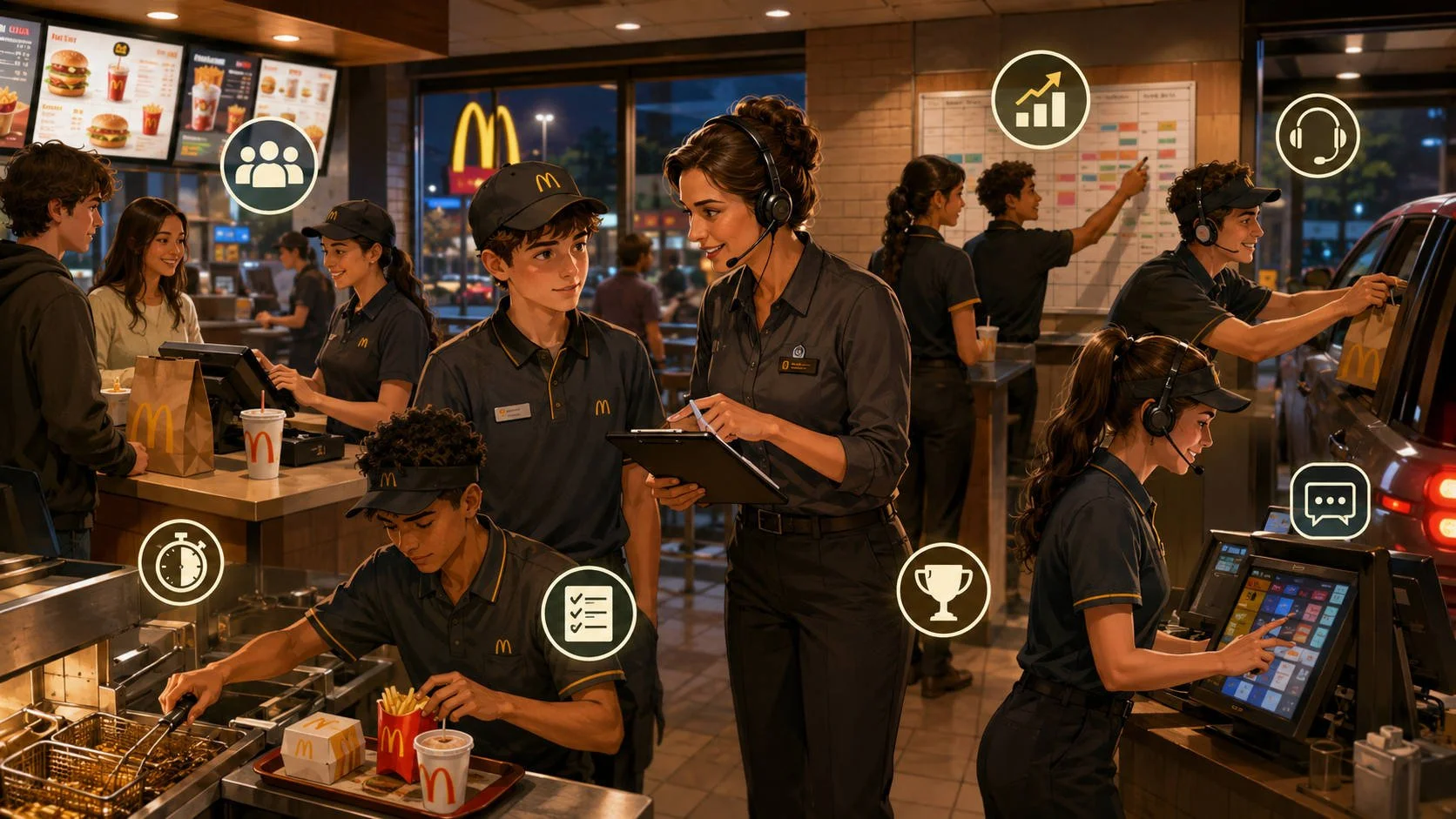
McDonald’s managers know better. They know the restaurant is not just a burger machine. It is a training ground disguised as a place that sells hash browns. It is speed, food safety, labor planning, customer psychology, inventory, cash control, conflict resolution, coaching, cleaning standards, and the daily miracle of getting 14 people with different moods, school schedules, and life problems to produce consistent food under fluorescent pressure.
McDonald’s itself claims that 1 in 8 Americans have worked at a McDonald’s restaurant, and the company frames that experience as a source of “critical life skills,” networks, and career opportunities. Yes, this is corporate branding, obviously, because corporations do not say “we taught Dylan to stop being late” when “launched futures” is available. But the point stands: fast food is often a first job, and first jobs are where people either learn work habits or discover that “I’m just not a morning person” is not a career strategy.
Teenagers See a Starter Job. Managers See a Skills Factory.
The teenage mistake is thinking a food job only counts if it looks fancy. If there is no chef coat, no tasting menu, no copper pans, and no emotionally fragile man named Luca screaming about risotto, then apparently it is not a “real” food career. This is nonsense with a side of ketchup.
Food careers are not just about becoming a chef. They include restaurant management, franchise ownership, operations, training, supply chain, food safety, hospitality tech, marketing, product development, human resources, facilities, logistics, and corporate leadership. McDonald’s corporate careers page says the company has paths for people looking for a first job, career advancement, or a career shift, with roles across U.S. field offices, headquarters, and global operations. In other words, the burger is not the ceiling. The burger is the door.
Managers understand this because they are living inside the system teenagers dismiss. They see the crew member who always shows up early become the crew trainer. They see the teenager who learns every station become the shift manager. They see the person who can calm down a furious customer without turning into a Reddit post get promoted. They see the difference between “I work here” and “I am learning how a business runs.”
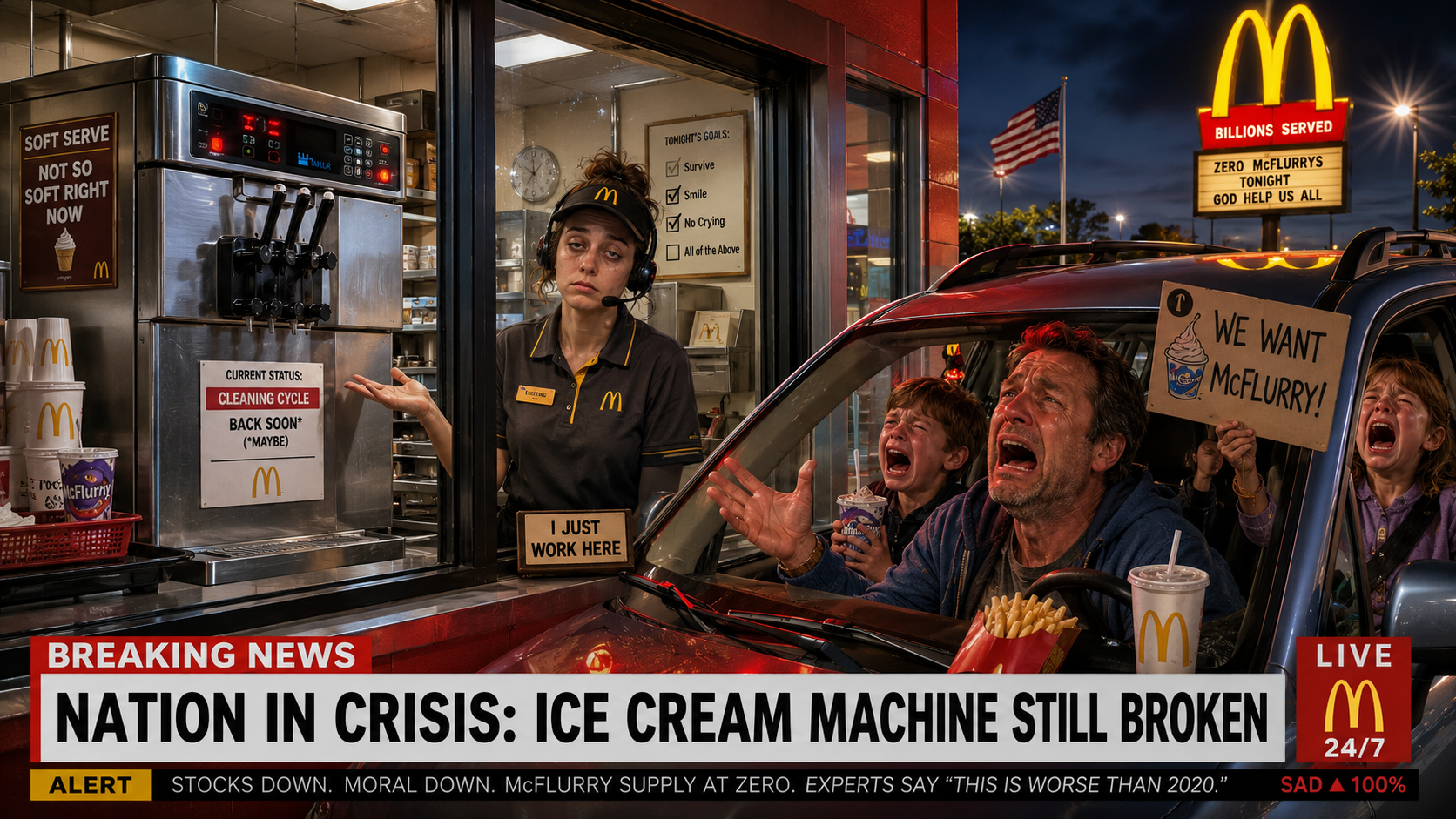
Teenagers often miss the boring truth: careers are usually not launched by glamorous moments. They are launched by being reliable when the ice machine is broken and everyone is yelling.
McDonald’s Teaches Operations, Which Is Business Wearing Nonslip Shoes
A McDonald’s manager does not just “watch people make fries.” That is the kind of analysis you get from someone whose only operational experience is organizing their Spotify playlists by mood.
The U.S. Bureau of Labor Statistics says food service managers are responsible for daily restaurant operations, including hiring and training employees, ordering supplies, overseeing food prep, maintaining health and food safety standards, handling complaints, scheduling staff, managing budgets and payroll, and establishing customer-service standards. That is not a side gig. That is a small business operating at drive-thru speed.
This is what teenagers miss: a restaurant is a live business class with grease traps. Every rush is a case study. Every short-staffed Saturday is a crisis-management simulation. Every wrong order is a customer-retention exercise. Every wasted case of lettuce is cost control. Every late employee is labor planning. Every broken freezer is risk management. Every angry parent at the counter is a communications final exam no one studied for.
And unlike school projects, the consequences are immediate. You do not get to turn in the lunch rush next week with a note from your mom.
Speed Is a Career Skill, Not Just a Fast-Food Requirement
McDonald’s managers know speed is not just moving quickly. Speed is preparation. Speed is layout. Speed is repetition. Speed is knowing where everything is before the rush turns the kitchen into a beeping escape room.
Teenagers often think speed means panic. Managers know speed means systems.
That is why fast food can be so useful as career training. It teaches sequencing: what needs to happen first, what can wait, what must be done now, and what will ruin everyone’s day if forgotten. It teaches prioritization: take the order, fill the drinks, drop the fries, clear the screen, restock before the next wave. It teaches communication: short, clear, useful information delivered while three machines scream and someone asks where the barbecue sauce went.
McDonald’s Canada says training starts as soon as employees join the team, with crew trainers, managers, and other employees showing new hires the ropes, and that workers can build teamwork, leadership, communication, guest service, responsibility, and time-management skills. Corporate language, yes, but also basically the unofficial curriculum of surviving a dinner rush without becoming a human puddle.
A teenager who learns speed at McDonald’s is not just learning “fast food.” They are learning how to operate under pressure. That skill travels. Kitchens, hospitals, warehouses, events, retail, logistics, customer service, emergency response, entrepreneurship — all of them reward people who can stay useful when the room gets loud.
Managers Know the Ladder Is Real, Even If It Looks Like a Mop Handle at First
The restaurant industry is one of the few places where the entry-level ladder is not just decorative corporate wallpaper. The National Restaurant Association says 63% of adults have worked in the restaurant industry, 9 in 10 restaurant managers started in entry-level positions, and 8 in 10 restaurant owners started in entry-level roles. That does not mean every teenager folding Happy Meal boxes is destined to become a franchisee, calm down, LinkedIn. It means the path exists, and lots of people actually use it.
McDonald’s loves this story because, frankly, it has one of the best versions of it. In its “1 in 8” campaign, McDonald’s highlighted franchise owner Paul Hendel, who started as a crew member at 16 and later owned 31 restaurants. That is not the normal outcome, obviously. Most people do not turn a teenage job into a small empire. Most people are just trying to make it through chemistry class and afford gas. But the story shows what managers already know: the crew job is not automatically a dead end. It becomes a dead end when you treat it like one.
The first promotion is often not glamorous. Crew trainer. Shift lead. Swing manager. Assistant manager. These titles will not impress anyone at a dinner party, unless the dinner party is full of people who have actually run restaurants, in which case they will nod like war veterans. But those roles teach supervision, accountability, scheduling, cash handling, coaching, and customer recovery.
That is career capital. It just happens to smell faintly like fries.
Food Careers Reward People Who Can Handle People
Teenagers often think technical skills matter most. Can I cook? Can I run the register? Can I make the drink? Can I use the fryer without creating a public safety event?
Managers know the real question is: can you handle people?
Can you tell a coworker they messed up without turning it into a cage match? Can you train someone who is slower than you? Can you apologize to a customer without sounding like a hostage reading a statement? Can you take feedback without acting like the manager personally attacked your bloodline? Can you keep your face normal when someone orders something deeply stupid?
The BLS lists communication, customer service, leadership, organizational ability, physical stamina, and problem-solving as important qualities for food service managers. That is the unsexy truth about food careers: the higher you go, the less the job is about touching food and the more it is about getting humans to perform a system without setting each other emotionally on fire.
This is why a teenager who learns hospitality has an advantage. Hospitality is not “being fake nice.” It is reading a situation, understanding what someone needs, and moving the interaction toward a result. That skill works in sales, healthcare, education, management, client service, real estate, aviation, tech support, and basically anywhere humans remain inconveniently involved.
McDonald’s Managers Learn Money Before Many Teenagers Learn Laundry
A manager knows food is math. Not romantic math. Not “Grandma’s recipe” math. Brutal, tiny-margin, why-is-the-waste-so-high math.
How many people do you schedule for the lunch rush? How much food do you prep? How do you avoid running out without overproducing? How do you keep labor costs in line without creating a dystopian understaffed circus? How do you train people fast enough to keep standards high? How do you reduce waste? How do you keep service times down? How do you count cash? How do you explain why a drawer is short without sounding like a courtroom drama?
Teenagers may see a manager counting inventory and think, “boring.” Managers see profit leaking out of a building through poor planning, bad habits, over-portioning, food waste, overtime, turnover, and mistakes. They know that a restaurant is not profitable because people “like burgers.” It is profitable because thousands of small actions do not collapse into chaos before 2 p.m.
That is why restaurant management can become a real career. BLS data shows food service managers had a median annual wage of $65,310 in May 2024, with projected employment growth of 6% from 2024 to 2034, faster than the average for all occupations. Is every McDonald’s manager making that? No, and location, ownership, role, and experience matter. But the broader occupation is not imaginary. It pays better than many people assume, because running food operations is harder than standing outside the counter pretending it is easy.
The Uncool Skills Are the Ones That Pay Later
Teenagers underestimate boring skills because boring skills do not look good on TikTok. “I always show up five minutes early” is not exactly viral content unless someone sets it to dramatic music and adds a wolf quote.
But managers know reliability is rare. Painfully rare. Like “printer that works on the first try” rare.
The teenager who shows up on time, keeps their phone away, learns multiple stations, asks questions, owns mistakes, and does not require three reminders to restock cups is already ahead of the teenage philosopher who believes work should “respect their energy” while arriving late with an iced coffee.
McDonald’s job postings for shift managers commonly emphasize communication, organization, quick decision-making, teamwork, customer service, safe and sanitary environments, and leadership. These are not cute résumé fillers. They are the actual job.
A manager knows that the person who can be trusted gets more chances. Better shifts. More training. First crack at leadership. A reference. A recommendation. Maybe tuition help. Maybe a corporate path. Maybe a franchise path. Maybe just the confidence to walk into the next job interview and say, truthfully, “I can handle pressure.”
That matters. A lot. More than being “passionate,” the most overused word in entry-level job applications besides “motivated,” which usually means “I would like money.”
McDonald’s Training Is More Serious Than Teenagers Think
The phrase “Hamburger University” sounds like a joke invented by a stoned guidance counselor. But McDonald’s has long used structured training to develop managers and operators, and the company describes Hamburger University as a global training center focused on restaurant operations procedures: quality, service, cleanliness, and value.
The American Council on Education also lists McDonald’s management training in its National Guide, describing courses designed to improve restaurant management skills and knowledge, including on-the-job training and instruction through Hamburger University and field offices. Some historical courses have even had ACE credit recommendations. So yes, “Hamburgerology” may sound ridiculous, but the training infrastructure is not imaginary.
This is what managers know: big food companies run on systems, and systems need trained people. A teenager may think training is a video you click through while trying not to fall asleep. A manager sees training as the difference between one messy restaurant and a brand that can reproduce the same experience in thousands of locations.
That is a career lesson hiding in plain sight: consistency is valuable. People who can create consistency, teach consistency, and improve consistency get promoted.
The Education Benefits Are Not Decorative
Another thing teenagers miss: food jobs can sometimes help pay for school. Not always. Not everywhere. Benefits vary by location, franchise, eligibility, hours, and role, because the phrase “participating location” is where dreams go to read fine print.
Still, the opportunity can be real. McDonald’s U.S. restaurant careers site lists tuition assistance of up to $3,000 per year for higher learning among potential benefits at certain locations, while Archways to Opportunity says eligible McOpCo part-time restaurant employees may receive $2,500 per year, and eligible full-time restaurant managers at participating franchise locations may receive $3,000 per year. McDonald’s says benefits vary by position and location, and independent franchisees control employment matters in their restaurants, which is corporate for “ask your actual manager, not a motivational poster.”
McDonald’s also says more than 90,000 crew members have received support through Archways to Opportunity since 2015, while an older corporate page reported over 60,000 participants and nearly $125 million in tuition assistance by that point. The numbers have changed over time, but the direction is clear: education benefits are part of the labor strategy, not just a brochure garnish.
A teenager who treats the job seriously may be able to turn hours worked into tuition help, credentials, references, or career counseling. A teenager who treats it like a place to complain about customers until quitting by text gets less, shockingly.
Food Service Is Hard. Managers Know That Too.
This article is not a motivational poster with a headset. Food work is hard. It can be stressful, repetitive, underpaid, understaffed, and physically draining. Customers can be awful with the confidence of people who think a coupon gives them constitutional authority.
BLS says food service managers often work evenings, weekends, and holidays; the work is hectic; dissatisfied customers can be stressful; and managers have one of the higher rates of injuries and illnesses because kitchens involve hot surfaces, sharp tools, crowded spaces, slippery floors, and other cheerful little hazards. So no, the career path is not just “smile near fries and become rich.”
The entry-level pay can also be modest. BLS reported that food and beverage serving and related workers had a median hourly wage of $14.92 in May 2024, with fast food and counter workers at $14.65. That is not yacht money unless the yacht is inflatable and sad.
Managers know both sides: the job can teach valuable skills, and the job can be exhausting. Teenagers should know both too. Do not romanticize the work. Do not dismiss it either. It is not “nothing.” It is also not automatically a golden ticket. It is a platform. What it becomes depends on the worker, the manager, the franchise, the market, and whether anyone involved understands how to make growth visible.
The Manager’s Secret: Your First Food Job Is a Reputation Machine
Teenagers think a first job is temporary, so they treat it like it does not count. Managers know temporary jobs create permanent evidence.
Your attendance counts. Your attitude counts. Your ability to recover from mistakes counts. Your willingness to learn new stations counts. Your behavior when the manager is not watching counts. Your response to boring tasks counts. Your ability to not start drama in a group chat counts. Truly, the bar is not in the clouds.
A food job gives teenagers something many classrooms do not: public accountability. Customers do not care that you are “usually better at mornings.” Coworkers do not care that you are having a character-building semester. The order is either right or it is not. The station is either stocked or it is not. The floor is either clean or it is auditioning for a lawsuit.
That feedback can be uncomfortable. Good. Useful things often are. Like vegetables, brake lights, and being told your availability form is not a personality quiz.
What Teenagers Should Actually Do With a McDonald’s Job
Treat the job like a paid training program, because in many ways, it is.
Learn every station you can. The more you understand the system, the more valuable you become. Being “the fries person” is fine for a week. Being the person who can jump from front counter to drive-thru to kitchen without causing a small national emergency is better.
Ask your manager what promotion looks like. Not in a weird “I am ready to lead this empire” way after three shifts. Just ask, “What would I need to learn to become a crew trainer?” Managers love this because it suggests you may be one of the rare teens who understands time exists beyond Saturday.
Keep track of skills. Scheduling, customer service, POS systems, food safety, inventory, training, cash handling, conflict resolution, opening or closing duties. These become résumé bullets later. Do not write “worked at McDonald’s.” Write what you actually did, unless what you actually did was hide in the walk-in, in which case improve your life first.
Use the benefits. Ask about tuition assistance, training, scholarships, scheduling, and advancement. Do not assume they will magically descend from the ceiling with a choir. Programs have eligibility rules, and managers are not psychic despite knowing exactly who forgot to clean the lobby.
Build references. A good manager reference from a first job can matter more than a vague club title from school. “Reliable, trained others, handled pressure, showed up on time” is a gorgeous little sentence in the entry-level job market.
The Final Lesson McDonald’s Managers Know
McDonald’s managers know that food careers are built from invisible skills. Teenagers often see the uniform, the headset, the fryer, and the customers who somehow need 14 sauces for six nuggets. Managers see time management, operations, safety, staffing, coaching, service recovery, inventory, leadership, and money.
They see who is learning. They see who is coasting. They see who can be trusted.
The teenager who figures this out early gets a huge advantage. Not because McDonald’s is magic. It is not. It is a restaurant chain, not a fairy godmother with a fry basket. But it is a place where young workers can learn the habits that make careers possible: show up, pay attention, move fast, communicate clearly, solve problems, control your attitude, learn the system, and become useful under pressure.
That is what teenagers miss when they call it “just fast food.”
It is fast food. It is also business school with a drive-thru window, leadership training with mop buckets, and a crash course in humanity served between a beeping fryer and a customer who insists they ordered no pickles.
And frankly, if you can survive that with your reputation intact, you are already learning more about work than half the people writing motivational posts about “grindset” from a desk they arrived at late.