What Lionel Messi Says About Athlete Food Mythology
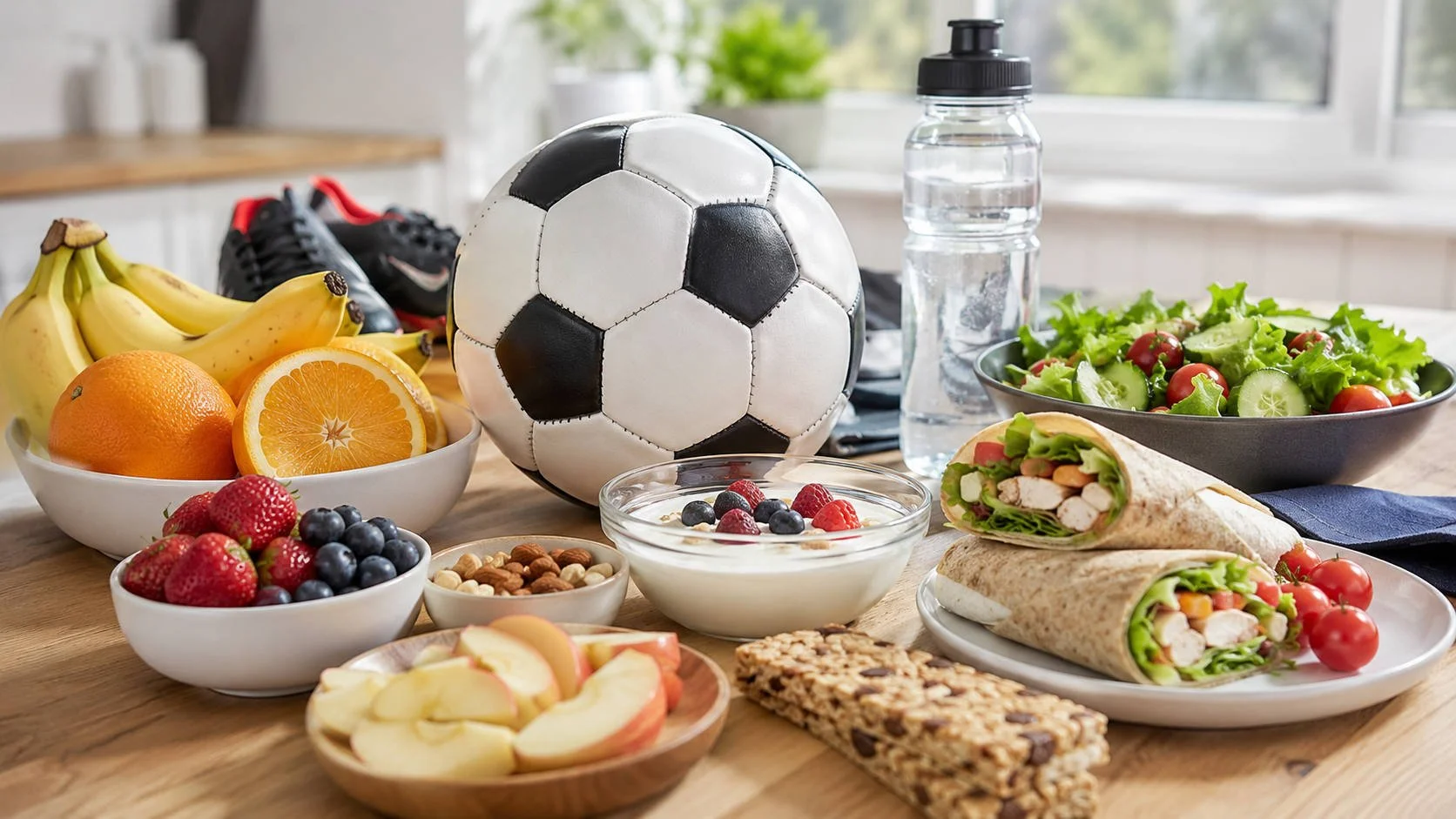
Lionel Messi is one of the funniest people to build a nutrition myth around because his entire career is basically an insult to every gym influencer who thinks eating chicken, rice, and sadness out of identical black containers makes them spiritually closer to greatness. Messi is not famous because he discovered an enchanted salad. He is famous because he is Lionel Messi: eight-time Ballon d’Or winner, World Cup champion, Barcelona deity, Inter Miami phenomenon, and the sort of footballer who made defenders look like furniture being rearranged by weather.
And yet, because the internet cannot see an elite athlete without immediately asking what brand of oatmeal created him, Messi has become part of the grand swamp of athlete food mythology. You know the genre. “What does Messi eat?” “What is Messi’s secret diet?” “Can I drink yerba mate and become the left foot of God?” No, Brandon. You will drink bitter leaf water and still misplace your keys.
Messi’s food story is actually more interesting than the usual performance-nutrition fairy tale. It includes junk food, vomiting, a diet overhaul, fish and salads, a nutritionist, Argentine comfort food, mate rituals, and eventually his name being slapped on burgers and chicken sandwiches because capitalism saw a football legend and said, “Can we put chorizo on that?”
Lionel Messi Diet Myths Start With the Dumbest Question: What Made Him Great?
The most annoying version of athlete food mythology assumes that greatness is hiding inside one meal. Eat like Messi and maybe you, too, will become Messi. This is the nutritional thinking of a medieval peasant licking a king’s spoon and expecting land ownership.
Messi’s career makes that fantasy look stupid immediately. He was already an absurd talent as a child. Britannica notes he moved to Barcelona at age 13, rose quickly through the club’s youth system, and made his informal first-team debut at 16. By the time nutrition became a public part of the story, he was not some random adult waiting for quinoa to unlock his destiny. He was already one of the most dominant footballers on earth.
That matters because food did not create Messi from scratch. Food helped manage the machine. There is a difference. A violinist still needs a violin that is not on fire, but the violin did not write the concerto. This distinction is too complicated for the internet, which prefers every athlete story to become “MAN ATE FIVE ALMONDS, ASCENDED TO GODHOOD.”
Messi’s Vomiting Story: Junk Food Was Not a Training Plan, Apparently
The most useful Messi food story is also the least glamorous: he used to eat badly and sometimes vomited during matches. In a 2018 interview reported by Sports Illustrated and FotMob, Messi said he had eaten poorly for years, including chocolate, alfajores, and fizzy drinks, and said that once he changed his eating habits, the vomiting stopped.
This is where athlete food mythology usually turns into a carnival ride for idiots. One side screams, “See, diet fixed everything!” The other side says, “He was still elite eating junk, so diet doesn’t matter!” Both are wrong, because apparently nuance was left in a cab.
What Messi actually reveals is simpler: elite talent can survive bad habits for a while, but bad habits still collect rent. He was not magically immune to poor nutrition. He was just so gifted that he could be the best player in the world while also eating like a teenager who found coins in a couch. That is not a recommendation. That is a biological prank.
Messi later described eating more organized meals with foods like fish, meat, vegetables, and salads. He did not say, “I began consuming lunar pollen and Himalayan oxygen broth.” He cleaned up the obvious chaos. He ate like a professional athlete instead of a vending machine with hair.
The Giuliano Poser Chapter: The Nutritionist Did Not Invent Messi
In 2014, Messi began working with Italian nutritionist Giuliano Poser, and multiple reports credited the change with helping him improve body composition and performance habits. The Independent reported that Poser identified water, good olive oil, whole grains, fresh fruit, and fresh vegetables as foundational foods, while also warning against sugar and refined flours.
ESPN and Football España reported Poser’s explanation that Messi reduced processed foods and replaced them with vitamin-rich foods such as cereals, vegetables, fish, and olive oil. Poser also described Messi as intelligent and intuitive enough to realize he needed to change something to keep performing at the highest level.
Now watch how the myth machine handles this. The internet hears “nutritionist helped Messi” and turns it into “SECRET ITALIAN DIET THAT MADE MESSI UNSTOPPABLE.” Fantastic. A grown man ate vegetables and suddenly we have to pretend spinach is a classified weapon.
The actual lesson is not that Poser had a magic grocery list. The lesson is that elite athletes often benefit from structure, personalization, and professional support. The joint position statement from Dietitians of Canada, the Academy of Nutrition and Dietetics, and the American College of Sports Medicine says performance and recovery are enhanced by well-chosen nutrition strategies involving the type, amount, and timing of food, fluids, and supplements, adjusted to the athlete’s sport, goals, health, body composition, practical challenges, and food preferences.
In other words: “eat better” is real. “Copy Messi’s fridge and become Messi” is toddler science wearing compression socks.
Messi’s Favorite Food Is Milanesa, Which Ruins the Broccoli Monk Fantasy
Here is where the mythology gets fun. Messi’s favorite food is not some sterile bowl of optimized beige fuel. It is milanesa, the glorious Argentine breaded cutlet that says, “Yes, I am fried, and yes, your abs can write a complaint letter.”
Axios reported on Miami’s “MilaMessi,” a breaded steak dish inspired by Messi’s favorite childhood meal in Argentina and an homage to the milanesa napolitana his mother, Celia Cuccittini, used to make. The restaurant serving it, Amalfi Llama in Aventura, counts the Messi family among its investors, and a spokesperson described the dish as an imitation of the family recipe.
Hard Rock took the mythology global with the Messi Chicken Sandwich, a Milanese-style chicken sandwich inspired by one of Messi’s favorite Argentine dishes growing up. In the release, Messi said he was thrilled to bring the flavors of his home country to the world and called milanesa one of his favorite dishes.
This is important because athlete food mythology usually strips athletes of culture. It wants them to be pure performance robots: no childhood dishes, no family meals, no nostalgia, no sauce, no emotional attachment to anything except macros. Just protein, discipline, and the haunted eyes of a man who has not enjoyed lunch since 2017.
Messi’s milanesa story says food is not only fuel. It is memory. It is home. It is family. It is Argentina on a plate, covered in breadcrumbs and absolutely not asking permission from a wellness app.
Yerba Mate and the Myth of the Secret Athlete Drink
Then there is yerba mate, the South American caffeine-rich drink often associated with Messi and other footballers. GOAL describes mate as a traditional South American drink popular in Argentina, Uruguay, Paraguay, and Brazil, and notes that Messi is frequently pictured with a mate gourd.
During the 2022 World Cup, Business Insider reported that Argentina brought about 1,100 pounds of yerba mate to Qatar, with midfielder Alexis Mac Allister saying he drank it largely because it brought the team together.
Naturally, the internet took one look at this and prepared to turn mate into a football potion. Because we are apparently incapable of allowing a cultural ritual to exist without stuffing it into the “biohack” drawer.
Mate may contain caffeine. It may be part of a routine. It may help players feel settled, alert, or connected. But that does not mean the gourd is a wizard cup. Argentina did not win because a herb leaf personally marked Kylian Mbappé. They won because they had elite players, tactics, mentality, execution, and yes, rituals that helped the squad feel like a squad rather than 26 stressed millionaires in matching pajamas.
Food mythology loves secrets. Real athlete food culture loves routines.
The Messi Burger: When Athlete Food Mythology Becomes Merchandise
The most hilarious evolution of Messi’s food mythology is that his name now sells restaurant food. Hard Rock launched the Messi Burger in 2022, describing it as a burger inspired by Messi’s ideal components, with beef patties, provolone, sliced chorizo, caramelized red onion, smoky sauce, lettuce, tomato, and a brioche bun. Because nothing says “elite football nutrition” like “try it with a fried egg for a small fee.”
Then came the Messi Chicken Sandwich in 2023. Then a Messi kids menu. Hard Rock said the kids menu included Messi X Burger, Messi Golden Chicken Sandwich, and other kid-friendly options, plus posters, stickers, and a mini golden soccer ball toy. Messi said that as a father of three, he had a special connection with kids and wanted families to have tasty meals and a fun dining experience.
This is athlete food mythology in its final capitalist form. First, fans ask what the genius eats. Then brands bottle the aura. Then families order the aura with fries. Eventually “greatness” arrives on a tray next to a fountain drink, because nothing escapes the merchandise cannon.
To be clear, there is nothing wrong with a Messi burger existing. It is fun. It is absurd. It is a restaurant collaboration, not a peer-reviewed training protocol. The problem starts when people confuse “food associated with Messi” with “food that explains Messi.” That is how you end up believing a sandwich has tactical awareness.
What Messi Reveals About Sports Nutrition Myths
Messi’s food story dismantles several annoying myths at once.
The first myth is that elite athletes are perfect eaters from birth. Messi himself said he ate badly for years. So much for the fantasy that greatness emerges only from spotless discipline and steamed poultry arranged by moon phase.
The second myth is that diet does not matter if you are talented enough. Messi was great before his diet overhaul, yes, but he also noticed a meaningful change after organizing his eating. Talent can cover a lot of mess. It cannot make the mess free.
The third myth is that one “clean” diet works for every athlete. Sports nutrition guidance repeatedly emphasizes personalization: athlete needs depend on sport, training load, goals, body size, food preferences, timing, and practical realities.
The fourth myth is that the secret must be a supplement, drink, powder, or ancient leaf situation. The IOC consensus statement on dietary supplements says supplements can play a small role in a high-performance athlete’s plan, but they are not the foundation and can carry risks if misused.
The fifth myth is that enjoyment is weakness. Messi’s food identity includes fish, salads, olive oil, vegetables, mate, milanesa, and branded burgers. That is not contradiction. That is being a human being instead of a protein calculator with cleats.
The Useful Lionel Messi Diet Lessons for Normal People
Nobody reading this should attempt to “eat like Messi” unless they also train like Messi, recover like Messi, have Messi’s genetics, hire Messi-level staff, and possess a left foot that makes defenders reconsider their life choices. Since you probably do not, here is the non-stupid version.
Start by removing the obvious garbage before inventing advanced theories. Messi did not publicly credit his improvement to a thirty-seven-step biohacking ritual involving blue light glasses and elk collagen. He said he moved away from years of sweets, fizzy drinks, and disorganized eating. That is not sexy, but neither is being sick during a match in front of 60,000 people.
Make meals repeatable, not theatrical. A useful diet is one you can follow when life is annoying. Fish, meat, vegetables, salads, whole grains, olive oil, fruit—these are not mystical. They are boring in the way a roof is boring. You only appreciate them when your old system starts leaking on your head.
Keep cultural foods in the picture. Messi’s milanesa story matters because a diet with no emotional attachment becomes a punishment spreadsheet. You do not need to delete every food you love. You need a structure where favorite foods do not become the entire operating system.
Match food to the job. The sports nutrition position statement is clear that timing, type, and amount matter across training and competition scenarios. Eating for a match, eating for recovery, and eating for a random Wednesday are not the same assignment.
Do not worship supplements. The supplement industry loves making normal food sound like a peasant activity. But IOC guidance is much less dramatic: supplements may help in specific cases, but they are a small piece of a much larger nutrition plan.
Get professional help if performance actually matters. A registered sports dietitian beats a YouTube goblin yelling about seed oils from a car.
The Real Meaning of Lionel Messi’s Food Story
Messi says athlete food mythology is mostly bullshit with a garnish of truth.
The truth: food matters. It affects energy, recovery, body composition, digestion, and performance. Messi’s own account of changing his eating habits and no longer vomiting during matches is a pretty strong argument that even genius has a stomach and that stomach occasionally files formal complaints.
The bullshit: food explains everything. It does not. Messi was Messi before the salad era. He was Messi before Hard Rock put his name on a burger. He was Messi before every blog tried to turn olive oil into a sacred tactical doctrine.
The best reading is this: Messi’s diet story is not a miracle tale. It is a maturity tale. Young genius gets away with chaos. Older genius professionalizes. Culture stays. Family food stays. Ritual stays. The work gets organized. The myth gets monetized. The fans buy the sandwich.
And somewhere in the middle of all that, the actual lesson survives: elite performance is not built from one magic food. It is built from talent, training, recovery, structure, adaptation, support, and enough common sense not to treat soda and chocolate like a pre-match nutrition plan.
Messi did not prove that food is everything.
He proved that food is one part of everything.
Which is less exciting than “eat this sandwich and become a World Cup champion,” but considerably less stupid.