What BeReal Revealed About How People Actually Eat
BeReal did not set out to become a food diary. It set out to be the anti-Instagram: one random notification, two minutes, front and back cameras, no filters, no precious little lifestyle fantasy where everyone lives inside a matcha commercial. The app tells users to post once a day at a random time, using both cameras, and it does not let them see friends’ posts until they post their own. This is less “curated social presence” and more “hostage situation with a selfie component.”
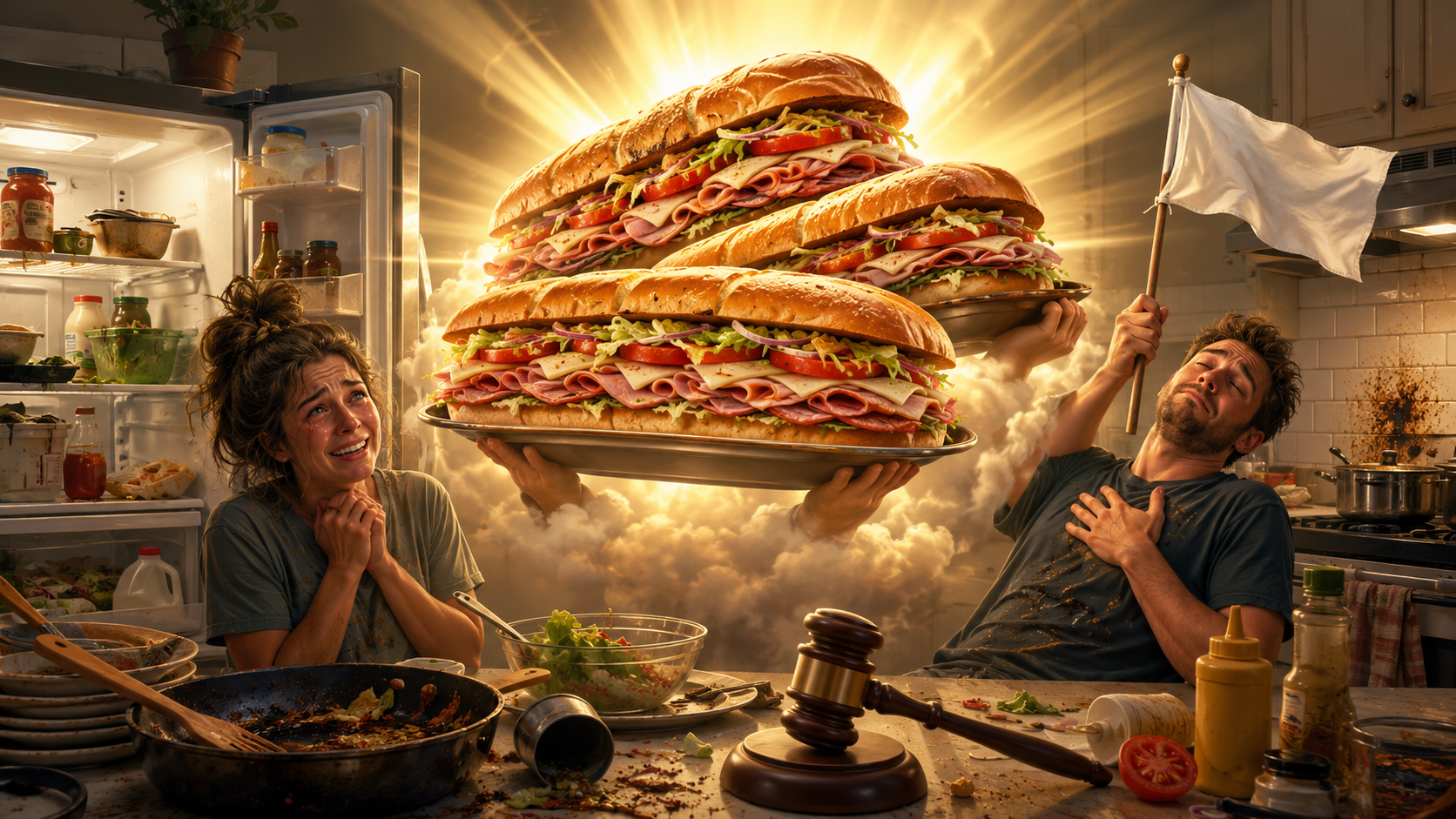
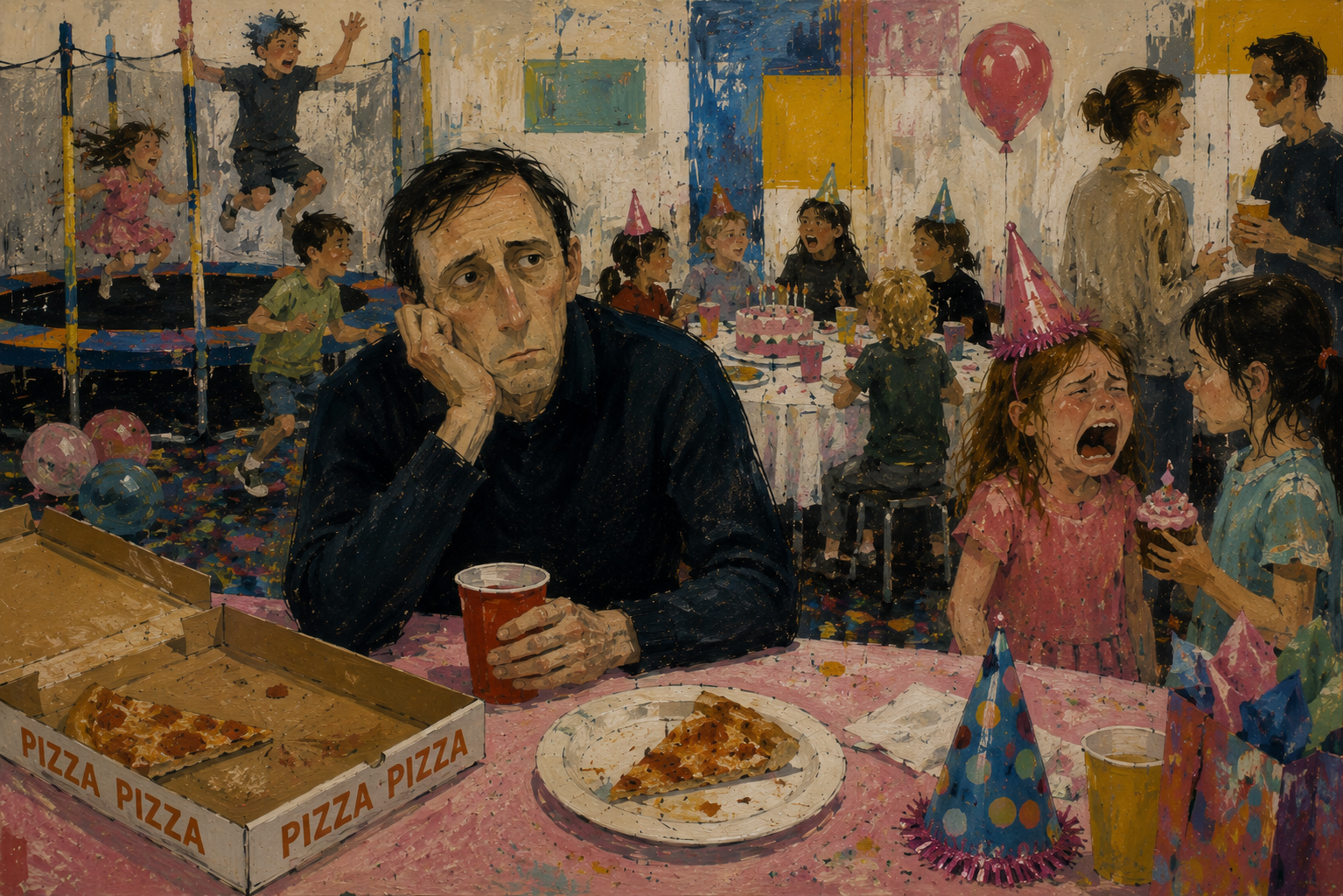
And because food is always lurking nearby like a carbohydrate raccoon, BeReal accidentally became one of the more honest windows into how people actually eat.
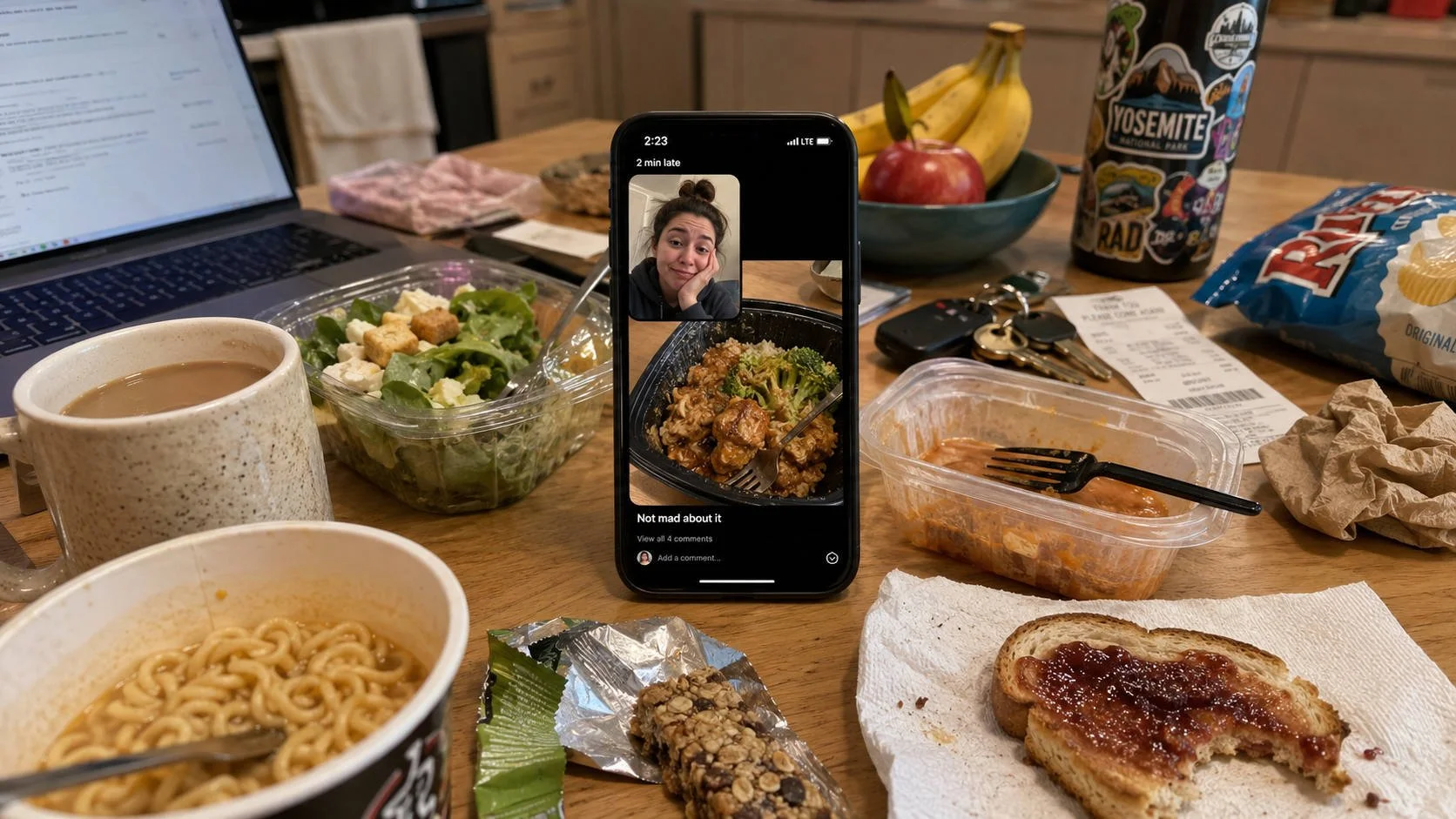
Not how people say they eat. Not how influencers pretend they eat while standing near a marble countertop holding a smoothie the color of wet lawn clippings. How people really eat: in bed, in cars, at desks, half-standing in kitchens, next to laptops, beside laundry, with one sad fork, under fluorescent dorm lighting, while a phone screams “Time to BeReal” like a digital parole officer.
BeReal revealed that modern eating is less “three balanced meals” and more “a rotating series of survival snacks interrupted by caffeine and shame.”
BeReal Turned Food Into Evidence, Not Content
Instagram trained everyone to treat food like a tiny celebrity. You angle the plate. You wait for the light. You move the napkin like you are directing a low-budget perfume ad. You crop out the mess. You pretend your brunch was a tasteful cultural event and not a $22 egg situation arranged by people who use slate plates because ceramic apparently became too emotionally available.
BeReal ruined that little dinner theater by removing time. The app’s official pitch is a random two-minute window, no filters, and front-back capture meant to show “real life, as it happens.” Its own homepage says it rejects filters, staging, and uploads, using the front-back format to show both the scene and the person behind it.
That matters because food stops being the star and becomes background evidence. The bowl of cereal is not styled. The pizza box is not art-directed. The iced coffee is not “content.” It is just there, sweating on a desk like the official beverage of poor sleep hygiene.
BeReal made food less aspirational and more forensic. It said: here is what was near your hand when the notification attacked.
People Eat at Desks Like They Are Being Punished by Capitalism
One of the great BeReal food truths is that the desk meal is not an exception. It is a civilization.
There are laptop lunches. Keyboard snacks. Spreadsheet sandwiches. Forks resting on notebooks. A plastic container of leftovers beside a computer that has seen more crumbs than a daycare carpet. Somewhere in the dual-camera chaos, BeReal revealed the average modern lunch is less “mindful nourishment” and more “I am inhaling rice beside a glowing rectangle because productivity culture has eaten my chair.”
This is what polished food media hides. Food content usually shows the finished plate. BeReal shows the ecosystem: the cables, the tabs, the hoodie sleeve, the half-empty water bottle from yesterday, the desktop that looks like a raccoon filed taxes on it.
And honestly, this is useful. Food is not just nutrients. Food is context. A review on digital food photography notes that food images can offer an intimate look into private life because food is tied to everyday experience, culture, and social exchange. BeReal accidentally weaponized that insight by showing the meal’s natural habitat: next to deadlines, boredom, fatigue, and a mousepad with emotional damage.
BeReal Exposed the Myth of the Perfect Daily Diet
Instagram food culture loves pattern. Smoothie bowls. Meal prep. Color-coded vegetables. Protein oats in jars. A salad photographed from above like it is applying to graduate school.
BeReal showed the opposite: eating is chaotic, repetitive, and deeply unsexy. One day it is toast. The next day it is coffee. Then instant noodles. Then a granola bar. Then the same coffee again, now spiritually older. Then takeout in bed. Then a salad, briefly, because the body made a formal complaint.
This is not failure. This is normal life.
Research on food photography and healthy eating notes that people use food photos in many ways, including viewing, creating, and sharing food content, and that these habits can influence eating behavior. But the usual food-photo world is biased toward what people choose to show. BeReal’s random timing disrupts that. It catches the unplanned meal, the non-meal meal, the snack pretending to be lunch, and the dinner that is just “whatever can be microwaved before I become legally difficult.”
The result is a more accurate portrait of eating: not a wellness journey, not a cheat day, not a “what I eat in a day” performance, but a pile of tiny decisions made under time pressure by a nervous mammal with a debit card.
Snacks Are the Real Meal Plan
BeReal revealed that snacks are not side characters. They are the government.
Chips. Fruit. Protein bars. Cookies. Crackers. A spoon in peanut butter. A banana with one bite taken out of it like a crime scene. A handful of cereal eaten dry because milk would involve infrastructure. These are not rare moments. They are the load-bearing beams of modern eating.
The funniest part is that snack eating looks much more real than “clean eating” ever did. Clean eating online always feels like someone is trying to sell you a supplement made from powdered superiority. BeReal snack eating feels like a person trying to remain functional until dinner, which may or may not happen before 10:47 p.m.
Large-scale research on adolescents has linked problematic social media use with poorer dietary habits, higher sweets and sugary drink intake, and lower breakfast intake, while also noting that social media’s relationship with eating is complicated and platform-dependent. BeReal’s value is not that it fixes this. Please. It is an app, not a registered dietitian with push notifications. Its value is that it makes the snack economy visible.
It shows that people are not always choosing between “healthy meal” and “unhealthy meal.” They are choosing between “eat something now” and “become a haunted chair.”
Coffee Is Not a Drink, It Is a Scheduling System
If BeReal revealed one sacred truth, it is this: coffee is less a beverage than a personal operating system.
BeReal is full of coffee cups. Desk coffee. Car coffee. Dorm coffee. Iced coffee. Coffee held in bed. Coffee beside laptops. Coffee beside unread books. Coffee beside someone’s face doing the expression of a person who has been alive for too many consecutive mornings.
The coffee is often more present than the meal. It is the meal’s aggressive little manager. It says, “No time for breakfast, but here is anxiety in a cup.”
This is where BeReal’s random timing becomes funny in a tragic way. The app does not ask, “Are you having a nutritious lunch?” It asks, “What are you doing right now?” And the answer, with disturbing frequency, is “holding caffeine like it is a rescue flare.”
BeReal Proved Most Food Is Ugly and That Is Fine
Real food is often ugly. Not morally ugly. Visually ugly. Leftovers slump. Sauces congeal. Microwaved rice looks like it survived a small trial. Soup in a mug is not winning awards. Pasta in a plastic container has the bleak authority of a municipal meeting.
Instagram made people believe food needs to be photogenic to matter. BeReal showed food as it actually exists: eaten in imperfect light, from imperfect containers, by imperfect people wearing socks indoors like exhausted indoor goats.
This is probably good for everyone’s sanity. A BeReal study with teens found that users appreciated seeing friends in ordinary moments, including people in bed eating snacks or watching Netflix, because it made others seem more normal and less polished. That is the food lesson too: ugly eating is not a personal failure. It is Tuesday.
Not every meal is supposed to look like a cookbook cover. Some meals are supposed to do a job and then disappear. A burrito eaten over the sink does not need branding. It needs structural support.
BeReal Made Eating Look Social Again, But Not in the Fake Dinner-Party Way
Food social media usually loves the big moments: birthdays, tasting menus, cocktails, dinner parties, brunches where everyone pretends a tiny chair is comfortable. BeReal catches quieter social eating: roommates on a couch, friends at a cafeteria table, someone’s partner making toast in the background, a group sharing takeout from containers like raccoons with degrees.
The app’s audience settings are built around friends and friends-of-friends, not just broadcast fame; users can choose whether a post goes only to friends or more broadly depending on available settings. That smaller audience changes food sharing. A meal does not have to impress strangers. It only has to say, “This is where I am. This is what is happening. Yes, that is a paper plate. Mind your business.”
That is a better kind of food intimacy than influencer eating, which often feels like watching someone chew inside a sales funnel.
BeReal Also Revealed That “Authenticity” Can Still Be Performed, Because Humans Are Ridiculous
Now, before we canonize BeReal as Saint Unfiltered of the Holy Snack Drawer, let’s be adults. The app did not eliminate performance. It merely made performance more frantic.
BeReal lets users retake photos before posting, and late posts are allowed, though friends can see that the post was late. The teen self-presentation study found that some users still delayed, staged, retook, or avoided posting when they felt self-conscious, because apparently even “be real” needs a loophole department.
So yes, someone can still wait until the sushi arrives. Someone can point the camera away from the sad bowl. Someone can retake the photo until the coffee cup looks less like evidence. Humans are not authenticity machines. We are presentation goblins with thumbs.
But even staged BeReal is less polished than traditional food content. The pressure is lower. The camera is messier. The audience is usually smaller. The lie, if there is one, has less time to put on contour.
BeReal Showed That Food Photos Are Rare Until the App Forces the Issue
Here is the funny research wrinkle: despite the internet acting like everyone photographs every meal, one review cites a study of healthy university students in Singapore that found an average meal-time photography rate of about 5% across roughly 7,000 recorded meals; only 23% of participants photographed any meals, and those who did photographed around 16% of their meals.
Translation: most people are not actually photographing every sandwich like it owes them rent. A minority of food-photo power users generate a lot of the visible food internet. Shocking development: the internet may not be a perfect mirror of reality. Someone alert the Ministry of Obvious Disappointments.
BeReal changes the equation because it does not ask, “Is this meal worth photographing?” It asks, “What is happening now?” Sometimes the answer is food. Sometimes it is not. That makes the food moments feel less like voluntary performance and more like accidental data.
It is not a perfect study. It is not nutrition surveillance. It is not a national dietary assessment. But it is a vibe correction with a camera.
It Revealed the Gap Between Food Identity and Food Reality
People use food to perform identity. Vegetarian. Gym person. Brunch person. Budget person. Fancy person. “I meal prep” person. “I support local bakeries” person. “I only drink natural wine” person, a sentence that makes ordinary wine want to file a harassment complaint.
Research using social media data has found that food preferences can reflect broader values, identity, and social patterns, not just diet. Instagram lets users sharpen that identity into a clean little brand. BeReal tends to blur it with reality.
You may be a “healthy eating” person, but BeReal catches the fries. You may be a “foodie,” but BeReal catches instant ramen. You may be a “home cook,” but BeReal catches the delivery bag. You may be a “coffee lover,” but BeReal catches the third iced coffee, at which point love has become a hostage arrangement.
The reveal is not hypocrisy. It is complexity. People contain multitudes, and some of those multitudes are tortilla chips eaten from the bag.
BeReal Made Eating Less About Food and More About Time
The biggest thing BeReal revealed about eating is that food is often a scheduling problem disguised as a lifestyle choice.
People eat what is available. What is fast. What is cheap. What survives a backpack. What can be eaten between meetings. What can be reheated without summoning a landlord. What does not require dishes. What can be consumed while half-listening to a lecture, commuting, working, scrolling, or trying not to answer an email with “please release me.”
That is the part food culture often refuses to admit. It talks like every meal is an act of self-expression. BeReal shows that many meals are logistical triage.
A University of Washington story about Instagram food journaling noted that photos can help people notice patterns across meals, including the way “special occasion” foods stop looking special when they appear repeatedly in a grid. BeReal memories could create a similar mirror, though more chaotic and less nutrition-focused: a private archive of what your life actually looked like when the app shouted at you. BeReal’s Memories feature stores past posts privately for the user.
That means the app can accidentally say: look, you are not “bad at food.” You are busy, tired, underplanned, over-caffeinated, and living in an environment designed by people who think lunch breaks are folklore.
The Corporate Punchline: Even Realness Got Ads
Naturally, because capitalism cannot see a human moment without asking where to insert a brand rectangle, BeReal eventually moved further into advertising. Voodoo acquired BeReal for €500 million in 2024, and BeReal’s current ads page pitches the platform as a way to reach Gen Z and Millennials in an “unfiltered” environment with native placements, boosted posts, and campaigns.
This is the most predictable ending imaginable. First the app says, “Be real.” Then the ad deck says, “What if a beverage company was real near you?”
So yes, the future of BeReal food may include more brand interference. The snack drawer may become a “premium advertising environment,” which is a phrase so bleak it should come with a tiny funeral bell. Still, the original insight remains valuable: when you remove filters, reduce staging, and shrink the audience, food looks much less like aspiration and much more like life.
What BeReal Revealed About How People Actually Eat
BeReal revealed that people eat messily. Quickly. Repetitively. Socially. Privately. Guiltily. Joyfully. Randomly. At desks. In beds. In cars. In kitchens. Near laundry. Under bad lighting. Around other people. Alone. With coffee. With snacks. With leftovers. With takeout. With whatever could be assembled before the next obligation started barking.
It revealed that food is not always identity. Sometimes it is maintenance.
It revealed that “what I eat in a day” content is often a polished puppet show, while real eating is a calendar accident wearing crumbs.
It revealed that snacks are infrastructure, coffee is governance, leftovers are realism, and the desk lunch is apparently one of the dominant architectural forms of modern life.
Most importantly, it revealed that the normal meal is not a plated fantasy. It is a human trying to keep going.
And honestly, that is more interesting than another overhead shot of avocado toast arranged like it expects applause.