What Jamie Oliver Would Pack in a Kid’s Lunchbox Today
A kid’s lunchbox is a tiny plastic battleground. On one side: nutrition advice, school rules, budget limits, food safety, suspicious yogurt tubes, and a parent trying to leave the house with matching shoes. On the other side: a child who believes lunch should be beige, sweet, and shaped like either a dinosaur or a contractual obligation from a snack company.
This is exactly the kind of chaos Jamie Oliver has spent years stomping around in, usually with the energy of a man trying to drag school food out of the deep fryer by its collar. His current school-food campaigning is still focused on updating school food standards and actually enforcing them, not just printing lovely rules and then letting lunch descend into pizza-adjacent entropy. The School Food Project, backed by groups including the Jamie Oliver Group’s Ministry of Food Foundation, is aimed at improving school food, food education, and children’s outcomes.
So what would Jamie Oliver pack in a kid’s lunchbox today? Not a joyless box of raw broccoli and moral superiority. Not a £9 artisanal bento shrine that takes longer to assemble than a garden shed. Not a lunch designed to impress other parents on Instagram while the child quietly trades it for crisps behind the gym.
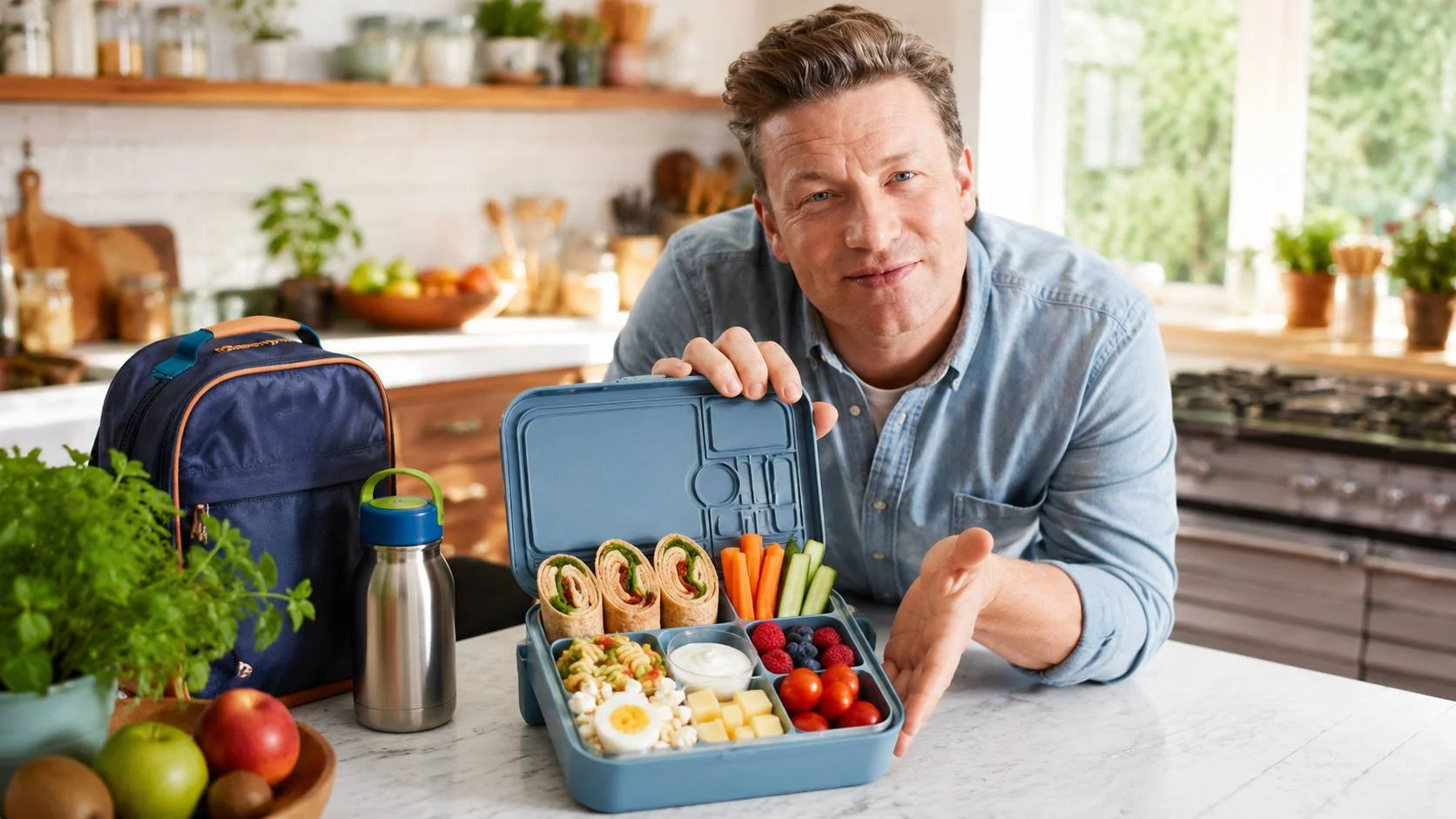
He would probably pack something that looks like this: real food, lots of colour, enough carbs to keep the kid functioning, enough protein to stop the 2 p.m. stomach opera, fruit, veg, a dip, water, and something the child will actually eat. Radical. Almost suspiciously sensible.
The Jamie Oliver Lunchbox Rule: Real Food, Not Snack Theatre
Jamie Oliver’s lunchbox style starts with one basic idea: feed children proper food. Not “clean eating,” because that phrase has been ruined by adults who think a courgette can replace joy. Proper food means recognisable ingredients, balanced meals, and flavours kids can learn to like instead of another lunch built around processed snack confetti.
His back-to-school recipe collection literally frames lunchboxes around “veg-packed sandwiches,” noodle salads, pasta salads, hummus with carrots, celery or breadsticks, crunchy carrot pittas, and after-school snacks that restore energy. That is a very clear pattern: starchy base, vegetables, protein or pulses, dips, leftovers, and actual taste.
The lunchbox should not be a punishment cube. It should be a small meal. A sandwich can be fine, but the phrase “ham sandwich every day until graduation” is not a food strategy; it is a hostage situation with bread.
Start With Carbs, Because Children Are Not Powered by Vibes
The first thing Jamie would not do is panic about carbohydrates. Children need energy. School is not exactly a low-demand activity. They sit, learn, run, shout, negotiate playground politics, lose jumpers, and somehow return home with one sock damp despite no rain. A lunchbox with no substantial carbohydrate is how you get a child who comes home acting like a Victorian orphan discovered Wi-Fi.
The carb does not have to be boring white bread every day, although bread is allowed to exist without a family meeting. Think wholemeal pitta, wraps, pasta salad, noodles, rice, couscous, potatoes, oat-based muffins, seeded bread, or crackers. NHS lunchbox guidance encourages making lunchboxes more interesting with fruit, veg, starchy foods and swaps such as rice cakes or popcorn instead of constant crisps. Harvard’s kids’ lunchbox guide also recommends letting children choose from protein, vegetables, fruit and other categories when packing the night before.
A Jamie-style lunchbox would use carbs as the foundation, not the entire building. Pasta with peas and pesto? Good. Noodles with peppers and chicken? Fine. Pitta stuffed with crunchy carrot and hummus? Excellent. A plain roll with a whisper of cheese and the emotional depth of printer paper? Try again, champion.
Protein: Enough to Last, Not Enough to Smell Like a Bus Station
Protein is where lunchboxes often get weird. Parents either forget it entirely and send crackers, fruit, and a muffin, which is basically a snack wearing a school uniform, or they overcorrect and pack boiled eggs, tuna, and leftover salmon in a warm classroom until the lunchbox develops its own social consequences.
Jamie’s back-to-school page points to chickpea hummus as a high-protein, high-fibre lunchbox snack paired with carrots, celery or breadsticks. That is exactly the kind of protein he would probably approve of: cheap, useful, kid-dippable, and not likely to clear a table when opened.
Protein options that make sense include hummus, chicken, turkey, egg, cheese, yogurt, beans, lentils, tuna if your child and their classmates can emotionally survive it, tofu, edamame, cottage cheese, or leftover roast meat. The goal is not to create a bodybuilder meal prep box for a nine-year-old named Oliver who still eats glue-adjacent snacks. The goal is steady fullness.
Vegetables Need a Job, Not a Lecture
Vegetables do not work in lunchboxes when they are packed like evidence. Three carrot sticks thrown into a corner beside a sandwich are not “veg.” They are orange guilt batons. Children can sense when vegetables have been included purely so a parent feels less like lunch was assembled by a vending machine.
Jamie’s lunchbox recipe suggestions lean heavily on vegetables that are built into the meal: crunchy carrot pittas, salad sandwiches, pepper and noodle salad, green pasta pots, hummus with vegetable sticks. The point is not to “hide” vegetables like they are fugitives. The point is to make them belong.
Good lunchbox vegetables have purpose. Cucumber gives crunch. Grated carrot gives sweetness. Peppers give colour. Cherry tomatoes give bite-sized drama. Lettuce can work if it does not become wet paper by noon. Slaw makes wraps better. Peas in pasta are tiny green lunchbox confetti. Roasted vegetables can go into couscous or wraps.
Add a dip. Hummus, yogurt dip, tzatziki, salsa, guacamole, or even a little ranch if that is the toll required to get a vegetable eaten. Yes, ranch. Calm down, nutrition monks. A vegetable eaten with dip is usually more useful than a dry vegetable returned home untouched, wilted, and silently accusing you.
Fruit Should Be Easy, or It Will Return Home Like a Tiny Rejection Letter
Fruit in a lunchbox needs to be easy. A whole apple is noble until it comes home with two bites out of it and a story about “not enough time.” Kids are busy at lunch. Busy talking, comparing snacks, dropping cutlery, and performing whatever elaborate social ceremony occurs around yogurt tubes.
NHS lunchbox guidance suggests bite-sized fruit such as chopped apple, peeled satsuma segments, strawberries, blueberries, halved grapes, or melon slices, because apparently children prefer fruit when it has been made less like homework.
This is not indulgence. This is strategy. Cut the fruit. Peel the orange. Halve the grapes for younger children. Add lemon to apple slices if browning causes a small courtroom drama. Use tinned fruit in juice when fresh fruit is expensive or your fridge has become a museum of forgotten berries.
Jamie Oliver would not pack fruit as a moral token. He would make it edible, visible, and easy to grab.
The Sandwich Is Not Dead. It Just Needs a Personality
A sandwich can absolutely belong in a Jamie-style lunchbox. But it needs to stop being the same sad rectangle every day. The sandwich has suffered enough.
Jamie’s back-to-school ideas include a “squash it sandwich” that uses leftover salad and a crunchy carrot pitta that kids can help prepare. That tells you the principle: use leftovers, use crunch, use vegetables, and let the kid participate so the lunchbox is not a parental solo act performed at 7:03 a.m. while everyone else asks where their shoes are.
Better sandwich ideas include chicken with grated carrot and yogurt dressing, hummus with cucumber and roasted peppers, cheese with apple slices and lettuce, tuna with sweetcorn, egg mayo with watercress, turkey with slaw, or leftover meatballs in a roll. Use pitta, wraps, bagels, seeded bread, flatbread, or English muffins. Variety does not require a culinary degree. It requires not packing the same damp ham square until the child develops a lunchbox thousand-yard stare.
The Best Jamie Oliver Lunchbox Is Built From Leftovers
The most Jamie-ish lunchbox move is leftovers. Not sad leftovers. Not “here is last night’s dinner in a container and good luck eating cold stew with a plastic fork.” Useful leftovers.
Jamie’s batch-cooking guidance emphasizes freezer-friendly soups, batchable bakes, and leftovers that work for lunchboxes, with the stated benefits of saving time, money and energy. His healthy greens lunchbox recipe is built from store-cupboard staples and ingredients used earlier in the week, like couscous, greens, seeds, lemon, harissa and feta.
This is how parents escape lunchbox doom. Cook extra pasta and make pesto pasta pots. Roast extra chicken and make wraps. Save rice for a rice salad. Keep leftover roasted veg for couscous. Turn chickpeas into hummus. Make muffins with vegetables. Pack soup in a thermos if your school setup allows it.
A lunchbox should not require starting from zero every morning. Starting from zero every morning is how people end up throwing cheese crackers and a banana into a bag while whispering, “At least it’s food,” like a defeated camp counselor.
The Treat Is Allowed. The Treat Is Not the Whole Plot.
A Jamie Oliver lunchbox would probably not be a sugar carnival. The man has spent enough time campaigning on children’s food environments to not pack a fizzy drink, two chocolate bars and a packet of crisps, then call it “balance” because there was one grape.
But he also would not turn lunch into a joyless moral exam. The treat can exist. The treat just should not be the structural beam holding the lunchbox together.
A small homemade muffin, popcorn, yogurt, fruit loaf, a little flapjack, or one small sweet item can work. Jamie’s back-to-school snack ideas include Marmite popcorn as a low-sugar snack and sweet potato muffins that can be batch-prepped. That is the sweet spot: familiar, enjoyable, not a full dessert festival smuggled into school under a napkin.
The problem is not a treat. The problem is a lunchbox where the “main” is basically a snack, the snack is dessert, the drink is sugar, and the fruit is ornamental. That is not lunch. That is a vending machine having children.
Water Wins, Because Lunchboxes Are Not a Juice-Bar Franchise
The Jamie lunchbox drink is almost certainly water. Maybe milk in some contexts. Not a neon pouch of liquid sugar with a cartoon animal on it looking far too pleased with itself.
This is not because juice is evil. Juice is not a villain. It is fruit’s more chaotic cousin. But water is the easiest default, especially when the lunchbox already contains fruit and food. Save sweet drinks for specific moments instead of making them the daily beverage mascot.
The dullest answer is often the correct one. Water. A bottle. Refilled. Screamingly unglamorous. Very useful.
Let Kids Help, or Enjoy Packing Food for the Bin
Jamie Oliver’s whole food-education worldview is not just “children should eat better.” It is also “children should understand food.” The School Food Project’s stated goals include improving nutrition and championing food education, bringing food to life from the dining hall to the classroom.
That applies at home. A lunchbox made without the child’s input is a gamble. Sometimes it works. Sometimes it returns home untouched except for the biscuit, which somehow vanished like it had legal immunity.
Let kids choose between two fruits, two vegetables, two proteins, two carbs. Let younger kids wash grapes or put hummus in a pot. Let older kids assemble wraps, pasta salads, or snack boxes. Harvard’s kids’ lunchbox guide recommends involving children in food prep and having them pack lunch the night before using choices from protein, vegetable, fruit and other categories.
This is not giving them total control. Total control is how lunch becomes crisps, biscuits and one heroic strawberry. It is structured choice. The child gets agency. The parent gets a lunch that has some chance of being eaten. Everyone briefly behaves like society is possible.
The Jamie Oliver Lunchbox Formula
Here is the formula, because parents do not need another Pinterest board named “School Lunch Magic” filled with star-shaped sandwiches made by people who apparently do not have jobs.
Pack:
A starchy base: bread, pitta, wrap, pasta, rice, noodles, couscous, potatoes, crackers, or oat muffins.
A protein: hummus, chicken, egg, cheese, yogurt, beans, lentils, tofu, tuna, turkey, edamame, or leftover meat.
A vegetable: carrot sticks, cucumber, peppers, tomatoes, slaw, peas, salad leaves, roasted veg, sweetcorn, spinach, or broccoli.
A fruit: berries, chopped apple, melon, grapes, satsuma, banana, pear, tinned fruit in juice, or dried fruit kept with the meal.
A dip or flavour boost: hummus, yogurt dip, salsa, tzatziki, pesto, guacamole, lemony dressing, harissa yogurt, or a little chutney.
A drink: water.
A small optional treat: popcorn, muffin, fruit bread, yogurt, or one small sweet thing that does not seize control of the entire box.
There. That is the whole thing. No lunchbox degree required. No edible googly eyes. No cucumber carved into woodland creatures by a parent who needs hobbies less visible to the rest of us.
Five Lunchboxes Jamie Oliver Would Probably Not Hate
The hummus pitta box: wholemeal pitta, hummus, grated carrot, cucumber sticks, pepper strips, satsuma segments, yogurt, water. It is cheap, colourful, dippable, and will not require a therapist to explain.
The pesto pasta pot: pasta, peas, spinach or basil pesto, cherry tomatoes, chicken or chickpeas, a little cheese, apple slices, water. Jamie’s back-to-school collection includes green pasta pots and noodle salads because apparently pasta can do more than sit under tomato sauce forever like a bored intern.
The leftover roast chicken wrap: tortilla or flatbread, leftover chicken, slaw, yogurt dressing, sweetcorn, grapes, popcorn, water. This is how last night’s dinner gets a second career instead of becoming fridge debris.
The noodle salad box: noodles, peppers, cucumber, edamame or chicken, sesame seeds if allowed, fruit, water. Add dressing separately unless you want noon noodles with the texture of wet shoelaces.
The muffin-and-snack plate: vegetable muffin, cheese cubes, boiled egg or hummus, crackers, carrot sticks, berries, water. This is for kids who like grazing and parents who are tired of making sandwiches with the emotional energy of a tax form.
Food Safety: The Lunchbox Cannot Be a Warm Bacteria Condo
Now the boring but important part: keep the food safe. The lunchbox is not just a cute container; it is a small portable climate problem.
FoodSafety.gov recommends using an insulated lunch bag for perishable foods and packing two cold sources, such as frozen water bottles, frozen juice boxes or freezer packs, to keep food at 40°F or below until lunch. It also says perishable foods should not be packed in a brown paper bag because they will not stay safely cold.
So if you are packing chicken, yogurt, cheese, eggs, deli meat, cooked pasta, rice, or anything that needs cold storage, use an insulated bag and cold packs. Do not send a mayonnaise-based chicken wrap into a hot classroom with nothing but optimism. Optimism is not a food-safety system. It is how parents create afternoon regret with Tupperware.
What Jamie Oliver Would Not Pack
He probably would not pack a lunchbox that is all ultra-processed snack items with one baby carrot included as legal counsel.
He probably would not pack a lunchbox so worthy and joyless that the child trades it for a biscuit before the lid is fully open.
He probably would not pack foods the child has never seen before and then act wounded when they come home untouched. A lunchbox is not the place to introduce “fermented beetroot millet patties” unless your child is unusually forgiving and your school has very strong social policies.
He probably would not pack giant portions. Children do not need lunchboxes loaded like they are hiking across a mountain range unless they are, in which case why is your school so intense?
And he definitely would not pack food with no flavour. Jamie Oliver’s entire public food identity is built on cooking, real ingredients, and making good food accessible. The Ministry of Food says its mission is to inspire and empower people to cook and eat nutritious, sustainable and balanced meals. Balanced does not mean bland. Bland food is just failure wearing a health halo.
The Real Jamie Oliver Lunchbox Lesson
The lunchbox is not about perfection. It is about patterns.
More real food. More colour. More cooking skills. More leftovers used intelligently. More pulses, vegetables, fruit and whole grains. More water. Fewer daily processed snack parades. Less shame. Less parental theatre. Less pretending a lunchbox must be either a nutrition brochure or a fun-size dessert bunker.
Jamie Oliver’s school-food work has always been about the bigger environment around children’s meals, not just one parent trying to win Tuesday with a carrot stick. His campaigns have pushed for updated standards, monitoring, enforcement, food education, and better access to nutritious meals. That matters because lunch is not just a private family puzzle; it is part of how children learn what normal food looks like.
So what would Jamie Oliver pack today?
He would pack a lunch that looked like food. A pitta with hummus and crunchy veg. A green pasta pot. A noodle salad. A leftover chicken wrap. Fruit that is actually easy to eat. A small treat that knows its place. Water. Maybe popcorn. Maybe a yogurt. Definitely some colour. Definitely some flavour.
And he would probably want the kid to help make it, because if children never touch real food except to unwrap it, we should not be shocked when they think lunch comes from a packet with a cartoon tiger screaming about crunch.
The best kid’s lunchbox is not perfect.
It is eaten. It is balanced enough. It is safe. It has colour. It has fuel. It has something the child likes. It does not require a parent to wake at dawn and sculpt cucumber into marine life.
That is the Jamie Oliver lunchbox today: real food, practical prep, no snack tyranny, and absolutely no sad little lunchbox built entirely around parental guilt.